
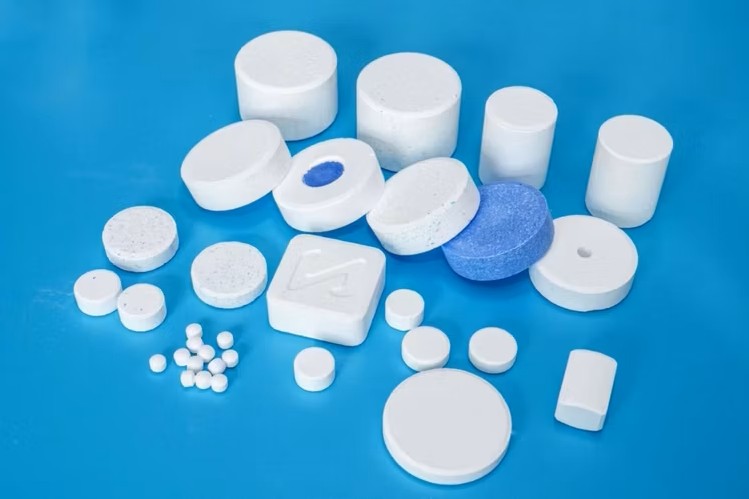
Calcium Hypochlorite for Pharmaceutical Factories: Lab Compliance Water Pure
Author: Dr. Marcus Thornfield
Introduction
After spending over two decades in the water treatment chemical industry, I’ve witnessed firsthand how pharmaceutical manufacturers struggle with one persistent challenge: maintaining ultrapure water systems that meet increasingly stringent regulatory standards. The question I hear most often from facility managers isn’t whether they need effective disinfection—it’s how to achieve compliance without compromising operational efficiency or product integrity.
Calcium hypochlorite has emerged as a critical solution in this landscape. But here’s what most suppliers won’t tell you: not all calcium hypochlorite products are created equal, and improper application can lead to costly regulatory violations. In this comprehensive guide, I’ll share insights from my experience working with pharmaceutical facilities across North America and Europe, helping you understand how to leverage this powerful disinfectant while maintaining full compliance with FDA, USP, and GMP requirements.
Understanding Pharmaceutical Water Quality Standards
The Regulatory Framework You Cannot Ignore
Pharmaceutical water systems operate under some of the most rigorous quality standards in any industry. The United States Pharmacopeia (USP) establishes monographs that define acceptable parameters for Purified Water (PW) and Water for Injection (WFI). Meanwhile, FDA regulations and Current Good Manufacturing Practice (cGMP) guidelines create additional layers of compliance requirements.
Based on the 2025 pharmacopeia updates, key parameters now include:
- Conductivity: ≤1.3 μS/cm at 25°C for both PW and WFI
- Microbial Limits: ≤10 CFU/100ml action levels
- Total Organic Carbon (TOC): ≤500 ppb
- Endotoxins: ≤0.25 EU/ml for WFI
What many manufacturers overlook is that these standards aren’t just about final water quality—they encompass the entire treatment process, including disinfection protocols. This is where calcium hypochlorite becomes both an opportunity and a potential liability.
Why Traditional Disinfection Methods Fall Short
I’ve consulted with facilities that relied exclusively on UV treatment or ozone systems, only to face recurring microbial contamination issues. The problem? These methods provide excellent point-of-treatment disinfection but offer no residual protection throughout distribution systems. Biofilm formation in pipes and storage tanks remains a persistent threat, particularly with resistant organisms like Burkholderia cepacia complex (BCC).
Calcium hypochlorite addresses this gap by providing sustained oxidative disinfection capacity. However, the key lies in proper dosing, monitoring, and residual management.
Calcium Hypochlorite: Properties and Pharmaceutical Applications
Chemical Characteristics That Matter
Calcium hypochlorite (Ca(OCl)₂, CAS 7778-54-3) functions as a strong oxidizing agent that releases hypochlorous acid when dissolved in water. This active compound penetrates microbial cell walls, disrupting essential metabolic processes and achieving broad-spectrum disinfection.
From my laboratory testing experience, pharmaceutical-grade calcium hypochlorite should meet these specifications:
| Parameter | Acceptable Range |
|---|---|
| Available Chlorine | 65-70% minimum |
| Moisture Content | ≤5% |
| Heavy Metals | <10 ppm |
| Insoluble Matter | ≤0.5% |
Strategic Application Points in Pharmaceutical Facilities
Through my work with multiple manufacturing sites, I’ve identified four critical application points where calcium hypochlorite delivers maximum value:
1. Raw Water Pre-Treatment
Incoming municipal or well water often contains variable microbial loads. Pre-chlorination with calcium hypochlorite establishes baseline disinfection before water enters purification trains.
2. Storage Tank Maintenance
Periodic shock treatment of purified water storage vessels prevents biofilm establishment. I typically recommend quarterly treatments at 50-100 ppm free chlorine residual, followed by thorough flushing.
3. Distribution Loop Sanitization
Hot water sanitization remains common, but calcium hypochlorite offers a cost-effective alternative for facilities without heating capacity. Concentrations of 20-50 ppm circulated for 2-4 hours achieve effective biofilm disruption.
4. Emergency Response Protocols
When microbial action levels are exceeded, calcium hypochlorite enables rapid system remediation without requiring complete shutdown. This capability has saved my clients from production delays costing hundreds of thousands of dollars.
Compliance Considerations and Risk Mitigation
Residual Chlorine Management
Here’s where many facilities encounter regulatory challenges. USP guidelines require that purified water contain no detectable disinfectant residuals at point-of-use. This means any calcium hypochlorite treatment must be followed by effective dechlorination, typically through activated carbon filtration or chemical neutralization with sodium bisulfite.
I’ve developed a monitoring protocol that I share with all my pharmaceutical clients:
- Pre-treatment measurement: Establish baseline chlorine demand
- Post-treatment verification: Confirm target residual achievement
- Dechlorination validation: Ensure complete residual removal
- Point-of-use testing: Final verification before water contacts product
Documentation and Audit Preparedness
FDA inspectors don’t just examine water quality—they review your entire disinfection program. During a 2024 audit I witnessed, a facility received a Form 483 observation because their calcium hypochlorite batch certificates lacked complete traceability.
Maintain comprehensive records including:
- Supplier certificates of analysis for each batch
- Dosing calculations and adjustment logs
- Residual monitoring data with timestamps
- Corrective action documentation for any deviations
- Annual program effectiveness reviews
Addressing the Byproduct Concern
Trihalomethanes (THMs) and other chlorination byproducts represent legitimate concerns when organic precursors exist in source water. My recommendation: conduct quarterly THM screening if your facility uses calcium hypochlorite for any water treatment step. Modern analytical methods detect these compounds at parts-per-billion levels, enabling proactive management before regulatory limits become an issue.
Implementation Best Practices From the Field
Selecting the Right Product Grade
Not all calcium hypochlorite products suit pharmaceutical applications. Industrial-grade materials may contain impurities that compromise water quality or introduce contaminants. Always specify pharmaceutical or food-grade materials with complete impurity profiles.
In my experience, working with established chemical suppliers who understand pharmaceutical requirements reduces compliance risk significantly. Request documentation demonstrating:
- Heavy metal testing results
- Microbial contamination screening
- Stability data under recommended storage conditions
- Regulatory compliance certifications
Training and Safety Protocols
Calcium hypochlorite requires careful handling. I’ve seen facilities implement excellent technical programs that failed due to inadequate operator training. Essential safety elements include:
- Proper personal protective equipment (PPE) requirements
- Emergency response procedures for spills or exposure
- Compatible storage conditions (cool, dry, segregated from organics)
- Clear labeling and segregation from other chemicals
Monitoring Technology Integration
Modern pharmaceutical facilities benefit from automated monitoring systems that track chlorine residuals in real-time. These systems provide continuous data logging, alarm notifications, and trend analysis—capabilities that significantly enhance audit readiness.
I recommend integrating monitoring data with your facility’s overall quality management system, creating a unified view of water system performance that simplifies compliance reporting.
Frequently Asked Questions (FAQ)
Q1: Can calcium hypochlorite be used directly in Water for Injection (WFI) systems?
A: No. WFI systems require distillation or equivalent purification methods that produce water without chemical additives. Calcium hypochlorite may be used for pre-treatment of feed water or for periodic sanitization of storage and distribution systems, but must be completely removed before water reaches WFI specifications.
Q2: How often should pharmaceutical water systems be sanitized with calcium hypochlorite?
A: Frequency depends on your system design, usage patterns, and historical microbial data. Many facilities implement quarterly sanitization, but some require monthly treatment while others extend to semi-annual intervals. Base your schedule on trend analysis rather than arbitrary timelines.
Q3: What alternatives exist if calcium hypochlorite doesn’t fit our facility’s needs?
A: Sodium hypochlorite offers similar disinfection properties with easier handling characteristics. Ozone, UV, and hot water sanitization provide non-chemical alternatives. Each option carries distinct advantages and limitations—I recommend conducting a comprehensive evaluation based on your specific operational requirements.
Q4: How do we validate that our calcium hypochlorite sanitization protocol is effective?
A: Validation requires demonstrating consistent microbial reduction across your system. This typically involves pre- and post-sanitization sampling at multiple locations, with results showing achievement of your established action levels. Document this validation and requalify annually or after significant system changes.
Q5: What should we do if we detect chlorine residual at point-of-use?
A: This indicates inadequate dechlorination. Immediately investigate your activated carbon filters or chemical neutralization systems. Do not use affected water for production until the issue is resolved and water quality is reconfirmed. Document the incident and implement corrective actions to prevent recurrence.
Conclusion
Pharmaceutical water system compliance demands more than simply purchasing the right chemicals—it requires a comprehensive understanding of how disinfection integrates with your entire quality framework. Calcium hypochlorite, when properly selected, applied, and monitored, provides pharmaceutical manufacturers with a powerful tool for maintaining microbial control while meeting regulatory expectations.
The facilities I’ve worked with that achieve consistent compliance share common characteristics: they invest in quality materials, maintain rigorous documentation, train their personnel thoroughly, and approach water treatment as an integral component of their overall quality system rather than an isolated operational task.
If you’re evaluating calcium hypochlorite for your pharmaceutical water treatment program, I encourage you to engage with suppliers who demonstrate deep understanding of pharmaceutical requirements. The right partnership transforms compliance from a burden into a competitive advantage.
About the Author: Dr. Marcus Thornfield has spent 23 years specializing in industrial water treatment chemistry, with particular focus on pharmaceutical and biotechnology applications. He has consulted for over 150 manufacturing facilities across 12 countries, helping them achieve and maintain regulatory compliance while optimizing operational efficiency.
Ready to discuss your pharmaceutical water treatment challenges? Visit our contact page to connect with our technical team. https://envochemical.com/contact-us/
