
Top TCCA Manufacturers: Custom Packaging Options for B2B Buyers
Introduction
In the global water treatment and disinfection industry, Trichloroisocyanuric Acid (TCCA) stands as one of the most critical chemical compounds for effective sanitization. As B2B buyers navigate an increasingly complex supply chain, selecting the right TCCA manufacturer goes beyond price considerations—it demands thorough evaluation of technical specifications, packaging flexibility, quality certifications, and regulatory compliance.
This comprehensive guide examines the landscape of leading TCCA manufacturers, their custom packaging capabilities, and the key technical parameters that discerning B2B purchasers must consider when establishing long-term supply partnerships. Whether you operate swimming pool facilities, municipal water treatment plants, agricultural operations, or industrial processing units, understanding these factors will empower your procurement decisions.
Understanding TCCA: Technical Fundamentals
Chemical Composition and Properties
Trichloroisocyanuric Acid, with the chemical formula C₃Cl₃N₃O₃ and CAS Number 87-90-1, represents a high-efficiency organic chlorine disinfectant. The compound features a molecular weight of 232.41 g/mol and contains approximately 90% available chlorine in its premium grade formulations.
Key Physical Properties:
| Parameter | Specification |
|---|---|
| Appearance | White crystalline powder or granular solid |
| Available Chlorine Content | ≥90.0% (Premium Grade), ≥88.0% (Standard Grade) |
| Moisture Content | ≤0.5% |
| pH Value (1% aqueous solution) | 2.6–3.2 |
| Solubility (25°C in water) | 1.2g/100g |
| Density | 0.95 (light grade) / 1.20 (heavy grade) g/cm³ |
| Melting Point | 247–250°C |
| Decomposition Temperature | 272–275°C |
Performance Characteristics
TCCA demonstrates exceptional oxidizing and chlorinating capabilities, making it highly effective against bacteria, viruses, fungi, spores, and even oocysts. The compound’s slow-release mechanism ensures sustained disinfection action, distinguishing it from faster-acting alternatives like sodium hypochlorite.
Critical Performance Metrics:
- Disinfection Efficiency: 99.9% microbial reduction within 30 minutes at recommended concentrations
- Stability: Shelf life of 24–36 months when stored under proper conditions
- Dissolution Rate: Controlled release over 7–10 days in pool applications
- Temperature Tolerance: Effective performance range from 5°C to 45°C
Industry Standards and Compliance Requirements
International Quality Certifications
Reputable TCCA manufacturers maintain multiple quality management system certifications to ensure product consistency and safety:
- ISO 9001:2015 – Quality Management Systems
- ISO 14001:2015 – Environmental Management Systems
- ISO 45001:2018 – Occupational Health and Safety Management
- REACH Compliance – European Chemical Agency registration
- EPA Registration – United States Environmental Protection Agency approval
Chinese Industry Standards
The primary technical standard governing TCCA production in China is HG/T 3779-2005, which establishes comprehensive specifications for:
- Available chlorine content thresholds
- Moisture level limitations
- Particle size distribution
- Heavy metal contamination limits
- Packaging and labeling requirements
Additional Regulatory Frameworks
- UN Classification: Class 5.1 (Oxidizing Substances), UN Number 2468
- Transport Regulations: IMDG Code, IATA Dangerous Goods Regulations
- Storage Requirements: Cool, dry, well-ventilated areas away from incompatible materials
Custom Packaging Solutions for B2B Applications
Packaging Format Options
Leading TCCA manufacturers offer diverse packaging configurations to accommodate various B2B operational needs:
1. Small-Scale Commercial Packaging
| Package Size | Material Type | Typical Applications |
|---|---|---|
| 1 kg | Aluminum foil bags | Laboratory use, sample testing |
| 5 kg | Multi-layer plastic bags | Small facilities, retail distribution |
| 25 kg | Woven PP bags with PE liner | Standard commercial operations |
2. Industrial Bulk Packaging
| Package Size | Material Type | Typical Applications |
|---|---|---|
| 50 kg | Double-layer woven bags | Medium-scale water treatment |
| 500 kg | Super sacks (FIBC) | Large industrial facilities |
| 1,000 kg | Tote bins with liners | Municipal water treatment plants |
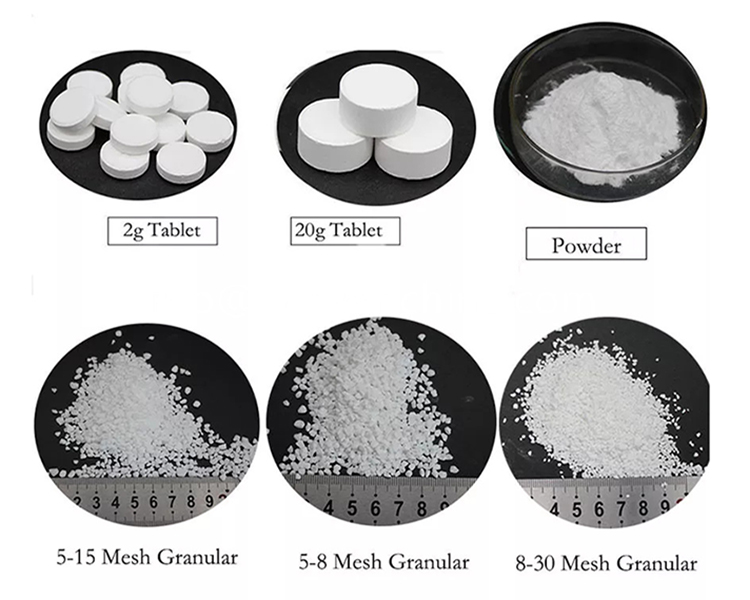
3. Tablet and Granule Forms
- 20g tablets: Residential pool maintenance
- 200g tablets: Commercial swimming pools
- 500g tablets: Industrial water systems
- Granular form: Rapid dissolution applications
Customization Capabilities
Premium manufacturers provide extensive customization options:
Labeling and Branding:
- Private label packaging design
- Multi-language safety data sheets
- Custom barcode and tracking systems
- Branded container identification
Specialized Packaging Features:
- UV-resistant outer layers for outdoor storage
- Moisture-barrier enhanced liners for humid climates
- Tamper-evident sealing mechanisms
- Easy-pour spouts for controlled dispensing
Logistics Optimization:
- Pallet configuration customization (EUR, ISO, custom dimensions)
- Container load optimization for sea freight
- Consolidated shipping arrangements
- Just-in-time delivery scheduling
Selecting the Right TCCA Manufacturer: Evaluation Criteria
Production Capacity and Scalability
B2B buyers must assess manufacturer capacity against their projected demand:
- Annual Production Volume: Leading facilities produce 30,000–60,000 metric tons annually
- Lead Time: Standard orders fulfilled within 7–15 days; custom packaging may require 20–30 days
- Scalability: Ability to increase supply by 50–100% during peak seasons
Quality Assurance Protocols
Comprehensive quality control systems should include:
- Raw Material Testing: Incoming cyanuric acid and chlorine source verification
- In-Process Monitoring: Real-time available chlorine content tracking
- Final Product Analysis: Third-party laboratory certification
- Batch Traceability: Complete lot number tracking from production to delivery
Technical Support Services
Differentiated manufacturers provide value-added support:
- Application engineering consultation
- Water chemistry optimization guidance
- Safety training programs for end-users
- Emergency response protocol development
Supply Chain Reliability
Evaluate manufacturer logistics capabilities:
- Port Access: Proximity to major shipping ports reduces transit time
- Inventory Management: Safety stock maintenance for continuity
- Alternative Shipping Routes: Multiple logistics options for risk mitigation
- Documentation Accuracy: Complete commercial invoices, packing lists, certificates of analysis
Price Considerations and Total Cost of Ownership
Market Pricing Dynamics
TCCA pricing fluctuates based on several factors:
- Raw Material Costs: Cyanuric acid and chlorine price volatility
- Energy Costs: Production is energy-intensive
- Seasonal Demand: Peak swimming pool season commands premium pricing
- Grade Specifications: 90% available chlorine vs. 88% standard grade
Current Market Range (2025–2026)
| Grade | FOB Price Range (USD/MT) | Typical MOQ |
|---|---|---|
| Premium (≥90% Cl) | $1,800–$2,400 | 20 MT |
| Standard (≥88% Cl) | $1,500–$2,000 | 25 MT |
| Custom Formulations | $2,200–$3,000 | 10 MT |
Total Cost Analysis
B2B buyers should calculate comprehensive costs including:
- Base product price
- Packaging customization fees
- Freight and insurance
- Import duties and tariffs
- Storage and handling requirements
- Quality testing expenses
Application-Specific Recommendations
Swimming Pool and Recreation Facilities
Recommended Specifications:
- Available chlorine: ≥90%
- Form: 200g or 500g slow-release tablets
- Packaging: 25 kg moisture-resistant bags
- Cyanuric acid content: Built-in stabilizer for outdoor pools
Municipal Water Treatment
Recommended Specifications:
- Available chlorine: ≥90%
- Form: Granular or powder for rapid dissolution
- Packaging: 500 kg super sacks or 1,000 kg totes
- Certification: NSF/ANSI 60 drinking water additive approval
Agricultural and Aquaculture Applications
Recommended Specifications:
- Available chlorine: ≥88%
- Form: Powder or small tablets for precise dosing
- Packaging: 25 kg bags with application guidelines
- Additional: Veterinary use certifications where applicable
Industrial Process Water
Recommended Specifications:
- Available chlorine: ≥90%
- Form: Custom granule size for specific dissolution rates
- Packaging: Bulk containers with integrated dispensing systems
- Support: Technical consultation for system integration
Risk Mitigation Strategies
Quality Verification Protocols
Implement comprehensive incoming inspection procedures:
- Certificate of Analysis Review: Verify all parameters match specifications
- Independent Laboratory Testing: Third-party validation of available chlorine content
- Visual Inspection: Check for clumping, discoloration, or package damage
- Dissolution Testing: Confirm expected dissolution rates in application conditions
Supply Continuity Planning
Develop robust contingency measures:
- Multi-Supplier Strategy: Maintain relationships with 2–3 qualified manufacturers
- Safety Stock Levels: 60–90 days inventory for critical applications
- Contract Terms: Include force majeure and alternative supply clauses
- Regular Audits: Annual manufacturer facility assessments
Safety and Handling Compliance
Ensure organizational readiness:
- SDS Availability: Current Safety Data Sheets in all relevant languages
- PPE Requirements: Appropriate personal protective equipment for handlers
- Storage Facilities: Compatible construction materials and ventilation systems
- Emergency Procedures: Spill response and first aid protocols
Future Trends in TCCA Manufacturing
Sustainability Initiatives
Leading manufacturers are implementing:
- Reduced energy consumption production processes
- Recyclable packaging materials
- Carbon footprint tracking and reduction programs
- Water recycling in manufacturing operations
Technological Advancements
Emerging innovations include:
- Enhanced stability formulations for extended shelf life
- Smart packaging with moisture indicators
- Automated dosing system compatibility
- Digital batch tracking and blockchain verification
Market Expansion
Growing application sectors:
- Healthcare facility disinfection
- Food processing sanitation
- Emergency water purification
- Industrial cooling tower treatment
Conclusion
Selecting the optimal TCCA manufacturer requires comprehensive evaluation beyond basic pricing considerations. B2B buyers must assess technical capabilities, quality certifications, packaging flexibility, and supply chain reliability to establish partnerships that deliver consistent value.
The manufacturers highlighted in this guide demonstrate industry-leading capabilities in producing high-quality TCCA with customizable packaging solutions. By applying the evaluation criteria and recommendations outlined herein, procurement professionals can make informed decisions that align with their operational requirements and risk management objectives.
For organizations seeking to optimize their TCCA procurement strategy, engaging directly with qualified manufacturers to discuss specific requirements remains the most effective approach. Request detailed product specifications, sample testing, and comprehensive quotations to facilitate thorough comparison before finalizing supplier selection.
Frequently Asked Questions (FAQ)
Q1: What is the typical shelf life of TCCA products?
A: Properly stored TCCA maintains its effectiveness for 24–36 months from the manufacturing date. Storage conditions must include cool, dry, well-ventilated areas away from direct sunlight and incompatible materials. Premium manufacturers provide batch-specific expiration dates on all packaging.
Q2: Can TCCA be mixed with other disinfectants?
A: No. TCCA should never be mixed with ammonium compounds, ammonia, urea, or other chlorine-based disinfectants. Such combinations can produce toxic nitrogen trichloride gas or cause explosive reactions. Always consult the Safety Data Sheet before combining any chemicals.
Q3: What is the minimum order quantity for custom packaging?
A: Minimum order quantities vary by manufacturer and customization level. Standard packaging typically requires 20–25 MT minimum. Custom packaging (private labeling, special sizes) may require 10–15 MT minimum. Contact manufacturers directly for specific requirements.
Q4: How do I verify TCCA quality before large-scale purchase?
A: Request product samples for independent laboratory testing. Reputable manufacturers provide Certificates of Analysis for each batch. Consider third-party testing for available chlorine content, moisture levels, and heavy metal contamination before committing to large orders.
Q5: What certifications should I look for in a TCCA manufacturer?
A: Essential certifications include ISO 9001 (quality management), ISO 14001 (environmental management), and relevant regional approvals (EPA, REACH, NSF). For drinking water applications, NSF/ANSI 60 certification is mandatory in North America.
Q6: How does TCCA compare to sodium dichloroisocyanurate (SDIC)?
A: TCCA contains higher available chlorine (90% vs. 55–60% for SDIC) and releases chlorine more slowly. TCCA is more stable for long-term storage and outdoor applications. SDIC dissolves faster and is preferred for rapid disinfection needs. Selection depends on specific application requirements.
Q7: What are the primary safety concerns when handling TCCA?
A: TCCA is a strong oxidizer (UN Class 5.1). Key safety concerns include fire risk when contacting organic materials, toxic gas release when mixed with acids or ammonia, and skin/eye irritation. Proper PPE, ventilation, and storage separation from incompatible materials are essential.
Q8: Can TCCA be used for drinking water treatment?
A: Yes, when manufactured to drinking water grade specifications and certified by relevant authorities (NSF/ANSI 60 in North America, equivalent standards elsewhere). Dosage must comply with local regulatory limits for residual chlorine levels.
Q9: What documentation is required for international TCCA shipments?
A: Standard documentation includes Commercial Invoice, Packing List, Certificate of Analysis, Safety Data Sheet, Certificate of Origin, and Dangerous Goods Declaration. Some destinations require additional permits or pre-shipment inspections.
Q10: How do seasonal fluctuations affect TCCA pricing and availability?
A: Peak demand occurs during spring and summer months (March–September in Northern Hemisphere) due to swimming pool season. Prices may increase 15–25% during peak periods. Advance ordering and long-term contracts can mitigate seasonal price volatility.
Ready to explore custom TCCA packaging solutions for your business? Contact qualified manufacturers today to discuss your specific requirements and request comprehensive quotations.
