
💧 Unlocking the Power of SDIC: The Ultimate Solution for Professional Pool Maintenance
Author: Marcus Thorne
As a seasoned expert in the water treatment industry, I have spent decades navigating the complexities of commercial and public aquatic facilities. One truth remains constant: maintaining crystal-clear water is not just about aesthetics; it is a critical public health mandate. For pool maintenance professionals, the relentless battle against bacteria, algae, and organic waste requires a weapon that is both potent and practical. That weapon is Sodium Dichloroisocyanurate (SDIC).
In today’s competitive market, where operational costs are soaring and client expectations for pristine water are higher than ever, finding an affordable SDIC solution is the holy grail. This article will dissect why SDIC is the cornerstone of professional pool maintenance and how you can source high-quality, cost-effective products to maximize your margins without compromising on safety.
🏊 Why SDIC is the Gold Standard for Professionals
When you are managing a commercial pool, a hotel lagoon, or a public water park, you cannot afford downtime. You need a disinfectant that works predictably, stores safely, and delivers consistent results. SDIC—often referred to as SDIC Granular or SDIC Tablets—is that solution.
🧪 The Science of Stability
Unlike liquid chlorine, which degrades rapidly under sunlight, SDIC is a stabilized chlorinated isocyanurate. This means it contains Cyanuric Acid built into its molecular structure. For professionals managing outdoor facilities, this is a game-changer. It allows the chlorine to persist in the water, fighting pathogens for longer periods without constant reapplication.
📈 The Operational Advantage
As a maintenance professional, your time is money. SDIC offers unparalleled versatility:
- High Solubility: It dissolves rapidly, making it perfect for shock treatments.
- pH Neutral: It operates effectively in a neutral pH range, reducing the need for constant pH correction.
- Long Shelf Life: Unlike gas chlorine, SDIC is stable and safe to store in bulk.
💰 Decoding “Affordable”: Beyond the Price Tag
When I speak of Affordable SDIC Solutions, I am not advocating for the cheapest product on the market. As a professional, you know that “cheap” often translates to “false economy.” An affordable solution is one that offers the highest value per application—the product that costs slightly more per kilo but lasts significantly longer and requires less labor to administer.
The Hidden Costs of Low-Quality Chemicals
Many B2B buyers fall into the trap of prioritizing the initial purchase price. However, low-grade SDIC often comes with high levels of insoluble residue. This residue clogs your feeders, damages your pumps, and settles at the bottom of the pool, requiring expensive vacuuming and filtration maintenance.
The True Cost Calculation:
High-Quality SDIC: Higher initial cost, but 99% active ingredient, zero residue, less equipment wear. Low-Quality SDIC: Lower sticker price, but 10-15% inert waste, frequent equipment cleaning, higher labor costs.
To remain profitable, you must source SDIC that is manufactured to strict industrial standards. You need a partner who understands that affordability means reliability.
🏗️ Integrating SDIC into Your Maintenance Workflow
For pool maintenance professionals, efficiency is king. Here is how SDIC integrates seamlessly into your daily operations, making it the most affordable choice for your workflow.
1. The Shock Treatment Protocol
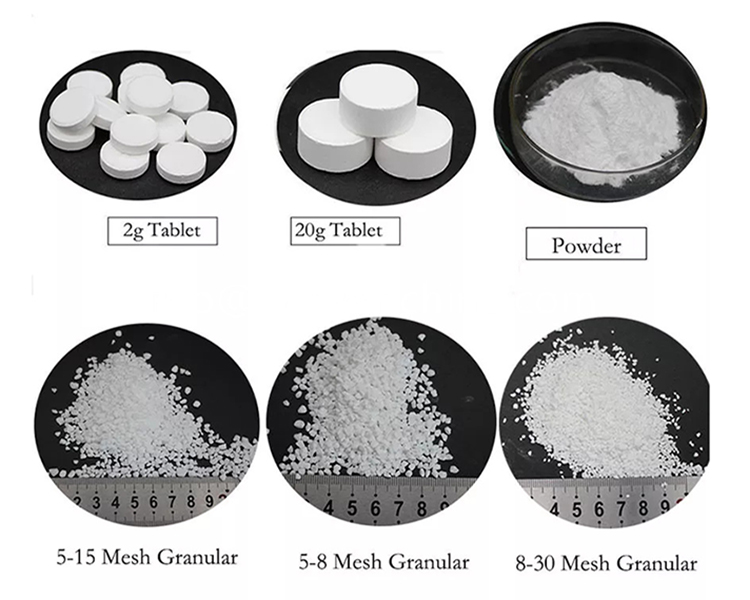
When opening a pool for the season or recovering from a bather load event, you need a rapid response. SDIC Granular is the preferred choice for shock treatments.
- Action: Dissolve and disperse rapidly.
- Benefit: Restores water clarity within hours, minimizing facility closure time.
2. Automated Feeding Systems
For daily maintenance, SDIC Tablets are the workhorse. They are designed to feed slowly through erosion feeders.
- Action: Consistent, metered release of chlorine.
- Benefit: Reduces the need for daily manual intervention, allowing your team to focus on other tasks.
3. Algae Control and Prevention
Algae blooms can turn a pristine pool into a liability overnight. The stabilized nature of SDIC makes it highly effective at penetrating algae cell walls, even in bright sunlight where other chlorines fail.
🌍 Sourcing Your Solution: Quality Meets Value
Finding a reliable supplier of SDIC is the final piece of the puzzle. As an expert, I have seen the industry shift towards manufacturers who can offer bulk pricing without sacrificing quality. The goal is to find a partner who operates at the intersection of R&D and cost-efficiency.
What to Look for in a Manufacturer
When evaluating potential suppliers, ask yourself:
- Purity: Does the product meet or exceed international standards (e.g., ISO, NSF)?
- Consistency: Can they guarantee the same quality batch after batch?
- Logistics: Do they have the global reach to deliver SDIC to your location affordably?
A manufacturer that integrates production, R&D, and sales under one roof often offers the best value. By cutting out middlemen and investing in their own production facilities, these companies can pass the savings directly to B2B clients like you.
📝 Conclusion: Elevate Your Service with the Right Chemistry
In the world of professional pool maintenance, water clarity is your reputation. SDIC is not just a chemical; it is the foundation of a healthy aquatic environment. By choosing Affordable SDIC Solutions that prioritize high purity and operational efficiency, you are not cutting corners—you are optimizing your business.
Do not let the fear of upfront costs blind you to the long-term savings. Invest in a product that protects your equipment, saves your team time, and delivers water that sparkles. It is the smartest business decision you can make for your maintenance operation.
❓ Frequently Asked Questions (FAQ)
Q1: What is the difference between SDIC and Trichlor?
A: While both are stabilized chlorines, SDIC (Sodium Dichloroisocyanurate) is sodium-based and typically pH neutral (around 6.8-7.0). Trichlor (Trichloroisocyanuric Acid) is acidic (pH 2.8-3.0). For professionals, this means SDIC does not require frequent pH correction, whereas Trichlor can lower pH levels, necessitating the addition of soda ash or other alkaline substances.
Q2: Is SDIC safe for all types of pool surfaces?
A: Yes. When used according to standard dosing protocols, SDIC is safe for vinyl liners, fiberglass, plaster, and pebble finishes. However, because it is a strong oxidizer, it should never be mixed with other chemicals (especially acids) outside of the water, as this can create hazardous fumes.
Q3: How should I store bulk SDIC?
A: SDIC should be stored in a cool, dry, and well-ventilated area. It is crucial to keep it away from direct sunlight and moisture. Unlike liquid chlorine, solid SDIC has a long shelf life (typically 5 years if unopened), but exposure to humidity can cause it to cake or degrade.
Q4: Can SDIC be used in saltwater pools?
A: Absolutely. While saltwater pools generate chlorine through electrolysis, they still require “shocking” to remove combined chlorine (chloramines). SDIC is the perfect shock treatment for saltwater systems because it adds the necessary free chlorine without interfering with the salt generator.
Q5: What is the ideal Cyanuric Acid (CYA) level when using SDIC?
A: For outdoor pools using SDIC, the ideal CYA level is generally between 30-50 ppm. This provides enough stabilization to protect the chlorine from UV degradation without causing “chlorine lock,” where the chlorine becomes too slow to react with contaminants.
