
🐟 Why Aquaculture Demands Premium Grade SDIC: The Ultimate Guide to Water Sterilization
As an industry insider who has spent years navigating the complexities of water treatment, I can tell you that aquaculture is a high-stakes game. The margin for error in maintaining water quality is razor-thin. One bad batch of chemicals can lead to disease outbreaks, stunted growth, and catastrophic financial loss. If you are in the business of farming shrimp, fish, or shellfish, you know that the heart of your operation is the water. And the gold standard for keeping that water pristine is Sodium Dichloroisocyanurate (SDIC).
However, not all SDIC is created equal. The market is flooded with generic products, but for aquaculture, you need Premium Grade SDIC. This article will break down why this specific grade is non-negotiable for your business and how to source it reliably.
🧪 The Science Behind SDIC: Why It’s Vital for Your Stock
Before we dive into the “premium” aspect, let’s understand the mechanism. SDIC is a stabilized organic chlorine compound. Unlike simple chlorine bleach, which dissipates quickly and can be harsh on aquatic life, SDIC releases hypochlorous acid (HOCl) slowly and steadily.
The Mechanism of Action
When SDIC dissolves in water, it undergoes a hydrolysis reaction: $$ \text{C}_3\text{Cl}_2\text{N}_3\text{O}_3\text{Na} + 2\text{H}_2\text{O} \rightarrow \text{C}_3\text{H}_3\text{N}_3\text{O}_3 + 2\text{HOCl} + \text{NaOH} $$
This reaction is crucial because Hypochlorous Acid (HOCl) is the active agent that penetrates the cell walls of bacteria, viruses, and algae, destroying their DNA and enzymes without leaving toxic residues in the water.
Key Insight: For aquaculture, the speed of dissolution and the stability of the chlorine release are paramount. Generic industrial grades often dissolve too slowly or contain impurities that cloud the water.
🌊 The Aquaculture Advantage: More Than Just a Disinfectant
In the aquaculture industry, SDIC serves a dual purpose: it is both a prophylactic shield against pathogens and a growth promoter.
- Disease Prevention: It effectively eliminates Vibrio species, White Spot Syndrome Virus (WSSV), and other pathogens that devastate shrimp and fish farms.
- Water Clarity: By controlling algal blooms and oxidizing organic waste, it keeps the water clear, allowing for better light penetration and oxygenation.
- Regulatory Compliance: Premium SDIC breaks down into cyanuric acid and carbon dioxide, which are generally considered safe and do not bioaccumulate in the food chain.
⚠️ The Hidden Cost of “Cheap” Chemicals
I cannot stress this enough: Do not cut corners on your disinfectant. Many aquaculture businesses source “industrial grade” SDIC to save a few cents per kilogram. This is a false economy.
The Downside of Low-Grade Products
- High Impurity Content: Cheap SDIC often contains high levels of insoluble residues. These residues settle at the bottom of your tanks or ponds, creating a sludge layer that can suffocate the biological balance of your water.
- Unstable Chlorine: Low-grade products may have inconsistent Available Chlorine content (often below 56%). This leads to under-dosing (ineffective disinfection) or over-dosing (toxic shock for your stock).
- Corrosion: Impurities can increase the corrosiveness of the water, damaging your expensive pumps, pipes, and aeration systems.
The Takeaway: Premium Grade SDIC ensures that every gram you use is working for your yield, not against it.
🏆 What Defines “Premium Grade” SDIC?
So, what exactly separates a premium product from the generic? It is not just marketing jargon; it is a strict set of chemical and physical specifications.
The Four Pillars of Premium Quality
- High Available Chlorine Content A premium product must guarantee an Available Chlorine content of 56% to 60%. This ensures maximum efficacy with minimal volume, reducing shipping costs and storage space.
- Rapid Dissolution In aquaculture, time is oxygen. Premium SDIC must dissolve completely within 15-30 minutes at room temperature. If it takes longer, it is not suitable for emergency disinfection protocols.
- Low Water Insolubles (<0.1%) This is the hallmark of a premium product. The insoluble fraction should be virtually zero. If you see sediment after mixing, you are using a lower grade that is polluting your water.
- Stability and pH Buffering Premium SDIC maintains a neutral pH (6.0 – 7.0) when dissolved. This is critical because drastic pH shifts can stress fish and shrimp, making them more susceptible to disease.
📊 Technical Specifications: Premium vs. Standard
To help you evaluate your current supplier, I have compiled a comparison table based on industry standards.
| Feature | Standard/Industrial Grade | Premium Grade (Aquaculture Standard) |
|---|---|---|
| Available Chlorine | 50% – 54% | 56% – 60% |
| Water Insolubles | < 0.5% | < 0.1% |
| Dissolution Time | 60+ Minutes | < 30 Minutes |
| Moisture Content | < 7% | < 5% |
| Best Use Case | Industrial Bleaching, Cleaning | Aquaculture, Drinking Water, Pools |
Note: The lower the moisture and insolubles, the higher the stability and safety for aquatic life.
🚢 Sourcing Strategy: Finding a Reliable Supplier
As a business owner, finding a supplier is about more than just price; it is about partnership and consistency.
What to Look for in a Manufacturer
- Vertical Integration: Look for a company that controls the entire process from raw materials to the finished product. This ensures batch-to-batch consistency.
- Global Logistics: Aquaculture is a global industry. Your supplier must have the capability to deliver large volumes (often in bulk or 25kg bags) anywhere in the world without compromising the integrity of the product.
- Technical Support: A premium supplier doesn’t just ship chemicals; they provide data sheets, safety protocols (SDS), and technical advice on dosage specific to your type of aquaculture.
My Recommendation: When evaluating suppliers, ask for a Certificate of Analysis (COA) for every batch. A reputable manufacturer will provide this without hesitation.
📝 Conclusion: Protecting Your Investment
In conclusion, Premium Grade SDIC is not just a chemical purchase; it is an investment in the health of your aquaculture operation. By choosing a product with high Available Chlorine, rapid dissolution, and low insolubles, you are ensuring that your water remains a clean, safe environment for your stock to thrive.
Don’t let substandard chemicals jeopardize your hard work. Insist on quality, demand consistency, and partner with a manufacturer that understands the unique demands of the aquaculture industry.
💡 Frequently Asked Questions (FAQ)
Q1: What is the shelf life of Premium Grade SDIC? Premium Grade SDIC typically has a shelf life of 2 years when stored in a cool, dry, and well-ventilated place. It is crucial to keep it away from direct sunlight and moisture to prevent caking and degradation of the chlorine content.
Q2: Is SDIC safe for use in fish and shrimp ponds? Yes, when used according to the recommended dosage. SDIC is approved by various international bodies for use in aquaculture because it breaks down into non-toxic components (cyanuric acid and carbon dioxide) and does not leave harmful heavy metal residues.
Q3: How does SDIC differ from Calcium Hypochlorite? While both are chlorine-based disinfectants, SDIC is organic and more stable. Calcium Hypochlorite is inorganic and can leave calcium deposits (scale) in your equipment and increase water hardness. SDIC is generally preferred for aquaculture due to its neutral pH and lack of scaling issues.
Q4: What is the ideal dosage for aquaculture? The dosage varies depending on the specific application (disinfection vs. algae control) and the volume of water. Generally, for preventive maintenance, dosages range from 0.1 ppm to 0.3 ppm of Available Chlorine. For shock treatment, it can go up to 1.0 ppm, but the water must be dechlorinated before restocking.
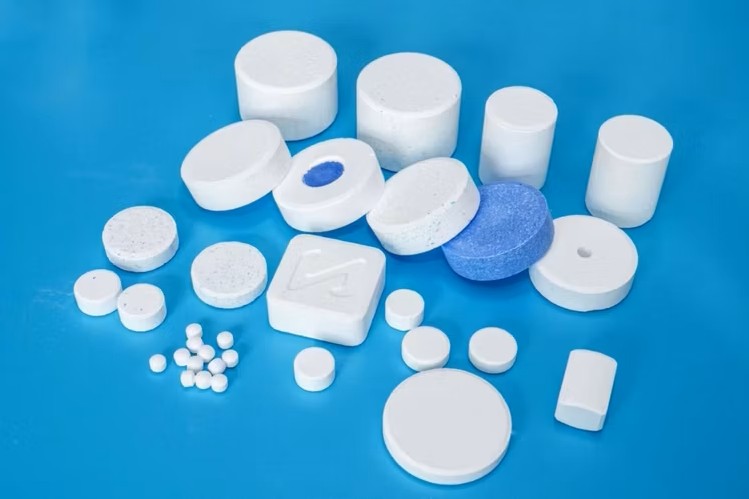
Q5: Can I use tablets or powder for aquaculture? Both forms are used. Powder is often used for direct application in ponds or large tanks for rapid treatment. Tablets are excellent for slow-release applications in recirculating aquaculture systems (RAS) or for maintaining a residual chlorine level in water storage tanks.
Author: Marcus Reynolds Senior Aquaculture Chemical Specialist
