
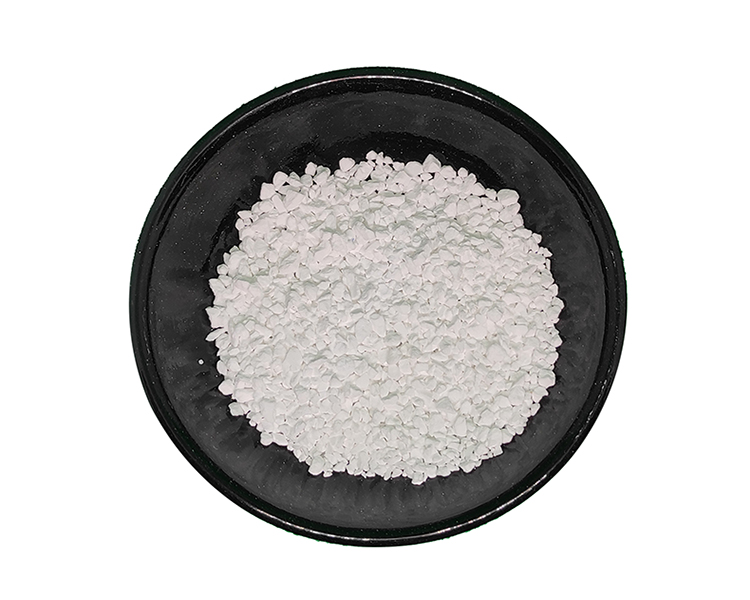
The Direct Reason: Form, Formulation, and Condition Affect Available Chlorine
Two SDIC (sodium dichloroisocyanurate) products can have different available chlorine values because they may differ in chemical form (anhydrous versus dihydrate), in formulation (pure compound versus blended or stabilized product), in manufacturing purity, or in their state of degradation after storage. Available chlorine is a measured value that reflects how much active oxidizing capacity remains in a specific batch at the time of testing, not a single fixed property of “SDIC” as a generic term.
When comparing two products labeled as SDIC, the first question is always: are you comparing the same chemical form at the same purity, tested under the same conditions? If not, different available chlorine readings are expected, not anomalous.
Anhydrous SDIC Versus Dihydrate SDIC
The most common source of different available chlorine values between two SDIC products is the difference between anhydrous sodium dichloroisocyanurate and its dihydrate form (sodium dichloroisocyanurate dihydrate, often abbreviated SDIC dihydrate or NaDCC dihydrate).
Anhydrous SDIC has a molecular weight of approximately 219.95 g/mol and a theoretical available chlorine content of about 64%. The dihydrate form includes two water molecules per formula unit, raising the molecular weight to roughly 255.98 g/mol and reducing the theoretical available chlorine to approximately 55%. This is a fundamental stoichiometric difference: the dihydrate simply contains less chlorine per unit mass because part of its mass is water of crystallization.
If one product is anhydrous SDIC at 64% theoretical and another is the dihydrate at 55% theoretical, their available chlorine values will differ even if both are manufactured to high purity. This is not a quality issue; it is a chemical identity issue. Always confirm which form a product is before comparing available chlorine numbers.
| Property | Anhydrous SDIC | SDIC Dihydrate |
|---|---|---|
| Theoretical available chlorine | ~64% | ~55% |
| Molecular weight (approx.) | 219.95 g/mol | 255.98 g/mol |
| Typical commercial purity range | 96–99% (as compound) | 98–99% (as compound) |
Raw Material Purity Versus Formulated Products
A second reason two SDIC products show different available chlorine values is that one may be a pure raw compound while the other is a formulated product containing additives. Granular or tablet SDIC products often include binders, stabilizers, wetting agents, or flow improvers. These excipients do not contribute available chlorine, so they dilute the active content per unit mass of the finished product.
For example, a pure SDIC granular product tested at 60% available chlorine reflects mostly the active compound. A tablet version of the same base chemistry that contains 10% binder and filler might test at 54% available chlorine, even though the underlying SDIC raw material is identical. The difference is not in the SDIC itself but in what surrounds it.
When reading a product specification sheet, distinguish between “available chlorine (as product)” and “available chlorine (as active ingredient).” The first reflects the finished formulation; the second isolates the SDIC compound. Confusing these two values is a frequent cause of apparent discrepancy between products.
Manufacturing Variation and Batch-to-Batch Differences
Even when two products are the same form and the same type (both anhydrous granules, for instance), manufacturing controls determine the actual available chlorine in each batch. Small variations in reaction completeness, residual moisture, or removal of by-products during production shift the measured value.
Reputable manufacturers specify an available chlorine range (for example, 58–62% for a given anhydrous granule grade) rather than a single number. If you receive two batches from the same product line and see 60.1% versus 59.3%, this falls within normal manufacturing tolerance and does not indicate a problem. However, if one product consistently reads 55% and another from a different source reads 63%, the difference likely points to a different grade, a different form, or a different formulation.
Degradation During Storage and Handling
Available chlorine is not permanently stable. SDIC products lose available chlorine over time when exposed to heat, moisture, sunlight, or open air. Two products manufactured identically can test differently if one has been stored in cool, dry, sealed conditions and the other has been exposed to a warm or humid environment.
This is why the date of manufacture and storage conditions matter when comparing available chlorine values. A product tested fresh from production will typically show a higher value than the same product tested after twelve months of shelf life in a non-climate-controlled warehouse. Degradation is a real, measurable cause of different available chlorine readings between otherwise identical products.
Users who need consistent dosing should request the manufacture date and recommended shelf life alongside the available chlorine specification, and should store products according to the supplier’s guidance to maintain the stated value.
Testing Method Differences Can Also Create Apparent Gaps
Available chlorine is determined by analytical testing, commonly iodometric titration. Different laboratories may use slightly different procedures, sample preparations, or endpoint determinations. Two products tested in different labs can show small but real numerical differences even if the actual chlorine content is the same.
This does not mean the products are different; it means the measurement method introduces variability. When evaluating whether two SDIC products truly differ in available chlorine, confirm that the values come from the same test standard and, ideally, the same or comparable laboratory conditions.
What to Check When You See Different Values
If you are comparing two SDIC products and their available chlorine values do not match, verify the following before concluding that one product is superior or defective:
- Chemical form: Is one anhydrous and the other dihydrate?
- Product type: Is one a pure compound and the other a formulated tablet or granule with excipients?
- Specification basis: Does the stated value refer to the finished product or the active ingredient?
- Manufacture date and storage: Could degradation explain the lower value?
- Test method: Were both values generated using the same analytical procedure?
Answering these five questions resolves the majority of cases where two SDIC products appear to have different available chlorine values.
Safety Note
SDIC is a strong oxidizer. Regardless of its available chlorine value, it must never be mixed with acids, ammonia, or other incompatible chemicals, as dangerous gas release or violent reaction can occur. Handling should follow the safety data sheet for the specific product in use, and personal protective equipment appropriate for oxidizing solids should always be worn.
If you need to confirm whether two specific ENVO CHEMICAL SDIC products differ in available chlorine because of form, formulation, or another factor, contact us with the product names or grades you are comparing and we can clarify the basis for any difference.
