
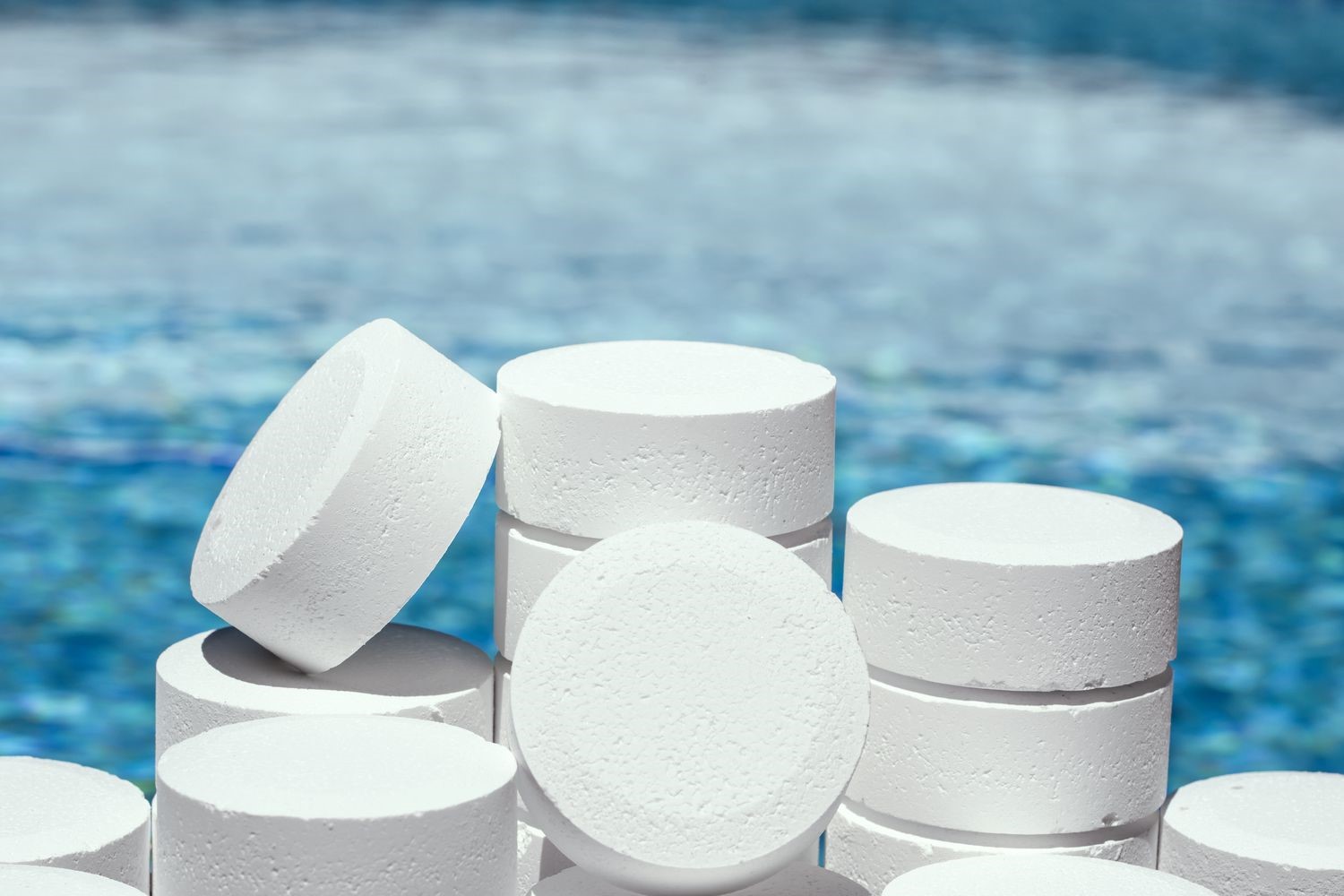
The Direct Relationship Between Water Temperature and SDIC Dissolution
Higher water temperature accelerates the dissolution rate of sodium dichloroisocyanurate (SDIC) and increases the amount that can dissolve per unit volume, but it simultaneously speeds the hydrolysis of available chlorine. Below approximately 10 °C dissolution becomes notably slow, while above 40 °C the dissolved active chlorine degrades rapidly, shortening the useful contact window. The practical sweet spot for most SDIC applications lies between 15 °C and 30 °C, where dissolution is efficient without excessive chlorine loss.
Why Temperature Changes Dissolution Speed
SDIC is a crystalline solid that must first be wetted at the particle surface, then broken apart as water molecules penetrate the crystal lattice. Temperature influences both of these steps.
At the molecular level, warmer water carries more kinetic energy. Water molecules collide with SDIC particle surfaces more frequently and with greater force, disrupting the crystal structure faster. This is why a given mass of SDIC granules or powder will visibly dissolve in seconds at 30 °C but may take several minutes at 5 °C, even with identical stirring.
Two distinct temperature effects are at work:
- Dissolution kinetics: the speed at which solid SDIC enters solution. This increases steadily with temperature across the normal operating range.
- Equilibrium solubility: the maximum concentration of SDIC that water can hold before undissolved solid remains. This also rises with temperature, meaning more product can be loaded into a given volume of warm water.
Both effects matter when preparing SDIC stock solutions or dosing batches. Cold water does not prevent dissolution entirely, but it demands longer mixing times and may leave residual undissolved particles if the dose is high.
Solubility Limits Across Temperature Ranges
Published solubility data for SDIC show a clear upward trend as temperature climbs. While exact figures depend on the specific form—anhydrous versus dihydrate—and on the presence of other solutes, the general pattern is consistent: solubility at 5 °C is roughly half or less of the value at 30 °C. Operators who dose SDIC into cold water must verify that the intended concentration stays below the lower solubility ceiling to avoid sludge or undissolved residue.
When formulating a concentrated stock solution, warming the water to 20–25 °C allows a higher loading rate without saturation. The solution should then be used promptly, because cooling it afterward does not reverse the hydrolysis that has already begun at the higher temperature.
The Trade-Off: Faster Dissolution Versus Faster Degradation
This is the critical point that the title’s question demands. Temperature does not only help SDIC dissolve—it also drives the chemical breakdown of the dichloroisocyanurate ion in water. Hydrolysis converts available chlorine to hypochlorous acid and then to chloride, releasing the sanitising power faster than it can be used.
At 10 °C the dissolution is slow but the available chlorine remains stable for a longer period once dissolved. At 40 °C the powder disappears quickly, but the measured chlorine residual may drop significantly within minutes if no demand is present to consume it. The net effect is that high temperature improves the physical step of getting SDIC into solution while undermining the chemical step of keeping that chlorine available.
For this reason, the recommended practice is to dissolve SDIC in moderate-temperature water and then add the solution to the target system quickly, rather than maintaining a warm stock solution for extended periods.
Practical Steps to Manage Temperature During Dissolution
The following actions directly address the dissolution challenge posed by temperature variation:
- Pre-warm dosing water to 15–25 °C when ambient conditions are cold. Do not exceed 30 °C unless the solution will be used immediately.
- Stir or circulate continuously during addition. Mechanical agitation compensates partially for low temperature by refreshing the water layer at each particle surface.
- Add SDIC gradually, not in a single dump. Smaller increments dissolve more evenly, especially in cold water where local saturation can form around a large mass of granules.
- Avoid using hot water above 40 °C for routine preparation. The rapid chlorine loss at that range means a significant portion of the product’s active ingredient is wasted before it reaches the target application.
- Monitor the solution visually. Undissolved SDIC particles in cold water appear as a cloudy suspension or settled white powder. These should not be counted as part of the dosed concentration.
Special Considerations for Different SDIC Forms
Not all SDIC products behave identically in water. Granular forms have a smaller surface-area-to-mass ratio than fine powder, so temperature has a more pronounced effect on their dissolution time. Tablet or briquette forms may require pre-crushing and warm water to achieve complete dissolution within a useful timeframe.
The dihydrate form of sodium dichloroisocyanurate contains two water molecules in the crystal lattice. These are released on dissolution and can slightly alter the local concentration dynamics, but the temperature dependence of dissolution rate remains the same: warmer water dissolves it faster, cooler water slower.
Formulated products that combine SDIC with buffers, surfactants, or other excipients may show different dissolution behaviour. Always refer to the specific technical data sheet for the product in question rather than applying generic SDIC rules to a branded blend.
Safety Limits Tied to Temperature
When dissolving SDIC in warm water, the exothermic nature of the process is mild but real. Adding large quantities of SDIC to small volumes of hot water can cause localised heating and rapid gas release (carbon dioxide and minor chlorine vapour). Work in a ventilated area, wear appropriate protective equipment, and never mix SDIC with acids or other chlorine-based products regardless of temperature.
Cold-water dissolution carries a different risk: undissolved SDIC granules that settle in a tank or pipe can create concentrated pockets. If these pockets later encounter warmer water, they may dissolve suddenly, releasing a spike of available chlorine. Ensure complete dissolution and uniform mixing before the solution enters any process stream.
Summary of the Temperature Effect
Water temperature is a double-edged variable for SDIC dissolution. Warm water solves the physical problem of getting the solid into solution quickly and allows higher concentrations, but it simultaneously accelerates the loss of available chlorine through hydrolysis. Cold water preserves chlorine stability but demands patience, agitation, and dose management to avoid incomplete dissolution. The most reliable approach is to use moderately warm water, dissolve promptly with continuous mixing, and deliver the solution to its point of use without delay.
If you need guidance on the optimal dissolution temperature for a specific SDIC grade or application condition, contact ENVO CHEMICAL with your product form, target water temperature range, and intended concentration—we will confirm the parameters that keep both dissolution efficiency and chlorine stability in balance.
