
What Actually Happens When Polyphosphate Supply Interrupts Your Water-Treatment Operation
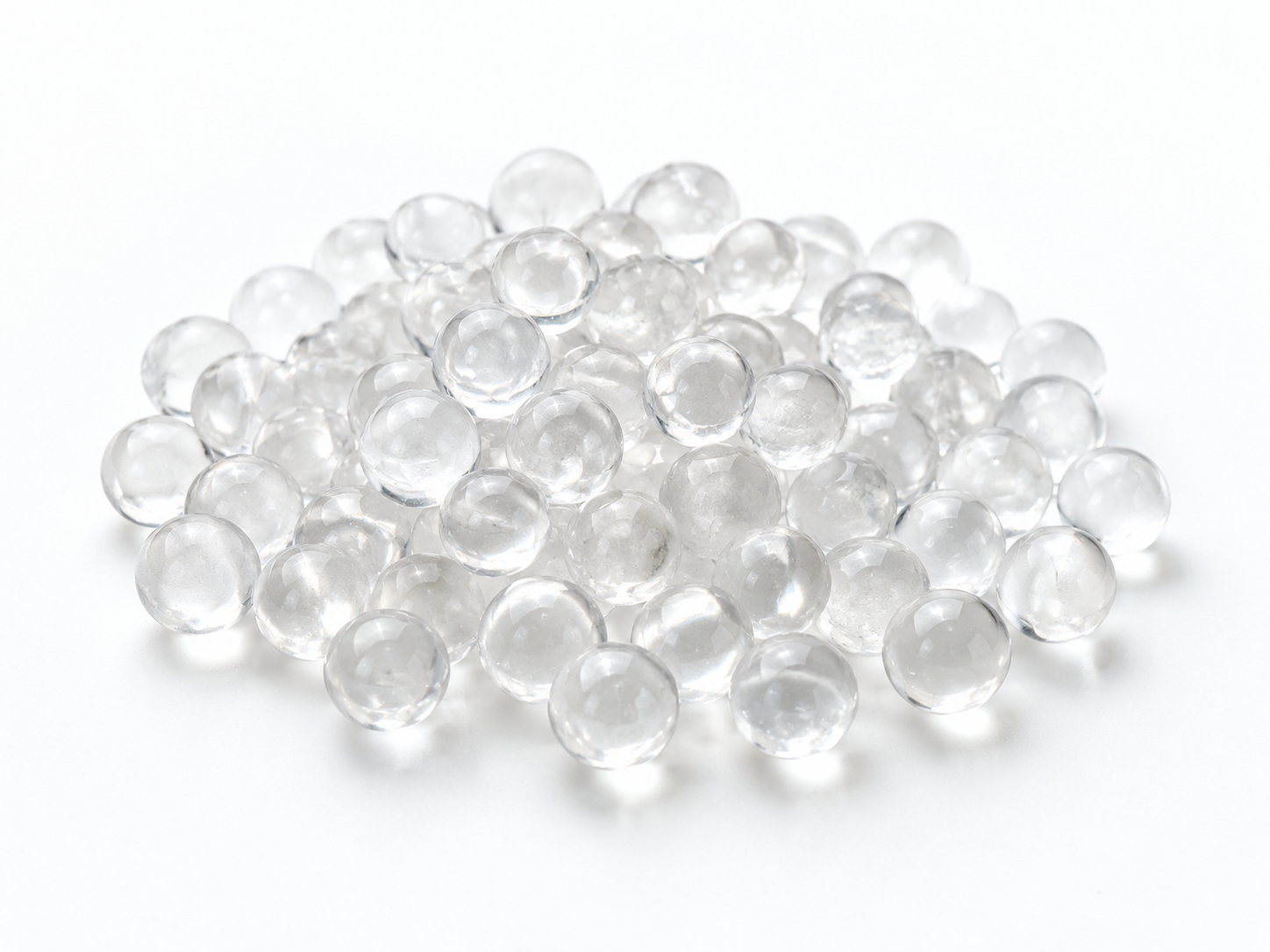
If a polyphosphate production line stops, facilities that rely on siliphos crystal or similar polyphosphate media for scale inhibition face an immediate gap in dosing capability. The most direct consequence is a loss of protective phosphate residual in treated water, which can allow calcium carbonate and other mineral scales to re-form on heat-exchange surfaces, pipes, and distribution equipment within days to weeks—depending on water chemistry and temperature. For procurement teams and plant operators, the real question is not whether an interruption matters, but how long your current inventory and alternative sourcing options can bridge the gap.
Why Polyphosphate Matters in the First Place
Polyphosphates—including the siliphos crystal form used in many point-of-entry and commercial water-treatment systems—function as scale inhibitors, not water softeners. They work by sequestering dissolved calcium and magnesium ions, keeping those minerals in solution so they cannot precipitate as hard scale on equipment surfaces. This is fundamentally different from ion-exchange softening, which removes hardness minerals entirely, and from physical filtration, which captures particles already present in the water.
When dosing stops because supply is unavailable, the sequestering effect fades as the existing phosphate residual is flushed through the system. The speed of that fade depends on flow volume, retention time, and the baseline hardness of the source water. A high-hardness, high-temperature system will show scale recurrence faster than a low-hardness, ambient-temperature installation.
Immediate Operational Risks of a Supply Break
How quickly does protection disappear?
Protection does not vanish the moment the last crystal dissolves. Residual polyphosphate concentration typically declines over a period that correlates with system turnover. In a recirculating system with modest daily throughput, measurable residual may persist for several days. In a high-flow continuous-feed installation, the residual can drop below effective levels within 24 to 48 hours. Operators should understand that “protection” is a dosing-dependent condition, not a one-time treatment.
What equipment is most vulnerable?
Scale-sensitive assets that suffer first include:
- Heat exchangers and boiler elements, where elevated temperature accelerates mineral precipitation
- Reverse-osmosis pretreatment stages, where even thin scale layers increase pressure drop and reduce membrane life
- Commercial dishwashers and coffee equipment, where visible spotting and reduced heating efficiency appear quickly
- Irrigation and cooling-tower systems, where clogging of small orifices and distribution lines can occur
Corrosion is a separate issue. Polyphosphate dosing at appropriate levels can contribute to a mild protective film on ferrous pipes, but its primary and well-documented role is scale inhibition, not corrosion control or disinfection. Confusing these functions leads to incorrect risk assessment when supply is interrupted.
Understanding Where the Vulnerability Comes From
Polyphosphate products like siliphos crystal are manufactured through thermal polymerization processes that require controlled heating of orthophosphate precursors. A production line stoppage can result from equipment failure, raw-material shortages (such as phosphoric acid or sodium tripolyphosphate feedstock), regulatory shutdowns, energy disruptions, or planned maintenance that extends beyond schedule. Because the chemistry is specific—chain length, solubility rate, and purity affect dissolution behavior—a substitute product from a different manufacturer may not perform identically even if it carries the same generic label.
For buyers evaluating supply continuity, the critical factors are:
- Number of qualified suppliers. Relying on a single source for a proprietary crystal formulation increases risk significantly.
- Inventory buffer. On-site stock measured in weeks rather than days buys time for alternative procurement.
- Product equivalence. Not all polyphosphate media dissolve at the same rate or deliver the same phosphate chain-length distribution. Switching formulations mid-operation may require dosage recalibration.
- Lead-time transparency. Understanding whether a supplier can ship from a secondary warehouse or alternate production site matters more than the nominal quoted delivery time.
Practical Steps to Reduce Disruption Risk
Procurement professionals and plant managers can take several concrete actions before a stoppage occurs:
- Audit your current supply contract. Confirm whether your agreement includes contingency clauses, secondary sourcing options, or minimum stock commitments from the manufacturer.
- Quantify your consumption rate. Express it in kilograms per day based on actual dosage and flow data. This number becomes the basis for calculating safe inventory levels.
- Identify at least one alternative supplier or formulation. Verify compatibility with your existing dosing equipment—feed rate, dissolution tank sizing, and control settings may need adjustment if the alternative has different solubility characteristics.
- Test the alternative in advance. A bench-scale or pilot comparison under your actual water conditions is the only reliable way to confirm that a substitute polyphosphate will maintain adequate scale inhibition.
- Document your water chemistry baseline. Hardness, pH, temperature, alkalinity, and iron content all influence how fast scale returns when dosing lapses. Having this data on hand helps you prioritize which systems to protect first during a shortage.
When “Food Grade” or “NSF” Labels Do Not Solve the Problem
A common misconception is that any product labeled food grade or certified to a drinking-water standard automatically qualifies for every potable-water application. In reality, suitability for drinking water must be confirmed against the specific regulatory framework of the destination market and the exact product formulation. A polyphosphate crystal that is food grade in one jurisdiction may not meet the leaching limits, additive listings, or maximum-contaminant-level requirements of another. Always verify the certification scope and the applicable standard before substituting a product in a potable-water system.
How ENVO CHEMICAL Fits Into a Continuity Strategy
For operations that source siliphos crystal or related polyphosphate media through ENVO CHEMICAL, the practical question is whether your current arrangement provides enough visibility and flexibility to survive a production interruption elsewhere in the supply chain. ENVO CHEMICAL’s role as a supplier of water-treatment materials means that procurement teams can discuss their specific application parameters—source-water hardness, system type, dosage range, and destination requirements—to determine whether the product on hand matches their operational needs or whether a formulation review is warranted.
What matters most is having a conversation grounded in real data rather than generic reassurance. A supplier who can confirm product specifications, discuss inventory status, and help evaluate alternatives under your actual conditions is a more reliable partner than one who simply restates marketing claims.
Frequently Asked Questions About Polyphosphate Supply Gaps
Can I use a different brand of polyphosphate crystal if my usual supply stops?
Possibly, but only after verifying that the alternative has a comparable dissolution rate and phosphate chain-length profile for your water chemistry. A faster-dissolving crystal may overdose at your current feed setting; a slower one may underdose. Recalibration is almost always necessary.
How much inventory should I keep on hand?
This depends on your daily consumption, the reliability of your supplier’s lead time, and how quickly scale damage becomes costly in your specific equipment. A common starting point is a minimum of two to four weeks of stock, but high-temperature or high-hardness installations may justify more.
Does stopping polyphosphate dosing immediately cause pipe corrosion?
Not typically. Polyphosphate is primarily a scale inhibitor, not a corrosion inhibitor. Stopping it removes scale protection, but it does not in itself trigger aggressive corrosion. However, if the system was relying on the mild film-forming effect of polyphosphate in combination with other treatment, the overall water-quality balance should be reassessed.
Is siliphos crystal the only polyphosphate form available?
No. Polyphosphate is also supplied as liquid concentrates, powder blends, and glass-like beads in addition to crystal forms. Each has different handling, dosing, and dissolution characteristics. The crystal form is often chosen for point-of-entry feeders where slow, steady dissolution is desired.
What Information Helps You Get the Right Answer Faster
If you are evaluating your supply-continuity plan or need to confirm whether a specific polyphosphate product matches your system requirements, the most useful details you can provide are your application type (residential, commercial, industrial), source-water hardness and temperature range, the dosing equipment you currently use, the quantity you consume per month, and the regulatory context of your destination market. With those parameters in hand, a supplier can give you a practical assessment rather than a generic overview.
