
Which Technical Details Should a Polyphosphate Trade Account Actually Capture?
A well-maintained polyphosphate trade account should record the product form (granular, crystal, or liquid), the active polyphosphate concentration or chain-length designation, the intended application type (scale inhibition, corrosion control, or sequestration), the source-water parameters the product was matched to, and the equipment or dosing configuration it feeds into. Anything less creates gaps that lead to overdosing, under-performance, or regulatory non-compliance downstream.
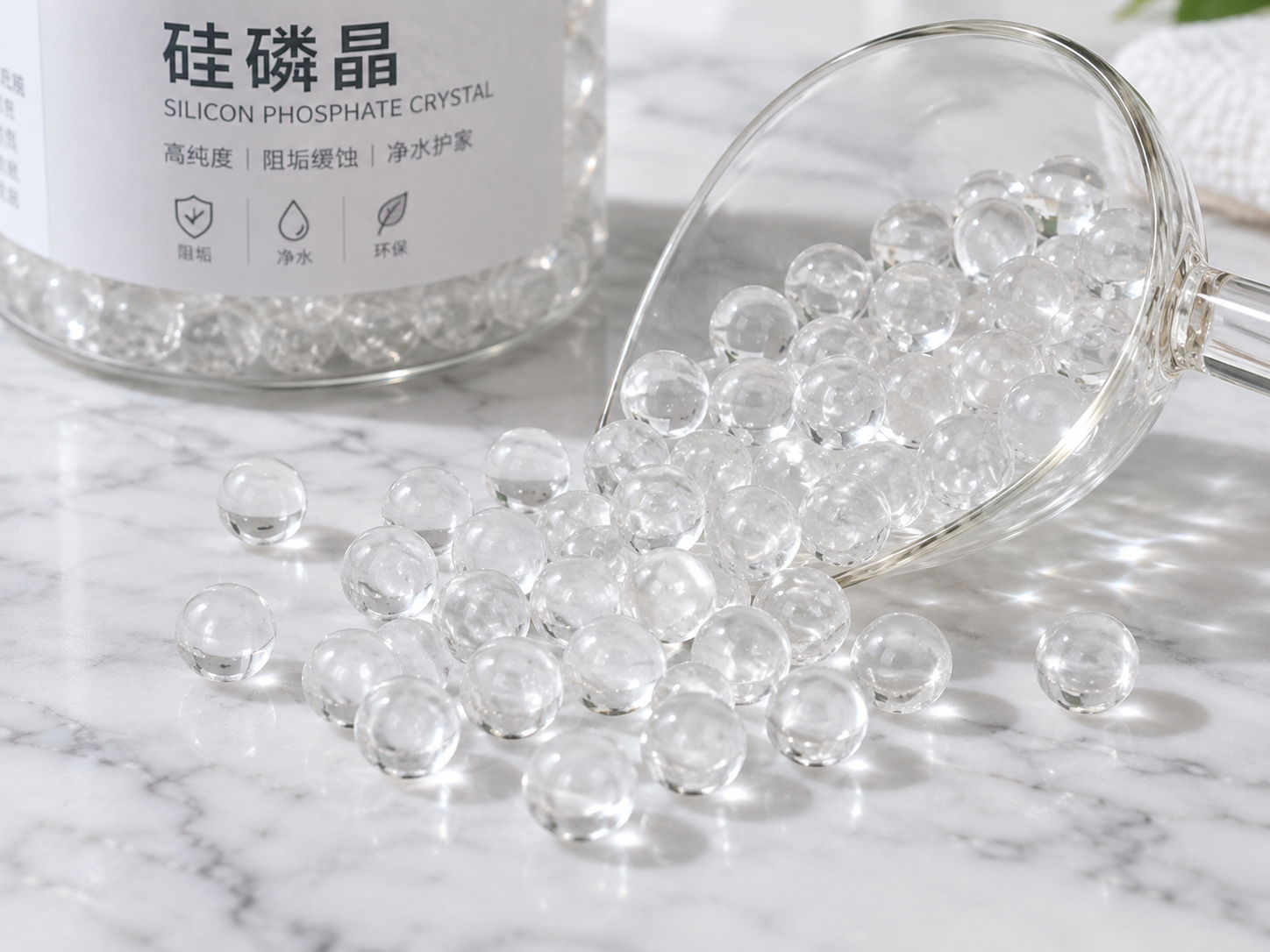
This is not a question about paperwork for paperwork’s sake. When you handle siliphos crystal or comparable long-chain polyphosphate media in a commercial water-treatment account, the technical record is the bridge between what was sold and what actually works on site. Missing or vague entries in that record are one of the most common reasons polyphosphate programs fail after the initial installation.
Why Trade-Account Records Matter More Than Most Buyers Assume
Polyphosphate products are not interchangeable commodities in the way that, say, sodium chloride might be. A siliphos-type crystal engineered for residential scale inhibition behaves differently from a short-chain sodium hexametaphosphate used in industrial boiler treatment, even though both fall under the polyphosphate umbrella. If your trade account only lists “polyphosphate — 25 kg bags,” you lose the ability to verify whether the right product reached the right application.
For distributors and equipment manufacturers who resell or integrate polyphosphate dosing systems, the customer record becomes a quality-control document. It answers three questions that matter during warranty claims, performance audits, or regulatory inspections:
- What exact product specification was delivered?
- What water conditions was it selected for?
- What dosing or contact parameters were agreed upon?
If you cannot answer all three from your records, the account is incomplete regardless of how tidy the invoice looks.
Core Technical Fields Every Polyphosphate Trade Account Should Include
Product Identity and Form
Record the specific product name or trade designation, the physical form (crystal, bead, granular, or liquid concentrate), and whether it is a single-component polyphosphate or a blended formulation that includes silicates, orthophosphates, or other co-agents. This distinction matters because blended products carry different dissolution rates and dosing logic than pure long-chain polyphosphate crystals.
Do not use shorthand like “PP product” without a cross-reference to a datasheet or batch certificate. Short-chain and long-chain polyphosphates have fundamentally different mechanisms: long-chain variants form protective thin films on pipe surfaces (threshold inhibition), while short-chain variants primarily sequester hardness ions in solution. Confusing the two in a record leads to wrong dosing assumptions.
Source-Water Baseline Data
The single most valuable entry in a polyphosphate trade account is the source-water profile the product was matched against. At minimum, record:
- Total hardness (as CaCO₃)
- Calcium and magnesium split (if available)
- pH at point of injection
- Temperature range of the water
- Total dissolved solids or conductivity (as a general indicator)
- Presence of iron, manganese, or silica if relevant to the application
Polyphosphate dosing is highly sensitive to pH and temperature. A crystal product that performs well at 20 °C and pH 7.2 may precipitate or lose effectiveness at 40 °C and pH 8.5. If the trade account does not capture these baseline conditions, no one can later judge whether a performance complaint is a product failure or a mismatch between product and water.
Dosing Parameters and Equipment Context
Specify the target dosage range (typically expressed in mg/L as P₂O₅ or as active polyphosphate), the type of dosing equipment (saturation feeder, proportional injector, batch dissolver), the flow rate the system was designed for, and the intended contact time or residence condition. For siliphos crystal installations that dissolve into a storage vessel before injection, note the saturation concentration and the vessel material, because some polymers and elastomers are incompatible with concentrated phosphate solutions.
Also record whether the application is for scale inhibition only, for corrosion inhibition in combination with a corrosion inhibitor, or for sequestration in a process water loop. These are distinct objectives with different technical requirements, and lumping them together in a trade account obscures what the customer actually needs.
Regulatory and Compliance Markers
If the end use involves potable water, food processing, or any regulated discharge, the account must note which certifications or compliance standards the product batch carries and whether those standards apply to the specific destination market. A product described as food-grade in one jurisdiction may not carry the same legal weight in another. Do not assume equivalence; document the actual certification reference and its scope.
For non-potable industrial or cooling-tower applications, note any environmental discharge limits that govern phosphate concentrations in the effluent, because polyphosphate eventually hydrolyses to orthophosphate and contributes to nutrient loading if not managed.
A Practical Checklist for Building the Record
Use this as a working template when you open or update a polyphosphate trade account. Not every field will apply to every transaction, but each one you skip should be a conscious decision, not an oversight.
| Field | Why It Matters | Common Mistake |
|---|---|---|
| Product designation and batch/lot number | Enables traceability if performance issues arise | Listing only the brand without batch data |
| Physical form and average particle size or mesh | Affects dissolution rate and feeder selection | Assuming all crystals dissolve at the same speed |
| Active component type (long-chain vs. short-chain) | Determines inhibition mechanism | Using “polyphosphate” as a single undifferentiated category |
| Source-water hardness, pH, temperature | Basis for dosing calculation | Recording only hardness and ignoring pH or temperature |
| Target dosage and dosing equipment type | Links product to application hardware | Noting dosage without specifying the feeder type |
| Application objective (inhibition, sequestration, corrosion) | Clarifies what success looks like | Describing every sale as “scale control” regardless of intent |
| Regulatory or certification reference | Protects both supplier and buyer legally | Copying a generic certificate without verifying scope |
| Customer’s equipment brand/model or system type | Helps troubleshoot integration problems | Recording only the end-user name, not the system |
What Belongs Outside the Trade Account — And Why
Not every piece of information about a polyphosphate product belongs in the trade account. Marketing claims, generic brochure language, and competitor comparisons have no place in a technical customer record. What does belong is any product-specific test data that was used to select the material — for example, a dissolution test result from the supplier that confirmed the crystal meets a minimum solubility at the customer’s water temperature.
Equally, do not conflate scale inhibition with scale removal or water softening in the record. Polyphosphate crystals prevent new scale from forming by interfering with crystal nucleation; they do not remove existing scale (that requires acid cleaning or mechanical methods) and they do not remove hardness ions from the water (that requires ion exchange or reverse osmosis). If the account describes the product as a “water softener,” the record is technically wrong and will mislead anyone who reads it later.
How to Use the Record After the Sale
A complete polyphosphate trade account pays for itself the first time a customer calls with a performance question. Instead of starting from zero, you can pull the baseline water data, the agreed dosage, and the equipment context — and determine within minutes whether the issue is product quality, dosing error, water-condition change, or equipment malfunction.
For distributors managing multiple accounts, a standardized record format also makes it possible to spot patterns: which water conditions consistently require higher dosages, which feeder types have the most integration problems, and which batches from a given production run performed differently. That kind of insight only exists if the technical data was captured correctly at the point of sale.
Frequently Asked Questions About Polyphosphate Trade Records
Do I need to record the polyphosphate chain length in the customer file?
Yes, if the product you supply distinguishes between long-chain (typically >10 phosphate units) and short-chain formulations. The chain length determines whether the product works primarily by threshold inhibition (long-chain, film-forming) or by sequestration (short-chain, ion-binding). If your product data sheet does not specify this, request clarification from the manufacturer before entering it into the account.
What if the customer does not provide full water analysis data?
Record what you have, note the gaps, and flag the account as incomplete. Do not guess or fill in plausible-looking numbers. A partial record is still better than a fabricated one, and it signals to the customer that you need better data to support the application properly.
Should I include the end-user’s maintenance schedule in the trade account?
Only if it directly affects polyphosphate performance — for example, the interval for replenishing crystal in a saturation tank or the schedule for cleaning the dosing injector. General facility maintenance that does not touch the dosing system does not belong in the polyphosphate-specific record.
Is it enough to attach a product datasheet to the account instead of entering the data?
No. A datasheet is a reference document; the trade account is a transaction record. The datasheet tells you what the product can do. The account tells you what was agreed for a specific customer, with specific water, at a specific dosage. Both are needed, and they serve different purposes.
How long should I retain polyphosphate trade-account records?
Retention depends on your jurisdiction and industry norms, but as a practical rule, keep records for at least as long as the product’s expected service life in the installed system, plus any additional period required by local environmental or food-safety regulations. When in doubt, check the applicable standard rather than guessing.
Next Step: Let Us Match the Right Record to Your Application
If you are setting up or auditing polyphosphate trade accounts for siliphos crystal, long-chain polyphosphate media, or related scale-inhibition products, the technical detail you capture now determines how easily you solve problems later. ENVO CHEMICAL supplies polyphosphate-based water-treatment materials and can provide the product-specific documentation you need to build accurate records — but we need to understand your side first.
Share your application type, the source-water conditions you are working with, the dosing equipment in use, and the destination market or regulatory context, and we will help you confirm which technical parameters must be in the file.
