
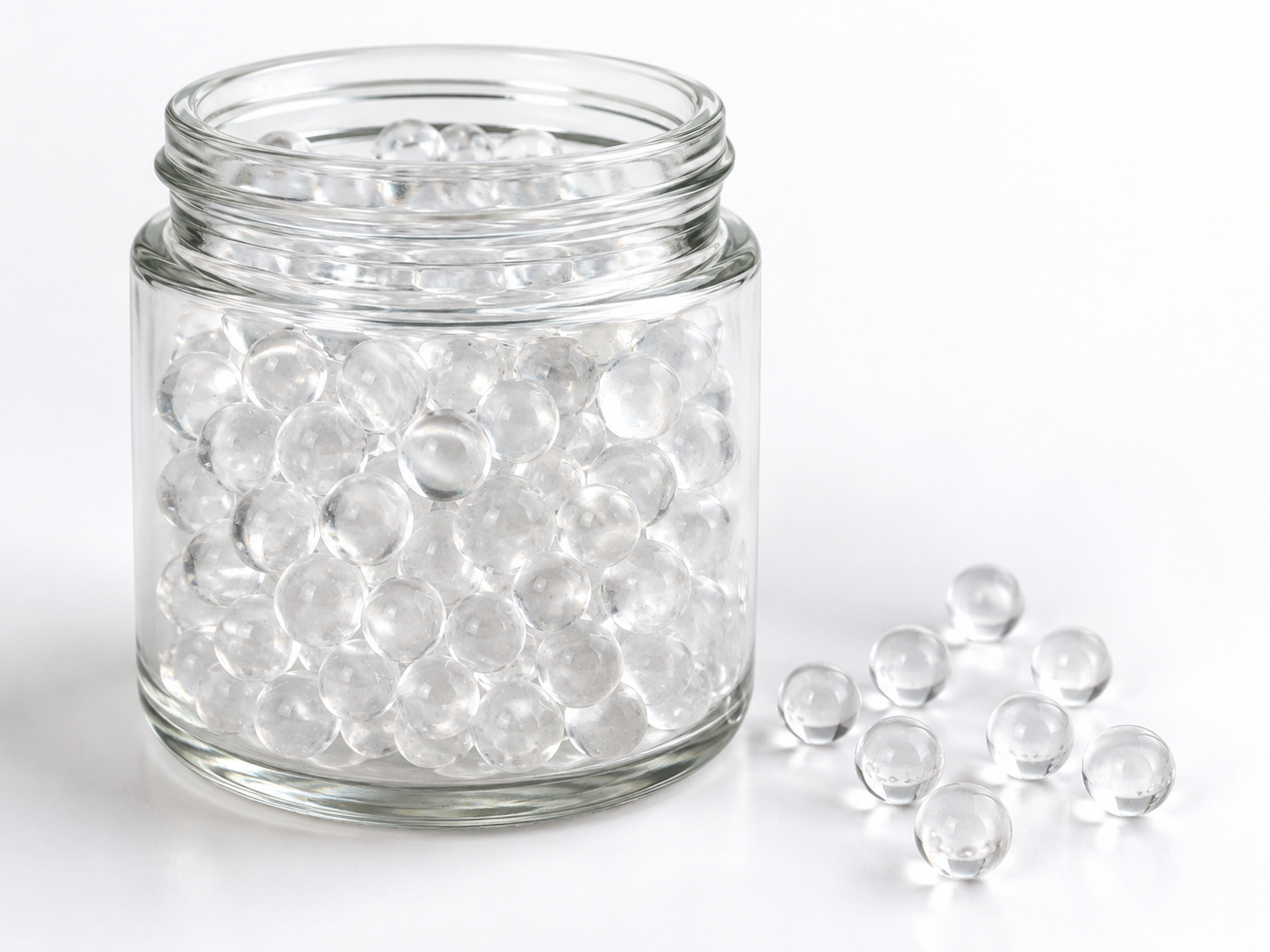
A polyphosphate opportunity brief for a cartridge manufacturer should answer one practical question: should this company design, test, and launch a cartridge that uses phosphate-based media for a specific water problem? The brief is not a product catalogue. It is a decision tool that links the application, source water, cartridge format, regulatory path, and validation plan. If any of those are missing, the project is still a concept—not an opportunity.
This article is written for product managers, filter engineers, and business development teams at cartridge manufacturers who are considering siliphos crystal, polyphosphate glass, or related water-treatment media. It explains what to include in the brief, what to verify, and where the technical boundaries lie.
What makes polyphosphate media different from ordinary filter media?
Ordinary filter cartridges remove suspended solids, sediment, chlorine, or specific contaminants. A polyphosphate cartridge usually works by releasing a small amount of phosphate into the water. The released phosphate can interfere with scale formation and, in some formulations, help control corrosion. That means performance depends on water chemistry, flow, contact time, temperature, and the dissolution behavior of the exact medium—not only on media weight or cartridge dimensions.
Polyphosphate media are not all the same. Siliphos crystal, phosphate crystal, slow-dissolving polyphosphate glass, and other phosphate-based materials may differ in composition, dissolution rate, particle size, and intended use. Treating the names as interchangeable can lead to incorrect claims and failed validation.
Define the water problem before choosing the material
Cartridge manufacturers often start with a material because a customer asked for it. A stronger brief starts with the problem. Use the definitions below to avoid mixing functions.
| Function | What it does | Typical mechanism | Not the same as |
|---|---|---|---|
| Scale inhibition | Reduces precipitation or adhesion of scale-forming minerals | Sequestration or threshold effect from phosphate | Softening or scale removal |
| Water softening | Removes hardness ions | Ion exchange or membrane separation | Polyphosphate treatment |
| Scale removal | Dissolves existing scale | Acid or chemical cleaning | Scale inhibition |
| Filtration | Removes particles | Mechanical or sorptive media | Polyphosphate release |
| Corrosion inhibition | Reduces metal loss in plumbing | Film formation or sequestration | Scale inhibition or disinfection |
| Disinfection | Inactivates microorganisms | Chemical or UV treatment | Any phosphate media |
A brief that says “softener cartridge” when the goal is scale inhibition will create wrong expectations. A brief that says “scale removal” when the product only inhibits new scale will create complaints. Precision at this stage saves months of development work.
The core sections of a polyphosphate opportunity brief
1. Application and target user
Describe where the cartridge will be used and who will replace it. Is it a point-of-use cartridge, a point-of-entry cartridge, or part of a larger water-treatment system? Is the end user residential, commercial, or industrial? Which equipment is being protected—a beverage machine, a boiler feed line, a humidifier, or another water-using device?
Be specific about flow demand, duty cycle, and maintenance expectations. “Protection of a beverage machine in a food-service setting” is more useful than “food service.” The application determines the cartridge size, media volume, and replacement strategy.
2. Source-water conditions
Polyphosphate performance is water-chemistry dependent. The brief should list the available baseline data:
- pH
- Hardness
- Alkalinity
- Total dissolved solids
- Temperature range
- Chlorine or chloramine level
- Iron, manganese, and silica
- Flow rate and pressure
- Duty cycle and seasonal variation
If values are unknown, mark them as open items. Do not let a supplier fill them with assumptions. For projects with multiple water sources, describe each source or the expected blend.
3. Cartridge and housing constraints
Phosphate media dissolve over time, so the cartridge cannot always be treated as a simple drop-in replacement. The brief should cover:
- Housing dimensions and connection type
- Media volume and available space
- Flow path and contact time
- Pressure-drop budget
- Orientation and mechanical retention
- Target replacement interval
- End-of-life indication, if required
Pre-filtration or post-filtration may be necessary to protect the medium or the downstream equipment. Those design choices should be recorded before sampling.
4. Material specification boundaries
Identify the exact material under consideration. Do not copy specifications from another supplier or from a similar-sounding product. The brief should request:
- Exact product name and form—crystal, bead, glass, or other
- Particle size distribution
- Dissolution behavior
- Phosphate content or active component
- Binder or encapsulation, if any
- Shelf life and storage conditions
- Regulatory and safety documentation for the intended market
Food-grade status alone does not establish drinking-water suitability. That must be verified for the exact product, application conditions, and destination market.
5. Regulatory and market requirements
Potable water applications require a clear compliance path. Check drinking-water contact regulations, treatment chemical rules, phosphate discharge limits, labeling requirements, and end-user claims. A material that is acceptable in one market may not be acceptable in another.
If the cartridge will be sold for non-potable use, state that boundary clearly. The brief should identify who is responsible for regulatory review and what documents are still missing.
6. Validation plan
Test the finished cartridge, not only loose media. The validation plan should define:
- Bench test conditions and field test conditions
- Worst-case water and normal water
- Phosphate release profile
- Scale inhibition or corrosion performance, if claimed
- Pressure drop and flow stability
- Cartridge integrity over time
- Acceptance criteria and comparison baseline
Performance claims should match the test method. A scale-inhibition claim needs scale-related evidence, not only a phosphate residual measurement.
7. Supply and commercial case
The brief should list what must be confirmed with suppliers: batch consistency, quality agreements, packaging, lead time, minimum order quantity, price, and change control. These items should be marked as unconfirmed until documented. Do not build a business case on assumed pricing or availability.
8. Go/no-go decision gate
End the brief with a decision. Proceed to prototype only if the application is defined, water data is sufficient, the regulatory path is feasible, and at least one supplier can provide a suitable medium with documentation. Pause if the goal is actually hardness removal, existing scale removal, or particulate filtration. Those are different problems.
One-page brief template
| Section | Key question | Evidence or output |
|---|---|---|
| Problem statement | Which water problem is being solved? | Scale inhibition, corrosion control, or another verified function |
| Application | Where will the cartridge be used? | Equipment, flow, duty cycle, and user |
| Water data | What is the water chemistry? | Test reports or customer data |
| Cartridge design | How will the media contact water? | Drawing, flow path, and media volume |
| Material | Which exact medium is proposed? | Technical data sheet, safety data, and regulatory documents |
| Compliance | Can it be sold in the target market? | Legal and regulatory review |
| Validation | How will success be measured? | Test protocol and acceptance criteria |
| Commercial | Can supply and cost work? | Supplier quotes, MOQ, lead time, and quality agreement |
| Decision | Proceed, pause, or reject? | Signed go/no-go criteria |
Common mistakes to avoid
- Calling polyphosphate media a water softener.
- Using “Siliphos” as a generic term for every polyphosphate medium.
- Transferring dissolution, dosage, or certification data from another product.
- Assuming food-grade status equals drinking-water approval.
- Ignoring phosphate discharge or wastewater rules.
- Testing only loose media instead of the finished cartridge.
- Designing the cartridge before defining source-water conditions.
- Promising a replacement interval without dissolution and field data.
- Forgetting that pre-filtration or post-filtration may be required.
When polyphosphate media may not be the right choice
Polyphosphate media are useful for certain scale-control and corrosion-control applications, but they are not universal. They may be a poor fit when:
- The customer needs hardness removal. Use ion exchange or reverse osmosis instead.
- Existing scale must be removed. Inhibition is preventive, not a descaling treatment.
- The goal is particulate filtration. Use mechanical filtration media.
- Phosphate discharge is restricted in the destination market.
- Water conditions vary widely and cannot be monitored or controlled.
- No regulatory path exists for potable water use in the target market.
Frequently asked questions
Is siliphos crystal the same as polyphosphate media?
Not necessarily. Siliphos is a trade name often associated with a slow-dissolving polyphosphate glass, but other polyphosphate media may have different formulations, particle sizes, and dissolution profiles. Always specify the exact product rather than relying on a common name.
Does polyphosphate media soften water?
No. Water softening removes hardness ions, usually by ion exchange. Polyphosphate media are generally used for scale inhibition and sometimes corrosion control. They do not reduce hardness in the way a softener does.
Can we put polyphosphate crystals into an existing filter cartridge?
Only after confirming compatibility. The housing, flow path, media retention, contact time, and pressure drop must be evaluated. A drop-in replacement is not safe to assume.
What should a cartridge manufacturer ask a supplier?
Ask for the exact product identity, technical data sheet, safety information, regulatory status for the intended market, recommended handling, batch consistency information, and any available application guidance. Do not accept copied specifications from a different product.
What data is needed before a prototype?
At minimum: application, target flow, source-water chemistry, cartridge dimensions, expected replacement interval, regulatory target, and success criteria. Missing data should be listed as open items, not guessed.
Turning the brief into a purchasing inquiry
Once the brief is complete, the inquiry to a material supplier can be precise. Instead of asking for “polyphosphate for filters,” state the water problem, the intended cartridge type, the source-water data, the target market, and the documentation required. That lets the supplier confirm whether a specific medium is technically relevant and what must still be validated.
If you are preparing a polyphosphate opportunity brief and want to discuss a specific water-treatment medium with ENVO CHEMICAL, share the following so the conversation stays technical:
- The application and equipment type
- The water problem to be solved—scale inhibition, corrosion control, or another verified objective
- Source-water conditions available at this stage
- Cartridge dimensions, flow path, and expected flow rate
- Destination market and regulatory requirements
- Required material form, specification, and documentation
- Estimated annual quantity and trial quantity
With those details, ENVO CHEMICAL can review whether a specific water-treatment medium fits the project and what information must be confirmed before sampling or validation. Please include your technical objective and any test results you already have. That is the fastest way to move from an opportunity brief to a realistic development plan.
