
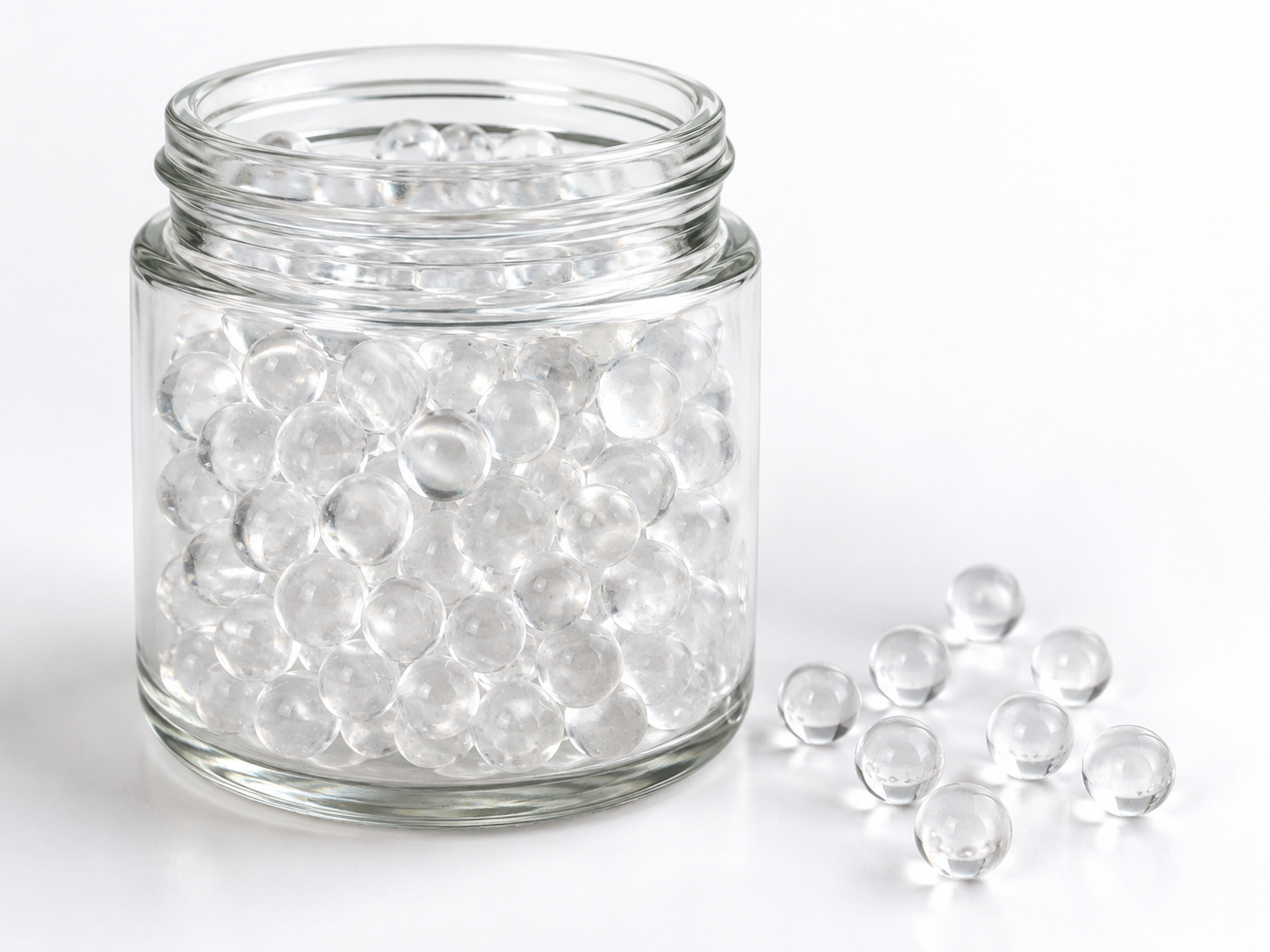
Why Lot Number Mismatches on Polyphosphate Export Documents Cause Problems
When your polyphosphate product leaves the factory, every accompanying document—the packing list, commercial invoice, certificate of analysis, and bill of lading—must carry the identical lot number. A single discrepancy can trigger customs holds, failed audits, or rejected shipments, especially for crystalline polyphosphate products such as siliphos-type media used in water treatment. The fix starts before the pallet is even sealed: you need a single source of truth for the lot identifier and a documented process that ties that identifier to every piece of paperwork generated for the export.
This is not a generic documentation tip. For buyers and importers of polyphosphate crystals, inconsistent lot codes mean you cannot reliably trace a batch back to its production record, its test results, or its specific performance characteristics. Whether you are a distributor stocking siliphos crystal for point-of-use applications or a water-treatment contractor specifying dosing rates per batch, lot integrity is what lets you stand behind every kilogram you sell.
What Counts as a “Lot Number” in Polyphosphate Export Shipments
A lot number (sometimes called a batch number or lot code) is the manufacturer’s unique reference for a defined quantity of product made under the same conditions—same raw-material charge, same production run, same packaging event. For polyphosphate crystals, this matters because even small variations in calcination temperature or raw-phosphate source can shift dissolution behavior and dosing requirements.
The lot number typically appears on:
- The inner bag or drum label
- The outer carton or pallet tag
- The certificate of analysis (CoA) issued with the shipment
- The packing list
- The commercial invoice
- The bill of lading or airway bill
- Any import declaration or customs entry form
If any one of these documents shows a different code—even a typo or a reformatted version—the chain of traceability breaks. Customs officials in many destination markets compare the lot on the CoA against the lot on the invoice and the physical markings. A mismatch can be treated as evidence of mislabelled or potentially non-conforming goods.
How to Keep Lot Numbers Aligned Across Every Export Document
1. Define the Lot Number at the Point of Production, Not at the Point of Shipping
The most common source of inconsistency is generating the lot code late in the process—for example, when the warehouse team assigns a shipping number that overwrites or duplicates the production batch code. The solution is to lock the production lot number at the moment the polyphosphate crystals are weighed, packaged, and sealed, then carry that exact string forward unchanged.
Ask your supplier whether their internal system generates the lot code automatically from the production date, line, and sequence, or whether it can be manually overridden. Automatic generation reduces human error. Manual override increases the risk that two different teams will use different conventions for the same physical batch.
2. Use a Single Master Document as the Reference
Before any export documents are drafted, the exporter should produce a single “shipment master sheet” that lists:
- Product name and grade (for example, food-grade polyphosphate crystal or siliphos-type corrosion inhibitor)
- Exact lot number as it appears on the physical packaging
- Net and gross weight per unit and per shipment
- Number of bags, drums, or cartons
- Intended HS code and destination country
Every downstream document—packing list, invoice, CoA—pulls the lot number from this sheet. Do not let the invoicing team or the logistics team type the lot number independently.
3. Standardise the Format of the Lot Number Itself
Inconsistency often hides in formatting rather than in the digits. One document may show “LOT-2024A-07” while another shows “2024A07” or “2024/A/07.” These look different to a customs scanner even though they refer to the same batch.
Agree on a single format with your polyphosphate supplier and require it on every label and every document. A common and unambiguous pattern is a fixed prefix, the year, a plant or line code, and a sequential number—for example, “PP-24-EN-0038.” The key is that the format does not change between production, quality control, and export documentation.
| Document | Lot number source | Common error |
|---|---|---|
| Physical label on bag/drum | Production system | Printed with wrong font or truncated |
| Certificate of Analysis | Quality department, pulled from master sheet | Copy-paste error or old template |
| Packing list | Warehouse, should mirror master sheet | Manual entry by shipping clerk |
| Commercial invoice | Finance or sales, should mirror master sheet | Reformatted for software compatibility |
| Bill of lading | Freight forwarder, based on shipper’s info | Typo during data entry |
4. Verify Before the Container Is Sealed
A final cross-check—sometimes called a “pre-seal audit”—compares the lot number on the physical packaging against the lot number on every document in the shipment file. This takes minutes but catches errors that would otherwise become expensive disputes weeks later. For polyphosphate crystals destined for drinking-water applications, this step is especially important because many importing authorities require full batch traceability as part of their compliance review.
Why This Matters Specifically for Polyphosphate Crystal Products
Polyphosphate crystals such as siliphos-type media serve a specific role in water treatment: they dose orthophosphate into the water stream to form a protective film inside pipes, reducing corrosion and limiting scale formation. This is not the same as ion-exchange softening, nor is it filtration or disinfection. It is a targeted corrosion-inhibition and scale-control strategy.
Because the product works through a controlled dissolution of phosphate chains, the exact composition and crystalline structure of each lot influence how quickly the material releases phosphate under given temperature, pH, and flow conditions. If a buyer receives a shipment with a mismatched lot number, they lose the ability to reference the specific CoA for that batch—meaning they cannot confidently verify that the dissolution rate, purity, or heavy-metal content meets the specification they ordered.
This is why distributors and end-users of polyphosphate media should treat lot-number consistency not as a paperwork formality but as a quality-assurance requirement. When you source siliphos crystal or similar polyphosphate products, confirm that your supplier’s export process includes the controls described above. If the supplier cannot guarantee that every document carries the same lot code as the physical product, ask for their standard operating procedure and verify it before you commit to a volume order.
Common Questions About Polyphosphate Export Documentation
Does the lot number have to match the manufacture date?
Not necessarily, but it often includes the date or a code derived from it. What matters is that the same lot number appears everywhere—on the label and on every export paper. If the date is embedded in the lot code, make sure no document drops or reformats that segment.
What if I need to split one production lot into multiple shipments?
The original lot number stays the same across all split shipments. Each packing list should state the same lot number with a split-shipment notation (for example, “Lot PP-24-EN-0038, Shipment 1 of 3”). Do not create new lot numbers for each partial shipment unless the supplier’s quality system explicitly defines sub-lots.
Can a distributor re-label polyphosphate crystals with their own lot number?
Re-labelling is possible in some markets, but you must retain a clear link to the original manufacturer’s lot number for traceability. If you remove or overwrite the factory lot code, you break the chain of custody and may violate import regulations in jurisdictions that require original batch identification for water-treatment chemicals.
Is a certificate of analysis always required for polyphosphate crystal exports?
It depends on the destination country’s import rules and on the end use. For products intended for drinking-water contact, many authorities expect a CoA confirming compliance with relevant standards. Even where it is not legally mandatory, a CoA tied to the correct lot number protects both the buyer and the seller in the event of a quality dispute.
How ENVO CHEMICAL Handles Lot Traceability for Export Shipments
ENVO CHEMICAL supplies polyphosphate crystal products for water-treatment applications, including siliphos-type corrosion-inhibition media. For export orders, the company generates documentation that references a single production lot number across the packing list, CoA, and invoice. If you are evaluating ENVO CHEMICAL as a source for polyphosphate crystals and need to confirm their specific documentation process for your destination market, the details you need are available on request.
Ready to Source Polyphosphate Crystals with Reliable Batch Documentation?
If you are an importer, distributor, or water-treatment contractor looking for polyphosphate crystal products where lot-number consistency across export documents is guaranteed, share the following with ENVO CHEMICAL and we can respond with the information most relevant to your situation:
- Your intended application (for example, residential point-of-use, commercial building system, industrial cooling loop)
- Source-water characteristics you need to treat (pH range, hardness, temperature if known)
- Required product grade and any certification expectations
- Approximate quantity per order and destination country
- Whether you need a specific HS code or regulatory document format
