
Why Shared-Container Polyphosphate Shipments Carry Unique Risks
Ordering polyphosphate media such as siliphos crystals in shared containers—whether pallets, drums, or bulk sacks loaded alongside unrelated cargo—introduces measurable risks of odor transfer and cross-contamination that can compromise product performance before it ever reaches a treatment system. The core issue is not the polyphosphate itself but the logistics environment: moisture, residual chemicals from previous loads, and prolonged exposure to ambient conditions inside a container used for multiple shipments. For water-treatment professionals and procurement teams, understanding these risks is essential before committing to a bulk purchase.
Polyphosphate products function as scale inhibitors. They sequester hardness ions (primarily calcium and magnesium) to prevent crystalline deposit formation on pipes, heat exchangers, and appliances. They do not soften water in the ion-exchange sense, nor do they disinfect or remove existing scale. When the product arrives compromised—smelling of solvents, fuels, or foreign odors, or carrying particulate contamination from a prior cargo—the treatment objective is immediately at risk.
What Actually Causes Odor Problems in Polyphosphate Shipments
Is the odor coming from the polyphosphate itself?
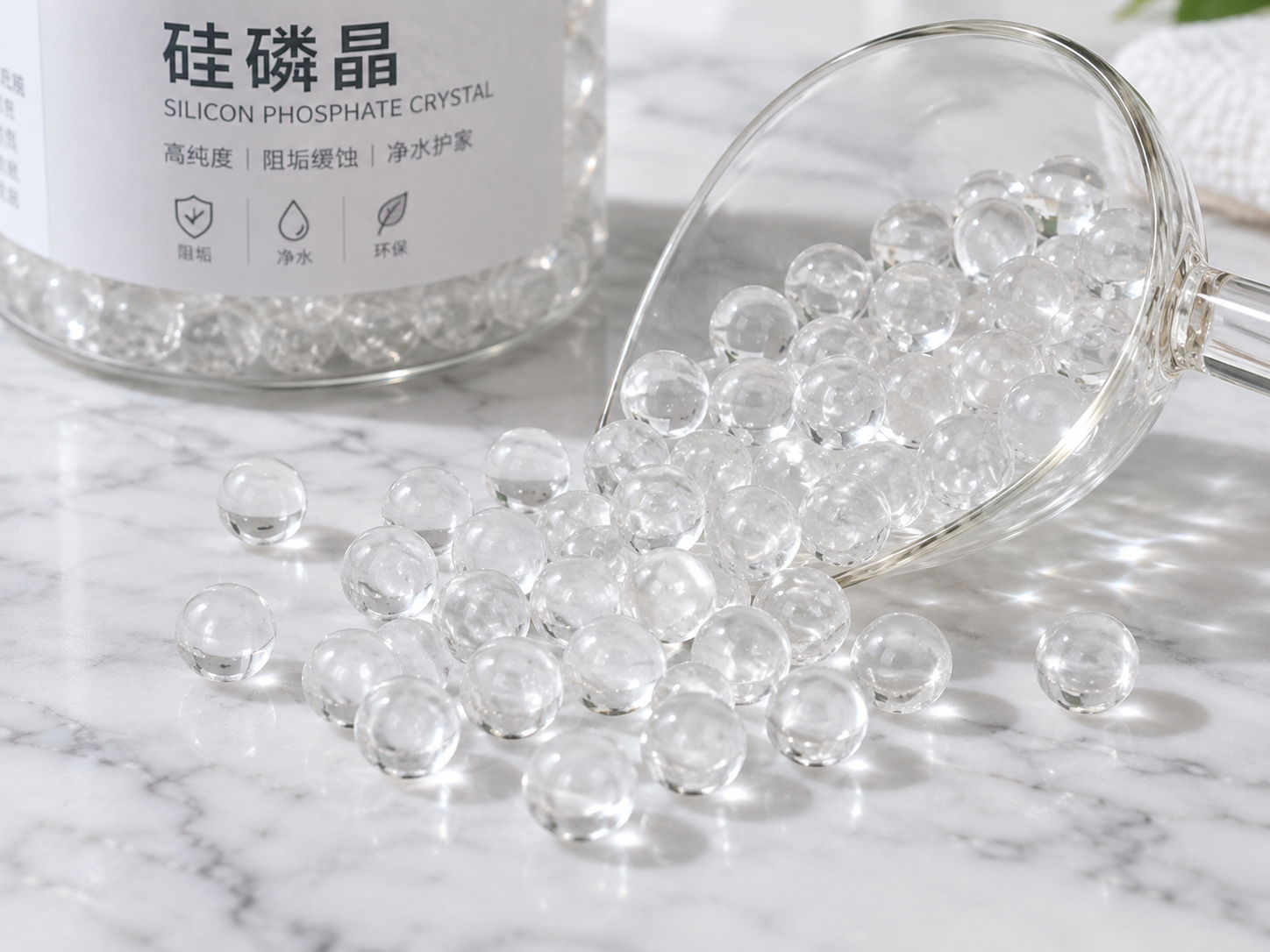
High-quality siliphos-type crystal polyphosphate is typically a glassy, glass-like solid with little to no detectable smell under normal conditions. If a shipment arrives with a strong or unfamiliar odor, the source is almost certainly external—residues left inside the container, off-gassing from packaging materials, or absorption of volatile compounds during transit. Polyphosphate is hygroscopic to a degree; it can absorb moisture and, with that moisture, volatile organic compounds present in the surrounding air or on container walls.
Common odor sources in shared containers include:
- Previous chemical cargoes: Residues of chlorine-based products, solvents, or agricultural chemicals that were not fully purged.
- Container lining or paint: Some liner materials emit volatile compounds, especially when heated during ocean or overland transit.
- Moisture and microbial activity: If the container was not sealed or was exposed to rain, damp conditions can produce musty or sulfurous smells that polyphosphate crystals readily absorb.
How significant is odor as an indicator of contamination?
Odor is a useful but imperfect early warning. A faint, non-chemical smell may indicate nothing more than temporary surface absorption that dissipates after the product is exposed to air in a dry environment. A persistent, sharp, or chemical odor, however, suggests deeper contamination that could affect dissolution rates, dosing accuracy, or interaction with downstream water chemistry. In such cases, the batch should be isolated and tested before any portion enters a treatment line.
Cross-Contamination Risks Beyond Odor
Odor is only one symptom. The more insidious risk in shared containers is physical and chemical cross-contamination that may not be immediately apparent.
| Contamination Type | How It Occurs in Shared Containers | Potential Effect on Polyphosphate Performance |
|---|---|---|
| Particulate carryover | Dust or granules from a previous solid cargo settle on or mix with polyphosphate crystals | Altered dissolution profile; possible clogging of dosing equipment |
| Chemical residue | Traces of acids, alkalis, or oxidizers from prior loads remain on container surfaces | Premature degradation of polyphosphate chains; reduced sequestration capacity |
| Moisture intrusion | Shared containers may have compromised seals or be opened multiple times | Clumping, caking, accelerated hydrolysis, microbial growth |
| Biological contamination | Organic residues or damp conditions foster mold or bacterial colonization | Unsuitable for potable-water applications without verified treatment; fouling risk |
Note that the presence of any foreign material does not automatically disqualify a polyphosphate product for non-potable scale inhibition. What it does demand is verification—through visual inspection, dissolution testing, and, where required, water-quality analysis—before the material is committed to service.
When Shared Containers Make Sense and When They Don’t
Not every bulk polyphosphate order needs a dedicated, single-use container. For large-volume industrial or municipal applications where the receiving facility has robust incoming-inspection protocols and dry storage, shared-container shipping can be a cost-effective option. The decision hinges on three factors:
- Volume and frequency: One-off or low-volume orders benefit more from dedicated packaging because the per-unit container cost is justified by reduced risk.
- Receiving capability: Facilities that can test every incoming lot for dissolution rate, visual purity, and odor have more flexibility. Those without lab access should insist on dedicated or at least verified-clean containers.
- End-use sensitivity: If the polyphosphate will be used in a system serving drinking water—or in food-processing rinse water—the tolerance for any contamination is effectively zero. Shared containers are generally inadvisable for these applications unless the supplier can document container cleaning and segregation procedures.
Practical Steps to Protect Your Polyphosphate Order
Whether you are specifying siliphos crystals or another polyphosphate medium, the following checklist applies to any shared-container purchase:
- Request container history: Ask the supplier or freight forwarder what the container carried previously and whether it was cleaned or lined. A written statement is preferable to a verbal assurance.
- Specify packaging integrity: Demand inner liners (polyethylene or equivalent) that are sealed and intact. Barrier bags inside drums or fiber sacks add a second layer of protection.
- Include inspection criteria in the purchase order: State explicitly that the product must be free of foreign odor, visible particulates, caking, and discoloration. Define what happens if these criteria are not met—return, replacement, or credit.
- Plan for quarantine: Upon receipt, store the material separately from other chemicals for a minimum period sufficient for visual and olfactory checks, and ideally for a dissolution test against a known water sample.
- Document everything: Photograph the container seal, the inner packaging, and the product itself on arrival. This record protects both buyer and supplier if a dispute arises.
Clarifying What Polyphosphate Can and Cannot Do
A frequent source of confusion—and occasionally of disappointment with a product—is the assumption that polyphosphate media performs functions it does not. To keep expectations aligned with reality:
- Scale inhibition: Polyphosphate keeps calcium and magnesium in solution, preventing new deposit formation. It is effective for this purpose within its designed dosage range and water-chemistry window.
- Not scale removal: Existing hard-scale deposits require mechanical or acid cleaning. Polyphosphate will not dissolve what is already there.
- Not water softening: It does not remove hardness permanently. If the polyphosphate dose is interrupted or overdosed, scale can form rapidly.
- Not corrosion inhibition: Some formulations include minor corrosion-control additives, but polyphosphate alone is not a substitute for a dedicated corrosion inhibitor in aggressive water.
- Not disinfection: It has no biocidal action. Systems using polyphosphate for scale control still need separate treatment if microbial control is required.
Understanding these boundaries helps buyers evaluate whether a polyphosphate product—delivered in whatever container—is the right choice for their specific problem, or whether a different treatment technology is needed.
Sourcing Considerations for Bulk Polyphosphate Orders
When evaluating suppliers for siliphos crystal or comparable polyphosphate media, look beyond unit price. Ask about:
- The composition and form of the polyphosphate (sodium hexametaphosphate, tetrasodium pyrophosphate, or a blend)—because performance varies with the specific chemistry.
- Whether the supplier can accommodate dedicated-container requests for sensitive applications.
- What documentation accompanies each shipment: certificates of analysis, container-cleanliness statements, or third-party test reports.
- The supplier’s experience with your destination market’s regulatory environment, particularly if the product is intended for any application involving potable water.
ENVO CHEMICAL supplies polyphosphate-based water-treatment media and can discuss container options, product specifications, and documentation requirements for specific projects. We do not assume that every polyphosphate product meets every standard—we work with buyers to confirm fit for the intended use.
Ready to Place a Polyphosphate Order?
If you are planning a bulk purchase of siliphos crystals or a related polyphosphate scale inhibitor and need to decide between shared or dedicated container shipping, the most efficient next step is to share the details that matter: your application type, source-water hardness and pH range, the equipment or dosing system you will use, the required quantity, your destination country, and whether the water treated is potable. With that information, a supplier can advise on container selection, packaging, and the documentation you should require—so the product arrives ready to perform, not compromised by the journey.
