
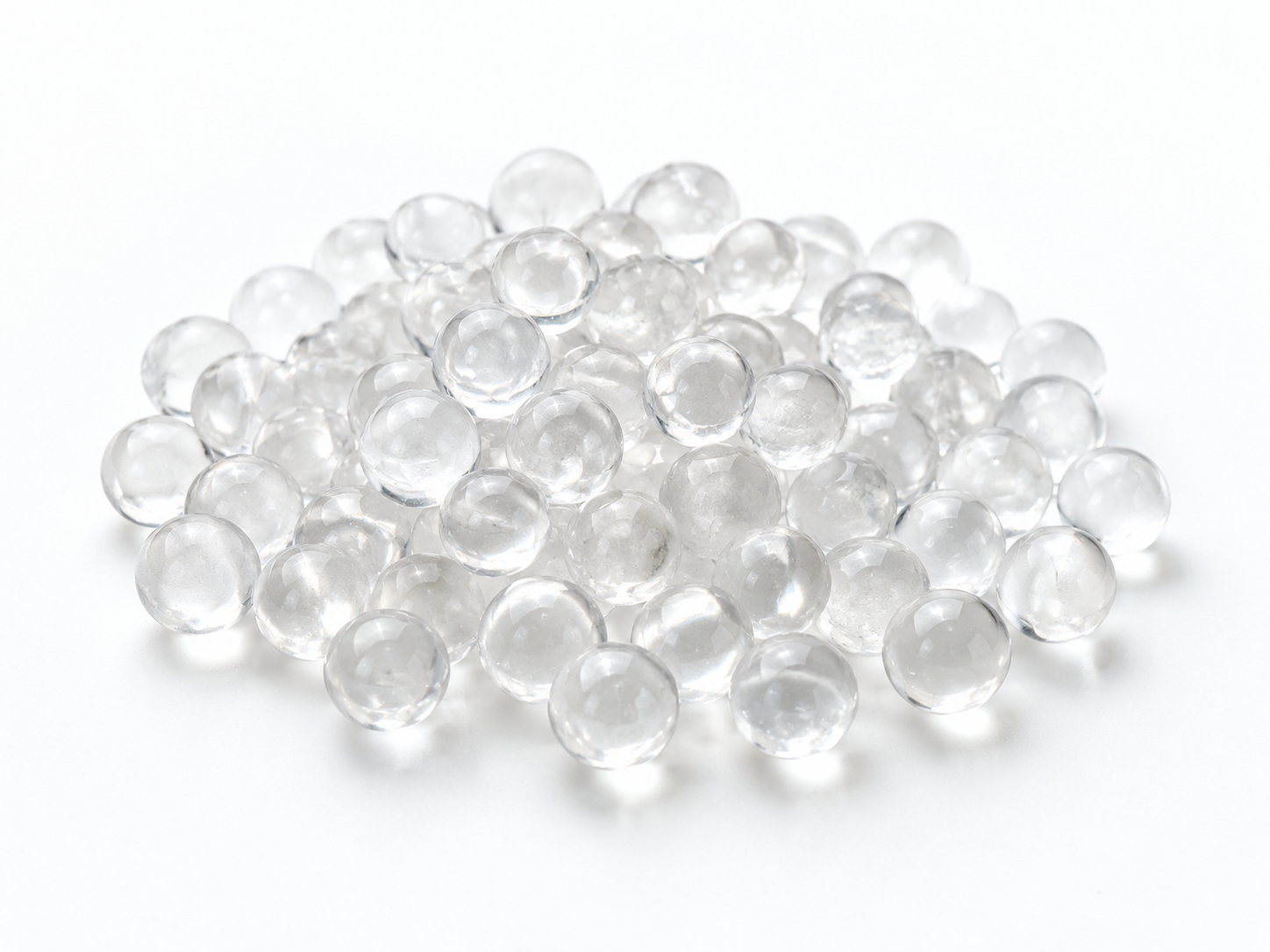
Matching an urgent Siliphos replacement order to a failed lot is primarily a documentation and specification exercise, not a guessing game. The fastest way to get the right replacement is to gather three things: the failed lot’s identity (lot number, manufacturer, and technical data sheet), the physical and chemical characteristics of the crystals, and the operating conditions that led to the failure. With those details, a supplier can compare their current production against your requirements and recommend a match—or tell you what cannot be matched.
Why Matching the Failed Lot Is a Specification Problem, Not Just a Brand Problem
Siliphos is a trade name for a slowly dissolving polyphosphate crystal used mainly for scale inhibition and corrosion control in water systems. It is not a water softener, and it does not remove hardness ions through ion exchange. Different manufacturers may use different polyphosphate chemistries, crystal size distributions, binders, or additives. Two products that both carry the name “Siliphos” or “polyphosphate crystal” can behave differently in the same feeder and water chemistry.
When a lot fails—whether it dissolves too quickly, clogs the feeder, stops inhibiting scale, or causes other problems—the replacement must match the original specification as closely as possible. If you only order “the same product name,” you may receive a material that differs in dissolution rate, particle size, or phosphate content. That can extend the downtime you are trying to avoid.
Step 1: Recover the Failed Lot’s Identity and Documentation
Check the Packaging and Labels
Start with the failed lot’s original packaging. Record every piece of information printed on the label or bag:
- Manufacturer name and product name
- Lot number or batch code
- Production date and expiry date (if shown)
- Crystal size range (e.g., a mesh or millimeter range)
- Net weight
- Any certification marks or statements (e.g., food grade, NSF/ANSI 60, or other)
Photograph the label and the crystals themselves. These photos will help suppliers visually compare their material to your failed lot.
Request the Lot-Specific Certificate of Analysis (CoA)
The CoA is the single most useful document for matching. It should list the actual test results for that production lot, not just typical values. Look for parameters such as:
- Phosphate content (often expressed as % P2O5)
- pH of a prepared solution
- Bulk density
- Particle size distribution
- Dissolution rate or solubility
- Moisture content
- Appearance and color
If you do not have the CoA, contact the original supplier or distributor. If they are unresponsive or out of business, you will need to characterize the remaining material yourself (see Step 2).
If the Original Supplier Cannot Help
In an urgent situation, do not wait indefinitely for documents. Proceed with physical and laboratory testing in parallel. A contract laboratory can measure the key parameters listed above using standard methods for phosphate analysis, particle size distribution, and dissolution testing. This will give you a specification to match, even without the original paperwork.
Step 2: Characterize the Failed Lot with Physical and Laboratory Tests
Visual Inspection and Photo Documentation
Examine the remaining crystals from the failed lot. Note:
- Color and shape (e.g., clear, white, glassy, irregular)
- Presence of dust, fines, or broken pieces
- Foreign matter or discoloration
- Any caking or clumping
These observations are not a substitute for chemical analysis, but they help a supplier quickly rule out obviously different materials.
Laboratory Testing to Confirm Key Parameters
Ask a qualified laboratory to test the failed lot for the same parameters that would appear on a CoA. The most important for matching are:
- Phosphate content – indicates the active ingredient concentration.
- Particle size distribution – affects dissolution rate and feeder performance.
- Bulk density – affects feeder calibration and hopper capacity.
- Dissolution rate – how quickly the crystal releases polyphosphate under controlled conditions.
- pH of solution – can influence corrosion inhibition and downstream water chemistry.
Use the same test conditions that your application uses, or as close as possible. For example, if your system operates at a specific temperature and flow rate, ask the lab to mirror those conditions. This makes the comparison more meaningful.
Step 3: Document the Application and the Failure Symptoms
Was the Product Actually the Problem?
Before ordering a replacement, confirm that the failed lot is the root cause. Polyphosphate crystals can underperform for reasons unrelated to the material itself, including:
- Incorrect dosage or feeder setting
- Feeder malfunction or blockage
- Changes in water chemistry (hardness, pH, temperature, flow)
- Depletion of the crystal bed
- Improper storage (moisture, heat, contamination)
If the application conditions changed, simply matching the old lot may not solve the problem. The replacement must be selected for the current conditions.
Application Data Checklist
Record the following information for your system. This will help any supplier recommend a suitable replacement:
- Water source (municipal, well, surface, etc.)
- Water hardness, pH, temperature, and alkalinity (as recent test results)
- Flow rate and system volume
- Feeder type and model
- Current dosage setting and actual dosage (if known)
- Replacement frequency of the crystal bed
- Observed symptoms: scaling, corrosion, pressure drop, discoloration, or other
- When the symptoms started relative to the failed lot
Step 4: Build a Replacement Match Specification
Use the table below to organize the comparison between the failed lot and any proposed replacement. Fill in the values from your CoA, lab tests, or supplier documents. If a value is unavailable, mark it as “to be confirmed” and ask the supplier for their typical and guaranteed specifications.
| Parameter | Why It Matters | Where to Find It | What to Confirm with Supplier |
|---|---|---|---|
| Polyphosphate type and % P2O5 | Determines scale inhibition and corrosion control performance. | CoA, TDS, or lab test. | Whether their product uses the same polyphosphate chemistry and active content. |
| Crystal size distribution | Affects dissolution rate, feeder flow, and dust generation. | CoA, particle size analysis. | Mesh or mm range; whether fines are removed. |
| Bulk density | Affects feeder calibration and hopper capacity. | CoA or lab test. | Typical and minimum/maximum values. |
| Dissolution rate | Controls how long the crystal lasts and how much polyphosphate is released. | Lab test under your conditions. | Test method used and whether it matches your application. |
| pH of solution | Can influence corrosion inhibition and downstream water quality. | CoA or lab test. | pH of a 1% solution or as specified. |
| Moisture content | Affects caking, storage stability, and dissolution. | CoA. | Maximum moisture specification. |
| Appearance and color | Quick visual check against the failed lot. | Photos and physical sample. | Whether the appearance is representative of their standard production. |
| Certifications (e.g., NSF/ANSI 60) | Required if the product contacts drinking water. | Supplier documentation. | Whether the exact product and lot are certified for your market. Do not assume “food grade” equals drinking water approval. |
If you cannot match every parameter exactly, determine which differences are acceptable. For example, a slightly different particle size may be tolerable if the feeder can be adjusted. However, a different polyphosphate chemistry or a significantly different dissolution rate may require re-validation before use.
Step 5: Communicate the Urgent Requirement Clearly
When you contact suppliers for an urgent replacement, provide a single, organized package of information. This reduces back-and-forth and speeds up quotation and sampling. Include:
- The failed lot’s product name, manufacturer, and lot number (if known).
- Photos of the packaging label and the crystals.
- The CoA or lab test results for the failed lot.
- Your application data checklist (Step 3).
- The specific parameters you must match and any acceptable tolerances.
- Quantity required and packaging preference.
- Destination and required delivery date.
- Any certification requirements for your market.
Ask the supplier to provide a CoA for the proposed replacement lot before shipment. If time allows, request a small sample for a quick dissolution or feeder test. Even a few hours of testing can prevent a larger failure.
How to Avoid a Repeat Failure
Once the urgent replacement is in place, review your maintenance and monitoring practices:
- Keep a log of lot numbers, CoAs, and installation dates.
- Test water chemistry regularly and adjust dosage if conditions change.
- Inspect and clean the feeder according to the manufacturer’s instructions.
- Store crystals in a dry, cool area away from contaminants.
- Retain a sample of each lot for future comparison.
FAQs
What if I cannot find the failed lot’s CoA?
You can still match the replacement by using laboratory testing on the remaining crystals. Focus on phosphate content, particle size distribution, bulk density, and dissolution rate. A supplier can compare these results to their own product specifications.
Can I substitute a different polyphosphate crystal as a direct replacement?
Not automatically. Different polyphosphate chemistries, crystal sizes, and dissolution profiles can change performance. A substitution should be evaluated against your application conditions and, if possible, tested before full-scale use.
Is Siliphos a water softener?
No. Siliphos and similar polyphosphate crystals are scale inhibitors and corrosion inhibitors. They do not remove calcium and magnesium from water the way an ion-exchange water softener does. They work by sequestering hardness minerals and forming a protective film on metal surfaces.
How do I verify that the replacement matches the failed lot?
Compare the replacement lot’s CoA against the failed lot’s specification. If no CoA is available for the failed lot, compare laboratory test results. For critical applications, run a small-scale dissolution or feeder test before committing to full production.
Does food grade mean the product is approved for drinking water?
No. Food grade refers to the material’s suitability for contact with food in general, but drinking water contact requires specific certification for the exact product, application, and destination market—such as NSF/ANSI 60 or an equivalent local standard. Always verify the certification status with the supplier.
If you are matching an urgent Siliphos replacement to a failed lot, ENVO CHEMICAL can help you compare specifications and identify a suitable polyphosphate crystal. To respond quickly, send us the failed lot’s TDS or CoA (if available), a photo of the packaging and crystals, your application details (water chemistry, feeder type, flow rate, and observed symptoms), the required quantity, and any certification requirements for your destination. Our technical team will review the information and provide options or clarify what additional data is needed.
