
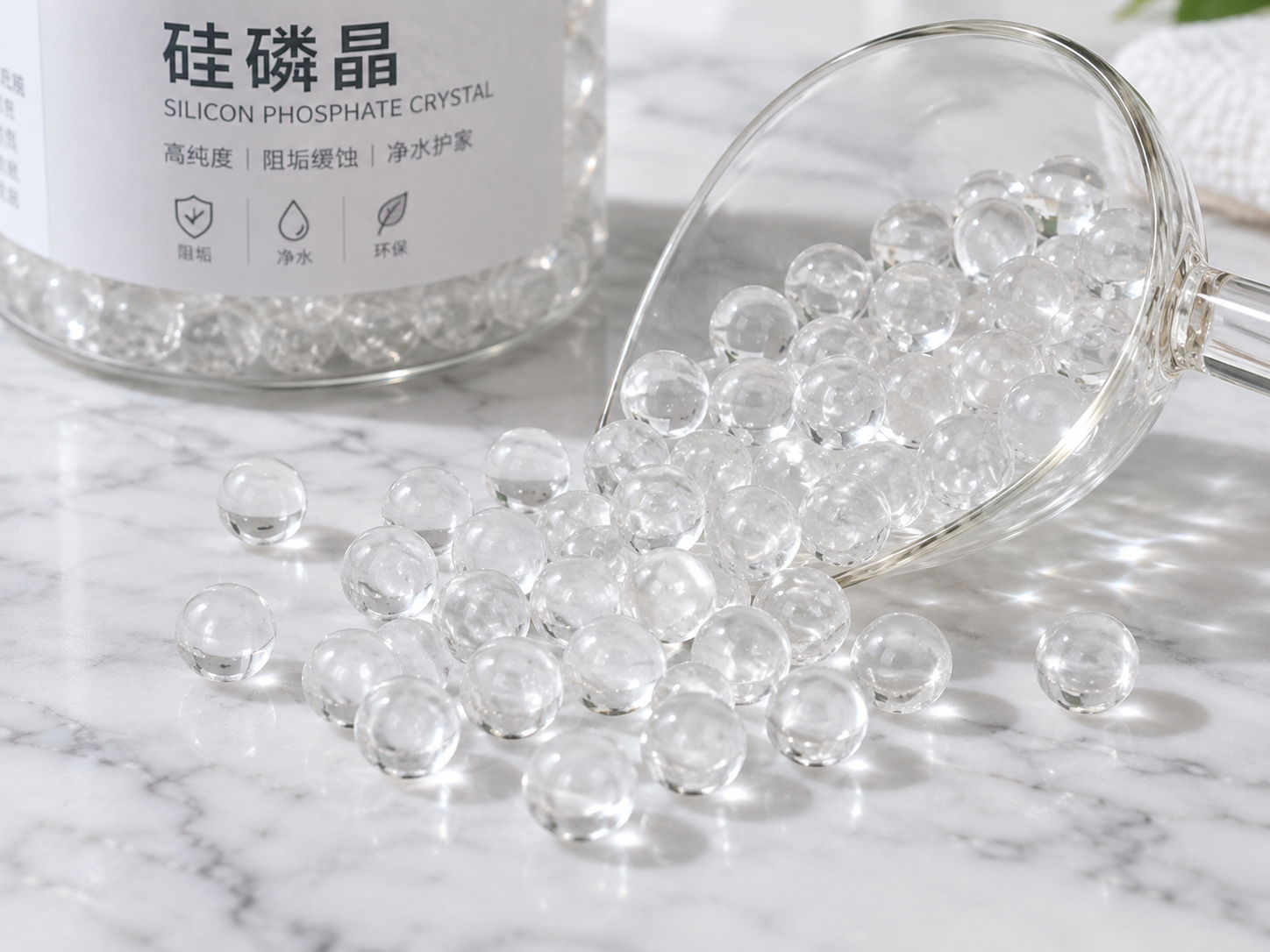
Why Your Polyphosphate Reorder Must Reference the Installed Model and Previous Refill Grade
When you place a reorder for polyphosphate treatment media, the single most common cause of wrong shipments is failing to state the exact model currently installed and the grade that was supplied on the previous refill. Suppliers cannot reliably cross-reference polyphosphate orders without both pieces of information because the same crystal appearance can mask different formulations, certified grades, and dosing characteristics. If your reorder email omits either detail, you risk receiving media that does not match your equipment’s dosing requirements, your regulatory compliance needs, or your water chemistry profile.
This article explains what “installed model” and “previous refill grade” actually mean in a polyphosphate context, why they are not interchangeable, and how to capture both details so your next refill arrives correct the first time.
What “Installed Model” Refers to in Polyphosphate Systems
The installed model is the specific polyphosphate media product or system configuration that is physically mounted in your dosing unit, inline cartridge, or vessel. It is not simply “polyphosphate” or “siliphos crystal” as a generic category—it is the particular formulation, bead size, crystal morphology, and certification level that was selected for your original installation.
How installed models differ even within the same product family
Polyphosphate media for scale control typically comes in several structural and compositional variants:
- Crystal morphology: Some products are sold as rounded beads, others as irregular granules or fine crystals. Bead shape affects dissolution rate, contact time, and how the media packs inside a dosing column.
- Phosphate chain length: Short-chain polyphosphates behave differently from long-chain types in terms of threshold inhibition and residual phosphate levels downstream. The installed model encodes this distinction.
- Certification tier: A food-grade or NSF/ANSI 60-listed variant is not the same as an industrial-grade variant, even if both appear as clear or white polyphosphate crystals. Using the wrong tier can void compliance documentation.
- Dosing format: Some installations use bulk bags, others use pre-measured cartridges or sachets. The model designation often includes the packaging and dosing format intended for that equipment.
If you cannot locate the original model number, check the dosing unit’s nameplate, the media bag label from the last delivery, or the installation invoice. Sending a photograph of the existing media and the equipment housing to your supplier will also help them confirm the correct match.
What “Previous Refill Grade” Means and Why It Matters
The previous refill grade identifies the purity and regulatory classification of the polyphosphate you received most recently. This is distinct from the model because the same model number can occasionally be supplied in different grades depending on the destination market, the customer’s certification requirement, or a formulation update by the manufacturer.
Grade matters for three practical reasons:
- Regulatory compliance: If your application involves potable water, you must confirm that the specific grade you receive is approved for that use in your jurisdiction. “Food grade” is a description, not a universal certification—each grade must be verified against the relevant standard and market.
- Dosing calibration: Higher-purity grades often have a slightly different active-phosphate concentration than standard industrial grades. Switching grades without adjusting the dosing rate can lead to under-treatment (scale formation) or over-treatment (excess phosphate in effluent).
- Compatibility with existing inventory: If you blend new media with leftover stock from a prior order, mismatched grades can produce inconsistent dissolution and unpredictable performance.
When you write your reorder email, state the grade exactly as it appeared on the previous shipment label—for example, “NSF/ANSI 60 listed, food-grade polyphosphate, long-chain” or whatever wording your supplier used. Do not abbreviate or paraphrase.
Scale Inhibition versus Water Softening: A Distinction That Affects Your Reorder
A frequent source of confusion in polyphosphate reorders is the assumption that polyphosphate “softens” water. It does not. Polyphosphate functions as a sequestrant and threshold inhibitor: it binds calcium and other hardness ions in solution, preventing them from crystallizing as scale on pipe walls and heat-exchange surfaces. The water’s hardness level does not decrease; the ions remain dissolved but are held in a non-scaling form.
This distinction matters when you reorder because:
- If your goal is actual hardness reduction, polyphosphate is the wrong technology and you need an ion-exchange softener instead.
- If your goal is corrosion control in addition to scale inhibition, some polyphosphate grades include orthophosphate blends designed for that purpose, and the grade you specify on reorder must reflect this.
- If your system includes a downstream filtration stage, the particle size of the polyphosphate crystals (part of the installed model) affects whether media fines clog the filter.
Confirm your treatment objective before you write the reorder. If you are unsure whether polyphosphate is the correct approach for your current water chemistry, request a water analysis review rather than simply repeating the last order.
A Simple Checklist for Accurate Polyphosphate Reorder Emails
Use this list before you send any reorder request. Each item reduces the chance of a mismatch:
| Item to include | Why it matters | Where to find it |
|---|---|---|
| Exact model number or product name from the installed unit | Ensures the correct crystal type and format | Equipment label, original invoice, media bag |
| Previous refill grade as printed on the last shipment | Confirms regulatory tier and active-phosphate level | Previous delivery label or certificate of analysis |
| Quantity needed (weight or number of units) | Prevents under- or over-ordering | Usage rate multiplied by desired coverage period |
| Application description (e.g., commercial boiler, residential drinking-water system, cooling tower) | Helps supplier flag if the grade needs additional verification | Your own system documentation |
| Source-water conditions if known (hardness, pH, temperature range) | Allows supplier to confirm the grade is still appropriate | Recent water test report |
Common Mistakes That Lead to Wrong Polyphosphate Shipments
Even experienced buyers make these errors when reordering:
- Saying “the same as last time” without attaching the last order details. Suppliers may have updated their product line, and “last time” may no longer be available under that exact grade.
- Confusing “food grade” with “NSF/ANSI 60 certified for drinking water.” Not all food-grade polyphosphate carries the specific listing required for potable-water contact in every market. Always verify the certification document, not just the label description.
- Ignoring packaging format. If your dosing unit accepts only sachets, ordering bulk crystals will create a handling problem even if the chemical is correct.
- Assuming all polyphosphate is interchangeable. Siliphos-type crystal products, sodium hexametaphosphate blends, and other polyphosphate formulations have different dissolution profiles and are not direct substitutes without recalibration.
How to Verify That Your Reorder Matches Your System Before It Ships
Once you have submitted the reorder with the correct model and grade, ask your supplier to confirm two things in writing:
- That the shipped product matches the grade and certification tier you specified, including the relevant standard or listing number.
- That the physical form (bead size, crystal type, packaging) is compatible with your installed dosing equipment.
If the supplier cannot provide this confirmation, pause the order and request a sample or a technical data sheet before committing to the full quantity.
When to Reconsider the Grade Entirely
Sometimes the previous refill grade was correct at the time of installation but is no longer optimal. Changes in source-water chemistry, updated local regulations, or a shift in your treatment objective (for example, adding corrosion inhibition) may justify specifying a different grade on the next order. In that case, state both the old grade and the new target grade in your email so the supplier understands the change is intentional, not an error.
Do not make this switch without a water-quality reassessment. Polyphosphate performance is sensitive to pH, temperature, and the ratio of calcium to alkalinity in the water. A grade that worked at pH 7.2 may underperform at pH 8.0, even if the product name is the same.
Get the Right Refill the First Time
Accurate polyphosphate reorders come down to two non-negotiable details: the installed model that fits your equipment and the previous refill grade that meets your compliance and dosing requirements. Include both in your email, attach supporting documentation if you have it, and ask for written confirmation before the shipment leaves the warehouse.
If you are preparing a reorder and want to confirm that ENVO CHEMICAL can supply the correct polyphosphate grade for your specific installation, share your installed model designation, the grade from your last delivery, your application type, and the approximate quantity you need. We will respond with product options that match what you already have in service.
