
Can NaDCC Tablets Treat Water from a Private Well?
NaDCC tablets can disinfect water from a private well, but they do not treat it in the full sense. They inactivate bacteria, viruses, and many other microorganisms, yet they do not remove dissolved minerals, heavy metals, suspended solids, or chemical contaminants that private wells commonly contain. Using NaDCC alone on untreated well water may produce water that is microbiologically safer but still unfit for drinking or household use. The answer depends on what you mean by “treat” and on the specific quality of the well water in question.
What NaDCC Tablets Actually Do to Well Water
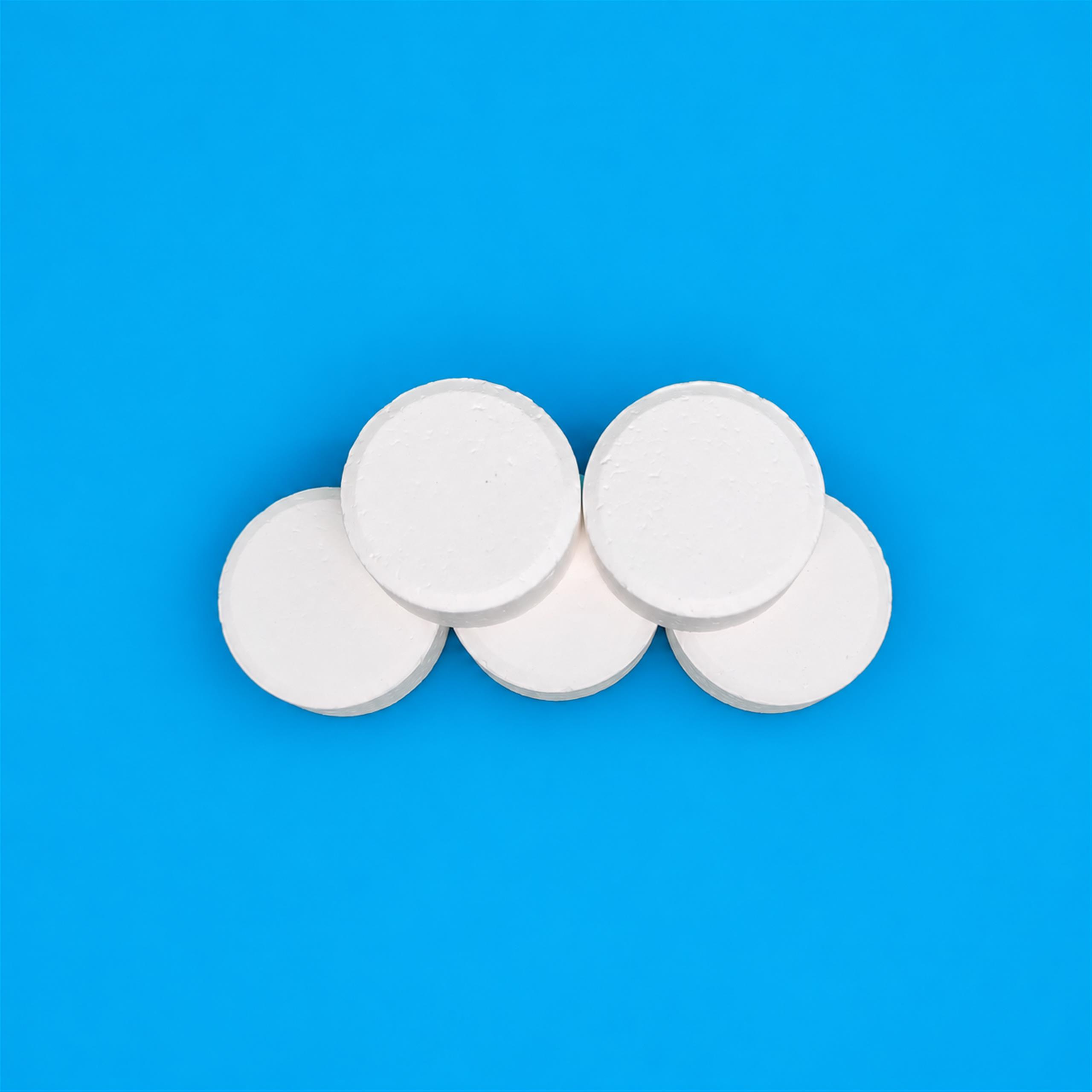
NaDCC (sodium dichloroisocyanurate) is a stable, chlorine-releasing compound available in tablet form. When dissolved in water it hydrolyses to form hypochlorous acid (HOCl), the active disinfecting species. This mechanism is effective against a broad range of pathogens, including bacteria, viruses, and some protozoa, provided the dose and contact time are adequate.
For well water, the tablet simply adds a measured amount of available chlorine. It does not filter, precipitate, soften, or adsorb anything. If the well water contains iron, manganese, hydrogen sulfide, nitrate, arsenic, pesticides, or excessive turbidity, NaDCC will not address those issues. In fact, high levels of organic matter or turbidity can consume chlorine rapidly, reducing the residual concentration available for disinfection.
Why Private Well Water Needs More Than Disinfection
Private wells are not regulated under municipal drinking-water standards in most jurisdictions. Owners are responsible for testing and maintaining water quality. Common problems include:
- Microbiological contamination from surface runoff, septic systems, or well construction defects.
- Turbidity and suspended solids that shield pathogens from disinfectant contact.
- Dissolved iron and manganese that cause staining, taste, and potential health concerns at high levels.
- Hardness (calcium and magnesium) that affects appliance longevity and soap efficiency.
- Chemical contaminants such as nitrates, arsenic, or volatile organic compounds from agricultural or industrial sources.
NaDCC tablets address only the first category. If microbiological contamination is the sole or primary concern and the water is otherwise acceptable, NaDCC can be a practical disinfection step. If other contaminants are present, additional treatment stages are necessary before or after disinfection.
When NaDCC Tablets Are a Viable Disinfection Step
NaDCC tablets can serve as part of a well-water treatment routine under the following conditions:
- The water has been tested and confirmed free of significant chemical contamination.
- Turbidity has been reduced to low levels, typically below 1 NTU, through sediment filtration or settling.
- The goal is emergency or routine microbial disinfection, not comprehensive water conditioning.
- The user understands that NaDCC adds cyanuric acid (a stabiliser) and sodium to the water, which may be relevant for people on restricted diets or in applications where residue build-up matters.
In emergency situations where a well has been flooded or the water supply is suspected of bacterial contamination, NaDCC tablets offer a portable, shelf-stable method to raise the chlorine residual and reduce pathogen risk quickly. This does not make the water “treated” in the broader sense, but it does make it safer from an infectious-disease standpoint in the short term.
Pre-Treatment Requirements That Affect NaDCC Performance
The effectiveness of NaDCC tablets depends heavily on water quality at the point of application. Two factors matter most: turbidity and organic load.
| Water Condition | Effect on NaDCC Disinfection | Recommended Action |
|---|---|---|
| High turbidity (above 5 NTU) | Particles shield microorganisms; chlorine is consumed by suspended matter | Filter through sediment filter or allow settling before adding tablet |
| High organic content (colour, odour) | Chlorine demand increases; residual may not reach target level | Pre-filter or use activated carbon; increase dose carefully with testing |
| Iron or manganese present | Chlorine oxidises these metals, creating precipitates and consuming dose | Remove via oxidation-filtration system before NaDCC dosing, or accept reduced residual |
| Low turbidity, no significant chemicals | NaDCC works as intended; predictable residual achievable | Dissolve tablet, wait required contact time, verify residual |
Without addressing these conditions first, a user may add NaDCC tablets and find that no meaningful free chlorine residual remains after the recommended contact time. This is not a failure of the tablet; it is a mismatch between the product’s function and the water’s condition.
Dosing and Contact Time Considerations for Well Water
Specific dosage depends on the tablet’s available chlorine content, the volume of water, and the initial microbial and chemical load. ENVO CHEMICAL produces NaDCC tablets with defined available chlorine specifications, but the correct dose for any given well must be calculated based on water test results and the target free chlorine residual.
General guidance from public-health sources for household water disinfection typically recommends achieving a free chlorine residual of 0.2 to 0.5 mg/L after a minimum contact time of 30 minutes for clear water at ambient temperature. For turbid or colder water, longer contact times and higher doses may be needed. These are reference points; the exact requirement for a specific well must be confirmed by testing, not assumed.
Do not combine NaDCC tablets with acids, ammonia-based cleaners, or other chlorine products. Such mixtures can release toxic gases or create unpredictable reactions. Always dissolve the tablet in a clean container of the water to be treated before adding it to the full volume.
Regulatory and Safety Limits
NaDCC is widely used for water disinfection in emergency and development contexts, but it is not universally approved as a primary drinking-water treatment chemical in all regulatory frameworks. “Food grade” or “water treatment grade” designations from a manufacturer do not automatically satisfy local drinking-water regulations. Well owners should check with their local health authority about acceptable disinfection methods for private supplies.
Long-term use of NaDCC for household drinking water introduces cyanuric acid into the supply. While this compound is relatively low in toxicity, its accumulation is not desirable in drinking water, and most guidelines do not endorse continuous NaDCC dosing for potable supplies without a treatment plan that includes its removal or management.
The Practical Verdict
NaDCC tablets can disinfect private well water effectively when the water is pre-filtered to low turbidity, when the primary goal is microbial inactivation, and when the user monitors the chlorine residual. They cannot, by themselves, make contaminated well water safe to drink if chemical or physical contaminants are present. Thinking of NaDCC tablets as a complete “treatment” for well water is a misunderstanding of what the product does. They are one tool in a treatment chain, not the whole chain.
If your well water test shows microbial contamination but acceptable levels of other parameters, NaDCC tablets may be a suitable disinfection option. If the test reveals multiple contaminants, you need a multi-barrier system that may include filtration, oxidation, and possibly reverse osmosis or other methods before or after disinfection.
If you need help determining whether NaDCC disinfection fits your specific well-water test results, contact ENVO CHEMICAL with your water quality report and intended volume, and we can discuss whether this product form meets your disinfection requirements.
