
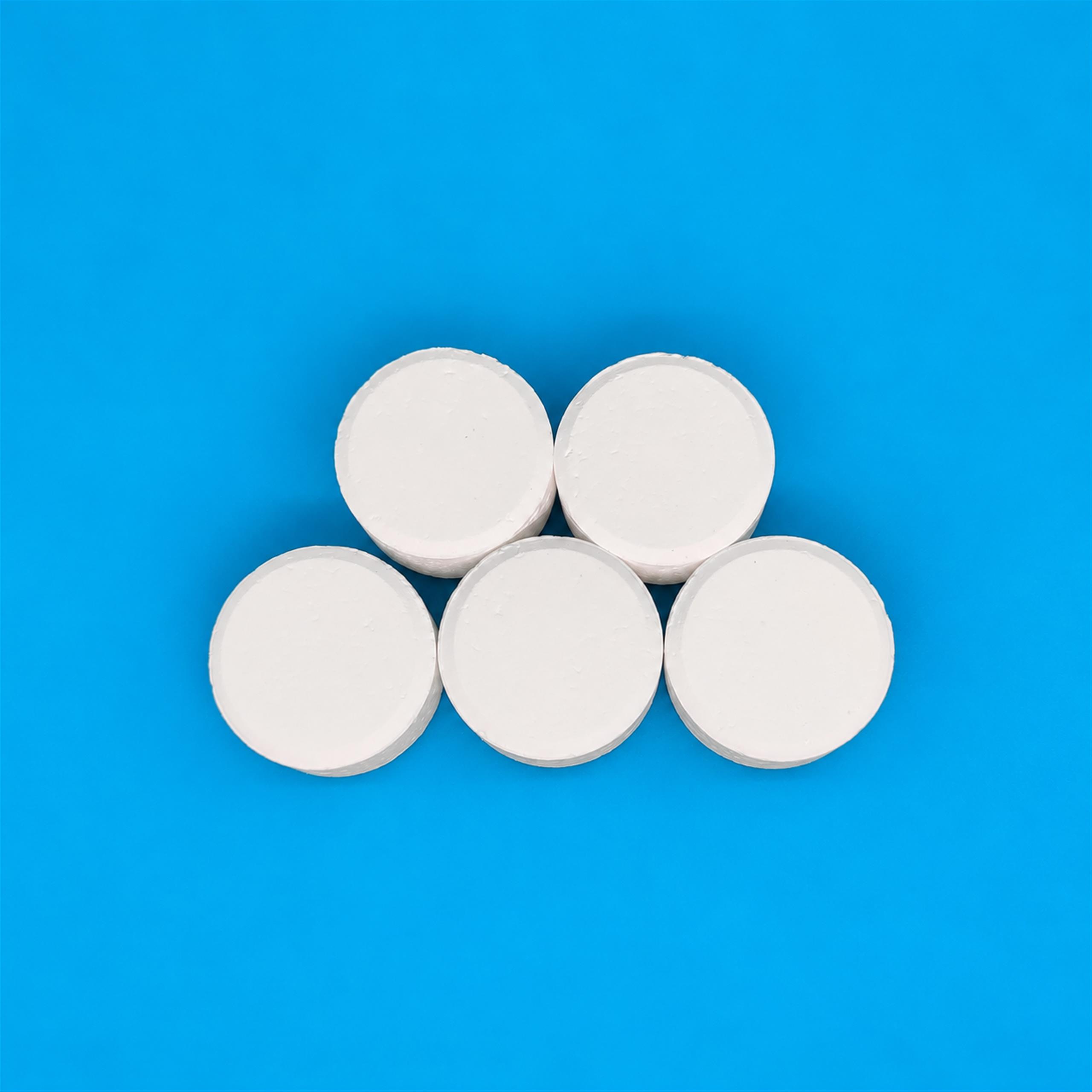
NaDCC Tablets Require Source Assessment Before Use in Flood Emergencies
In flood emergencies, NaDCC tablets can disinfect water effectively only when the operator first assesses the water source for turbidity, chemical interference, and contamination type. Skipping this step risks under-dosing, wasted tablets, or creating a false sense of safety—because highly turbid floodwater can shield pathogens from the available chlorine that NaDCC releases, and certain chemical constituents can neutralise it before it reaches a protective residual.
The practical rule is straightforward: evaluate the visible and measurable condition of the floodwater before deciding how many NaDCC tablets to add, whether pre-treatment is needed, and whether the water is even suitable for tablet-based disinfection at all.
What Water Source Assessment Means in a Flood Context
Water source assessment during a flood is the process of checking the physical and chemical state of the water you intend to treat. It is not a laboratory certification exercise—it is a rapid field check that tells you whether NaDCC tablets will do their job or whether you must adjust your approach first.
The three parameters that matter most for NaDCC tablet performance in floodwater are:
- Turbidity—how cloudy or particulate-laden the water is.
- Chemical interference—presence of ammonia, heavy metals, or organic loads that consume chlorine.
- Contamination profile—whether the water carries mainly microbial risk, chemical pollution, or both.
Each of these directly affects how much available chlorine remains after the NaDCC tablet dissolves, and therefore whether the water reaches a concentration sufficient to inactivate bacteria, viruses, and protozoa.
Why Turbidity Is the First Thing to Check
Floodwater is almost always turbid. Mud, silt, vegetation debris, and sewage solids create a suspended load that NaDCC tablets alone cannot overcome. When turbidity is high, microorganisms embed themselves inside particles. The available chlorine released by the NaDCC tablet reacts with the particle surfaces and organic matter before it can reach the pathogens protected inside.
This is not a theoretical concern. Field guidance from emergency-water treatment sources consistently notes that water with visible cloudiness or a turbidity above approximately 30 NTU should be settled or filtered before chemical disinfection. If you drop NaDCC tablets directly into visibly muddy floodwater without reducing turbidity first, you may need many times the normal tablet dose—and even then the residual may be insufficient.
A simple field test helps: fill a clear container with the floodwater, hold it against a printed page. If you cannot read large text through the container, the water is too turbid for direct NaDCC tablet treatment. Let it settle in a clean vessel, decant the clearer top layer, or pass it through a cloth filter before adding tablets.
Chemical Interference That Reduces NaDCC Efficacy
NaDCC tablets deliver available chlorine through the dichloroisocyanurate ion. That chlorine is a powerful oxidant, but it is also a reactant—it will be consumed by anything in the water that is chemically reducible or that forms chloramine compounds.
In flood scenarios, the most common interferents are:
- Ammonia and nitrogenous compounds from sewage, agricultural runoff, or decomposing organic matter. These react with free chlorine to form chloramines, which are weaker disinfectants and dissipate faster.
- High organic loads such as leaf litter, animal waste, or industrial effluent. These create a chlorine demand that the tablet may not satisfy at standard doses.
- Iron or manganese in some groundwater-influenced flood zones. These metals oxidise and consume chlorine, turning the water a rust colour even as the disinfecting power drops.
The assessment step here is qualitative but critical. If the floodwater smells strongly of sewage, appears greenish, or shows obvious industrial discoloration, the operator should treat it as high-chlorine-demand water. This means either increasing the NaDCC tablet dose substantially—only if verified guidance supports it for that specific product—or, more reliably, combining physical removal (settling, filtration) with the tablet treatment to lower the demand first.
When NaDCC Tablets Are Not the Right Choice
Assessment sometimes reveals that NaDCC tablets are not appropriate at all. If the water source is chemically contaminated with pesticides, petroleum products, or heavy metals at concentrations that pose a direct toxicological risk, disinfection with NaDCC does nothing to address the hazard. The tablets treat microbiological risk; they do not remove chemical poisons.
Similarly, if assessment shows the water is seawater or brackish flood surge, the chloride and salinity background can interfere with the free-chlorine residual readings and the tablet’s effective dose calculation. In such cases, the operator should seek guidance specific to that water type rather than applying standard NaDCC tablet protocols blindly.
The key point is that assessment prevents the dangerous mistake of treating visibly or chemically compromised floodwater with a standard tablet dose and assuming it is safe.
How Assessment Changes Your NaDCC Tablet Dosing Decision
Once you have assessed the source, the dosing decision follows a logical sequence:
- If water is relatively clear (low turbidity, no obvious chemical contamination), standard NaDCC tablet dosing per volume can be applied with confidence. The available chlorine will reach the target residual more reliably.
- If water is turbid but not chemically complex, pre-treat by settling or filtration, then dose. Fewer tablets are wasted because the chlorine demand from suspended solids is reduced.
- If water has high organic or ammonia load, increase the dose only within the limits specified for your NaDCC tablet product, and verify the free chlorine residual after the required contact time. If the residual is still below target, physical treatment must come first—more tablets alone will not solve it.
- If water is chemically toxic, do not rely on NaDCC tablets for safety. Seek an alternative water source or specialised treatment.
This sequence only works if you start with assessment. Without it, you are guessing—and in an emergency, guessing with disinfection chemistry can mean drinking or cooking with inadequately treated water.
Practical Assessment Tools That Fit Emergency Conditions
Emergency responders do not need a full water laboratory. Useful assessment methods include:
- Visual clarity test using a transparent container.
- Smell assessment for sewage, petroleum, or chemical odours.
- Colour observation for unusual tints (green, brown, oily sheen).
- Portable turbidity tubes if available, which give a rough NTU reading in seconds.
- Free chlorine test strips after adding a trial tablet dose—these confirm whether the tablet actually delivered the expected residual.
The last tool is especially valuable. After adding a measured NaDCC tablet dose to a sample of the assessed water and waiting the required contact time, a chlorine residual test tells you instantly whether your assessment-informed decision was correct or whether you need to adjust.
Safety Boundaries for NaDCC Tablet Use in Floodwater
NaDCC tablets are acidic when dissolved and release chlorine gas at high concentrations. In flood emergencies, never handle tablets with wet hands, never mix them with other chemicals such as acids, ammonia-based cleaners, or other disinfectants, and always add tablets to water—never water to a concentrated pile of tablets. Ensure adequate ventilation in enclosed spaces where treatment is carried out.
These precautions are standard for all NaDCC use but become even more critical in chaotic flood conditions where improper handling risks are higher.
Assessment First, Tablets Second
The answer to why water source assessment matters for NaDCC tablets in flood emergencies is simple and non-negotiable: without it, you cannot know whether the tablets will disinfect effectively, whether you are using the right dose, or whether the water is safe at all. Assessment turns a chemical product into a reliable tool. Without it, NaDCC tablets become a gamble.
If you are planning emergency water treatment supplies and need to confirm which NaDCC tablet format and specification suit your specific flood-response scenario, contact ENVO CHEMICAL with details of the water type and expected contamination profile so we can advise accurately.
