
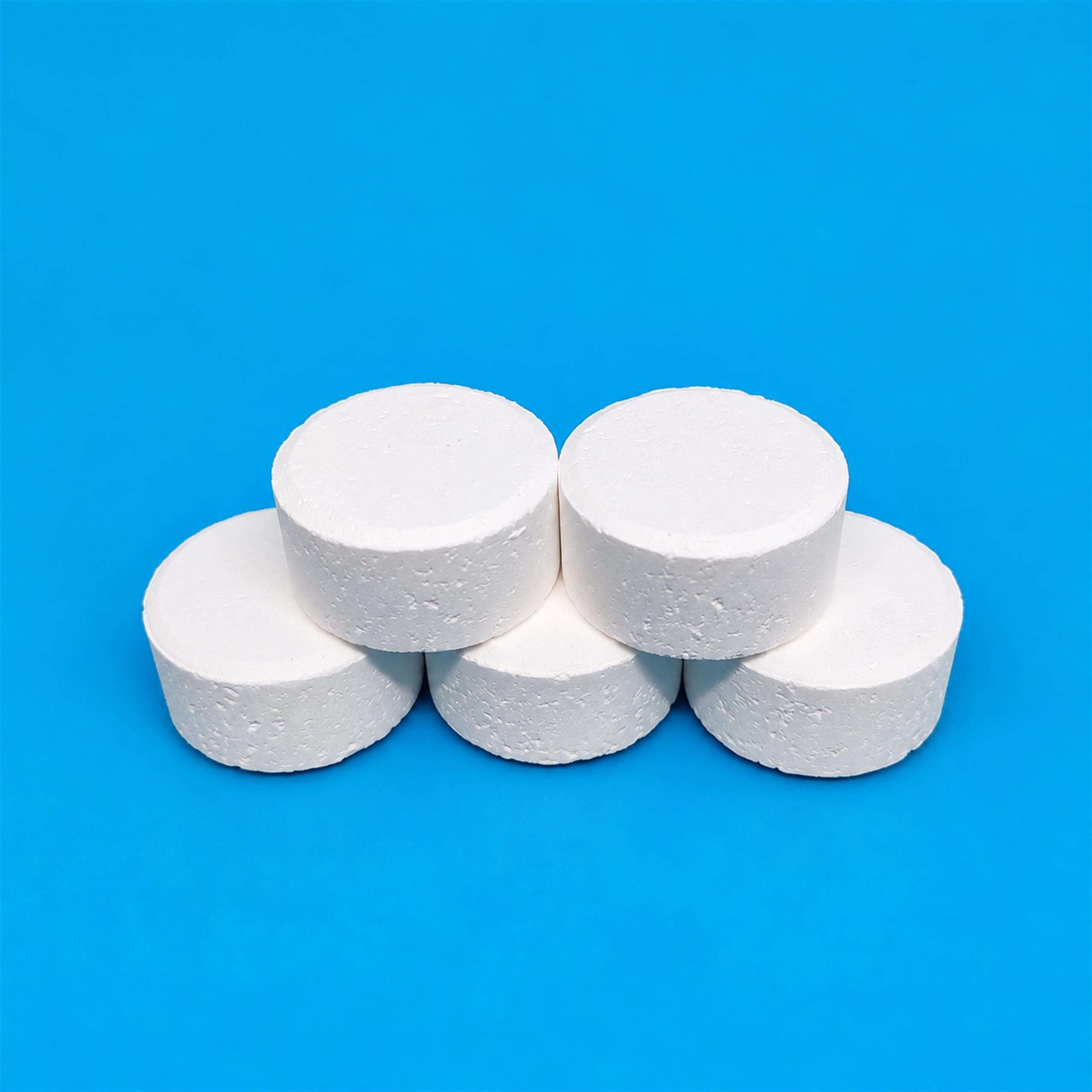
What Information You Can and Cannot Get Directly From the Blister Pack
When the outer box of a NaDCC (sodium dichloroisocyanurate) product is missing, the blister pack itself usually still carries essential identification data printed on the foil or film lidding: the product name or abbreviated code, the net weight per tablet or sachet, the batch or lot number, the manufacturing or expiry date, and basic safety pictograms. What you typically lose is the full dosage table, detailed application instructions, regulatory registration numbers, and the complete safety data sheet reference. The first step is to examine every printed surface of the blister—front, back, and any edge seal—because manufacturers vary in how much they transfer to the unit pack versus the carton.
If the blister pack is also damaged, torn, or faded, you may be unable to confirm the available chlorine content, the tablet weight, or the expiry date with confidence. In that case, do not use the product for any disinfection or water-treatment purpose until you can verify the specifications through the supplier or distributor.
Locating the Key Data Fields on the Foil or Film
Product Identity and Chemical Designation
Most NaDCC blister packs carry a short product name, a code such as “NaDCC” or “SDIC,” or a brand-specific identifier. Look for the chemical name “sodium dichloroisocyanurate” or its abbreviation. This is your primary confirmation that the tablet contains the dihydrate or anhydrous form of the compound. Do not assume the tablet is NaDCC if the pack is blank or the text is illegible—tablet appearance alone (white, chlorine-smelling) is not a reliable identifier because other chlorine donors can look similar.
Tablet or Sachet Weight
The net weight per unit—often printed as “1.5 g,” “3.3 g,” “5 g,” or similar—is normally stamped or printed on each blister cell or on the pack header. This number is critical because NaDCC tablets are formulated at different available-chlorine concentrations (commonly around 56 % for the dihydrate and 60 % or higher for anhydrous grades). Without the weight and the concentration, you cannot calculate how much active chlorine a single tablet delivers. If the weight is absent, note that the remaining data on the blister may not be sufficient to determine correct dosing.
Batch, Lot, and Date Codes
A batch or lot number and either a manufacture date or an expiry date (or both) are almost always printed on the seal or the foil surface. These codes let you trace the production run if you can contact the manufacturer. Write them down immediately; they are the most useful data for verifying product integrity when the carton is gone.
Available Chlorine or Purity Statement
Some blister packs state the available chlorine content directly, for example “56 % av. Cl” or “≥ 60 % available chlorine.” Others leave this to the outer box. If the percentage is not on the blister, you cannot confirm whether the tablet meets a particular specification from the printed information alone. Confirm with the supplier before relying on the product for a specific application.
What the Outer Box Normally Adds and Why It Matters
The carton or outer box is where you normally find the complete dosing instructions—how many tablets per litre or per cubic metre for a given water volume, the required contact time, and the target residual chlorine concentration. Without this information you can still read the per-tablet chlorine content (if printed) and the tablet weight, but you lack the context that translates those numbers into a working dose for your specific use. Mixing or misdosing NaDCC can produce ineffective disinfection or, at higher concentrations, hazardous chlorine gas or corrosive solutions.
Safety warnings, first-aid measures, storage conditions, and regulatory approval numbers are also typically on the outer box. If the blister pack carries GHS pictograms or brief hazard statements (for example, “Causes skin irritation” or “May cause respiratory irritation”), treat those as minimum safety information. Do not assume additional protections are in place just because they are not visible.
Step-by-Step: Reading the Blister Pack Systematically
- Check the front of each blister cell. Look for the product name, chemical designation, and tablet weight.
- Flip the pack and read the back. Batch number, date codes, and any brief hazard or handling notes are often here.
- Inspect the edge seal or perforated strip. Manufacturers frequently print the lot number and expiry along the sealed margin.
- Note any available-chlorine percentage. If present, record it; if absent, flag it as unconfirmed.
- Photograph everything. Clear images of all readable text help the supplier or distributor identify the exact product and lot.
- Do not open or use tablets with unreadable or missing date codes. Expired NaDCC degrades, losing available chlorine and potentially forming unstable by-products.
How to Confirm Missing Information Safely
If the blister pack does not display the dosage instructions or the available chlorine content, contact the product supplier or distributor with the batch number and any product code you can read. They can confirm the formulation grade, the intended use concentration, and whether the product is still within its shelf life. Do not attempt to derive dosing from general NaDCC guidelines found online unless those guidelines specifically reference the same tablet weight and chlorine percentage you have on the pack—generic advice does not replace product-specific data.
Never mix NaDCC tablets with acids, other chlorine products, or organic cleaners unless the product documentation explicitly permits it. Even with full packaging, combining incompatible chemicals can release chlorine gas. When documentation is incomplete, the safest action is to wait for verified information.
When the Blister Pack Itself Is Unreadable
Fading, moisture damage, or torn foil can render all printed information illegible. In that situation the blister pack offers no reliable data. Do not guess the tablet weight or concentration. If you must identify the product, send a photograph of the physical tablet (size, colour, any embossing or markings) together with the blister material to the supplier. Be aware that visual identification alone is not a substitute for printed specifications.
A Short Note on ENVO CHEMICAL Documentation
ENVO CHEMICAL provides batch-traceable labelling on its NaDCC blister packs so that key data—including tablet weight, available chlorine grade, and lot code—remains readable even if the outer carton is separated from the product. If you are working with ENVO CHEMICAL blister packs and find the carton missing, the lot number printed on the foil seal is usually sufficient to request full product documentation from the company.
If you have a NaDCC blister pack with partially missing or unreadable information and need help matching the batch to the correct dosing parameters, contact ENVO CHEMICAL with the lot number and any text you can still read on the foil.
