
Why Expiry Dates on NaDCC Tablets in Emergency Kits Must Be Verified Before Storm Season
NaDCC tablets in emergency water-treatment kits lose available chlorine over time, and using them past their marked expiry date can leave you without reliable disinfection when a storm disrupts your water supply. Before storm season begins, you should open every kit, read the expiry date printed on the tablet container or blister pack, and replace any tablets that have reached or passed that date.
This single check determines whether your emergency kit will actually perform its job. NaDCC (sodium dichloroisocyanurate) is a stabilized chlorine source widely used in portable water-treatment tablets, but it is not indefinitely stable. Temperature, humidity, and the integrity of the packaging all affect how quickly the available chlorine decays. An unchecked kit may look complete on the shelf yet contain tablets that no longer deliver the chlorine dose needed for safe drinking water.
What the Expiry Date on NaDCC Tablets Actually Means
The expiry date on a NaDCC tablet pack is the date until which the manufacturer guarantees that the tablets retain their specified available chlorine content when stored under the conditions stated on the label. After that date, the available chlorine may have fallen below the level required for the labelled disinfection claim.
It is important to distinguish two things:
- Expiry date — the manufacturer’s guaranteed performance window based on stability testing.
- Actual degradation — the real-time loss of available chlorine, which can happen faster than the date suggests if storage conditions were poor.
A tablet that is one week past its expiry date may still have some chlorine left, but you cannot rely on it for the specific dose and contact time printed on the packaging. In an emergency water-treatment scenario, that uncertainty is unacceptable. The expiry date is therefore a hard stop: replace, do not guess.
How to Check NaDCC Tablet Expiry in Your Emergency Kit
Follow these steps each year before your region’s storm season starts.
- Locate the date. Check the outer container, the inner blister pack, or the individual sachet. Most NaDCC tablet packs for emergency use carry a printed or stamped month and year.
- Compare to today’s date. If the printed date has passed, the tablets must be replaced regardless of appearance.
- Inspect the packaging. Look for torn foil, broken blisters, or signs of moisture ingress such as clumping, discoloration, or a strong chlorine smell escaping from a sealed pack. Any of these signs mean the tablets may have degraded even if the expiry date has not yet been reached.
- Record the check. Write the verification date on the kit or in a household log so you know when the next check is due.
Do not rely on a visual inspection of the tablets alone. NaDCC tablets that look white and intact can still have lost significant available chlorine if they were exposed to heat or humidity during storage.
Why Storm Season Makes This Check Especially Critical
Storms — hurricanes, typhoons, severe thunderstorms — create two problems that collide with expired NaDCC.
First, storms often disrupt municipal water treatment and distribution. When tap water becomes unreliable, emergency kits with water-treatment tablets become a primary line of defence. Second, the conditions that precede and accompany storms — high humidity, flooding, elevated temperatures — are precisely the conditions that accelerate NaDCC degradation. A kit that was fine in a dry cupboard in January may be compromised by July, right when hurricane season peaks.
This means the window between a spring expiry check and a late-summer storm can be dangerously short. Verifying expiry dates well before the forecasted storm season, not during it, is the only practical approach.
What Happens If You Use Expired NaDCC Tablets
Expired NaDCC tablets may deliver a lower available chlorine dose than labelled. The consequences in an emergency water-treatment context include:
- Insufficient disinfection of bacteria, viruses, and protozoa that the tablet dose was designed to inactivate.
- Unpredictable contact-time requirements — you cannot know how long to wait if the chlorine strength is unknown.
- A false sense of security. Treated water that looks clear may still contain pathogens if the chlorine level was too low.
NaDCC is a disinfectant, not a filter. It does not remove particulates, chemicals, or heavy metals. Its entire function depends on delivering a known quantity of available chlorine. When the expiry date has passed, that known quantity is no longer guaranteed.
Storage Conditions That Affect Expiry in Emergency Kits
Even within the printed expiry period, poor storage shortens the useful life of NaDCC tablets. Emergency kits are often stored in garages, basements, vehicles, or outdoor sheds — locations where temperature swings and moisture are common.
| Storage factor | Effect on NaDCC tablets | Practical check |
|---|---|---|
| High temperature (above 30 °C / 86 °F) | Accelerates chlorine loss | Feel the kit storage area; if it is hot, treat tablets as potentially degraded even if within date |
| Moisture or water exposure | Initiates premature dissolution and chlorine release | Look for water stains, swollen packaging, or tablet clumping |
| Direct sunlight | UV exposure and heat combine to degrade active ingredient | Store kits in opaque containers or shaded locations |
| Damaged packaging | Allows ongoing air and moisture contact | Replace any kit where the seal is broken, even if tablets seem fine |
If your kit has been stored in any of these conditions, treat the expiry date as a best-case estimate rather than a guarantee. Replace the tablets on a conservative schedule.
A Simple Pre-Storm Checklist for NaDCC Emergency Kits
- Open the kit and find the expiry date on the tablet container.
- Confirm the date has not passed. If it has, discard the old tablets and source replacements.
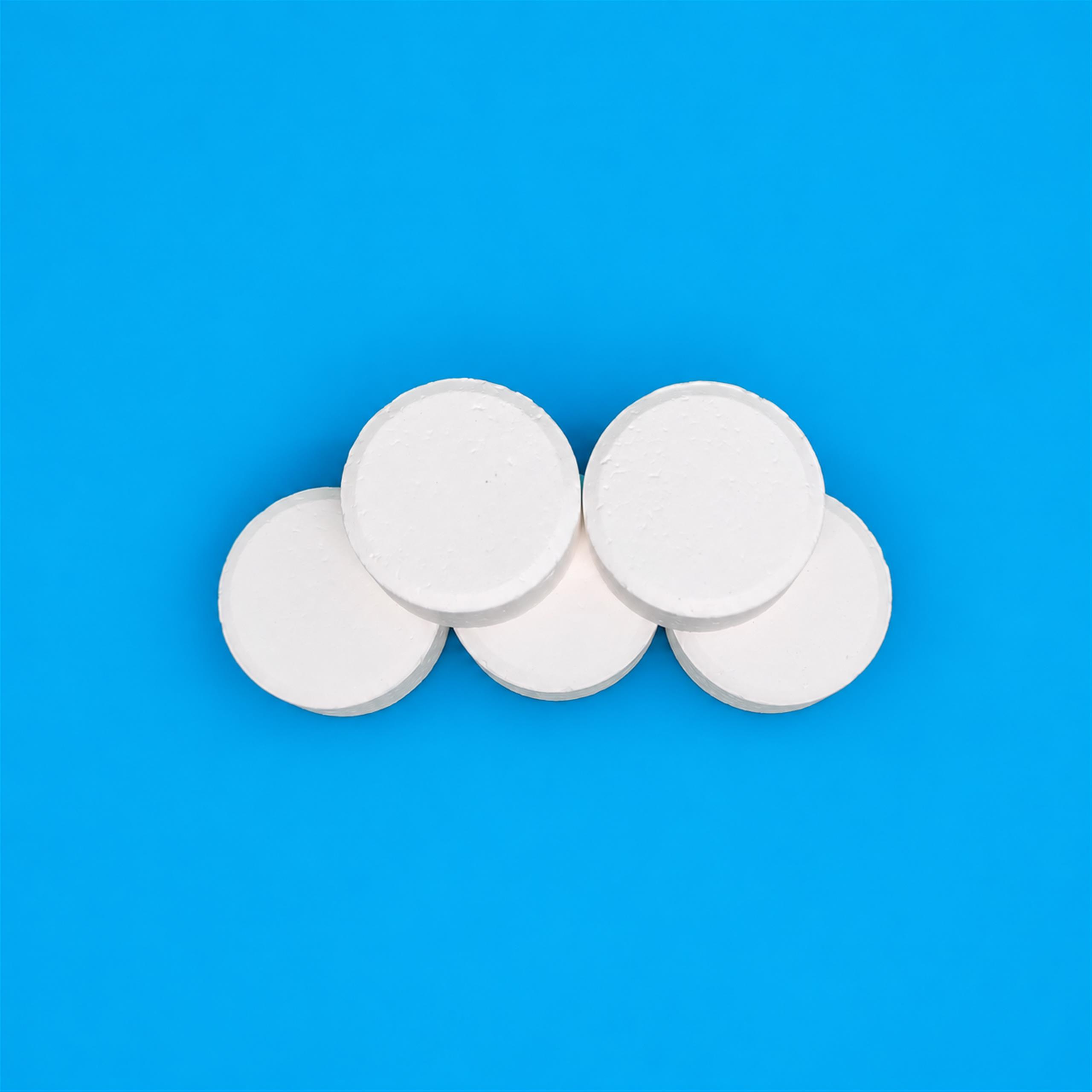
- Check each tablet’s appearance: white, dry, free-flowing, no clumping, no yellowing.
- Verify the packaging seal is intact — no tears, no moisture marks.
- Confirm you have enough tablets for the number of people and days your emergency plan requires.
- Write the verification date on the kit or in your household emergency log.
This process takes a few minutes per kit but ensures that when a storm hits, you are not depending on degraded chemistry.
When to Replace Rather Than Test
Some readers may wonder whether a simple chlorine test strip can verify that expired tablets still work. While test strips can measure available chlorine in a solution, they do not tell you whether a tablet will perform consistently over time or whether the degradation pathway has produced unexpected by-products. In an emergency context, the risk of a false result outweighs the cost of replacement tablets.
The practical rule is straightforward: if the expiry date has passed, replace. If the packaging is compromised, replace. If storage conditions were clearly poor, replace. The cost of a new supply of NaDCC tablets for an emergency kit is small compared with the risk of relying on unreliable disinfection during a water emergency.
Contact ENVO CHEMICAL About NaDCC Supply for Emergency Kits
If you need to verify the expiry information or sourcing details for NaDCC tablets intended for emergency water-treatment kits, contact ENVO CHEMICAL with your current product specifications and required quantities so we can confirm what applies to your situation.
