
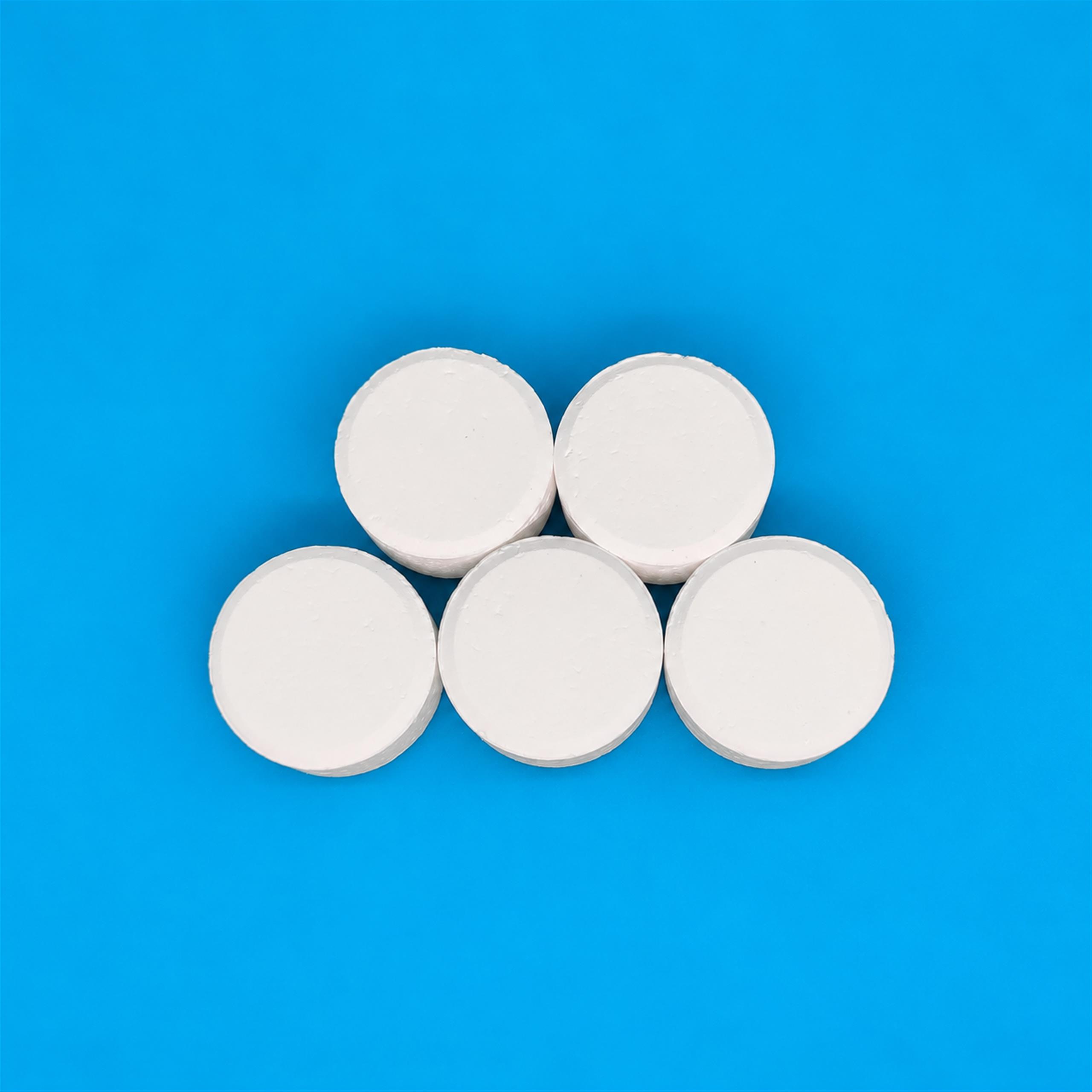
How Household Container Volumes Drive NaDCC Tender Specifications
The essential answer is that a NaDCC tender must define product forms, packaging units, and dosage instructions matched to the specific volumes of household water containers the end user will treat. When container sizes are known in advance—typically 5 L, 10 L, 20 L, 50 L, or 200 L in many domestic settings—the tender can specify NaDCC tablet or sachet counts per container, required available chlorine concentration, and pack sizes that align with realistic household handling, rather than issuing generic bulk-chemical requirements.
This approach changes the tender from a simple chemical-purchase order into a use-case-driven procurement. If container sizes are not confirmed before writing the tender, the resulting specification may supply either too much or too little active ingredient per household, creating both waste and inadequate disinfection risk.
Why Container Size Must Be the Anchor of the Tender
NaDCC (sodium dichloroisocyanurate, dihydrate or anhydrous) is a solid source of available chlorine used for point-of-use water treatment. Its effectiveness depends on delivering a defined dose of available chlorine into a defined water volume and maintaining adequate contact time. When the end user measures and treats water in a household container, the container’s capacity is the primary variable that determines how much NaDCC product is needed per treatment event.
A tender that ignores this relationship risks one of two outcomes:
- Supplying bulk NaDCC in 25 kg or 50 kg drums with no guidance on portioning, forcing distributors or NGOs to repackage at the point of delivery.
- Specifying pre-portioned sachets or tablets calibrated to a container size that does not match what households actually own, rendering the product unusable without on-site recalculation.
Therefore, the first section of the tender should state the target household container sizes, sourced from field surveys, programme design documents, or agreed ministry standards. This becomes the reference point for every subsequent specification.
Common Household Water Container Sizes and Their NaDCC Implications
Across many regions where point-of-use chlorination programmes operate, household water storage containers cluster around a handful of volumes. The table below shows typical sizes, the NaDCC dose range commonly referenced for safe drinking-water treatment at 2 mg/L free chlorine residual, and the approximate number of standard NaDCC product units a tender might need to define per container.
| Container Volume | Target Dose (2 mg/L available Cl) | NaDCC Mass Required (anhydrous, ~60% avail. Cl) | Typical Product Form in Tender |
|---|---|---|---|
| 5 L | 10 mg | ~17 mg | Small tablet or single-use sachet (~0.25 g) |
| 10 L | 20 mg | ~33 mg | Single-use sachet (~0.5 g) or small tablet |
| 20 L (jerry can) | 40 mg | ~67 mg | Tablet (~1 g) or 2 sachets (0.5 g each) |
| 50 L | 100 mg | ~167 mg | 2–3 tablets (1 g each) or multi-sachet pack |
| 200 L (drum) | 400 mg | ~667 mg | Bulk tablet or measured scoop from larger container |
These figures assume anhydrous NaDCC with approximately 60% available chlorine by mass. If the tender specifies the dihydrate form (typically ~55% available chlorine), the required mass increases proportionally. The tender must state which form is required because the mass-per-dose calculation depends on it. The numbers above are illustrative for planning purposes; the final tender should reference the exact product specification sheet from the supplier, such as the ENVO CHEMICAL grade being considered, and confirm the purity and available chlorine claim through certificate of analysis.
Structuring the Tender: Product Form and Packaging
Once container volumes are fixed, the tender can define NaDCC in the product form that best fits each size category.
Single-use sachets for small containers
For 5 L and 10 L containers, individually sealed sachets in foil or laminated film are practical. The tender should specify:
- Net mass per sachet calibrated to the target container (e.g., 0.5 g sachet for a 10 L container).
- Shelf life under stated storage conditions, because small sachets are more vulnerable to moisture ingress than bulk packs.
- Packaging configuration (e.g., sachets in cartons of 50 or 100) so that distribution units align with household consumption patterns.
If the programme intends households to treat multiple containers per day, the tender should calculate total sachet volume accordingly rather than specifying per-household rather than per-container quantities.
Tablets for medium containers
For 20 L and 50 L containers, effervescent or dissolving tablets are common. The tender needs to specify tablet mass, dissolution time (relevant for contact-time compliance), and whether tablets are scored for partial use. A 20 L container treated with a single 1 g tablet is straightforward; a 50 L container may require two tablets or one larger tablet, and the tender should state which approach is preferred.
Bulk or re-packaged product for large containers
For 200 L drums and similar, the tender may specify NaDCC supplied in bulk with a measuring device (scoop or pre-weighed portion packs) included in the delivery. This section must clarify whether the supplier provides the measuring device or whether the procuring organisation will source it separately, because inconsistent dosing tools introduce the greatest risk of under- or over-chlorination at this scale.
Dosage Verification and Contact Time Requirements
A tender that defines NaDCC around container sizes must also state the required contact time, because this determines when the water is safe to use and affects how households manage multiple containers. Most point-of-use chlorination guidance recommends a minimum of 30 minutes contact time for NaDCC at typical doses, but the tender should cite the specific regulatory or programme standard being followed (for example, WHO drinking-water guidelines or a national standard) rather than assuming a universal value.
If the tender includes a requirement for free chlorine residual testing, it should specify the test method (e.g., DPD colorimetric) and the acceptable range at point of use (commonly 0.2–0.5 mg/L after the full contact period). This closes the loop between container size, dose, and verifiable safety.
Avoiding Common Tender Design Errors
Three mistakes recur when tenders treat NaDCC as a generic chemical rather than a product calibrated to container volumes.
- Specifying only bulk purity. Stating “NaDCC, minimum 60% available chlorine” without linking it to a container-specific dose leaves the end user without a workable instruction. The tender must connect purity to a mass-per-volume instruction.
- Ignoring repackaging requirements. If the supplier only provides 25 kg drums, the tender must state whether repackaging into sachets or tablets is part of the contract or a separate procurement, because this affects cost, lead time, and quality control.
- Assuming one size fits all. If households use both 10 L buckets and 200 L drums, a single product form and dose will fail one group. The tender should either define multiple SKUs or specify a flexible bulk product with clear portioning instructions for each container size.
Safety and Handling Clauses Relevant to the Tender
Even in a procurement-focused article, the tender should include handling limitations that protect both distributors and households. NaDCC is an oxidiser and must not be stored or mixed with acids, ammonia-based cleaners, or organic solvents. The tender should require that packaging and labelling comply with applicable hazard communication standards, including clear instructions not to mix NaDCC with other household chemicals and to keep products dry and out of reach of children. These clauses are not optional background; they protect the procuring organisation from liability if the product is repackaged or misused.
Putting It Together: A Tender Checklist Aligned to Container Sizes
Before issuing the tender, confirm the following:
- Household container sizes are documented and agreed with programme stakeholders.
- NaDCC form (anhydrous or dihydrate) and available chlorine percentage are specified.
- Dose per container volume is calculated and stated in the tender documents.
- Product packaging (sachet, tablet, bulk with scoop) matches the dose and container size.
- Contact time and residual chlorine requirements are cited from an authoritative source.
- Shelf life, storage, and hazard handling clauses are included.
- Repackaging responsibilities, if any, are clearly assigned.
When all of these elements are tied back to the container sizes the tender is meant to serve, the procurement delivers a usable product rather than a chemical commodity that requires further interpretation in the field.
If you are preparing a NaDCC tender and need to confirm which container sizes and dosage formats ENVO CHEMICAL can support for your specific programme, contact us with your target container volumes and required treatment volumes so we can discuss product form options.
