
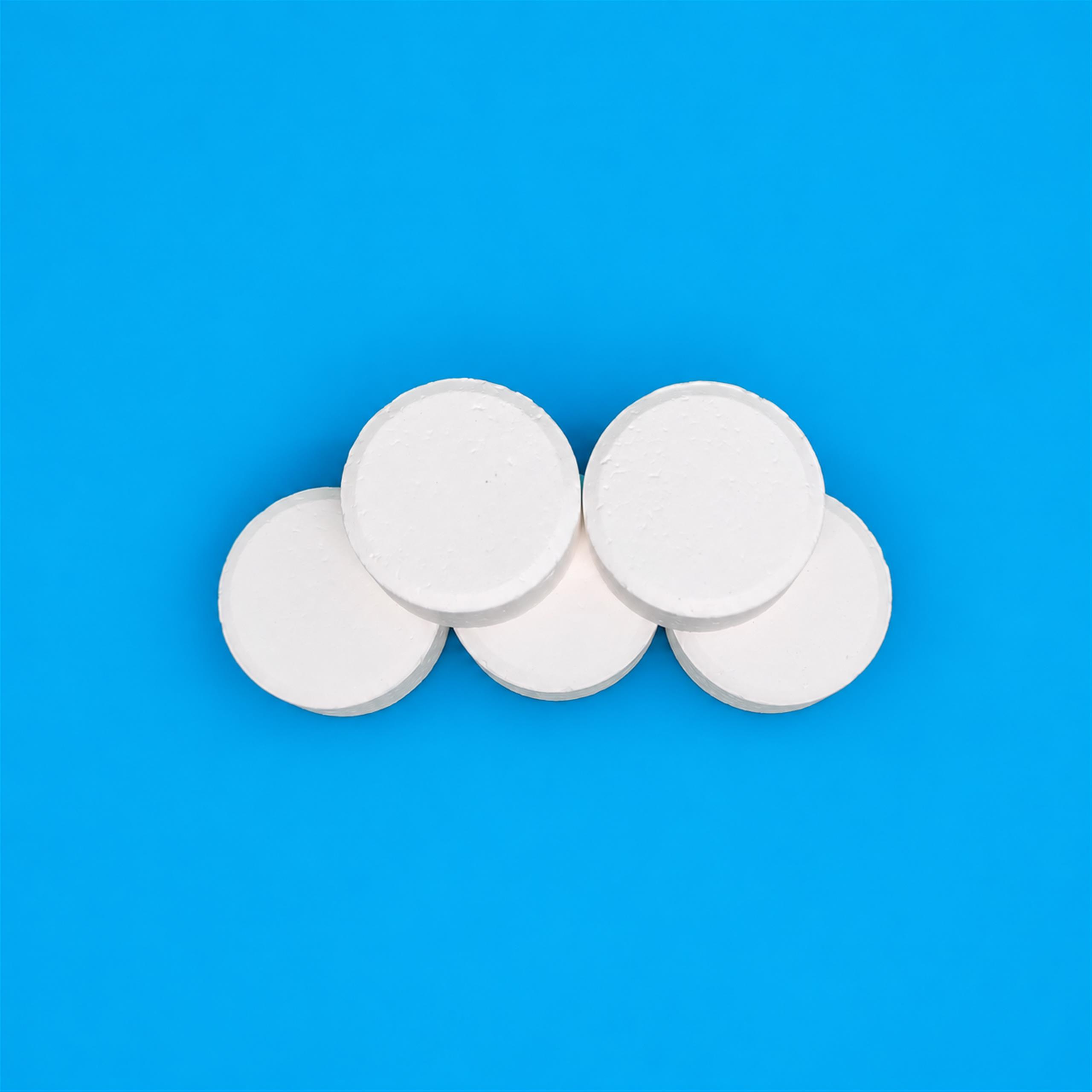
Why Tablet Delivery Counts Miss the Real Picture
Counting NaDCC tablets shipped or handed out tells you almost nothing about whether a disinfection program is actually working. The only reliable way to monitor a sodium dichloroisocyanurate program is to measure what gets dissolved, applied, and leaves a measurable chlorine residual at the point of use. Delivery metrics confirm logistics; use metrics confirm protection.
This distinction matters because NaDCC tablets can sit in storage, be lost, broken, or dissolved incorrectly without ever reaching the water or surface that needs treatment. A program that distributes 10,000 tablets per month but never verifies that users are preparing solutions correctly or achieving target residual concentrations may be failing silently. Monitoring use—not just tablets delivered—closes that gap.
What “Measuring Use” Actually Requires
Measuring NaDCC use means tracking three linked data points: how much product enters the system, how it is prepared, and what residual chlorine remains after the required contact time. None of these can be inferred from a delivery manifest alone.
Product Input Tracking
Start with a physical or digital record of tablets or granules removed from central storage. Weigh dispensed quantities rather than estimating by count, because tablet weight can vary between batches and broken or chipped tablets change the available chlorine per unit. Record the date, location, and person responsible for each dispensing event. This creates a baseline against which you can compare downstream measurements.
If your program uses pre-dosed sachets or bulk NaDCC powder, apply the same principle: track mass dispensed, not just units moved. For bulk material, calibrate scoops or dosing equipment regularly to avoid systematic over- or under-dosing that skews your use data.
Solution Preparation Verification
NaDCC must be dissolved in clean water at a known concentration before application. Monitoring use requires confirming that users are mixing at the correct ratio—typically specified in parts per million of available chlorine—and that they wait for full dissolution before drawing off the working solution. Undissolved granules or prematurely drawn solution will deliver less available chlorine than intended, even if the dispensed tablet count looks correct.
Where possible, supervise or audit a sample of preparation events. Check that water temperature is within the product’s recommended range (generally below 40 °C for NaDCC to limit decomposition), that containers are clean and food-grade or chemically compatible, and that mixing vessels are clearly marked with target concentrations.
Residual Chlorine Measurement at Point of Use
The single most important indicator that NaDCC is actually doing its job is the free chlorine residual measured after the required contact time. Use a calibrated colorimetric test kit (DPD method) or a digital photometer approved for free chlorine in the relevant matrix. Record the residual, the time of measurement, the location, and the batch or lot number of NaDCC used.
If residuals are consistently below target, investigate before assuming the program is under-dosing. Causes can include high organic load consuming chlorine, pH drift above 8.0 reducing hypochlorous acid formation, sunlight degradation in uncovered storage, or expired product with reduced available chlorine. Conversely, residuals far above target may indicate overdosing, which wastes product and can cause corrosion or user complaints.
Building a Monitoring Framework Around Use Data
A practical NaDCC program monitoring framework collects the three data streams above and compares them over time to spot trends, gaps, and failures early.
| Data Point | What It Tells You | How Often to Record |
|---|---|---|
| Mass of NaDCC dispensed (kg or number of tablets) | Total product entering the program | Each dispensing event |
| Volume and concentration of working solution prepared | Whether users are mixing correctly | Each preparation batch; spot-check weekly |
| Free chlorine residual at point of use (mg/L) | Whether treatment is achieving the target | Daily at critical points; weekly at others |
| pH and temperature of application water | Conditions that affect NaDCC efficacy | At each residual check or daily |
| Product lot number and expiry status | Whether degradation may be reducing available chlorine | At each dispensing event |
Plot dispensed mass against measured residuals over weeks. If dispensed quantities rise but residuals stay flat or fall, the program is likely losing product to poor storage, incorrect preparation, or high demand that the current dosing does not meet. If dispensed quantities are stable and residuals are consistent and on target, you have evidence that the program is functioning as designed.
Common Reasons Delivery Counts Mislead
Programs that rely only on tablet delivery data frequently encounter these problems:
- Stockpiling: Users may accumulate tablets without using them, especially if they doubt the product or lack clear instructions. Inventory counts at point of use will diverge from central delivery records.
- Breakage and loss: NaDCC tablets are brittle. A significant fraction can break during transport or handling, creating unusable fragments that still count as “delivered” units.
- Incorrect dissolution: Adding tablets to hot water, using dirty containers, or failing to wait for full dissolution reduces available chlorine in the working solution without changing the tablet count.
- pH interference: In alkaline water, a larger fraction of the chlorine from NaDCC exists as hypochlorite ion rather than hypochlorous acid, the more effective disinfectant species. Delivery counts cannot detect this shift.
- Expiry and storage degradation: NaDCC loses available chlorine over time, especially if exposed to moisture, heat, or direct sunlight. Tablets delivered on time may already be below specification.
None of these issues are visible in a delivery spreadsheet. All of them are detectable when you measure use through residuals and preparation checks.
Setting Realistic Targets for What “Use” Looks Like
Before you can measure use, you need a target. Define the required free chlorine residual (for example, 0.5 mg/L after 30 minutes contact time for general surface disinfection, or as specified for your particular application) and the volume of water or solution to be treated. From these, calculate the expected NaDCC mass per treatment event. Then compare actual dispensed mass to that expected value.
Do not confuse available chlorine percentage on the NaDCC label with the dose you need. A typical NaDCC tablet may contain 55–60% available chlorine, but the applied dose depends on the volume treated, the target residual, the contact time, and the water quality. Always calculate dose from the treatment requirement, not from the product specification alone.
If your program spans multiple sites or users, standardize the target residual and the method of measurement so data is comparable. A single DPD kit type, the same photometer model, or the same color chart across all locations eliminates instrument variation as a source of error.
When Monitoring Reveals a Problem
When use data shows a gap between what is dispensed and what is measured at the point of use, investigate in this order:
- Confirm the NaDCC batch is within expiry and has been stored correctly (cool, dry, sealed).
- Check preparation method: water temperature, container cleanliness, dissolution time, and mixing ratio.
- Measure pH at the point of application; adjust if it is above 8.0 to improve efficacy.
- Assess organic or inorganic load in the water or on the surface, which can demand more chlorine than standard dosing accounts for.
- Review user training and instruction clarity if preparation errors are recurring.
Each step narrows the cause. Skipping to “order more tablets” without this process will increase delivery numbers without fixing the underlying problem, and the monitoring data will continue to show the mismatch.
From Data to Decisions
The purpose of monitoring NaDCC use is not to produce reports—it is to decide whether to adjust dosing, retrain users, replace degraded stock, or change storage conditions. When your data consistently shows that dispensed product translates to on-target residuals, you have a program you can defend. When it does not, you have an early warning that the program needs correction before a failure becomes visible.
Track what is used. Verify it works. Act on what the data shows. That is the difference between a NaDCC program that looks active on paper and one that actually protects the people or processes it is meant to serve.
If you need help defining the residual targets, dosing calculations, or monitoring tools appropriate for your specific NaDCC application, contact ENVO CHEMICAL with your water volume, target use case, and current measurement method so we can discuss the right approach.
