
The Core Challenge in NaDCC Field Trials
In NaDCC field trials, the most common reason for inconclusive or negative results is not a failing product—it is a procedural error during preparation, dosing, or measurement. Separating genuine product performance from user error requires deliberate trial design, controlled variables, and documented verification at every step. Without these controls, trial data cannot reliably attribute outcomes to the NaDCC material itself.
This distinction matters because NaDCC (sodium dichloroisocyanurate) is a chlorine-releasing compound whose efficacy depends on concentration, dissolution completeness, contact time, water chemistry, and storage integrity. A failure in any of these handling parameters can mimic or mask the true disinfecting capacity of the product. Field trials that ignore this risk produce data that is difficult to act on.
Why User Error Distorts NaDCC Trial Outcomes
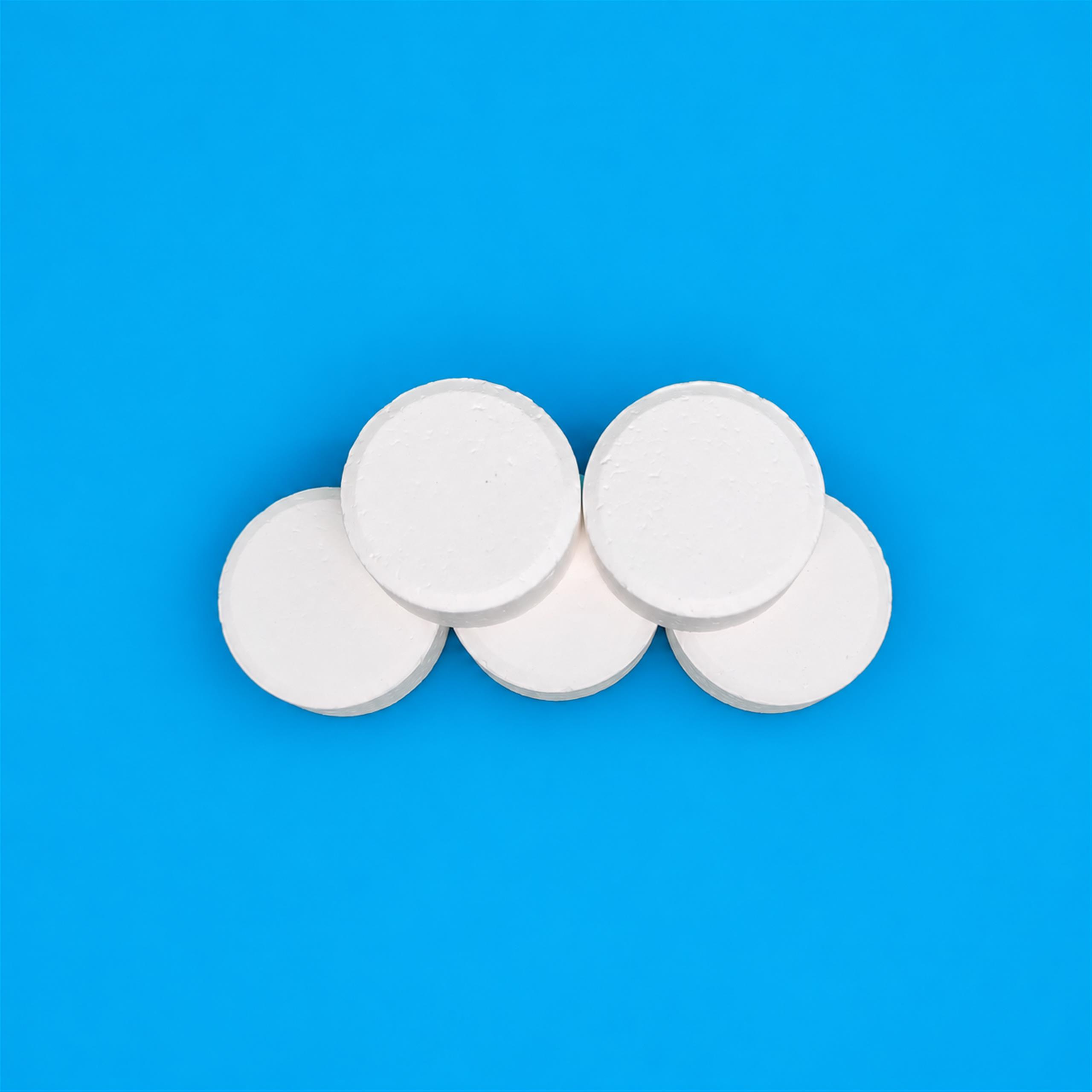
NaDCC is supplied as a solid—typically granules or tablets—that must be dissolved before use. Unlike pre-dissolved liquid chlorine, it introduces several points where operator action directly affects the delivered available chlorine. The most frequent sources of user error in field settings include:
- Incomplete dissolution. Undissolved NaDCC particles do not release available chlorine uniformly, producing localised high concentrations and bulk-solution concentrations that are lower than intended.
- Incorrect stock-solution concentration. Weighing errors, use of uncalibrated containers, or confusion between anhydrous and dihydrate equivalents lead to dosing that does not match the trial protocol.
- Failure to account for chlorine demand. Organic load, turbidity, and reducing agents in the test water consume available chlorine before it reaches the target residual. Trials that do not measure and document demand cannot separate product efficacy from water-quality interference.
- pH drift. NaDCC solutions are slightly acidic. If the test water has low buffering capacity, the pH may shift enough to alter the proportion of hypochlorous acid (the more active species) versus hypochlorite ion.
- Degraded stock solution. NaDCC solutions lose available chlorine over time, especially when exposed to heat, sunlight, or open containers. Using a solution prepared hours or days earlier without verification introduces a variable that is not product-related but trial-related.
Each of these errors depresses measured efficacy. A trial that records a low chlorine residual or poor microbial kill may be documenting a handling failure rather than a product shortfall.
Designing Trials That Isolate Product Performance
To separate NaDCC product performance from user error, the trial must be structured so that every non-product variable is either held constant or measured independently. Three design principles are essential.
1. Pre-trial calibration of all dosing equipment
Before any field work begins, weighing scales, volumetric containers, and mixing vessels must be verified against known standards. A simple check—dissolving a precisely weighed mass of NaDCC in a measured volume of water and titrating the available chlorine—confirms that the operator can achieve the target concentration. If this verification step fails, the problem is operator capability or equipment, not the NaDCC batch. Document the verification result as part of the trial record.
2. Mandatory measurement of stock-solution concentration at point of use
Do not assume that a solution prepared according to protocol retains its target concentration at the moment of application. Test the available chlorine in the working solution immediately before dosing. DPD (N,N-diethyl-p-phenylenediamine) colorimetric methods or amperometric sensors appropriate for the expected range provide rapid verification. If the measured concentration is more than 10 % below target, the solution has degraded and the trial point must be repeated with a fresh preparation. This step prevents degraded-solution data from being attributed to the product.
3. Parallel control of water-quality parameters
Measure and record pH, temperature, turbidity, and an estimate of organic demand (such as COD or total organic carbon) for every trial sample. These values allow you to calculate the expected chlorine decay and to interpret whether a low residual reflects genuine product underperformance or high demand in the test matrix. Without this parallel measurement, you cannot distinguish the two.
What to Measure—and What It Tells You
A NaDCC field trial that aims to separate product performance from user error should capture at minimum the following data points at each trial point:
| Measurement | Why it matters for the separation |
|---|---|
| Mass of NaDCC weighed (± calibration status) | Confirms the intended dose was physically prepared |
| Volume of dissolution water | Confirms stock concentration was targeted correctly |
| Available chlorine in stock solution (titrated at point of use) | Verifies actual delivered concentration versus theoretical |
| pH of test water before and after dosing | Identifies pH-driven shifts in active chlorine species |
| Free chlorine residual at specified contact times | Primary efficacy indicator—must be interpreted against demand data |
| Microbial or surrogate indicator results | End-point efficacy, only meaningful if all above variables are controlled |
When all of these measurements are present, a trial that still shows poor performance points more reliably toward the NaDCC product or its interaction with the specific water matrix. When any of them are missing, the data cannot support that conclusion.
Common Misinterpretations to Avoid
Attributing low residual to “weak product” without checking dissolution. If the NaDCC was not fully dissolved, the measured residual in the bulk solution will be low even though the product itself is performing correctly at the particle level. Visual inspection for undissolved solids is a basic but critical check.
Ignoring the difference between applied dose and measured residual. NaDCC releases chlorine that is consumed by demand. A high applied dose with a low residual is not evidence of poor product quality if the demand was also high. The trial must report both figures and the calculated demand.
Treating a single failed replicate as product failure. One data point with a handling deviation—a missed titration, a warm storage day, an unrinsed container—can create an outlier. Trials need sufficient replication and clear exclusion criteria tied to documented procedural breaches, not to results that simply do not look favourable.
When Product Performance Is Genuinely in Question
If a trial is designed with the controls above and the data still show that NaDCC is not delivering the expected available chlorine or microbial reduction under specified conditions, the next step is to isolate the product variable. Test the same batch against a known reference standard under identical water conditions. Compare the measured available chlorine release profile—not just the endpoint residual—to confirm whether the release kinetics of the material are within expected behaviour. If the product fails this comparison, the issue is material performance. If it passes, the original field results likely reflect conditions (temperature, demand, organic interference) that were not product-limited.
Safety note: NaDCC is an oxidiser. All trial handling must follow the product safety data sheet. Never mix NaDCC with acids, ammonium compounds, or other incompatible chemicals in an attempt to adjust trial conditions. Improvised mixing can release chlorine gas and is not a valid trial procedure.
Practical Takeaway
NaDCC field trials produce actionable data only when the trial protocol treats user error as a controlled variable rather than an assumed constant. Weigh, dissolve, verify, measure water quality, and document—then the results you obtain genuinely reflect product performance. Skip any of these steps and you cannot confidently separate the two.
If you are planning or reviewing NaDCC field trials and need guidance on protocol design, dosing verification, or interpreting available-chlorine data against specific water conditions, contact ENVO CHEMICAL with details of your application matrix and target parameters.
