
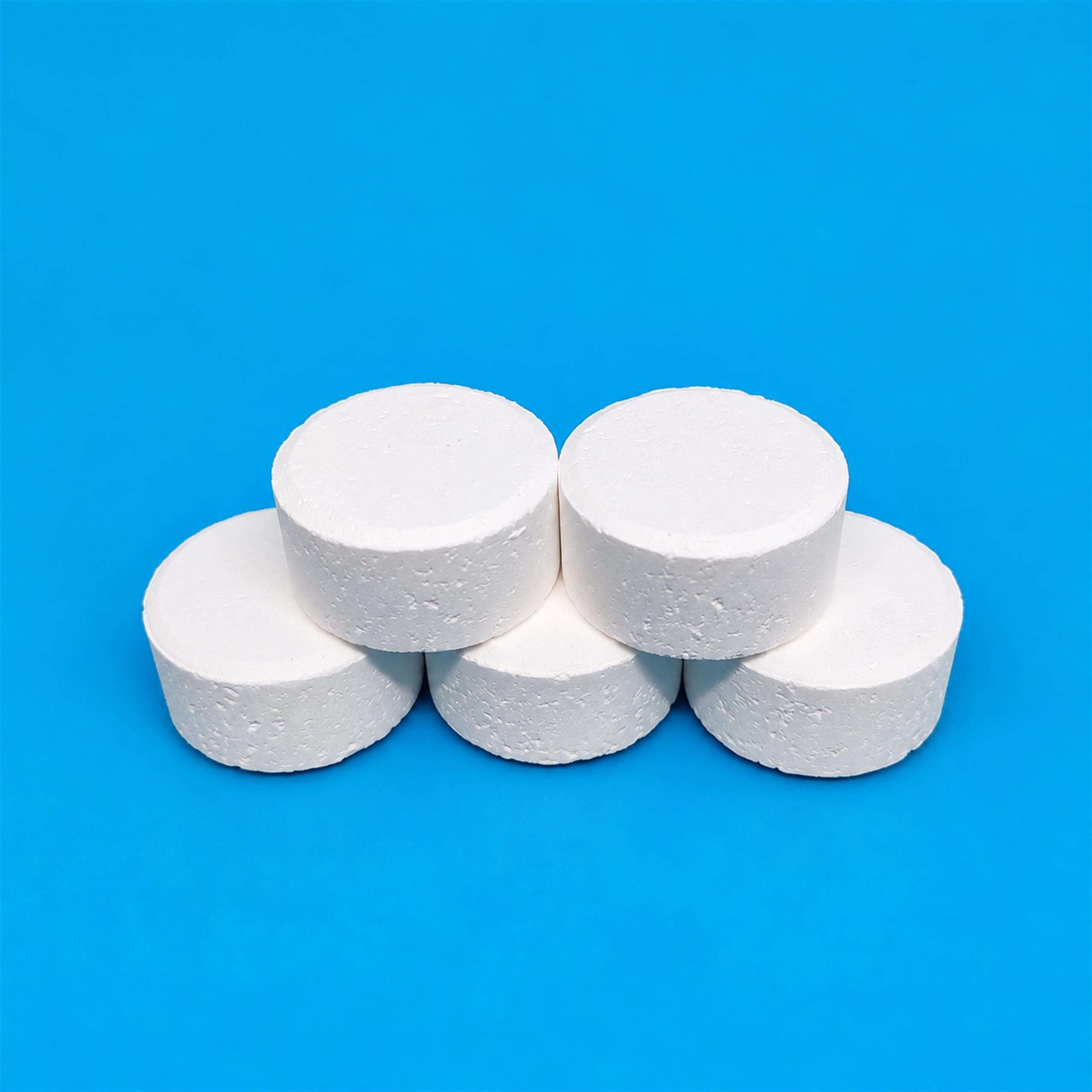
What NaDCC Specification Should Match the Cleaning Task?
Procurement teams sourcing NaDCC for school cleaning must first confirm whether the product is supplied as a granular tablet, powder, or pre-dissolved solution, and whether the available chlorine content aligns with the intended disinfection protocol. Not every NaDCC grade suits every surface or procedure in a school setting. The critical starting question is: does the product documentation clearly state the available chlorine percentage, the recommended working concentration for the target pathogen group, and the contact time required on the specific surfaces found in the school?
NaDCC is sodium dichloroisocyanurate, typically available in anhydrous or dihydrate forms. The dihydrate form is more common in disinfectant products because it is more stable in storage. Procurement should ask suppliers to specify which form they provide and to confirm that the labelled available chlorine reflects that form. Confusion between anhydrous and dihydrate material can lead to dosing errors that either under-treat or over-treat school surfaces.
Which Safety Data Must Be Available Before Purchase?
Schools are environments with children, staff with varying chemical literacy, and frequent cleaning by non-specialist personnel. The first safety question is: does the supplier provide a current Safety Data Sheet that addresses inhalation risk, skin and eye irritation, and incompatibility with common school cleaning agents such as acids or ammonia-based products?
Procurement teams should ask specifically whether the NaDCC product has been assessed for use around children and whether the supplier can confirm that the recommended dilution and ventilation instructions are practical for classroom and corridor cleaning. If the SDS lists hazards that require specialist PPE beyond what school cleaners typically use, the team must decide whether additional training or a different formulation is warranted.
How Should Efficacy Claims Be Verified for School Pathogens?
The second major question concerns what the product actually kills at the concentration it will be used. Procurement should ask: against which organisms has this NaDCC product been tested at the recommended working concentration and contact time, and can the supplier provide the test report or reference the standard method used?
Common pathogens of concern in schools include norovirus, influenza virus, Staphylococcus aureus, and certain fungal species. NaDCC is a broad-spectrum oxidising disinfectant, but efficacy depends on concentration, pH, temperature, and contact time. A product that claims general disinfection without specifying test conditions is not sufficient for procurement decisions. Teams should ask for clarification on the following:
- Which test standard was followed (for example, EN 14476 for virucidal activity, EN 13697 for surface disinfection).
- Whether the test was performed at the working concentration the school will actually use, not at a higher laboratory concentration.
- Whether organic soil load was included in the test, since school surfaces often carry visible soiling.
What Regulatory and Labelling Requirements Apply?
Procurement teams must ask whether the NaDCC product carries the regulatory approval required in the country or region where the school operates. In the European Union, biocidal products fall under the Biocidal Products Regulation (BPR, Regulation (EU) 528/2012), and the product must hold a valid authorisation for the intended product-type (for example, PT2 for disinfectants not in direct contact with food, or PT4 for surface disinfection in areas where food is present).
Teams should request the product-type designation, the authorisation number, and confirmation that the label includes the required signal word, hazard pictograms, and first-aid instructions in the local language. If the product is marketed outside a formal biocide framework, procurement should ask what national regulations govern its sale and use, and whether those regulations permit its application in schools.
What Dosing and Preparation Questions Need Answering?
A frequent source of error in school cleaning is incorrect preparation of the NaDCC solution. Procurement should ask: what is the exact mass of product required per litre of water to achieve the target concentration, and does the supplier provide a measuring device or clear instructions that minimise calculation errors?
Teams should also ask whether the product dissolves readily at typical room temperatures found in schools, whether the solution remains stable for the duration of a cleaning shift, and what colour indicator (if any) is included to help staff verify that the correct concentration has been achieved. If the product requires warm water for full dissolution, this may be impractical in some school facilities.
How Does NaDCC Interact with School Surfaces and Other Products?
Schools contain a wide range of surfaces including laminate, painted walls, stainless steel, plastic, and sometimes wood or fabric. Procurement should ask: has the supplier or an independent body tested this NaDCC product on the specific surface materials found in the school, and at what concentration and contact time?
Equally important is compatibility. Teams must ask whether the NaDCC solution can be used sequentially with, or must be rinsed before applying, other cleaning agents such as detergents, floor finishes, or acidic descalers. Mixing NaDCC with acids releases chlorine gas, and mixing with ammonia-based products produces toxic chloramines. Procurement should confirm that the supplier provides explicit incompatibility warnings and that these are written in language accessible to cleaning staff.
What Storage and Shelf-Life Information Is Needed?
NaDCC in tablet or granular form degrades over time, especially when exposed to moisture, heat, or sunlight. Procurement teams should ask: what is the stated shelf life from the date of manufacture, what storage conditions are required, and how will the product be packaged to protect it during transport to the school?
If the school will store the product for extended periods, teams should confirm whether batch dating is printed on each container and whether the supplier can advise on a stock rotation system. Bulk purchases without clear expiry information create a risk that degraded product will be used without anyone realising the available chlorine has fallen below the effective level.
What Documentation Should Accompany the Purchase?
Beyond the Safety Data Sheet, procurement should request the following from the supplier:
- A technical data sheet stating available chlorine, form (granule, tablet, powder), solubility, and recommended pH range of the working solution.
- Efficacy test summaries or references to recognised standards.
- Regulatory authorisation details applicable to the school’s jurisdiction.
- Clear label instructions including dilution ratios, contact times, surface compatibility, and disposal guidance.
If any of these documents are unavailable or vague, the procurement team should treat the product as unsuitable until the gaps are filled.
Why These Questions Matter for School Procurement
NaDCC is an effective oxidising disinfectant when used correctly, but schools present unique constraints: non-specialist users, diverse and sensitive surfaces, regulatory scrutiny, and the presence of children. Procurement teams that skip technical questions risk purchasing a product that either fails to disinfect at the intended level or creates safety hazards through misuse. Every question listed above is designed to close that gap before a contract is signed.
If your team is evaluating NaDCC products for school cleaning and needs to confirm specification details, regulatory status, or suitability for your specific surfaces, contact ENVO CHEMICAL with the product-type and intended application so we can address the precise questions your procurement list raises.
