
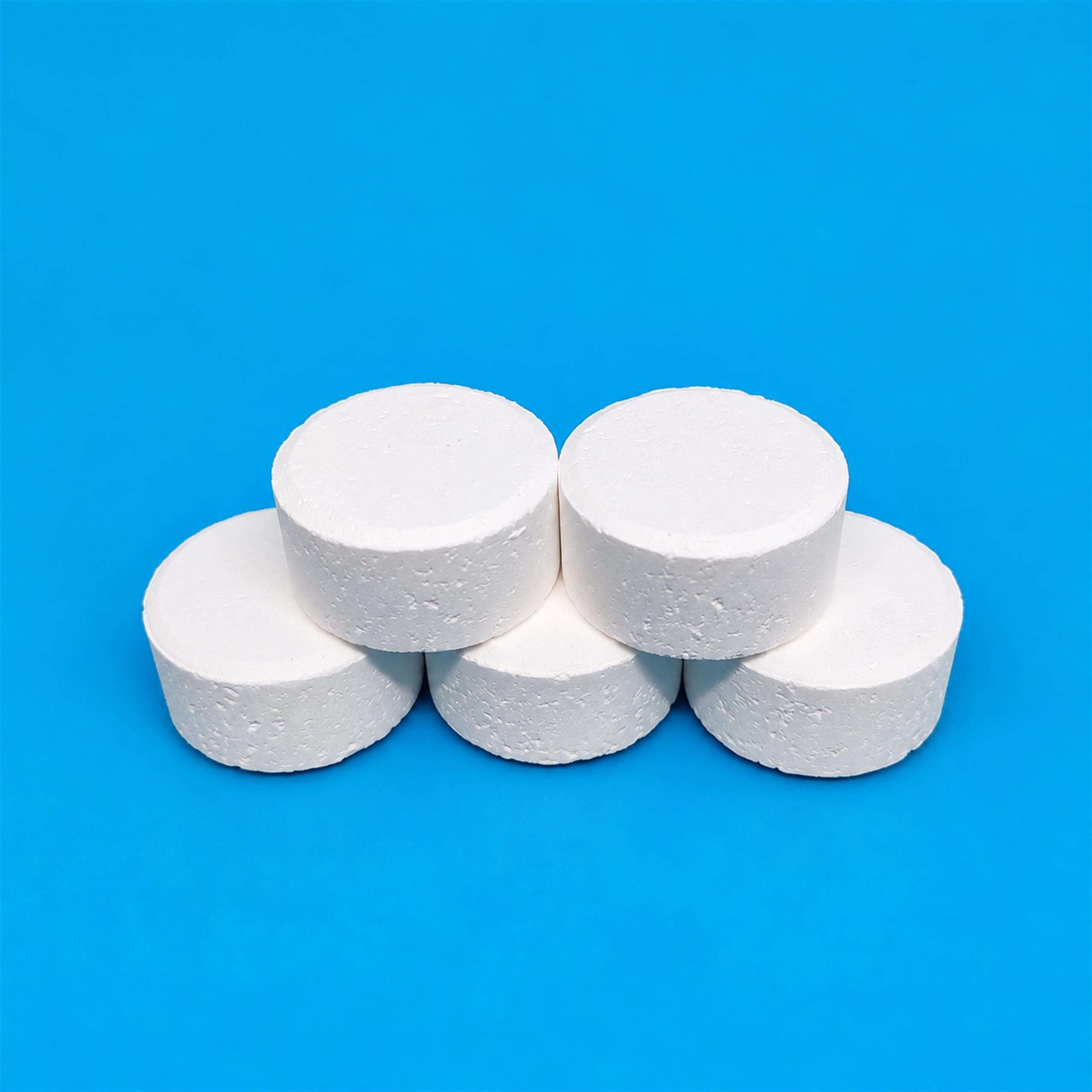
How NaDCC Control Measures Fit Into HACCP Documentation
When sodium dichloroisocyanurate (NaDCC) is used as a disinfection step within a HACCP plan, the relevant control measures that must be recorded include the applied concentration (expressed as available chlorine), contact time, solution pH, temperature, frequency of application, and the method of verification. These parameters define whether the NaDCC step is operating within its validated limits and whether the hazard it controls remains under control.
The specific records depend on whether NaDCC use is designated as a Critical Control Point (CCP), a prerequisite programme (PRP), or an operational prerequisite programme (oPRP). Each designation carries different documentation demands under Codex Alimentarius HACCP principles and related food safety management standards.
Identifying Which NaDCC Measures Are HACCP-Relevant
Not every use of NaDCC automatically triggers full CCP documentation. The first step in recording the relevant control measures is to confirm where NaDCC appears in the hazard analysis.
- CCP designation: If NaDCC disinfection is the step that controls a significant biological hazard (for example, pathogen reduction on food-contact surfaces or in process water), it will likely be a CCP. Documentation must include critical limits, monitoring procedures, corrective actions, verification, and record-keeping for that step.
- oPRP or PRP designation: If NaDCC is used for general environmental hygiene or non-product-contact sanitation, it may fall under an operational prerequisite or prerequisite programme. Records are still required, but the formal HACCP plan may reference them without the full CCP decision-tree documentation.
The hazard analysis determines the designation. Once confirmed, you record only the control measures that are tied to that hazard, not every NaDCC use on site.
Core Parameters to Record for NaDCC Disinfection Steps
Regardless of CCP or PRP status, the following parameters represent the minimum set of control measures that must be documented when NaDCC is the active disinfectant:
| Parameter | What to Record | Why It Matters |
|---|---|---|
| Available chlorine concentration | Measured value (e.g., mg/L or ppm) at point of use, prepared from known NaDCC mass and water volume | Confirms the dose is within the validated range for the target microorganism and application |
| Contact time | Start and end time of the disinfection exposure period | Ensures the chlorine-microorganism interaction lasts long enough for the required log reduction |
| Solution pH | Measured pH of the prepared NaDCC solution at the time of use | NaDCC efficacy is pH-dependent; hypochlorous acid formation peaks near pH 5–6 and declines sharply above pH 8 |
| Temperature | Solution or surface temperature during contact | Higher temperatures generally increase disinfection rate; lower temperatures may require longer contact or higher dose |
| Preparation details | Batch or lot identifier of NaDCC, mass weighed, water volume, preparation time, preparer initials | Provides traceability and supports corrective action if a preparation error is suspected |
| Verification test results | Periodic microbiological swab results, ATP readings, or chemical test strip confirmations | Demonstrates that the recorded parameters are actually achieving the intended hazard control |
Each of these entries becomes a line item on the monitoring record sheet or electronic log tied to the specific HACCP step.
Documenting Critical Limits for NaDCC
A critical limit is a measurable boundary that separates acceptable from unacceptable. For NaDCC disinfection, typical critical limits might include:
- Minimum and maximum available chlorine concentration at the point of application.
- Minimum contact time before rinsing or draining (if applicable).
- pH range within which the NaDCC solution is considered effective for the intended purpose.
These limits must be derived from validated data specific to the application—surface type, target organism, organic load, and water hardness. Generic figures from other operations do not satisfy HACCP validation requirements. The documentation must state the source or basis for each limit (for example, in-house validation study, published peer-reviewed data, or regulatory guidance applicable to the jurisdiction).
If a NaDCC step is not a CCP, the same parameters still need defined acceptable ranges, but they are documented within the PRP or oPRP record rather than the CCP monitoring log.
Monitoring Frequency and Who Records
The HACCP plan must specify how often each NaDCC parameter is checked and who is responsible. Common practice for NaDCC solution preparation includes:
- Concentration check at every batch preparation using test strips, colourimetric kits, or a calibrated photometer.
- pH check at every batch preparation and, for recirculating systems, at defined intervals during use.
- Contact time recorded by the operator performing the disinfection task, with a timestamp.
- Verification (swab or ATP test) on a scheduled basis—for example, daily, weekly, or per production run—depending on risk level.
The person recording the data must be trained and identified on the form. Signed or initialed entries provide the audit trail that food safety auditors expect.
Corrective Actions and Record Linking
When a recorded NaDCC parameter falls outside its critical limit, the HACCP documentation must capture the corrective action taken and the disposition of the affected product or surface. Typical corrective actions for NaDCC include:
- Re-preparing the solution at the correct concentration.
- Extending contact time if the deviation was short-duration.
- Re-cleaning and re-disinfecting the affected surface or equipment.
- Holding or rejecting product that may have been exposed during the deviation period.
Each deviation and its resolution must be recorded on the same document or on a linked corrective action report. This creates a single, traceable narrative from monitoring through to resolution.
Integrating NaDCC Records Into the Overall HACCP File
NaDCC monitoring records should not exist in isolation. They are one component of the HACCP documentation package, which also includes the hazard analysis, the HACCP plan table, prerequisite programme records, verification records, and any supporting validation documents. Best practice is to:
- Cross-reference each NaDCC monitoring log to the specific CCP or PRP number in the HACCP plan.
- Retain records for a period that meets local regulatory and customer requirements (commonly 12–24 months or longer for certain sectors).
- Review trends periodically—for example, monthly—to identify drift in NaDCC concentration or pH that may indicate a systemic issue before it becomes a critical limit breach.
Electronic logging systems can streamline this integration, but the underlying data fields must still capture the parameters listed above. A system that only records “disinfection performed: yes/no” does not meet HACCP documentation standards.
Common Gaps in NaDCC HACCP Records
Audits frequently identify the following shortcomings in NaDCC-related documentation:
- Recording the mass of NaDCC weighed but not the resulting concentration in the solution.
- Omitting pH measurement even though NaDCC efficacy is highly pH-sensitive.
- Failing to document the lot or batch number of the NaDCC product used, breaking traceability.
- Not linking verification results (such as post-disinfection swabs) back to the specific NaDCC application event.
- Using expiry dates or shelf-life assumptions for NaDCC solution without confirming stability under the actual storage and use conditions on site.
Addressing these gaps during a document review before an audit is far more efficient than correcting them after a non-conformance is raised.
Summary of What Must Be Recorded
To answer the title directly: recording the relevant control measures for NaDCC within HACCP documentation means capturing the concentration, contact time, pH, temperature, preparation details, monitoring frequency, responsible person, verification results, and any corrective actions—all tied to the specific hazard and step where NaDCC is applied. The depth of documentation scales with whether the step is a CCP, oPRP, or PRP, but the fundamental parameters remain the same.
If you need clarification on which parameters apply to a particular NaDCC disinfection step in your operation, contact ENVO CHEMICAL with the application details (surface type, target hazard, water conditions) so we can confirm the documentation requirements specific to your HACCP plan.
