
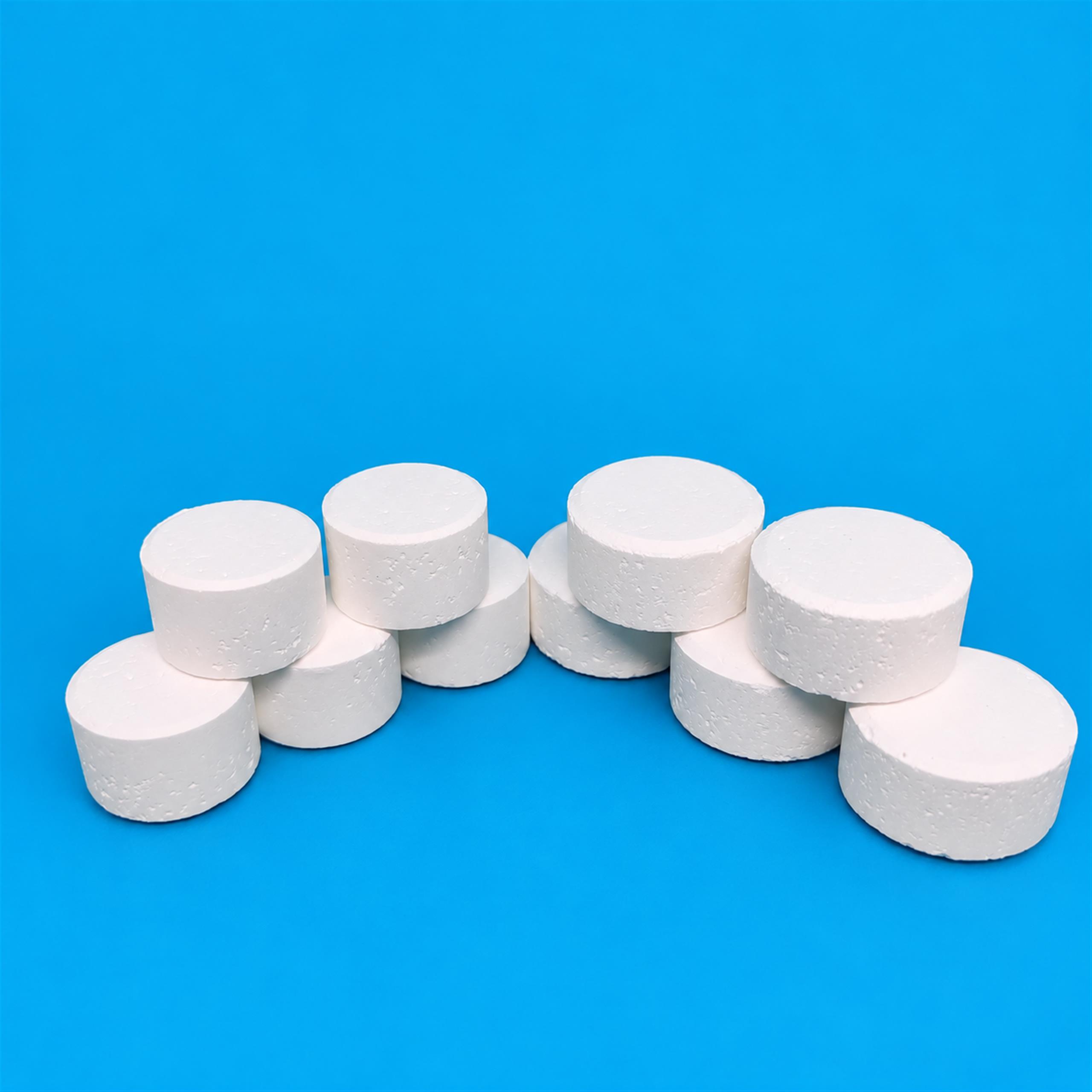
Is NaDCC Safe for Reusable Food Containers After Proper Rinsing?
Sodium dichloroisocyanurate (NaDCC) can be used to disinfect reusable food containers, but only if two conditions are met: the container material is compatible with the NaDCC solution at the intended concentration and contact time, and the final rinse removes available chlorine to a level that does not pose a risk to food safety or alter food quality. Neither condition can be assumed—both must be checked for each container type and each NaDCC preparation.
The practical answer is that many common food-contact plastics tolerate NaDCC at typical disinfection concentrations, but some materials do not. Equally important, rinsing must be verified by testing for residual chlorine, not by time or number of rinse cycles alone. Skipping either check risks either container damage or unacceptable chemical residue on food-contact surfaces.
Why Rinsing and Compatibility Both Matter
NaDCC is a chlorine-releasing compound that works by generating hypochlorous acid in water. This is a disinfection mechanism, not a cleaning or rinsing action. When NaDCC solution contacts a reusable food container, it kills microorganisms on the surface—but it also leaves behind residual available chlorine unless it is thoroughly removed. Residual chlorine at even low levels can react with food components, cause off-flavours, and in sufficient quantity raise food-safety concerns.
Compatibility matters for a different reason. Prolonged or repeated exposure to NaDCC solution can degrade certain plastics, elastomers, and printed surfaces on food containers. A container that looks undamaged after one use may crack, discolour, or leach substances after dozens of cycles. Both checks—material compatibility and rinse verification—are therefore prerequisites before NaDCC can be adopted as a routine disinfection step for reusable food containers.
Checking Material Compatibility With NaDCC
What to look for in container materials
Reusable food containers are commonly made from polypropylene (PP), polyethylene (PE), polycarbonate (PC), and sometimes stainless steel or silicone. NaDCC solutions are mildly acidic when dissolved (typically pH 5.5–6.5 depending on concentration), and they carry oxidative potential. Materials differ in how they tolerate this combination.
Polypropylene and high-density polyethylene generally show good resistance to NaDCC at standard disinfection concentrations (up to around 200 mg/L available chlorine) for the short contact times used in food-contact disinfection. Polycarbonate is more vulnerable to oxidative attack and can yellow or craze with repeated exposure. Silicone seals and gaskets may harden over time. Stainless steel is typically compatible but should be assessed for any passivation or surface finish that could be affected.
How to verify compatibility for your containers
- Identify the exact material grade and any coatings or printed inks on the container.
- Prepare the NaDCC solution at the concentration and temperature you plan to use—do not use a different concentration to “test” compatibility, because resistance changes with dose.
- Immerse or swab a sample container and hold it for the full intended contact time.
- Inspect for discolouration, surface roughness, cracking, swelling, or loss of flexibility in seals.
- Repeat the exposure for multiple cycles (a minimum of 10–20 cycles is reasonable for a preliminary check) to catch cumulative effects that a single test misses.
- If the container carries a food-contact certification or declaration of compliance, check whether it specifies resistance to chlorinated disinfectants—this is not the same as blanket compatibility with NaDCC.
If you cannot confirm compatibility through your own testing, request material-compatibility data from the container manufacturer. Do not rely on the assumption that a “food-safe” label covers chemical disinfection exposure.
Checking That Rinsing Removes NaDCC Residue
Why visual or time-based rinsing is not enough
A common mistake is to assume that a certain number of water rinses or a set number of seconds of rinsing will fully remove NaDCC. In practice, residual available chlorine depends on the initial concentration, the volume of solution that clings to the container (which varies with shape and surface texture), water temperature, and the number and thoroughness of rinse steps. Two identical containers can end up with different residuals after the same nominal rinsing procedure.
Testing residual chlorine after rinsing
The only reliable way to confirm adequate rinsing is to test for residual available chlorine on the rinsed container surface or in the final rinse water. Two practical methods are widely used:
- DPD colorimetric test: A drop of the final rinse water (or a swab extract from the container surface) is tested with N,N-diethyl-p-phenylenediamine (DPD) reagent. A colour change to pink indicates residual chlorine. The intensity can be compared against a colour chart to estimate concentration.
- Test strips: Semi-quantitative chlorine test strips dipped in the final rinse water give a rapid reading. These are less precise than DPD but useful for routine checks.
The target after rinsing is no detectable available chlorine, or a level so low that it will not transfer to food during normal use. What constitutes an acceptable residual depends on the food-safety framework applicable to your operation—this is not a value that can be assumed from general disinfection guidelines. Confirm the acceptable limit with the food-safety standards or regulations that govern your specific application.
Practical rinsing steps that support verification
- Use potable-quality water at a temperature that aids dissolution and runoff (warm water generally rinses more effectively than cold, but check container tolerance).
- Ensure water contacts all interior surfaces, including corners and under lips.
- Drain thoroughly between rinse cycles—pooling water dilutes but does not remove chlorine.
- Perform at least two full-volume rinses, then verify with a test on the final rinse water or a surface swab.
- If residual chlorine is still detectable, add another rinse and retest. Do not substitute longer soak times for additional rinses unless you have verified that soaking achieves the target.
What Goes Wrong When Checks Are Skipped
Using NaDCC on incompatible containers leads to physical degradation: cracks that harbour bacteria, discoloured surfaces that may indicate chemical breakdown, or stiff seals that fail to close properly. These failures can be subtle at first and become safety hazards over time.
Inadequate rinsing leaves chlorine residue that can react with fats, proteins, or acids in food, producing chlorinated by-products or off-odours. Even if no acute hazard is apparent, repeated low-level exposure through food contact is undesirable and may breach food-safety requirements.
Neither problem is visible to the naked eye at the point of use. That is why the checks described above—material compatibility testing and residual chlorine verification—are not optional steps; they are the core of safe NaDCC use on reusable food containers.
A Note on NaDCC Concentration and Contact Time
The specific concentration of NaDCC and the contact time required for disinfection on food-contact surfaces depend on the target organisms, the soiling level, and the regulatory or standard requirements that apply to your operation. Higher concentrations improve microbial kill but increase the burden on rinsing and the stress on container materials. Lower concentrations may be gentler on materials but may not achieve the required log reduction if contact time is also reduced.
Do not transfer dosage or contact-time recommendations from swimming-pool disinfection, drinking-water treatment, or healthcare-surface disinfection to food-container applications. These are different contexts with different requirements. Confirm the appropriate parameters for your specific food-contact use case before preparing any NaDCC solution.
Summary of the Two Key Checks
| Check | What to do | How to confirm |
|---|---|---|
| Material compatibility | Expose sample containers to the planned NaDCC solution at the planned concentration for the planned contact time, repeated over multiple cycles | Visual and tactile inspection for degradation; consult manufacturer data if available |
| Rinsing adequacy | Rinse with potable water using a defined procedure, then test the final rinse water or a surface swab | DPD test or chlorine test strip showing no detectable or acceptably low residual available chlorine |
Both checks should be documented and repeated if you change the NaDCC product, the concentration, the container type, or the rinsing procedure. A change in any one variable can invalidate a previous pass.
Next Step
If you are evaluating NaDCC for disinfection of reusable food containers and need to confirm material compatibility or establish a rinsing-verification protocol, contact ENVO CHEMICAL with your container material specifications and intended NaDCC concentration so we can discuss the relevant checks for your setup.
