
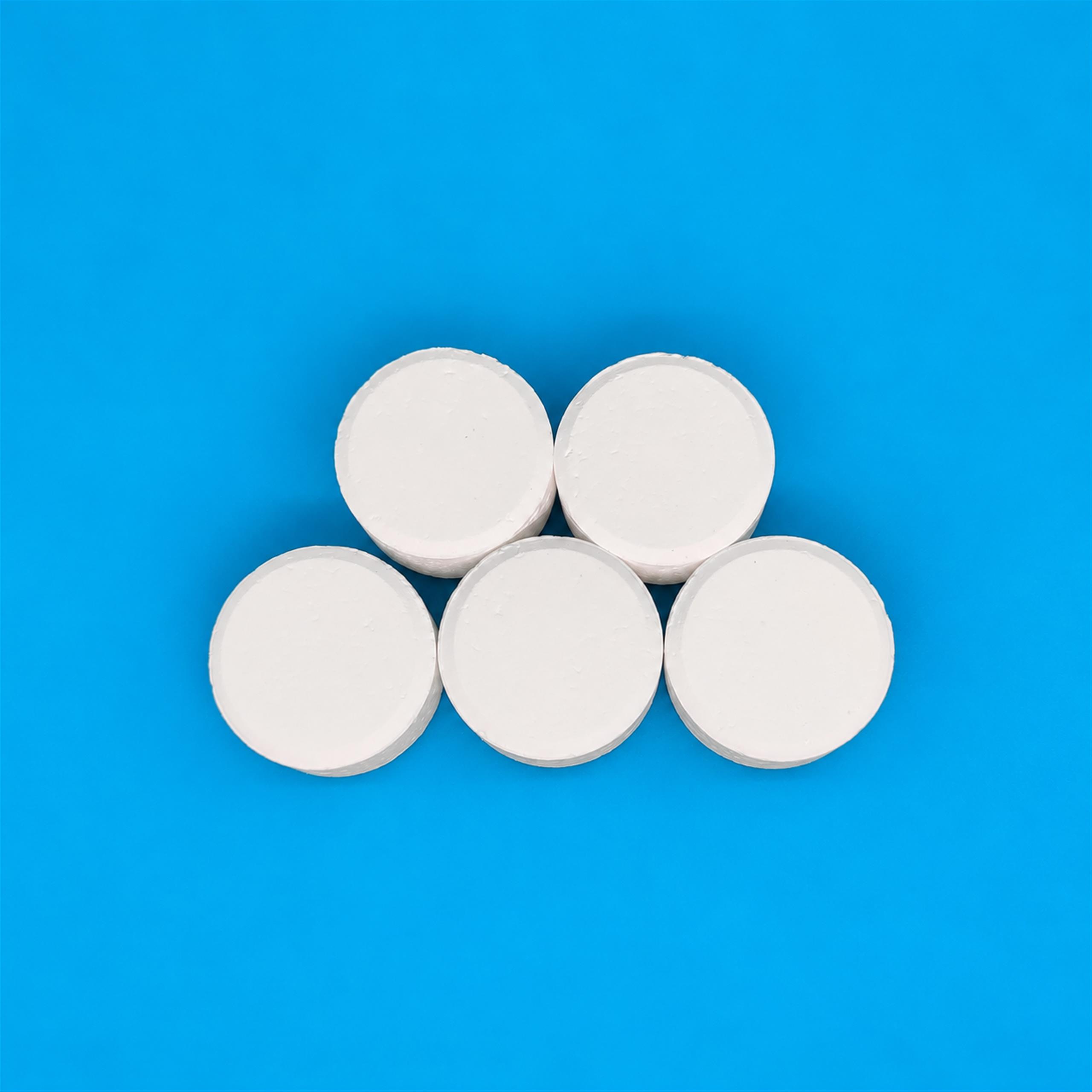
NaDCC on Food Conveyor Surfaces: The Core Confirmations Equipment Suppliers Must Make
Before recommending or integrating sodium dichloroisocyanurate (NaDCC) disinfection on food conveyor surfaces, equipment suppliers must confirm four critical points: material compatibility of the conveyor belt and frame with the NaDCC solution, the achievable and verifiable chlorine residual at the point of application, regulatory acceptability of the chosen concentration for food-contact surfaces, and whether the equipment’s dosing and rinse systems can maintain those parameters without cross-contamination. If any one of these is unconfirmed, the supplier risks delivering a system that either corrodes the conveyor, fails to disinfect, or violates food-safety standards.
Confirm Material Compatibility With NaDCC Solution
Why this matters
NaDCC releases available chlorine when dissolved. That chlorine, at the concentrations typically used for surface disinfection, is oxidising. Equipment suppliers must verify that every material on the conveyor—belt, rollers, guides, frame, seals—can withstand repeated exposure to the specific NaDCC concentration they intend to use.
What to check
- Belt material: Stainless steel (304 or 316 grades) generally tolerates dilute NaDCC solutions, but suppliers should obtain written confirmation from the belt manufacturer. Polyurethane, PVC, and rubber belts may degrade with prolonged or concentrated exposure. Confirm the manufacturer’s chemical resistance data against hypochlorous acid at the planned dose.
- Frame and fasteners: Even if the belt is compatible, bolts, bearings, and guide rails may not be. Galvanised or low-grade steel components can corrode. Suppliers must confirm that all wetted parts are rated for the oxidising environment.
- Gaskets and seals: Elastomers such as nitrile or EPDM may swell or harden. A material compatibility table from the seal supplier, referencing available chlorine rather than generic “chlorine” resistance, is essential.
A failure to confirm this is a root cause of premature conveyor failure. Suppliers should not assume compatibility based on a single material test; the entire wetted assembly must be evaluated.
Confirm the Target Chlorine Residual and Dose Accuracy
What the supplier must define
NaDCC is a solid that must be dissolved and dosed. The supplier must confirm the concentration of NaDCC in the stock solution, the flow rate or dosing volume, and the resulting available chlorine residual measured at the conveyor surface. These three values must be linked by a verifiable calculation.
Key distinctions to observe
- Available chlorine vs. NaDCC purity: NaDCC dihydrate typically provides around 55–56% available chlorine by weight. Anhydrous NaDCC is higher. Suppliers must specify which form they are dosing and not conflate the two.
- Applied dose vs. measured residual: What is dispensed onto the conveyor is not what remains after contact with organic load, surface geometry, and temperature. Suppliers must confirm that a measurable free chlorine residual (typically verified with test strips or a portable meter calibrated for low-range chlorine) is achieved and maintained for the required contact time.
- Contact time: Disinfection efficacy depends on both concentration and time. The supplier must state the minimum contact time the system design provides and confirm that the conveyor speed and spray coverage deliver it across the full belt width.
Without confirming these parameters, the supplier cannot guarantee that the system actually disinfects rather than merely wetting the surface with a solution that may be too dilute or too brief in contact.
Confirm Regulatory Acceptability for Food-Contact Applications
The regulatory landscape
NaDCC is used in food-processing environments, but equipment suppliers must verify that the specific concentration, application method, and rinse protocol comply with the food-safety regulations applicable in the installation’s jurisdiction. “Food grade” is not itself a regulatory clearance. In the EU, for example, Regulation (EC) No 852/2004 requires that substances used on surfaces that may contact food do not cause contamination. The supplier must confirm:
- Whether NaDCC at the planned concentration is listed or permitted for the intended use in the target market.
- Whether a potable-water rinse is required after disinfection and, if so, whether the equipment design includes a verified rinse stage that removes chlorine to acceptable levels before food contact resumes.
- Whether any no-rinse protocol is supported by the relevant food-safety authority for the specific application.
Documentation the supplier should request or provide
Suppliers should obtain and retain the NaDCC manufacturer’s technical data sheet showing the product’s food-contact regulatory status (not merely its general industrial classification), the specific concentration limits for surface disinfection, and any required post-treatment water quality specifications. If ENVO CHEMICAL supplies the NaDCC, the supplier should request the current data sheet directly to confirm these details rather than relying on third-party summaries.
Confirm System Design for Reliable Dosing and Rinse Control
Why equipment design matters as much as chemistry
Even with a compatible conveyor and a correct dose, the system will fail if the dosing equipment cannot maintain a consistent NaDCC concentration or if rinse water is not separated from the disinfectant supply. Suppliers must confirm:
- Dosing accuracy: The dosing pump or proportioner must be calibrated for the viscosity and concentration of the NaDCC stock solution. Over-concentration wastes chemical and risks surface damage; under-concentration fails to disinfect.
- Backflow prevention: Disinfectant solution must not siphon back into the water supply. A physical air gap or check valve is mandatory.
- Rinse separation: If a post-disinfection rinse is required, the rinse water supply must be independent. The supplier must confirm that the conveyor system design prevents carry-over of NaDCC solution into the rinse stage.
- Drainage: NaDCC solution on the floor or in drip trays will continue to release chlorine. Suppliers should confirm that the equipment includes adequate drainage and that collected runoff is handled in accordance with local discharge regulations.
Confirm Validation and Monitoring Capability
What a responsible supplier delivers
A supplier should not only install the system but also confirm that the operator can verify it works. This means:
- Providing test strips or a meter range suitable for the expected free chlorine levels on the conveyor surface.
- Defining a frequency for checking the NaDCC stock solution concentration (which degrades over time, especially if exposed to heat or moisture).
- Confirming that the conveyor’s speed and spray pattern allow a uniform application that the operator can visually inspect or measure.
Without this confirmation step, the supplier leaves the food processor without a means to prove that the disinfection step is under control—a critical gap in any HACCP or food-safety management system.
Summary of What to Confirm Before Proceeding
| Confirmation Area | What the Supplier Must Verify |
|---|---|
| Material compatibility | All wetted conveyor components resist the planned NaDCC concentration |
| Dose and residual | Stock concentration, flow rate, surface residual, and contact time are linked and measurable |
| Regulatory status | NaDCC concentration and method comply with food-contact regulations in the target market |
| System design | Dosing accuracy, backflow prevention, rinse separation, and drainage are engineered in |
| Operator verification | Testing tools and check procedures are provided so the processor can confirm ongoing efficacy |
Equipment suppliers who confirm these five areas before deploying NaDCC on food conveyor surfaces give food processors a system that disinfection actually works, the conveyor survives, and regulatory audits pass. Skipping any one of them introduces a failure mode that is difficult to detect until damage or non-compliance occurs.
If you are specifying NaDCC disinfection for a food conveyor installation and need to confirm any of the above parameters with your chemical supplier, contact ENVO CHEMICAL with your conveyor material list, target concentration, and installation jurisdiction so we can address the specific compatibility and regulatory questions.
