
Can You Cut Large Siliphos Balls to Fit a Smaller Refill Cartridge?
No — cutting large Siliphos polyphosphate balls to fit a smaller refill cartridge is not recommended. The controlled-release mechanism that makes Siliphos effective depends on intact, spherical media with a predictable surface-area-to-volume ratio. Sawing, grinding, or breaking the balls creates uneven fragments that dissolve too quickly, clog downstream components, and may compromise the cartridge’s structural integrity. If your existing cartridge is too small for standard-size Siliphos media, the correct solution is to source a media size matched to the cartridge or select a cartridge designed for the media you already have.
Why Siliphos Balls Cannot Be Safely Modified
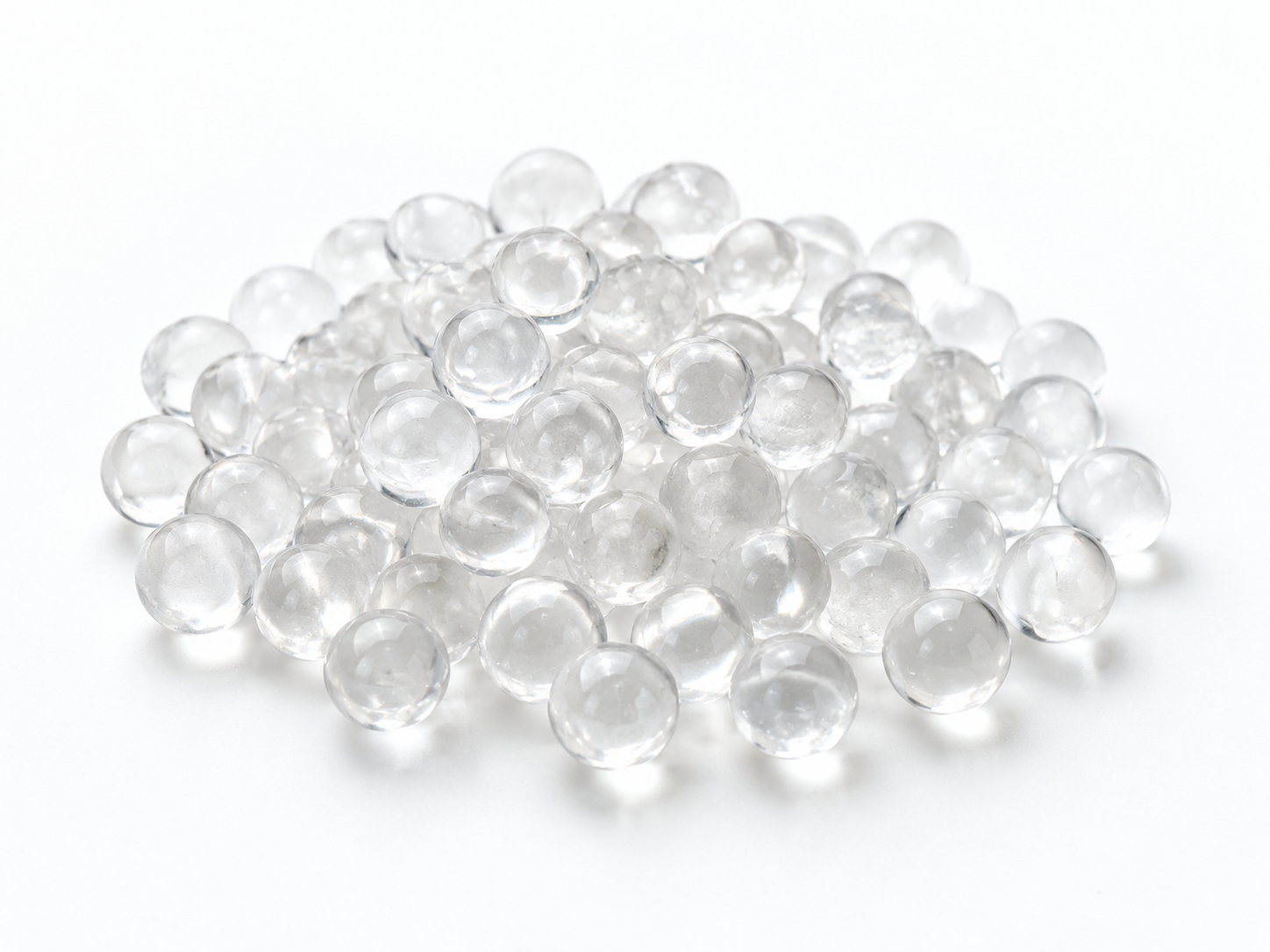
Siliphos is a polyphosphate-based scale inhibition product supplied as solid, glass-like spheres. Its performance relies on a slow, even dissolution of polyphosphate into the water stream. This dissolution is governed by the ball’s surface area relative to its mass. When you cut or break a ball, you dramatically increase the exposed surface area per unit of material, which accelerates phosphate release beyond the intended rate.
Three specific problems arise from cutting:
- Uncontrolled dosing. Fragments dissolve faster than whole balls, potentially delivering excessive polyphosphate to the water. This wastes media and may create conditions where the treated water exceeds the phosphate levels appropriate for the application.
- Physical obstruction. Irregular shards can bridge across cartridge inlet or outlet screens, restrict flow, or migrate into downstream plumbing where they accumulate and cause blockages.
- Reduced service life. Because fragments dissolve more rapidly, the media is exhausted sooner than a whole ball of equivalent mass would be, increasing replacement frequency and cost.
Polyphosphate media is not a filter medium that traps particles — it is a treatment medium that slowly releases active ingredient. Treating it like a granular filter media that you can trim to size misrepresents how the product functions.
What to Do When Your Cartridge Is Too Small for Standard Siliphos Balls
If you are an equipment assembler, installer, or maintenance technician facing a mismatch between the Siliphos ball diameter and your refill cartridge’s internal diameter, consider the following approaches in order of preference.
1. Match the media size to the cartridge specification
Polyphosphate media is available in several nominal ball diameters. Instead of forcing a larger ball into a smaller housing, identify the largest ball size that fits freely inside the cartridge with adequate clearance for water to circulate around it. A ball that sits loosely in the cartridge allows uniform water contact, which is essential for consistent dissolution.
2. Select a cartridge rated for the media you already stock
Many refillable cartridges are sold in multiple sizes. If you have a supply of, for example, 12–16 mm Siliphos balls, look for a cartridge whose internal chamber accommodates that range. Catalog specifications from cartridge manufacturers typically list the maximum media diameter or the recommended media size range — use those numbers, not visual estimation.
3. Evaluate whether a different media form factor suits your design
Some polyphosphate treatments are supplied as smaller granules, prills, or coated beads rather than large spheres. If your cartridge is inherently compact, a granular or smaller-bead format may provide the same scale-inhibition chemistry without requiring a larger housing. Confirm that any alternative form you consider is genuinely a polyphosphate scale inhibitor and not a different type of water-treatment media with a different mechanism.
4. Redesign the cartridge if volume requirements demand it
In OEM or custom-equipment contexts where the treatment capacity must meet a specific phosphate-release target, the cartridge volume may need to increase rather than the media size decrease. Work with your cartridge or housing supplier to size the chamber for the correct number of whole balls needed for the intended service interval.
How Siliphos Ball Size Affects Performance
Understanding the relationship between ball size and function helps explain why modification is counterproductive. Larger balls have a lower surface-area-to-mass ratio, meaning they dissolve more slowly and last longer. Smaller balls dissolve faster and need more frequent replacement but may fit into tighter spaces.
| Factor | Larger Ball (e.g., 16–20 mm) | Smaller Ball (e.g., 8–12 mm) | Cut or Broken Fragment |
|---|---|---|---|
| Dissolution rate | Slower, more controlled | Faster, shorter intervals | Unpredictable, often too fast |
| Service life per unit mass | Longer | Shorter | Shorter than whole ball of same mass |
| Risk of flow obstruction | Low (if cartridge fits) | Low to moderate | High — irregular shapes bridge gaps |
| Suitability for cutting | Not applicable | Not applicable | Not recommended |
This table is a general illustration of how ball size influences behavior. Exact dissolution rates depend on water temperature, pH, flow velocity, and the specific polyphosphate composition of the product. Verify the performance data for the exact grade you are using before finalizing a design.
Distinguishing Scale Inhibition from Other Water-Treatment Functions
It is easy to confuse what polyphosphate media does with what other treatment media do. Clarifying these differences prevents misapplication:
- Scale inhibition (what Siliphos does). Polyphosphate is released into water and interferes with the crystal growth of calcium carbonate and other scale-forming minerals. It does not remove existing scale, soften water by ion exchange, or disinfect.
- Water softening. Achieved through ion-exchange resins or reverse osmosis, not polyphosphate. A water softener and a polyphosphate injector are fundamentally different devices.
- Scale removal. Requires acid cleaning, mechanical descaling, or other active removal methods. Polyphosphate prevents new scale; it does not dissolve old deposits.
- Filtration. Physical removal of suspended particles. Polyphosphate media is not a filter — it is a chemical treatment medium.
- Corrosion inhibition. Some polyphosphate formulations offer mild corrosion-inhibiting properties as a secondary effect, but this is distinct from dedicated corrosion inhibitors such as orthophosphate or silicate-based products.
If your system requires a combination of these functions, each one needs its own treatment stage. Do not expect a single cartridge of polyphosphate media to soften, filter, disinfect, and inhibit scale simultaneously.
Practical Checklist Before Modifying or Selecting Media
Before you cut, grind, or force-fit any polyphosphate media, run through these points:
- Confirm the exact ball diameter of the Siliphos grade you have in hand.
- Measure the cartridge’s internal diameter and note any screen or retainer openings.
- Check the cartridge manufacturer’s recommended media size range.
- Determine the required phosphate release rate for your application based on water hardness and flow.
- Verify whether the specific Siliphos product is approved for your intended water use — food-grade labeling alone does not confirm drinking-water suitability in every jurisdiction; the exact product, application, and destination market must be checked.
- If no whole-ball size fits, source a smaller ball size or a different cartridge rather than modifying the media.
Frequently Asked Questions
Will cutting a Siliphos ball void any performance guarantee?
Most manufacturers, including ENVO CHEMICAL, specify that media must be used intact and in the form supplied. Altering the physical form is not covered under standard performance expectations because the dissolution behavior changes in ways that cannot be predicted from whole-ball data.
Can I use Siliphos fragments in a non-pressurized dispenser where flow is very slow?
Even in low-flow or gravity-fed dispensers, fragments dissolve faster and unevenly than whole balls. You may achieve short-term scale inhibition, but dosing becomes unreliable and the media depletes quickly. A small-ball grade designed for slow-flow applications is a better choice.
Is there a polyphosphate product that comes pre-sized for compact cartridges?
Yes. Several polyphosphate media suppliers offer smaller-diameter balls or granular forms specifically for compact housing. When selecting, confirm that the product is a true polyphosphate scale inhibitor and check its certified specifications for your target water conditions.
Does ball color indicate anything about cuttability or hardness?
Siliphos balls are typically clear to slightly amber glass-like spheres. Their hardness makes them brittle rather than ductile — they shatter rather than cut cleanly, which is another reason modification is impractical. Attempting to saw them produces powder and shards, not usable pieces.
Getting the Right Media Size for Your Cartridge
The most reliable path to solving a size mismatch is to align the media and the housing from the start rather than adapting one to the other through physical alteration. If you are specifying or sourcing polyphosphate scale-inhibition media for a particular cartridge, having the exact cartridge dimensions and the water-treatment requirements — source-water hardness, target flow rate, desired treatment duration, and applicable regulatory standards — allows you to select a compatible ball size or an alternative media form without compromise.
ENVO CHEMICAL supplies polyphosphate media in standard ball sizes suitable for a range of refillable cartridge systems. If you need help identifying which grade and size matches your equipment or if you want to discuss custom specifications for a particular application, share your cartridge internal dimensions, the water conditions the system will treat, and the volume or dosage you require — and we can point you toward the right option.
