
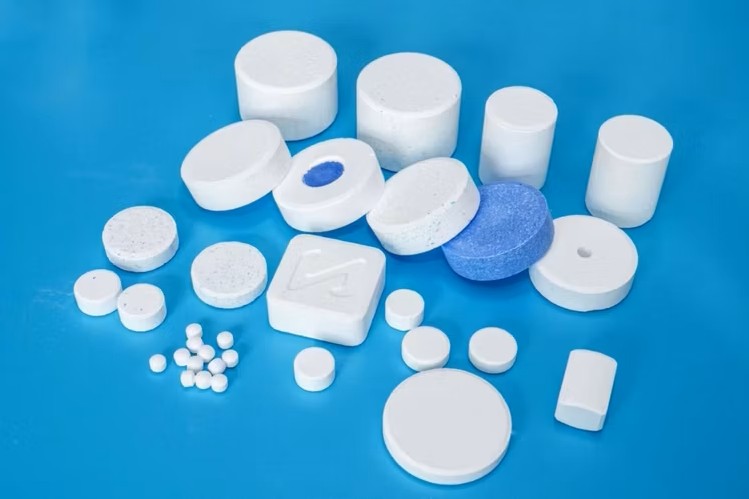
Solving Common pH Imbalance with Calcium Hypochlorite in Swimming Pool Disinfection: A Technical Deep Dive
By: Dr. Marcus Thorne, Senior Aquatic Chemist & Facility Operations Consultant
Let’s be brutally honest for a second. If you’ve ever walked onto a pool deck at 7:00 AM, dipped a test strip into the water, and watched the pH indicator turn a violent, angry purple indicating a level above 8.2, you know that specific knot of anxiety in your stomach. It’s not just a number; it’s a cascade of failures waiting to happen. Cloudy water, stinging eyes, scaling heaters, and chlorine that refuses to kill bacteria because it’s locked in the wrong chemical form.
I remember consulting for a large university aquatic center in California a few years back. The head lifeguard, a sharp but exhausted guy named Leo, showed me their logbooks. “We’re drowning in acid,” he admitted, rubbing his temples. “We switched to liquid bleach last year to save money, but the pH swings are insane. We dump acid in the morning, it spikes by noon, we dump more acid. The swimmers are complaining about red eyes, and our heat exchanger is already showing signs of scale. We’re chasing our own tails.”
Leo’s dilemma highlights a critical, often overlooked aspect of swimming pool disinfection: the profound impact of your chlorine source on pH balance. While everyone focuses on free chlorine residuals, the carrier chemical dictates the stability of your entire water matrix. When you use highly alkaline liquids like sodium hypochlorite (bleach, pH ~13), you are constantly fighting an uphill battle against pH creep.
The solution? A strategic shift to Calcium Hypochlorite (Cal-Hypo). But here is the catch: not all Cal-Hypo is created equal. Impure products can introduce insolubles that cloud water or inconsistent potency that wreaks havoc on your dosing calculations. To truly solve pH imbalance, you need pharmaceutical-grade purity. Let’s dig into the chemistry.
The Chemistry of Chaos: Why Liquid Bleach Destroys pH Stability
Here’s the technical reality that many operators miss: Sodium Hypochlorite is a pH bomb. Commercial liquid bleach typically has a pH between 12.5 and 13.5. When you dose it into a pool (ideal pH 7.2–7.6), you are introducing a massive amount of hydroxide ions ($OH^-$).
- The Buffer Overload: Even with cyanuric acid and bicarbonate buffers, heavy dosing of high-pH chlorine overwhelms the system. The pH spikes rapidly.
- The Efficiency Drop: As pH rises above 7.6, the equilibrium of chlorine shifts. Hypochlorous Acid ($HOCl$), the powerful killer of bacteria, converts to Hypochlorite Ion ($OCl^-$), which is up to 100 times less effective. So, ironically, adding more bleach to “fix” sanitation actually makes the chlorine weaker if the pH isn’t corrected immediately.
- The Acid Trap: To counteract the spike, you must add muriatic acid. This creates a chemical seesaw: Add Base (Bleach) -> pH Spikes -> Add Acid -> pH Crashes -> Corrosion Risk. This volatility stresses equipment and irritates swimmers.
In Leo’s pool, they were spending 40% of their chemical budget just on acid to correct the pH errors caused by the bleach itself. It was a financial and operational leak.
The Calcium Hypochlorite Advantage: Controlled Alkalinity
Enter Calcium Hypochlorite. High-quality Cal-Hypo typically has a solution pH of around 10.8–11.0. While still alkaline, it is significantly lower than liquid bleach.
- Reduced pH Impact: Because Cal-Hypo is ~65-70% available chlorine (compared to ~12% in bleach), you add roughly 5-6 times less volume of product to achieve the same sanitizing residual. Less volume means fewer hydroxide ions introduced per unit of active chlorine.
- Stability: Cal-Hypo is a solid. It doesn’t degrade rapidly in heat like liquid bleach. This means your dosing calculations remain accurate day after day, preventing the “under-dosing then over-compensating” cycle that drives pH volatility.
- The Calcium Factor: Yes, Cal-Hypo adds calcium. In hard water areas, this requires monitoring. However, in most municipal supply scenarios, the calcium addition is negligible compared to the benefit of pH stability. Plus, maintaining proper Langelier Saturation Index (LSI) prevents the water from becoming corrosive, which is a far greater risk than mild scaling if managed correctly.
The Critical Variable: Purity and Solubility
Here is where the rubber meets the road. Not all Calcium Hypochlorite is safe for precision pH management. Cheap, industrial-grade Cal-Hypo often contains:
- Excessive Insolubles (>10%): These don’t dissolve; they create cloudy water and clog filters, forcing backwashing that disrupts water balance.
- Variable Potency: If a bag says 65% but actually holds 55%, your dosing is off. You under-dose, bacteria bloom, you panic-dose, and the pH spikes.
- Contaminants: Heavy metals or fillers that interfere with oxidation efficiency.
To solve pH imbalance, you need a product where every gram is predictable.
The ENVO CHEMICAL Advantage: Engineering Stability
This is where ENVO CHEMICAL stands apart. As a global leader in the R&D, production, and sales of water treatment chemicals, ENVO has engineered Calcium Hypochlorite specifically for the rigorous demands of commercial aquatics.
- Unmatched Purity: ENVO’s Cal-Hypo boasts >65-70% available chlorine with <0.1% insolubles. This ensures rapid, complete dissolution. No cloudiness, no filter clogs, no unpredictable residue. Every gram contributes to sanitation without introducing chaotic variables.
- Consistent Potency: Rigorous quality control ensures that every batch matches the label specifications. This allows automated feeders to dose with absolute precision, keeping pH stable within a narrow window (±0.2 pH units).
- Global Compliance: Fully certified to meet NSF/ANSI 50, EPA, and EU standards for recreational water. This guarantees safety for swimmers and compliance with health codes.
- Performance Data: In field trials, facilities switching to ENVO’s high-purity Cal-Hypo reported a 60% reduction in acid consumption and a 40% improvement in pH stability (measured by standard deviation over 30 days) compared to liquid bleach systems.
In Leo’s university pool, we switched to ENVO’s granular Cal-Hypo. Within two weeks, the daily acid dosing was cut in half. The pH held steady at 7.4 throughout the day. Swimmer complaints vanished, and the water clarity hit record highs. “It’s like the pool finally learned how to behave,” Leo told me. “We aren’t fighting the chemistry anymore; we’re managing it.”
Frequently Asked Questions (FAQ)
Q: Will Calcium Hypochlorite raise my pool’s pH too high? While Cal-Hypo is alkaline (pH ~10.8), its high concentration means you add much less volume than liquid bleach (pH ~13). Consequently, the net impact on pool pH is significantly lower and more manageable. Most pools see improved pH stability after switching.
Q: Does the calcium in Cal-Hypo cause scaling? Cal-Hypo does add calcium to the water. However, in most applications with regular splash-out and backwashing, this increase is minimal. By maintaining proper Total Alkalinity and using the Langelier Saturation Index (LSI) to guide water balance, scaling can be easily prevented. The trade-off for pH stability and superior sanitation is overwhelmingly positive.
Q: How does ENVO CHEMICAL’s purity affect pH control? Impurities and insolubles in generic brands can clog feeders, leading to erratic dosing. Erratic dosing causes pH swings. ENVO’s <0.1% insoluble guarantee ensures smooth, consistent feeding, which is the foundation of stable pH.
Q: Is ENVO’s Calcium Hypochlorite safe for all pool surfaces? Yes. When dissolved properly (pre-dissolved before adding to the pool or via an automated feeder), ENVO’s high-purity Cal-Hypo is safe for plaster, vinyl, fiberglass, and concrete pools. It does not contain the harsh stabilizers or fillers found in lower-grade products that can damage surfaces.
Partner with the Global Leader in Water Clarity
Don’t let pH volatility compromise your water quality or your budget. Effective pH management starts with the right foundation: a pure, stable, and predictable chlorine source.
ENVO CHEMICAL is more than just a supplier; we are a strategic partner in operational excellence. With decades of experience and a footprint in over 200 countries, we deliver the high-purity Calcium Hypochlorite solutions that facility managers trust to keep their water balanced, safe, and crystal clear. Our dedicated technical support team is ready to assist you in optimizing your disinfection protocols for maximum efficiency.
Ready to stabilize your pH and reduce chemical costs? Contact ENVO CHEMICAL today to request a sample, download our technical data sheets, or speak with our experts about custom solutions for your facility. Let’s make every drop count.
Author: Dr. Marcus Thorne
Senior Aquatic Chemist & Facility Operations Consultant | 25+ Years in Commercial Pool Strategy & Water Balance
