
Sodium Hypochlorite vs TCCA: Best Choice for Industrial Wastewater Treatment
By: Dr. Aris Thorne, Lead Industrial Process Engineer & Effluent Optimization Specialist
Let’s cut the fluff. If you’ve spent more than a decade walking the catwalks of industrial wastewater treatment plants like I have, you know that “theoretical efficiency” means absolutely nothing when your discharge permit is hanging by a thread and your clarifier looks like a chocolate milkshake. We talk a lot about big-ticket solutions—ozone generators, advanced oxidation processes, membrane bioreactors. But sometimes, the most elegant solution isn’t the most expensive one; it’s the one you can deploy today with surgical precision. And often, that solution boils down to a fundamental choice between two heavyweights: Sodium Hypochlorite (liquid bleach) and Trichloroisocyanuric Acid (TCCA).
However, here is the brutal truth that most procurement managers miss: The “best” choice isn’t about the molecule itself; it’s about stability, purity, and the total cost of ownership. I remember consulting for a large textile dyeing complex in Southeast Asia a few years back. The plant manager, a sharp but exhausted woman named Linh, met me at the outflow channel. The water wasn’t just cloudy; it was a swirling, toxic purple, reeking of sulfides. “We’re dumping bulk liquid sodium hypochlorite until the pH is through the roof,” she admitted, her voice tight with stress. “The COD is still double the limit, the color isn’t fading, and our sludge volume has tripled because of all the salt and water we’re adding. The regulators are threatening to shut us down. We’re burning money and breaking the law.”
Linh’s problem wasn’t the concept of chlorination; it was the form she was using. She was fighting a high-load organic battle with a degraded, unstable liquid that was introducing massive volumes of waste into her system. She needed a paradigm shift. She needed TCCA. But is TCCA always the answer? Or does Sodium Hypochlorite still have its place? Let’s dig into the mud and find out which oxidant truly deserves the title of “best choice” for your specific application.
The Contender: Sodium Hypochlorite (The Volatile Workhorse)
Liquid sodium hypochlorite (NaOCl) has been the industry standard for decades. It’s cheap upfront, easy to pump, and widely available. But here is the dirty little secret most operators miss: It’s a reactive mess.
- Instability: NaOCl is inherently unstable. It decomposes rapidly when exposed to heat, light, and heavy metal contaminants. The decomposition rate doubles for every 10°C rise in temperature. In hot climates (like Linh’s plant), generic bleach can lose 50% of its strength in weeks. When you dose based on a label that says “12.5%” but the tank actually holds 7%, you fail to oxidize recalcitrant organics or kill pathogens.
- The Salt & Water Load: Liquid bleach is mostly water and salt (sodium chloride). To get enough active chlorine into the system, you have to pump in massive volumes. This increases the Total Dissolved Solids (TDS) of your effluent, which can violate discharge limits and harm downstream ecosystems. It also increases sludge volume, driving up disposal costs.
- pH Volatility: Bleach is highly alkaline (pH 12-13). Every time you dose it, you spike the wastewater pH, forcing you to dump acid to bring it back down. This seesaw effect stresses equipment, disrupts biological processes, and creates more sludge.
The Challenger: TCCA (The Precision Powerhouse)
Enter Trichloroisocyanuric Acid (TCCA). Unlike liquid chlorine, TCCA is a solid, slow-release chlorinating agent boasting approximately 90% available chlorine. Its unique dissolution profile offers distinct advantages for industrial wastewater treatment.
- Unmatched Potency: With ~90% active chlorine, TCCA is roughly 7-8 times more concentrated than standard liquid bleach. This means you store less, ship less, and handle fewer containers. One kilogram of TCCA does the work of nearly eight kilograms of liquid bleach.
- Stability: TCCA is incredibly stable. It doesn’t degrade in heat or light like liquid bleach. What you buy today is what you use six months from now. No more guessing games with potency charts.
- Controlled Release: TCCA dissolves gradually, maintaining a consistent residual of hypochlorous acid (HOCl). This steady presence allows the oxidant to penetrate deep into complex organic molecules (like azo dyes) and biofilms, dismantling them from the inside out.
- pH Neutrality: When dissolved, TCCA has a near-neutral pH impact (typically 5.5–6.5) compared to the massive spike from bleach. This stabilizes the system, reduces acid consumption, and protects downstream biological treatments.
- Reduced Sludge: Because you aren’t adding gallons of water and excess salts, the resulting sludge volume is significantly lower. This translates directly to reduced disposal costs.
The Verdict: Why TCCA Wins in Complex Industrial Applications
So, which is the best choice? For simple, low-volume applications with cool storage, liquid chlorine might suffice. But for complex industrial streams loaded with recalcitrant organics, dyes, high temperatures, or strict TDS limits, TCCA is the clear winner.
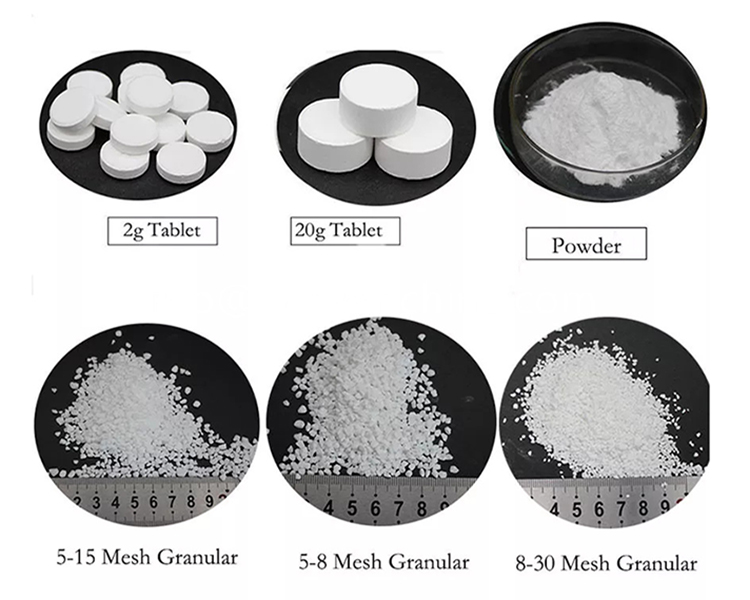
In Linh’s textile plant, we pivoted to a TCCA-based oxidation protocol. We stopped the erratic dumping of bleach and introduced a continuous, controlled feed of high-purity TCCA granules.
- The Result: Within 72 hours, the purple hue vanished. COD levels dropped from 800 mg/L to 140 mg/L. Sludge volume decreased by 40%. And surprisingly, their total chemical spend dropped by 25% because they stopped wasting money on degraded bleach and excess acid.
“It’s night and day,” Linh told me. “We aren’t fighting the chemistry anymore; we’re managing it.”
The Critical Factor: Purity Determines Performance
Here is the nuance that separates success from disaster: Not all TCCA is created equal.
Cheap, industrial-grade TCCA often contains fillers, binders, and insoluble residues. These impurities don’t just vanish; they turn into a chalky sludge that clogs automatic feeders, clouds the water, and adds to your waste mass. I’ve seen facilities spend thousands on maintenance to remove sludge caused by low-quality tablets.
You need a product that is pharmaceutical-grade pure. You need consistency.
The ENVO CHEMICAL Advantage: Engineering Excellence
This is where ENVO CHEMICAL stands apart. As a global leader in the R&D, production, and sales of water treatment chemicals, ENVO has engineered TCCA specifically for the rigorous demands of industrial wastewater treatment.
- Unmatched Purity: ENVO’s TCCA boasts >90% available chlorine with <0.1% insolubles. This ensures rapid, complete dissolution with zero residue. No clogged feeders, no cloudy water, no wasted product. Every gram is active, effective sanitizer.
- Uniform Density: ENVO’s manufacturing process ensures every granule and tablet has consistent hardness and dissolution rates. Whether you are in a humid tropical resort or a dry desert climate, the performance is identical. No more rock-hard bricks that won’t dissolve or dusty crumbs that choke your feeder.
- Global Reliability: With a distribution network spanning over 200 countries, ENVO ensures that your supply chain never breaks. You aren’t forced to buy inferior, risky substitutes because your local supplier ran out. The quality remains identical whether you are in North America, Europe, Asia, or Africa.
- Technical Partnership: ENVO doesn’t just sell drums; they provide dosing calculators, safety guides, and expert support to help you optimize your sanitation protocols. They act as partners in your operational success.
For Linh’s facility, switching to ENVO’s high-purity TCCA was transformative. Within two weeks, her oxidation levels held steady day and night. Her chemical budget dropped, and her maintenance team stopped fighting clogged feeders. “It’s like the system finally learned how to behave,” she told me.
Frequently Asked Questions (FAQ)
Q: Is TCCA more expensive than Sodium Hypochlorite?
While the upfront unit cost of TCCA may be higher, the Total Cost of Ownership (TCO) is significantly lower. Due to its high potency (90% vs 12%), you use far less product. Additionally, you save on transportation, storage, acid for pH correction, and sludge disposal fees.
Q: Does TCCA affect the pH of wastewater?
Minimal impact. Unlike liquid bleach which spikes pH to 12+, TCCA has a near-neutral dissolution profile. This stabilizes the treatment process and reduces the need for costly acid adjustments.
Q: Can TCCA handle high loads of organic matter and dyes?
Yes. TCCA’s slow-release profile provides a sustained concentration of hypochlorous acid, which effectively penetrates and oxidizes complex organic bonds and chromophores that liquid chlorine often misses.
Q: Why is purity so important for TCCA?
Impurities in low-grade TCCA can clog dosing equipment, add unnecessary mass to your sludge, and reduce the effective chlorine concentration. ENVO’s >90% pure product ensures maximum efficiency and minimal maintenance.
Q: Is TCCA safe to handle?
Yes, when proper PPE and handling procedures are followed. ENVO provides comprehensive Safety Data Sheets (SDS) and training materials to ensure safe storage and usage in industrial settings.
The Bottom Line
Stop letting volatile, inefficient chemicals drain your budget and compromise your water quality. The shift to TCCA offers a clearer, safer, and more efficient path forward for industrial wastewater treatment—but only if you start with the highest quality ingredients.
Don’t gamble with inferior products that clog and cloud. Partner with ENVO CHEMICAL, a trusted global innovator with decades of experience. Their commitment to purity, consistency, and reliability ensures that your move to advanced oxidation delivers the compliant, cost-effective results your facility deserves.
Ready to transform your wastewater treatment strategy? Contact ENVO CHEMICAL today to request a sample, speak with our industrial specialists, or get a customized design for your TCCA dosing system. Let’s make every drop count.
Author: Dr. Aris Thorne
Lead Industrial Process Engineer | 25+ Years in Effluent Optimization & Chemical Strategy
