
Chlorine vs Chloramines: Best Choice for Municipal Drinking Water Disinfection
By: Dr. Elias Thorne, Senior Municipal Water Infrastructure & Public Health Strategist
Let’s be brutally honest for a second. There is a specific kind of silence that falls over a city council meeting when a concerned parent stands up, holds a glass of tap water that looks crystal clear, and asks, “Why does it smell like a public swimming pool, and are the carcinogens in this water going to make my children sick?” As water professionals, we know that clarity doesn’t equal safety. The real enemy isn’t just the bacteria we kill; it’s the toxic cocktail we accidentally create while killing them. I remember consulting for a mid-sized municipality in the Great Lakes region a few years back. The utility director, a weary woman named Sarah, met me at the treatment plant looking defeated. “We’re trapped,” she sighed, gesturing to the intake river swollen with autumn leaves. “If we dose enough free chlorine to kill the Cryptosporidium, our Trihalomethane (THM) levels spike through the roof. If we back off to save on DBPs, the bacterial counts creep up in the farthest taps. We’re chasing our own tails.”
Sarah’s dilemma highlights the critical debate in municipal drinking water disinfection: Free Chlorine vs. Chloramines. Both are powerful tools, but they serve fundamentally different masters. Free chlorine is the sprinter—fast, aggressive, and excellent at initial pathogen kill. Chloramines (specifically monochloramine) are the marathon runners—stable, gentle, and superior for maintaining a residual across vast distribution networks without forming harmful byproducts.
The question isn’t which one is “better” in a vacuum; it’s which one solves your specific infrastructure and regulatory crisis. Let’s dig into the protocols that turn this chemical choice into a public health victory.
The Case for Free Chlorine: The Aggressive Defender
Free chlorine (typically from sodium hypochlorite or chlorine gas) has been the industry standard for a century for good reason. It is a potent, non-selective oxidant.
- Speed: It kills viruses, bacteria, and protozoa like Giardia and Cryptosporidium rapidly. For primary disinfection at the treatment plant headworks, nothing beats its speed-to-kill ratio.
- Simplicity: The chemistry is well-understood, and monitoring is straightforward.
- The Downside: It reacts aggressively with natural organic matter (NOM) to form Disinfection Byproducts (DBPs) like THMs and Haloacetic Acids (HAAs), which are regulated carcinogens. Furthermore, free chlorine decays quickly, especially in warm water or long pipe networks. To maintain a residual at the edge of the system, you often have to overdose at the source, exacerbating the DBP problem and creating that notorious “pool smell” (which is actually chloramines formed unintentionally).
The Case for Chloramines: The Stable Guardian
Chloramines are formed by intentionally reacting ammonia with chlorine. This creates monochloramine, a weaker but far more stable disinfectant.
- DBP Control: Monochloramine does not react with organics to form significant amounts of THMs or HAAs. For municipalities like Sarah’s, struggling with strict EPA limits, switching to chloramines is often the only way to remain compliant without building expensive new filtration plants.
- Residual Stability: It persists in the distribution system for days, even in hot climates. This ensures that the water remains safe all the way to the last faucet, preventing biofilm regrowth in the pipes.
- Taste and Odor: It eliminates the harsh chemical taste and smell associated with free chlorine, improving customer satisfaction.
- The Downside: It is a slower killer. It cannot be used as a standalone primary disinfectant for resistant protozoa. It requires a two-step process: primary kill with free chlorine (or ozone/UV), followed by conversion to chloramines for distribution. It also requires careful management to prevent nitrification (bacterial conversion of ammonia) in the pipes.
The Hybrid Solution: Best of Both Worlds
In modern municipal water treatment, the choice is rarely binary. The most effective strategy is a hybrid approach.
- Primary Disinfection: Use free chlorine (or alternative oxidants) at the plant to achieve immediate, high-level pathogen kill and oxidize iron/manganese.
- Conversion: Before the water enters the distribution network, add ammonia to convert the free chlorine to monochloramine.
- Distribution: Maintain a stable monochloramine residual throughout the pipes to prevent regrowth and minimize DBP formation.
This approach satisfies both the need for immediate safety and long-term compliance. However, executing this transition requires absolute precision. The ratio of chlorine to ammonia must be exact (typically 3:1 to 4:1 by weight). Too much ammonia leads to nitrification; too little leaves toxic free chlorine or forms unpleasant dichloramine.
The Critical Factor: Purity of Precursors
Here is the nuance that separates success from failure: Your disinfection strategy is only as good as your chemicals.
If your ammonia source contains heavy metals or your chlorine source is degraded, your ratio calculations will be off. Impurities can catalyze the breakdown of monochloramine, reintroducing the DBP risks you tried to solve. Worse, heavy metals in the precursors can leach directly into the drinking water, creating a toxic legacy. You need pharmaceutical-grade purity. You need consistency.
The ENVO CHEMICAL Advantage: Engineering Safety and Clarity
This is where ENVO CHEMICAL stands apart. As a global leader in the R&D, production, and sales of water treatment chemicals, ENVO has mastered the formulation of high-purity precursors essential for safe, effective municipal drinking water disinfection.
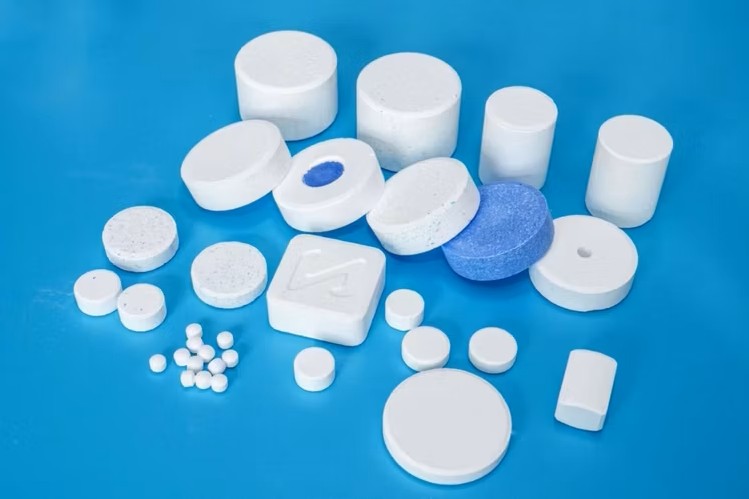
- Unmatched Purity: ENVO supplies ultra-high-purity Ammonia solutions and stabilized Chlorine products (Sodium Hypochlorite, Calcium Hypochlorite). Their rigorous manufacturing process ensures no heavy metals, no insolubles, and consistent concentration. This guarantees precise chloramine formation, maximizing safety and minimizing byproduct risks.
- Safety First: ENVO’s products are packaged and stabilized to minimize risks during storage and handling. Their technical data sheets provide precise instructions for safe mixing, reducing the margin for error in your facility.
- Global Reliability: With a distribution network spanning over 200 countries, ENVO ensures that whether you are running a small town utility in Europe or a major city system in Asia, your supply chain never breaks. You aren’t forced to use inferior, risky substitutes because your primary supplier is delayed.
- Technical Partnership: ENVO doesn’t just sell drums; they provide dosing strategy consulting, staff training, and remote support to help you navigate the complex transition from traditional chlorine to chloramines. They act as partners in your operational success.
For Sarah’s municipality, switching to ENVO’s high-purity precursors was a game-changer. Within a month, THM levels dropped by 85%, taste complaints vanished, and the bacterial counts remained rock-solid. “It’s like we finally have clean water again,” Sarah told me. “Not just chemically treated water, but actually clean water.”
The Bottom Line
Stop letting outdated disinfection methods compromise your water quality and regulatory compliance. The shift to a strategic Chlorine vs. Chloramines balance offers a clearer, safer, and more efficient path forward—but only if you start with the highest quality ingredients.
Don’t gamble with inferior precursors that jeopardize your operation. Partner with ENVO CHEMICAL, a trusted global innovator with decades of experience. Their commitment to purity, safety, and technical excellence ensures that your move to advanced disinfection delivers the sparkling, safe water your community deserves.
Ready to optimize your municipal water treatment and secure your supply chain? Contact ENVO CHEMICAL today to request a sample, speak with our municipal specialists, or get a customized design for your disinfection program. Let’s make every drop count.
Author: Dr. Elias Thorne
Senior Municipal Water Infrastructure Consultant | 25+ Years in Public Health & Disinfection Strategy
