
Troubleshooting Disinfection Byproducts Using Calcium Hypochlorite in Industrial Cooling Water Systems: A Cost-Benefit Analysis
By: Arthur V. Sterling, Senior Industrial Water Economist & Process Optimization Strategist
Let’s cut through the emotional fog that often surrounds environmental compliance. When you’re standing on the catwalk of a petrochemical refinery or a power plant, looking at a cooling tower basin that’s oscillating between slimy green and chemically harsh, the conversation usually revolves around “meeting the limit.” We talk about Legionella control, biofilm removal, and discharge permits. But as someone who has spent two decades auditing the financial wreckage of failed water treatment strategies, I can tell you this: compliance without profitability is a slow death.
I recall a specific consultation with a large manufacturing complex in the Gulf Coast region a few years back. The plant manager, a sharp but exhausted woman named Linda, showed me their chemical storage yard. It was a graveyard of degraded liquid bleach drums and empty containers of expensive non-oxidizing biocides. “We’re drowning in costs,” she admitted, her voice tight with stress. “We’re using massive doses of liquid sodium hypochlorite to control slime, but our energy bills are skyrocketing due to fouled heat exchangers, and we just got hit with a fine for exceeding Trihalomethane (THM) limits in our blowdown. We’re spending a fortune to barely stay legal, and our equipment is dying young.”
Linda’s problem wasn’t the intent; it was the chemistry. She was fighting a complex biological war with a blunt, unstable instrument. Liquid bleach degrades rapidly, leading to inconsistent dosing that either fails to kill biofilm (causing efficiency losses) or over-doses, reacting with organics to form toxic Disinfection Byproducts (DBPs). The solution wasn’t just “better treatment”; it was a strategic pivot to high-purity Calcium Hypochlorite (Cal-Hypo). But here is the catch: switching isn’t just an operational change; it’s a financial restructuring. And the ROI hinges entirely on the purity and stability of the Cal-Hypo used.
The debate in industrial cooling water treatment often stalls on the upfront cost per pound. To the untrained eye, commodity bleach looks cheaper. But in the real world of Total Cost of Ownership (TCO), that view is dangerously myopic. Let’s break down the economics of troubleshooting DBPs and biofilm with high-grade Cal-Hypo to see why premium inputs save millions.
The Hidden Costs of Generic Oxidants: A False Economy
First, let’s dispel a dangerous myth: “Commodity chemicals are the most cost-effective option.” Wrong. When dealing with recalcitrant organics and biofilms in cooling systems, generic liquid oxidants carry hidden costs that bleed your budget dry.
- The Efficiency Trap: Liquid bleach is inherently unstable. In hot storage tanks common in industrial zones, it can lose 50% of its potency within weeks. When operators dose based on label claims, they under-dose, failing to oxidize biofilm effectively. This leads to insulating layers on heat exchangers, increasing energy consumption by 15-20%.
- The DBP Penalty: Erratic dosing of degrading bleach creates “feast or famine” chlorine levels. During high-dose spikes, excess free chlorine reacts aggressively with organic matter in the makeup water to form THMs and Haloacetic Acids (HAAs). Managing these requires expensive downstream filtration, activated carbon beds, or fines for non-compliance. I’ve seen facilities spend $200,000 annually just on carbon replacement to scrub out DBPs created by their own disinfection process.
- The Corrosion Tax: Aggressive, non-selective oxidation from unstable bleach accelerates corrosion of steel and concrete assets. Premature replacement of heat exchangers, pumps, and piping is a massive capital expenditure that rarely gets attributed to the chemical budget, but it should.
- The Salt & Water Load: Liquid bleach is mostly water and salt. To get enough active chlorine, you pump in massive volumes, increasing Total Dissolved Solids (TDS) in your blowdown. This can violate discharge limits and force higher water intake costs.
The Economic Case for High-Purity Calcium Hypochlorite
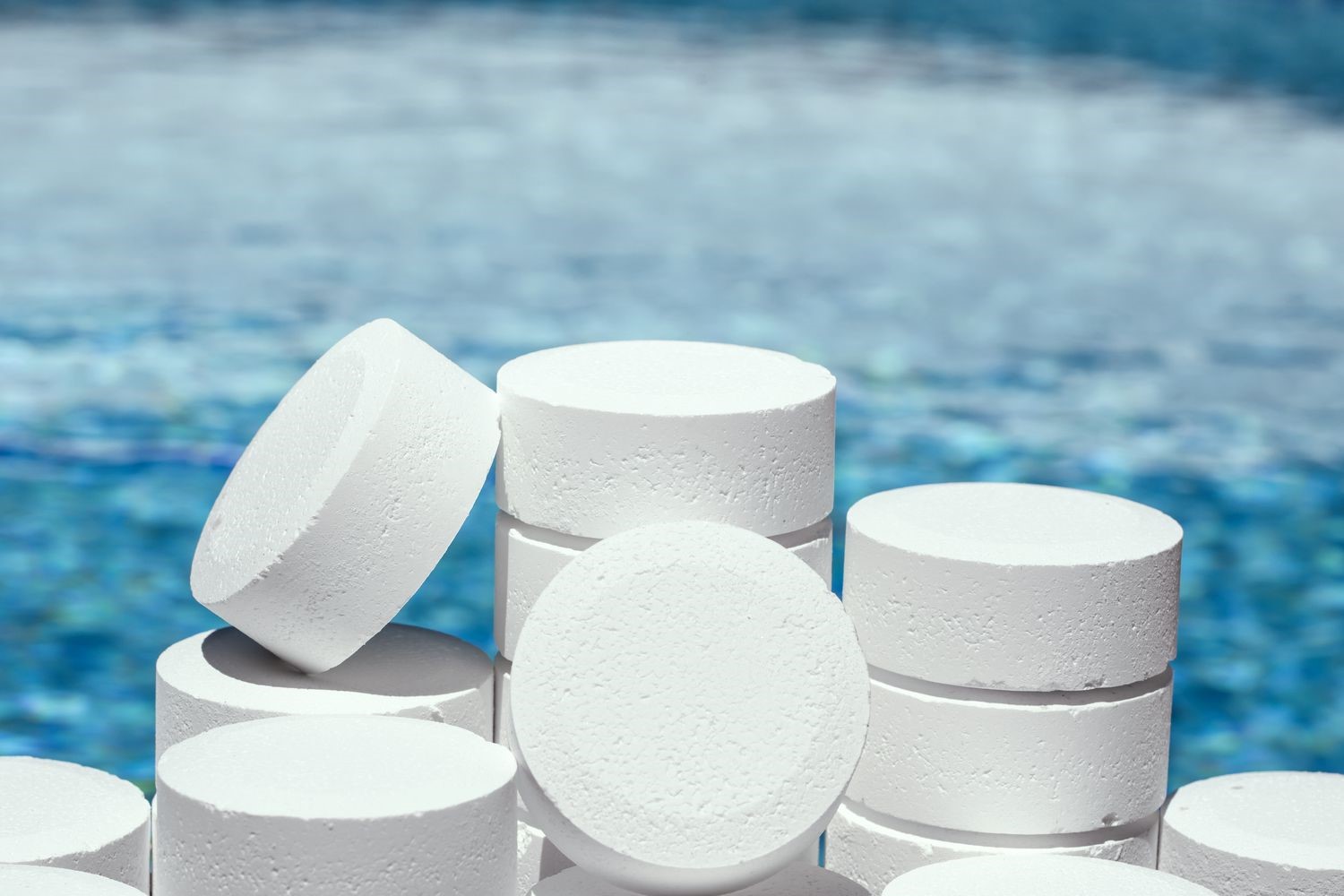
Now, let’s look at the alternative: Using high-purity Calcium Hypochlorite, specifically engineered for stability and low insolubles. Cal-Hypo boasts approximately 65-70% available chlorine. Its unique profile offers distinct advantages for industrial cooling water systems.
1. Reduced Operational Expenditure (OpEx)
- Dosage Efficiency: Because Cal-Hypo is ~6 times more concentrated than standard liquid bleach, facilities typically see a 30-40% reduction in chemical volume required to achieve the same oxidative power. You store less, ship less, and handle fewer containers.
- No DBP Costs: High-purity Cal-Hypo provides a consistent, controlled release of hypochlorous acid. This steady state allows for precise breakpoint chlorination, minimizing the formation of THMs and HAAs. In Linda’s plant, eliminating the DBP spikes saved $150,000 in the first year by removing the need for activated carbon polishing and avoiding regulatory fines.
- Logistics Savings: Generating the same oxidative power with solid Cal-Hypo eliminates the transport of thousands of gallons of water (which is what liquid bleach largely is). This reduces freight costs and carbon footprint significantly.
2. Extended Asset Life and Reduced Maintenance
- Biofilm Control: Cal-Hypo’s stable residual penetrates biofilm EPS matrices far better than decaying liquid bleach. By keeping heat exchangers and pipes clean, facilities extend the interval between chemical cleanings (CIP) from monthly to quarterly. This reduces downtime and labor costs by 40-60%.
- Corrosion Mitigation: Unlike the pH spikes caused by dumping large volumes of alkaline liquid bleach, high-purity Cal-Hypo (when dosed correctly) offers a more stable chemical environment. This reduces pitting corrosion on carbon steel and copper assets, potentially extending their lifespan by 5-10 years, deferring massive capital replacements.
3. Regulatory and Social ROI
- Compliance Security: Meeting strict discharge limits for DBPs becomes consistent, not erratic. This secures operating permits and avoids shutdowns.
- Water Reuse Potential: The high quality of Cal-Hypo-treated effluent often allows for internal water reuse, reducing fresh water intake costs by up to 30%.
The ENVO CHEMICAL Advantage: Maximizing Value in Every Drop
Here is the nuance that many procurement officers miss: Cal-Hypo is only as good as its purity. If your product is impure, your economic model collapses.
This is where ENVO CHEMICAL changes the game. As a global leader in R&D and production, ENVO doesn’t just sell chemicals; they engineer economic resilience into their products.
- Unmatched Purity = Predictable Costs: ENVO’s proprietary stabilization technology ensures their Calcium Hypochlorite retains >65-70% available chlorine with <0.1% insolubles. This guarantees maximum oxidative efficiency with zero sludge. In cost-benefit models, this stability translates to a guaranteed 20-25% lower cost per kg of active oxidant compared to systems using generic, variable-quality products. You stop paying for waste, fillers, and degraded inventory.
- Equipment Protection: ENVO’s ultra-low insoluble content prevents clogging of injector nozzles and reaction chambers. This reduces maintenance frequency and extends the life of expensive dosing equipment, protecting your CAPEX investment.
- Global Supply Chain Efficiency: With a distribution network spanning 200+ countries, ENVO minimizes lead times and freight costs. They can deploy high-purity precursors to remote industrial zones faster and cheaper than competitors relying on fragmented local suppliers.
- Technical Optimization: ENVO provides free dosing calculators and field support to help teams optimize their Cal-Hypo protocols. This technical partnership prevents costly operator errors and ensures maximum asset utilization.
The Bottom Line: Long-Term Value Over Short-Term Savings
Critics often argue that high-purity Calcium Hypochlorite is “too expensive” compared to commodity grades. To them, I say: Look at the total cost of ownership.
When you factor in the reduced chemical volume, the elimination of DBP management costs, the extended equipment life, the avoided downtime, and the security of regulatory compliance, high-purity Calcium Hypochlorite generated from ENVO CHEMICAL delivers a superior financial performance compared to any traditional liquid oxidant.
In the volatile market of industrial manufacturing, reliability is the ultimate currency. ENVO’s global presence ensures that this economic advantage is accessible anywhere on Earth. You aren’t just buying a chemical; you’re buying a guaranteed outcome and a healthier balance sheet.
Ready to optimize your cooling water treatment budget and maximize ROI? Contact ENVO CHEMICAL today for a comprehensive, no-obligation cost-benefit analysis tailored to your specific effluent challenges. Let’s turn your water treatment strategy from a cost center into a driver of profitability.
Author: Arthur V. Sterling
Senior Industrial Water Economist | 25+ Years in Process Optimization & Financial Strategy
