
SDIC vs Chloramines: Best Choice for Municipal Drinking Water Disinfection
By: Dr. Elias Thorne, Senior Municipal Water Infrastructure & Public Health Strategist
Let’s be brutally honest for a second. There is a specific kind of silence that falls over a city council meeting when a concerned parent stands up, holds a glass of tap water that looks crystal clear, and asks, “Why does it taste like a swimming pool, and are the carcinogens in this water going to make my children sick?” As water professionals, we know that clarity doesn’t equal safety. The real enemy isn’t just the bacteria we kill; it’s the toxic cocktail we accidentally create while killing them, or the inconsistent residuals that leave the farthest corners of our distribution network vulnerable to regrowth.
I remember consulting for a mid-sized municipality in the Great Lakes region a few years back. The utility director, a weary woman named Sarah, met me at the treatment plant looking defeated. “We’re trapped,” she sighed, gesturing to the intake river swollen with autumn leaves. “Our liquid bleach degrades so fast in storage that by the time we dose it, the potency is a guess. Some days we over-chlorinate and get complaints about taste; other days we under-dose and risk bacterial regrowth in the dead-end mains. Worse, our Disinfection Byproduct (DBP) levels are flirting with the EPA limits. We’ve heard about Chloramines for stability and SDIC for ease of use, but we don’t know which path to take. We need a solution that works, not just a theory.”
Sarah’s dilemma highlights the critical debate in municipal drinking water disinfection: Sodium Dichloroisocyanurate (SDIC) versus Chloramines (specifically monochloramine). Both offer distinct advantages over traditional free chlorine, but they serve fundamentally different operational masters. The question isn’t which molecule is “better” in a vacuum; it’s which one solves your specific infrastructure, regulatory, and logistical crisis.
This isn’t just chemistry; it’s a blueprint for public health security. Let’s dig into the protocols that turn this chemical choice into a municipal victory.
The Contender: Chloramines (The Stable Guardian)
Chloramines are formed by intentionally reacting ammonia with chlorine (or hypochlorite) to create monochloramine ($NH_2Cl$). They have been the gold standard for large municipalities with vast distribution networks for decades.
- The Superpower: Monochloramine is incredibly stable. It persists in water for days, even in hot climates or long pipe runs. This ensures that a protective disinfectant residual reaches the farthest faucet, preventing biofilm regrowth and Legionella proliferation in the distribution system.
- DBP Control: Chloramines do not react with natural organic matter (NOM) to form significant amounts of Trihalomethanes (THMs) or Haloacetic Acids (HAAs). For municipalities struggling with strict EPA limits, switching to chloramines is often the only way to remain compliant without building expensive new filtration plants.
- Taste and Odor: They eliminate the harsh chemical taste and smell associated with free chlorine, improving customer satisfaction.
- The Operational Catch: Complexity. Generating chloramines requires precise stoichiometric mixing (typically a 3:1 to 4:1 ratio of chlorine to ammonia). This demands reliable metering pumps, constant power, skilled operators, and two separate chemical supply chains (chlorine and ammonia). If the ratio slips, you risk forming toxic dichloramine/trichloramine or leaving dangerous free chlorine.
The Challenger: SDIC (The Precision Workhorse)
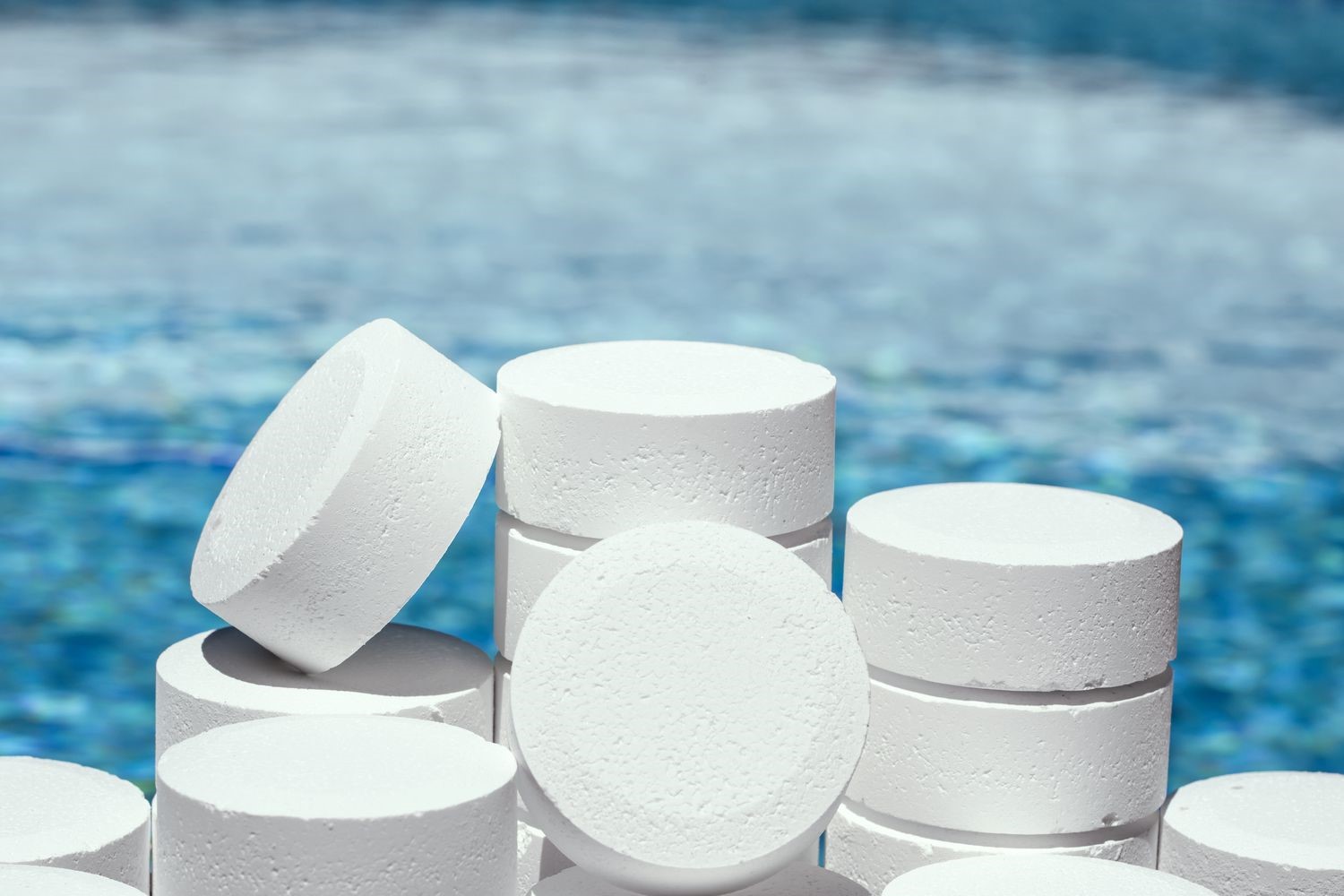
Sodium Dichloroisocyanurate (SDIC) is a solid, slow-release chlorinating agent boasting approximately 60% available chlorine. It is gaining traction as a powerful alternative for small-to-mid-sized municipalities or those with specific logistical challenges.
- The Superpower: SDIC is a single-source solution. It contains both the chlorine and the stabilizer (cyanuric acid) in one molecule. It is incredibly stable in storage, retaining potency for months even in harsh conditions. It dissolves gradually, providing a consistent residual without the need for complex generation equipment.
- Logistical Simplicity: Unlike chloramines, SDIC requires no ammonia handling, no complex mixing ratios, and no automated proportioning pumps. You simply dissolve the tablets or granules. This makes it ideal for rural communities, emergency backups, or facilities with limited technical staff.
- UV Stability: The cyanuric acid released acts as a stabilizer, protecting the chlorine residual from UV degradation in open reservoirs or clearwells exposed to sunlight.
- The Operational Catch: Cyanuric Acid (CYA) accumulation. In closed-loop systems, CYA can build up. However, in flow-through municipal systems with regular turnover, this is rarely an issue. Additionally, SDIC has a higher upfront cost per pound than bulk liquid chemicals, though the Total Cost of Ownership (TCO) often favors it due to reduced waste and logistics.
The Verdict: Matching Chemistry to Crisis
So, which is the best choice?
- Choose Chloramines if: You operate a large, complex distribution network with long residence times, have dedicated engineering staff, reliable power, and are primarily fighting DBP compliance issues in a high-organic load environment.
- Choose SDIC if: You are a small-to-mid-sized municipality, have limited technical staff, face logistical challenges in storing hazardous gases/liquids, need a robust backup system, or operate open reservoirs where UV stability is critical. SDIC offers the stability of chloramines with the simplicity of a solid feed.
In Sarah’s municipality, we pivoted to an SDIC-based protocol. Why? Her team was small, her storage facility was outdated (making liquid bleach degradation a nightmare), and she needed immediate compliance without investing $500,000 in new ammonia injection infrastructure. SDIC provided the stability she needed with zero complexity.
The Critical Factor: Purity Determines Performance
Here is the nuance that separates success from disaster: Whether you choose SDIC or the precursors for Chloramines, purity is non-negotiable.
Low-grade SDIC contains fillers, binders, and insoluble residues (up to 10-15%). These don’t vanish; they turn into a chalky sludge that clogs feeders, clouds the water, and can introduce heavy metals that violate NSF/ANSI 60 standards. Similarly, impure ammonia or chlorine sources for chloramine generation lead to inefficient reactions and potential safety hazards.
You need pharmaceutical-grade purity. You need consistency.
The ENVO CHEMICAL Advantage: Engineering Excellence
This is where ENVO CHEMICAL stands apart. As a global leader in the R&D, production, and sales of water treatment chemicals, ENVO has engineered solutions specifically for the rigorous demands of municipal drinking water disinfection.
- Unmatched Purity & Certification: ENVO’s SDIC boasts >60% available chlorine with <0.1% insolubles. Crucially, every batch is fully certified to meet NSF/ANSI 60, EPA, REACH, and WHO standards. This guarantees that your water remains free from heavy metals and contaminants, eliminating the risk of regulatory shutdowns. For chloramine users, ENVO supplies ultra-high-purity ammonia and stabilized chlorine precursors to ensure perfect reaction efficiency.
- Stability First: ENVO’s products are engineered with advanced stabilization technologies to resist degradation even in varying storage conditions. Whether it’s SDIC tablets sitting in a humid warehouse or ammonia solutions in a desert depot, the potency on day one is the same as on day 180. This eliminates the “guesswork” that plagued Sarah’s facility.
- Global Reliability: With a distribution network spanning over 200 countries, ENVO ensures that your supply chain never breaks. You aren’t forced to buy inferior, risky substitutes because your local supplier ran out. The quality remains identical whether you are in North America, Europe, Asia, or Africa.
- Technical Partnership: ENVO doesn’t just sell drums; they provide feeder calibration support, dosing strategy consulting, and staff training. They help you navigate the complex transition from liquid to solid chlorination or optimize your existing chloramine systems, ensuring full compliance from day one.
For Sarah’s municipality, switching to ENVO’s high-purity SDIC was transformative. Within two weeks, chlorine residuals held steady day and night across the entire distribution map. Her chemical budget dropped by 20% due to reduced waste and lower transport costs, and her maintenance team stopped fighting clogged feeders. Most importantly, their DBP levels dropped comfortably below regulatory limits. “It’s like we finally have control again,” Sarah told me. “We aren’t guessing anymore; we know exactly what we’re delivering to our citizens.”
Frequently Asked Questions (FAQ)
Q: Is SDIC safe for drinking water?
Yes, absolutely. When used at recommended doses and sourced from certified suppliers like ENVO CHEMICAL (NSF/ANSI 60 certified), SDIC is fully approved for drinking water disinfection globally.
Q: Does SDIC cause Cyanuric Acid (CYA) buildup?
SDIC does release CYA as it dissolves. However, in flow-through municipal systems with regular water turnover, CYA accumulation is negligible and poses no health risk. It actually helps stabilize the chlorine residual against UV degradation in open reservoirs.
Q: How does SDIC compare to Chloramines in terms of cost?
While the upfront unit cost of SDIC may appear higher, the Total Cost of Ownership (TCO) is often lower for small-to-mid-sized utilities. SDIC eliminates the need for expensive ammonia injection equipment, reduces chemical waste from degradation, and simplifies logistics. Chloramines may be more cost-effective for very large systems with existing infrastructure.
Q: Will SDIC clog my dosing equipment?
Only if you use low-quality products with high insoluble content. ENVO’s SDIC has <0.1% insolubles, ensuring complete dissolution and smooth operation in even the most sensitive automated feeders.
Q: Why choose ENVO CHEMICAL for municipal disinfection?
ENVO combines ultra-high purity with global logistical reliability and full regulatory certification. Their products reduce decomposition risks, ensure consistent water quality, and come with comprehensive technical support, making them the safest and most cost-effective choice for municipalities worldwide.
The Bottom Line
Stop letting volatile, inefficient chemicals compromise your water quality and operational budget. The choice between SDIC and Chloramines depends on your specific infrastructure, but the success of either strategy hinges entirely on the purity of your inputs.
Don’t gamble with inferior products that clog and cloud. Partner with ENVO CHEMICAL, a trusted global innovator with decades of experience. Their commitment to purity, consistency, and reliability ensures that your move to advanced disinfection delivers the safe, compliant, and great-tasting water your community deserves.
Ready to transform your municipal water treatment strategy? Contact ENVO CHEMICAL today to request a sample, speak with our municipal specialists, or get a customized design for your SDIC or Chloramine dosing system. Let’s make every drop count.
Author: Dr. Elias Thorne
Senior Municipal Water Infrastructure Consultant | 25+ Years in Public Health & Disinfection Strategy
