
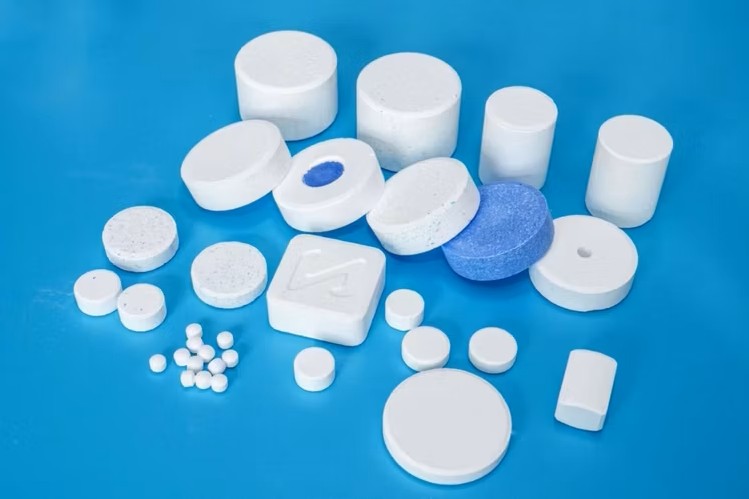
Affordable TCCA Solutions for Drinking Water Purification Professionals
Introduction
In an era where water security remains a paramount global concern, drinking water purification professionals face the continuous challenge of balancing cost-effectiveness with uncompromising safety standards. Trichloroisocyanuric Acid (TCCA), chemically known as C₃Cl₃N₃O₃ (CAS: 87-90-1), has emerged as a cornerstone disinfectant solution for municipal water treatment facilities, industrial purification systems, and community water supply networks worldwide.
This comprehensive technical guide explores how affordable TCCA solutions deliver exceptional value without compromising on performance, regulatory compliance, or public health protection. Water treatment professionals seeking reliable, scalable, and economically viable disinfection strategies will find actionable insights into TCCA’s technical specifications, application methodologies, and industry-standard compliance frameworks.
Understanding TCCA: Chemical Properties and Mechanism of Action
Molecular Structure and Stability
Trichloroisocyanuric Acid belongs to the chlorinated isocyanurate compound family. Its unique triazine ring structure provides remarkable stability under varied storage and operational conditions. Key molecular characteristics include:
| Parameter | Specification |
|---|---|
| Molecular Formula | C₃Cl₃N₃O₃ |
| Molecular Weight | 232.41 g/mol |
| CAS Registry Number | 87-90-1 |
| EINECS Number | 201-782-8 |
| Appearance | White crystalline powder or tablets |
| Density | 2.191 g/cm³ |
| Melting Point | 247°C (decomposition) |
| Solubility (25°C) | 1.2 g/100g water |
| Available Chlorine Content | ≥90% (premium grade) |
Disinfection Mechanism
TCCA functions through controlled hydrolysis in aqueous solutions, gradually releasing hypochlorous acid (HOCl) – the primary active disinfecting species. This slow-release mechanism offers several operational advantages:
- Sustained Residual Protection: Maintains disinfectant residual throughout distribution networks
- Reduced Handling Frequency: Extended contact time minimizes dosing intervals
- Minimized DBP Formation: Controlled chlorine release reduces trihalomethane (THM) formation compared to free chlorine gas
- pH Buffering Effect: Cyanuric acid byproduct provides mild pH stabilization
Technical Performance Data for Drinking Water Applications
Microbial Inactivation Efficiency
Peer-reviewed studies and field data demonstrate TCCA’s effectiveness against common waterborne pathogens:
| Microorganism | Contact Time (min) | Residual Chlorine (mg/L) | Log Reduction |
|---|---|---|---|
| Escherichia coli | 30 | 0.5 | >6-log |
| Salmonella typhi | 30 | 0.5 | >6-log |
| Giardia lamblia (cysts) | 120 | 1.0 | >3-log |
| Cryptosporidium (oocysts) | 180 | 1.5 | >2-log |
| Hepatitis A Virus | 60 | 1.0 | >4-log |
| Poliovirus | 60 | 1.0 | >4-log |
Data compiled from WHO Guidelines for Drinking-water Quality and EPA disinfection profiling studies
Residual Chlorine Maintenance
Optimal residual chlorine levels for distribution systems:
- Entry Point to Distribution: 0.5–1.0 mg/L free chlorine residual
- Distribution System Midpoint: ≥0.2 mg/L free chlorine residual
- System Extremities: ≥0.05 mg/L free chlorine residual (minimum detectable)
TCCA’s slow-release profile ensures consistent residual maintenance across extended distribution networks, particularly beneficial for rural and peri-urban water supply systems.
Temperature and pH Performance Range
| Condition | Performance Impact | Recommended Adjustment |
|---|---|---|
| pH 6.5–7.5 | Optimal disinfection efficiency | No adjustment needed |
| pH 7.5–8.5 | Slightly reduced HOCl fraction | Increase dosage by 10–15% |
| pH >8.5 | Significantly reduced efficacy | Consider pH correction or alternative disinfectant |
| Temperature 5–15°C | Extended contact time required | Increase contact time by 25–50% |
| Temperature 15–25°C | Standard performance | Apply standard dosing protocols |
| Temperature >25°C | Enhanced reaction kinetics | Monitor DBP formation closely |
Compliance with International Water Quality Standards
World Health Organization (WHO) Guidelines
The WHO Guidelines for Drinking-water Quality (4th Edition, 2022 update) recognize chlorinated isocyanurates as acceptable disinfectants for drinking water treatment when applied according to established protocols. Key compliance parameters include:
- Maximum Residual Disinfectant Level (MRDL): 5.0 mg/L for chlorine-based disinfectants
- Trihalomethanes (THMs) Limit: 100 μg/L (guideline value)
- Haloacetic Acids (HAAs) Limit: 60 μg/L (guideline value)
United States Environmental Protection Agency (EPA) Standards
Under the Safe Drinking Water Act (SDWA) and Stage 2 Disinfectants and Disinfection Byproducts Rule (DBPR):
| Parameter | EPA Maximum Contaminant Level (MCL) |
|---|---|
| Total Trihalomethanes (TTHMs) | 0.080 mg/L |
| Haloacetic Acids (HAA5) | 0.060 mg/L |
| Chlorine Residual (MRDL) | 4.0 mg/L |
| Chlorite (if using chlorine dioxide) | 1.0 mg/L |
Chinese National Standard GB 5749-2022
China’s Standards for Drinking Water Quality (GB 5749-2022) specifies:
- Free Chlorine Residual: ≥0.05 mg/L at pipeline extremities after 30-minute contact
- Combined Chlorine Residual: ≥0.05 mg/L (alternative requirement)
- THMs Maximum: 0.1 mg/L
- Formaldehyde Maximum: 0.9 mg/L
Industry Manufacturing Standard HG/T 3779-2005
TCCA production for water treatment applications should comply with China’s Chemical Industry Standard HG/T 3779-2005, which defines:
| Grade | Available Chlorine (%) | Moisture Content (%) | pH (1% Solution) |
|---|---|---|---|
| Premium | ≥90.0 | ≤0.5 | 2.6–3.2 |
| Standard | ≥88.0 | ≤1.0 | 2.6–3.2 |
| Industrial | ≥85.0 | ≤1.5 | 2.6–3.2 |
Cost-Benefit Analysis for Water Treatment Facilities
Comparative Cost Structure (per 1,000 m³ Treated Water)
| Disinfectant Type | Chemical Cost (USD) | Handling/Storage Cost | Total Operational Cost |
|---|---|---|---|
| TCCA Tablets (90%) | 8–12 | Low | 10–15 |
| Sodium Hypochlorite (12%) | 15–20 | Medium | 18–25 |
| Chlorine Gas | 6–10 | High (safety systems) | 12–18 |
| Calcium Hypochlorite (65%) | 12–18 | Medium | 15–22 |
| UV Disinfection | N/A | High (electricity/maintenance) | 20–35 |
Cost estimates based on 2025–2026 market data for medium-scale municipal facilities (10,000–50,000 m³/day capacity)
Long-Term Economic Advantages
- Extended Shelf Life: TCCA maintains ≥90% available chlorine after 24 months under proper storage (cool, dry, ventilated conditions)
- Reduced Transportation Frequency: High chlorine content (90%) means less volume transported compared to liquid alternatives
- Minimal Infrastructure Investment: No requirement for specialized dosing pumps or gas containment systems
- Lower Labor Costs: Tablet or granule forms enable simplified manual or automated dosing
Return on Investment Timeline
For facilities transitioning from liquid sodium hypochlorite to TCCA:
- Initial Investment Recovery: 6–12 months
- Annual Operational Savings: 15–25% compared to liquid chlorine solutions
- 5-Year Total Cost Reduction: 20–30% including maintenance and replacement costs
Application Methodologies for Different Water Treatment Scenarios
Municipal Water Treatment Plants
Recommended Protocol:
- Pre-oxidation Stage: 0.5–1.0 mg/L TCCA for iron/manganese control
- Primary Disinfection: 1.5–2.5 mg/L with 30-minute contact time
- Secondary Disinfection (Distribution): Maintain 0.3–0.5 mg/L residual
Dosing Calculation Formula:
TCCA Required (kg/day) = [Flow Rate (m³/day) × Target Dosage (mg/L)] ÷ [Available Chlorine (%) × 10]
Example: For 10,000 m³/day at 2.0 mg/L dosage with 90% available chlorine:
TCCA Required = (10,000 × 2.0) ÷ (90 × 10) = 22.2 kg/day
Rural and Community Water Systems
Small-scale systems benefit from TCCA’s simplicity:
- Tablet Form (3g or 20g): Direct placement in storage tanks or inline chambers
- Granule Form: Dissolved in batch tanks before distribution
- Contact Time: Minimum 30 minutes recommended
- Residual Monitoring: Weekly testing at distribution extremities
Emergency and Disaster Relief Water Purification
TCCA’s portability and stability make it ideal for emergency response:
| Scenario | Recommended Dosage | Contact Time | Notes |
|---|---|---|---|
| Clear Water (turbidity <5 NTU) | 2–4 mg/L | 30 minutes | Standard protocol |
| Turbid Water (5–50 NTU) | 4–8 mg/L | 60 minutes | Pre-filtration recommended |
| Suspected Viral Contamination | 8–10 mg/L | 60–90 minutes | Enhanced safety margin |
| Post-Flood Conditions | 10–15 mg/L | 90 minutes | Shock disinfection protocol |
Industrial Process Water Treatment
For cooling towers, boiler feed water, and process water:
- Microbial Control: 1–3 mg/L continuous dosing
- Biofilm Prevention: Shock dosing 5–10 mg/L weekly
- Algae Control: 2–5 mg/L with periodic monitoring
Safety, Storage, and Handling Guidelines
Occupational Safety Requirements
| Hazard Classification | GHS Category | Precautionary Statement |
|---|---|---|
| Oxidizing Solid | Category 2 | Keep away from combustible materials |
| Acute Toxicity (Oral) | Category 4 | Do not ingest |
| Skin Corrosion/Irritation | Category 2 | Wear protective gloves |
| Eye Damage/Irritation | Category 1 | Wear eye protection |
| Hazardous to Aquatic Environment | Category 1 | Prevent release to environment |
Storage Specifications
- Temperature: Store below 30°C; ideal range 15–25°C
- Humidity: Maintain relative humidity <70%
- Ventilation: Well-ventilated area with adequate air exchange
- Segregation: Separate from acids, ammonia, amines, and organic materials
- Container Type: Original sealed containers or approved HDPE drums
- Shelf Life: 24–36 months under optimal conditions
Emergency Response Procedures
In Case of Spill:
- Evacuate non-essential personnel from affected area
- Wear appropriate PPE (gloves, goggles, respiratory protection)
- Contain spill with inert absorbent material
- Collect contaminated material in compatible containers
- Rinse area with copious amounts of water
- Dispose according to local hazardous waste regulations
First Aid Measures:
- Eye Contact: Immediately flush with water for at least 15 minutes; seek medical attention
- Skin Contact: Remove contaminated clothing; wash skin with soap and water
- Inhalation: Move to fresh air; administer oxygen if breathing is difficult
- Ingestion: Do not induce vomiting; rinse mouth; seek immediate medical attention
Quality Assurance and Testing Protocols
Incoming Material Verification
Water treatment facilities should implement the following QA procedures for TCCA procurement:
| Test Parameter | Method | Acceptance Criteria | Frequency |
|---|---|---|---|
| Available Chlorine | Iodometric Titration (GB/T 23848) | ≥90% (premium grade) | Per batch |
| Moisture Content | Loss on Drying (105°C, 2h) | ≤0.5% | Per batch |
| pH (1% Solution) | pH Meter (calibrated) | 2.6–3.2 | Per batch |
| Heavy Metals (Pb, As, Hg) | ICP-MS or AAS | Within GB 5749-2022 limits | Quarterly |
| Particle Size Distribution | Sieve Analysis | As per specification | Per batch |
In-Process Water Quality Monitoring
Continuous monitoring ensures optimal disinfection performance:
- Free Chlorine Residual: Online analyzers or DPD colorimetric testing (hourly)
- Total Chlorine Residual: Daily verification at multiple distribution points
- Turbidity: Continuous monitoring (NTU); target <0.5 NTU post-filtration
- Microbiological Testing: Weekly total coliform; monthly E. coli verification
- DBP Monitoring: Quarterly THM and HAA analysis
Documentation and Traceability
Maintain comprehensive records for regulatory compliance:
- Certificate of Analysis (CoA) for each TCCA batch
- Daily dosing logs with flow rate and residual measurements
- Monthly water quality reports submitted to regulatory authorities
- Annual third-party laboratory verification
- Incident reports and corrective action documentation
Frequently Asked Questions (FAQ)
Q1: What is the recommended TCCA dosage for typical municipal drinking water treatment?
A: For standard municipal applications with source water turbidity below 5 NTU, the recommended TCCA dosage ranges from 1.5 to 2.5 mg/L for primary disinfection, followed by maintenance of 0.3–0.5 mg/L free chlorine residual throughout the distribution system. Actual dosage should be determined through jar testing and adjusted based on water quality parameters including pH, temperature, organic content, and contact time.
Q2: How does TCCA compare to sodium hypochlorite in terms of cost and effectiveness?
A: TCCA typically offers 15–25% lower total operational costs compared to sodium hypochlorite when factoring in chemical procurement, storage, handling, and transportation. TCCA’s higher available chlorine content (90% vs. 10–15% for liquid bleach) means reduced shipping volumes and extended shelf life (24–36 months vs. 3–6 months for liquid hypochlorite). Effectiveness is comparable when dosed appropriately, though TCCA provides more stable residual maintenance in extended distribution networks.
Q3: Can TCCA be used for drinking water treatment in compliance with WHO and EPA standards?
A: Yes, TCCA is recognized as an acceptable disinfectant under WHO Guidelines for Drinking-water Quality and EPA regulations when applied according to established protocols. Facilities must ensure compliance with maximum residual disinfectant levels (MRDL of 4.0–5.0 mg/L for chlorine) and disinfection byproduct limits (TTHMs ≤0.080 mg/L, HAA5 ≤0.060 mg/L under EPA standards).
Q4: What are the storage requirements for TCCA to maintain product stability?
A: TCCA should be stored in a cool, dry, well-ventilated area with temperature below 30°C and relative humidity under 70%. Original sealed containers or approved HDPE drums should be used. Keep away from acids, ammonia, amines, organic materials, and combustible substances. Under optimal storage conditions, TCCA maintains ≥90% available chlorine content for 24–36 months.
Q5: How do I calculate the required TCCA quantity for my water treatment facility?
A: Use the following formula: TCCA Required (kg/day) = [Flow Rate (m³/day) × Target Dosage (mg/L)] ÷ [Available Chlorine (%) × 10]. For example, a facility treating 10,000 m³/day at 2.0 mg/L dosage with 90% available chlorine TCCA requires: (10,000 × 2.0) ÷ (90 × 10) = 22.2 kg/day. Always include a 10–15% safety margin for operational variations.
Q6: What safety precautions should personnel follow when handling TCCA?
A: Personnel must wear appropriate PPE including chemical-resistant gloves, safety goggles, and respiratory protection when handling TCCA powder or granules. Avoid contact with skin, eyes, and clothing. Do not mix with acids, ammonia, or organic materials. Ensure adequate ventilation in handling areas. Emergency eyewash stations and safety showers should be accessible. Training on Material Safety Data Sheet (MSDS/SDS) requirements is mandatory.
Q7: Does TCCA produce disinfection byproducts (DBPs), and how can they be minimized?
A: Like all chlorine-based disinfectants, TCCA can form DBPs including trihalomethanes (THMs) and haloacetic acids (HAAs) when reacting with natural organic matter (NOM) in water. DBP formation can be minimized through: (1) optimizing chlorine dosage to minimum effective level, (2) removing NOM through enhanced coagulation or activated carbon filtration before disinfection, (3) maintaining pH in the 6.5–7.5 range, (4) reducing contact time where feasible, and (5) implementing regular DBP monitoring programs.
Q8: Is TCCA suitable for small-scale and rural water supply systems?
A: Yes, TCCA is particularly well-suited for small-scale and rural water systems due to its ease of handling, extended shelf life, and minimal infrastructure requirements. Tablet forms (3g or 20g) enable simple dosing without complex equipment. The slow-release mechanism provides sustained residual protection ideal for distribution networks with limited monitoring capabilities. Cost-effectiveness makes TCCA accessible for communities with constrained budgets.
Q9: What certifications should I look for when procuring TCCA for drinking water applications?
A: Seek TCCA suppliers who provide: (1) compliance with HG/T 3779-2005 or equivalent international standards, (2) NSF/ANSI Standard 60 certification for drinking water treatment chemicals (for North American markets), (3) ISO 9001 quality management certification, (4) comprehensive Certificate of Analysis (CoA) for each batch, and (5) documentation confirming heavy metal and contaminant levels within GB 5749-2022 or local drinking water standard limits.
Q10: How can I request a quotation or technical consultation for TCCA procurement?
A: Professional water treatment facilities can obtain customized quotations and technical support by visiting our contact page to submit detailed requirements including treatment capacity, water quality parameters, preferred product form (tablets/granules/powder), and delivery specifications. Our technical team provides application engineering support, dosing calculations, and regulatory compliance guidance tailored to your specific operational needs.
Conclusion
Affordable TCCA solutions represent a strategic investment for drinking water purification professionals seeking to optimize operational efficiency without compromising public health protection. With proven efficacy against waterborne pathogens, compliance with international regulatory frameworks, and compelling cost-benefit advantages, TCCA continues to serve as a cornerstone disinfectant for municipal, rural, and industrial water treatment applications worldwide.
Water treatment facilities evaluating disinfection strategies should consider TCCA’s technical merits alongside total cost of ownership, regulatory compliance requirements, and long-term operational sustainability. Partnering with qualified suppliers who provide comprehensive technical support, quality assurance documentation, and responsive customer service ensures successful implementation and sustained performance.
For detailed product specifications, customized dosing protocols, or procurement inquiries, water treatment professionals are encouraged to reach out through official channels to access expert guidance and competitive pricing structures tailored to facility-specific requirements.
