
Best SDIC for Aquaculture: Long Shelf Life and Superior Stability
Introduction
In the rapidly evolving aquaculture industry, water quality management stands as the cornerstone of successful fish and shrimp farming operations. Among various disinfection solutions available, Sodium Dichloroisocyanurate (SDIC) has emerged as the preferred choice for professional aquaculture facilities worldwide. This comprehensive technical guide explores why premium-grade SDIC delivers exceptional performance in aquatic environments, with particular emphasis on extended shelf life and long-term stability—two critical factors that directly impact operational efficiency and cost-effectiveness for B2B buyers.
Understanding SDIC: The Science Behind Superior Aquaculture Disinfection
Chemical Composition and Properties
Sodium Dichloroisocyanurate, commonly abbreviated as SDIC or NaDCC, is an organic compound with the chemical formula C₃Cl₂N₃NaO₃ and CAS Registry Number 2893-78-9. This white crystalline powder or granular substance functions as a powerful oxidizing agent, releasing hypochlorous acid (HOCl) when dissolved in water—the active disinfecting component responsible for its broad-spectrum antimicrobial activity.
Key Molecular Characteristics:
- Molecular Weight: 219.95 g/mol
- Available Chlorine Content: 56%-60%
- pH Range (1% solution): 5.5-7.0
- Solubility: Highly soluble in water (approximately 25g/100ml at 25°C)
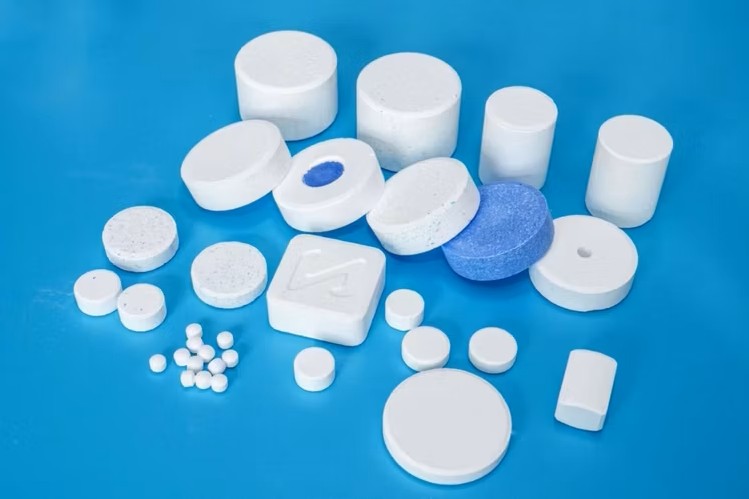
- Physical Form: Powder, granules, or tablets
Mechanism of Action in Aquatic Environments
When SDIC dissolves in water, it undergoes hydrolysis to release hypochlorous acid, which penetrates microbial cell walls and disrupts essential enzymatic processes. This mechanism proves highly effective against bacteria, viruses, fungi, and algae—common pathogens that threaten aquaculture productivity. Unlike traditional chlorine compounds, SDIC maintains stable chlorine release over extended periods, ensuring consistent disinfection without harmful concentration spikes.
Critical Technical Specifications for Aquaculture-Grade SDIC
Available Chlorine Content Standards
The effective chlorine content represents the most crucial quality parameter for SDIC products. Premium aquaculture-grade SDIC must meet the following specifications:
| Grade | Available Chlorine | Application Suitability |
|---|---|---|
| Standard | 56% ± 1% | General pond treatment |
| Premium | 60% ± 0.5% | Intensive farming systems |
| Ultra-Pure | 62%+ | Hatchery and breeding facilities |
Particle Size Distribution
Particle size directly affects dissolution rate and application uniformity:
- 8-30 Mesh: Optimal for large-scale pond treatment
- 16-36 Mesh: Ideal for recirculating aquaculture systems (RAS)
- Tablet Form: Precise dosing for small-scale operations
Moisture Content and Purity
High-quality SDIC maintains moisture content below 5% to ensure maximum stability. Products exceeding this threshold experience accelerated degradation, reducing effective shelf life by up to 40%.
Shelf Life Performance: The Competitive Advantage
Extended Stability Under Proper Storage
One of SDIC’s most significant advantages over alternative disinfectants lies in its exceptional shelf life. When stored under recommended conditions—cool, dry, well-ventilated environments away from direct sunlight and moisture—premium SDIC demonstrates remarkable stability:
Documented Performance Data:
- 12 Months: Less than 1% available chlorine loss
- 24 Months: Less than 3% available chlorine loss
- 36 Months: Less than 5% available chlorine loss (under optimal conditions)
This stability translates directly into reduced inventory waste, predictable procurement planning, and lower total cost of ownership for aquaculture operations.
Factors Affecting Shelf Life
Multiple environmental factors influence SDIC degradation rates:
- Temperature: Storage above 30°C accelerates decomposition
- Humidity: Relative humidity exceeding 70% significantly reduces stability
- Packaging Integrity: Moisture-proof packaging extends shelf life by 15-20%
- Contamination: Contact with organic materials triggers premature activation
Comparative Stability Analysis
| Disinfectant | 12-Month Stability | 24-Month Stability | Storage Requirements |
|---|---|---|---|
| SDIC (Premium) | 99%+ | 97%+ | Standard warehouse |
| Calcium Hypochlorite | 85-90% | 70-80% | Climate-controlled |
| Sodium Hypochlorite | 60-70% | 40-50% | Refrigerated |
| Trichloroisocyanuric Acid | 95%+ | 90%+ | Standard warehouse |
Application Guidelines for Optimal Aquaculture Results
Dosage Recommendations by Application
Proper dosing ensures effective disinfection while maintaining aquatic life safety:
Preventive Treatment:
- Fish Ponds: 0.3-0.5 ppm available chlorine
- Shrimp Farms: 0.5-0.8 ppm available chlorine
- Hatchery Systems: 0.2-0.3 ppm available chlorine
Therapeutic Treatment:
- Bacterial Outbreaks: 1.0-1.5 ppm available chlorine
- Viral Control: 1.5-2.0 ppm available chlorine
- Algae Management: 0.8-1.2 ppm available chlorine
Application Frequency
Treatment frequency varies based on system type and stocking density:
- Extensive Systems: Weekly application
- Semi-Intensive Systems: 2-3 times per week
- Intensive/RAS Systems: Daily monitoring with adjusted dosing
Safety Margins and Fish Tolerance
SDIC demonstrates excellent safety profiles when used according to specifications:
- Safe Concentration Range: 0.1-2.0 ppm for most freshwater species
- Marine Species Tolerance: 0.1-1.5 ppm
- Critical Threshold: Concentrations exceeding 3.0 ppm require water exchange
Industry Standards and Regulatory Compliance
International Quality Certifications
Premium SDIC manufacturers maintain compliance with multiple international standards:
- ISO 9001:2015: Quality Management Systems
- HACCP: Hazard Analysis Critical Control Point for aquaculture applications
- GMP: Good Manufacturing Practice for chemical production
- WHO Guidelines: Water treatment chemical safety standards
Regional Regulatory Frameworks
United States:
- EPA registration required for aquaculture applications
- Compliance with FIFRA (Federal Insecticide, Fungicide, and Rodenticide Act)
European Union:
- BPR (Biocidal Products Regulation) compliance mandatory
- REACH registration for chemical substances
Asia-Pacific:
- Varies by country; China GB/T standards widely recognized
- ASEAN harmonized standards emerging for aquaculture chemicals
Testing and Verification Protocols
Reputable suppliers provide comprehensive documentation:
- Certificate of Analysis (CoA): Batch-specific quality parameters
- Safety Data Sheet (SDS): Handling and emergency procedures
- Third-Party Testing: Independent laboratory verification
- Stability Reports: Accelerated aging test results
Economic Benefits for B2B Buyers
Total Cost of Ownership Analysis
While initial purchase price matters, smart procurement decisions consider total cost of ownership:
Cost Factors:
- Product longevity (shelf life)
- Dosage efficiency (available chlorine content)
- Storage requirements (climate control needs)
- Waste reduction (degradation losses)
- Application labor (dissolution time)
ROI Calculation Example:
A 10,000-ton annual shrimp farming operation switching from standard to premium SDIC can expect:
- 15% reduction in chemical consumption
- 20% decrease in inventory waste
- 10% improvement in disease prevention
- Net savings: 8-12% annually
Supply Chain Considerations
Reliable SDIC suppliers offer:
- Consistent Quality: Batch-to-batch uniformity
- Flexible Packaging: 25kg, 50kg, 1000kg options
- Technical Support: Application guidance and troubleshooting
- Documentation: Complete regulatory compliance packages
Why Choose Premium SDIC for Your Aquaculture Operation
Performance Advantages
- Broad-Spectrum Efficacy: 99% kill rate at 20 ppm against common aquaculture pathogens
- Residual Protection: Maintains disinfecting activity for 4-6 hours post-application
- pH Stability: Minimal impact on water pH compared to alternative chlorines
- Low Toxicity: Breaks down into harmless byproducts (sodium, chloride, cyanuric acid)
Operational Benefits
- Easy Handling: Solid form reduces spill risks
- Precise Dosing: Consistent composition enables accurate calculations
- Storage Efficiency: No special climate control requirements
- Transport Safety: Non-hazardous classification for most shipping routes
Sustainability Credentials
Modern aquaculture operations increasingly prioritize environmental responsibility:
- Reduced Chemical Usage: Higher efficiency means less product required
- Minimal Environmental Impact: Biodegradable breakdown products
- Energy Efficiency: No heating or special equipment needed for application
- Carbon Footprint: Lower transportation weight per treatment volume
Frequently Asked Questions (FAQ)
Q1: What is the recommended shelf life for SDIC in aquaculture applications?
A: Premium-grade SDIC maintains 97%+ available chlorine content for 24 months when stored properly in cool, dry conditions below 30°C with relative humidity under 70%. Industrial buyers should request stability certificates from suppliers to verify claimed shelf life.
Q2: How do I calculate the correct SDIC dosage for my fish pond?
A: Dosage calculation follows this formula: SDIC Required (kg) = Pond Volume (m³) × Target ppm × 1.67 ÷ Available Chlorine (%). For example, a 10,000 m³ pond targeting 0.5 ppm with 60% SDIC requires: 10,000 × 0.5 × 1.67 ÷ 60 = 139 kg. Always conduct small-scale testing before full application.
Q3: Can SDIC be used in recirculating aquaculture systems (RAS)?
A: Yes, SDIC is suitable for RAS applications but requires careful dosing control. Recommended concentrations range from 0.2-0.5 ppm with continuous monitoring. Biofilter compatibility should be verified, as excessive chlorine can damage beneficial bacterial colonies.
Q4: What certifications should I request from SDIC suppliers?
A: B2B buyers should request: ISO 9001 certification, batch-specific Certificate of Analysis, Safety Data Sheet (SDS), HACCP compliance documentation, and third-party testing reports. For export operations, verify compliance with destination country regulations.
Q5: How does SDIC compare to trichloroisocyanuric acid (TCCA) for aquaculture?
A: SDIC offers faster dissolution and more consistent chlorine release, making it preferable for routine water treatment. TCCA provides longer residual activity but dissolves more slowly. SDIC’s superior solubility makes it ideal for applications requiring quick disinfection response.
Q6: What packaging options are available for bulk SDIC purchases?
A: Standard packaging includes 25kg plastic drums, 50kg fiber drums, and 1000kg bulk bags (FIBC). Custom packaging available for large-volume contracts. All packaging must be moisture-proof with proper labeling per GHS standards.
Q7: Is SDIC safe for organic aquaculture certification?
A: SDIC acceptance varies by certification body and region. Some organic standards permit limited SDIC use for disease outbreak management with withdrawal periods. Buyers pursuing organic certification should verify acceptance with their certifying agency before procurement.
Q8: What are the storage requirements for maintaining SDIC shelf life?
A: Optimal storage conditions include: temperature below 30°C, relative humidity under 70%, well-ventilated warehouse, away from direct sunlight, separated from organic materials and reducing agents. Properly stored SDIC in original sealed packaging maintains specification for 24+ months.
Ready to optimize your aquaculture water treatment program?
Our technical team provides comprehensive consultation on SDIC selection, dosage optimization, and application protocols tailored to your specific operation. Contact us today to discuss how premium SDIC solutions can enhance your aquaculture productivity while reducing operational costs.
