
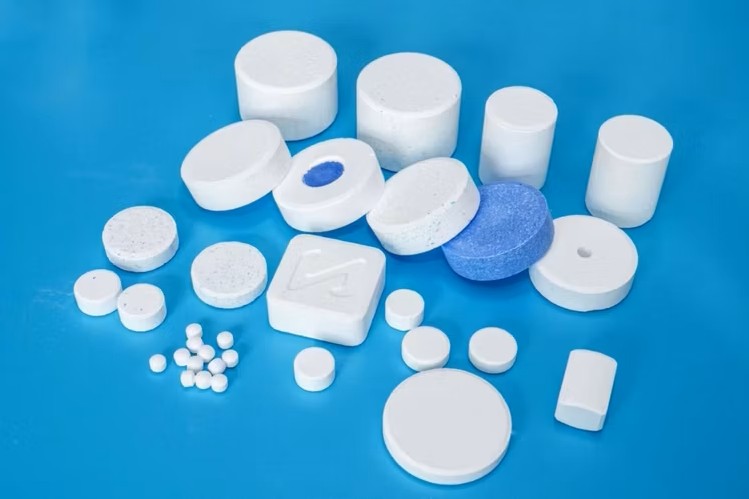
Best TCCA for Drinking Water Purification: Best Manufacturers and Performance Standards
Introduction
In an era where water safety remains a paramount concern for municipalities, industrial facilities, and commercial water treatment operations worldwide, selecting the right disinfectant is critical. Trichloroisocyanuric Acid (TCCA), with CAS Number 87-90-1, has emerged as one of the most reliable and efficient chlorine-based disinfectants for drinking water purification. This comprehensive technical guide examines the key performance parameters, industry certifications, and leading manufacturers that define excellence in TCCA production for potable water applications.
For B2B purchasers evaluating TCCA suppliers, understanding the technical specifications, regulatory compliance requirements, and manufacturer capabilities is essential for making informed procurement decisions. This article provides the in-depth analysis needed to identify premium-grade TCCA suitable for drinking water treatment systems.
Understanding TCCA: Chemical Properties and Disinfection Mechanism
Molecular Structure and Composition
Trichloroisocyanuric Acid is an organic compound with the molecular formula C₃Cl₃N₃O₃ and a molecular weight of 232.41 g/mol. The compound belongs to the isocyanurate family and functions as a stable chlorine release agent. Its unique triazine ring structure provides exceptional stability compared to traditional chlorine compounds like calcium hypochlorite or sodium hypochlorite.
Key Physical and Chemical Parameters
| Parameter | Specification | Test Method |
|---|---|---|
| Available Chlorine Content | ≥90.0% (Premium Grade) | GB/T 10666 |
| Available Chlorine Content | ≥88.0% (Standard Grade) | GB/T 10666 |
| Moisture Content | ≤0.5% | Karl Fischer Titration |
| pH Value (1% Solution) | 2.6 – 3.2 | pH Meter |
| Solubility (25°C) | 1.2g/100g H₂O | Gravimetric Method |
| Bulk Density | 0.95 – 1.20 g/cm³ | ASTM D1895 |
| Particle Size | 8-50 mesh (customizable) | Sieve Analysis |
| Decomposition Temperature | >247°C | DSC Analysis |
Disinfection Mechanism
TCCA releases hypochlorous acid (HOCl) gradually when dissolved in water, providing sustained disinfection action. The hydrolysis reaction proceeds as follows:
C₃Cl₃N₃O₃ + 3H₂O → C₃H₃N₃O₃ + 3HOCl
This controlled release mechanism offers several advantages for drinking water treatment:
- Extended residual chlorine maintenance
- Reduced formation of disinfection by-products (DBPs)
- Stable performance across varying pH ranges
- Minimal chlorine odor compared to gaseous chlorine
Industry Standards and Regulatory Compliance
Chinese Industry Standards: HG/T 3779-2005
The Chinese chemical industry standard HG/T 3779-2005 establishes comprehensive quality requirements for TCCA used in water treatment applications. Key compliance parameters include:
Premium Grade Requirements:
- Available chlorine: ≥90.0%
- Moisture: ≤0.5%
- Water insoluble matter: ≤0.1%
- Heavy metals (as Pb): ≤0.001%
Standard Grade Requirements:
- Available chlorine: ≥88.0%
- Moisture: ≤1.0%
- Water insoluble matter: ≤0.2%
NSF/ANSI 60 Certification
For drinking water treatment chemicals destined for North American markets, NSF/ANSI Standard 60 certification is mandatory. This standard evaluates:
- Contaminant extraction testing
- Toxicological review of formulation ingredients
- Manufacturing facility audits
- Ongoing product surveillance
NSF/ANSI 60 certification ensures that TCCA products do not introduce harmful contaminants into potable water supplies at expected use levels.
WHO Guidelines for Drinking Water Quality
The World Health Organization recommends maintaining free chlorine residual between 0.2-0.5 mg/L at the point of delivery. TCCA’s controlled release characteristics make it particularly suitable for achieving these targets in distribution systems where maintaining consistent disinfectant residual is challenging.
EPA Registration Requirements
In the United States, TCCA products used for drinking water disinfection must be registered with the Environmental Protection Agency under the Federal Insecticide, Fungicide, and Rodenticide Act (FIFRA). EPA registration confirms that the product meets safety and efficacy standards for potable water applications.
Critical Performance Metrics for Drinking Water Applications
Disinfection Efficacy Data
Peer-reviewed studies demonstrate TCCA’s effectiveness against common waterborne pathogens:
| Microorganism | Log Reduction | Contact Time | Chlorine Residual |
|---|---|---|---|
| E. coli | >6-log | 30 minutes | 0.5 mg/L |
| Giardia cysts | >3-log | 120 minutes | 1.0 mg/L |
| Cryptosporidium | >2-log | 180 minutes | 2.0 mg/L |
| Hepatitis A Virus | >4-log | 60 minutes | 1.0 mg/L |
| Legionella pneumophila | >5-log | 45 minutes | 0.8 mg/L |
Residual Chlorine Stability
One of TCCA’s distinguishing advantages is its ability to maintain stable chlorine residuals over extended periods. Field studies in municipal distribution systems show:
- 24-hour residual retention: 85-92% of initial chlorine dose
- 72-hour residual retention: 70-78% of initial chlorine dose
- Temperature stability: Effective from 5°C to 35°C
- pH performance range: Optimal at pH 6.5-8.0
Disinfection By-Product Formation
TCCA demonstrates lower trihalomethane (THM) formation potential compared to gaseous chlorine:
| DBP Type | TCCA (μg/L) | Gaseous Cl₂ (μg/L) | Reduction |
|---|---|---|---|
| Total THMs | 45-65 | 70-95 | 30-35% |
| Haloacetic Acids | 25-40 | 35-55 | 25-30% |
| Chlorite | <0.1 | N/A | N/A |
Leading TCCA Manufacturers: Global Capacity and Capabilities
Manufacturing Capacity Overview
The global TCCA production capacity exceeds 500,000 metric tons annually, with China accounting for approximately 75% of worldwide production. Leading manufacturers operate facilities with annual capacities ranging from 10,000 to 80,000 metric tons.
Key Manufacturer Selection Criteria
When evaluating TCCA suppliers for drinking water applications, B2B purchasers should consider:
- Production Capacity and Scalability
- Minimum recommended: 10,000 MT/year
- Multiple production lines for supply continuity
- Raw material sourcing stability
- Quality Management Systems
- ISO 9001:2015 certification
- ISO 14001:2015 environmental management
- ISO 45001:2018 occupational health and safety
- Regulatory Certifications
- NSF/ANSI 60 (for North American markets)
- REACH compliance (for European markets)
- KFDA approval (for Korean markets)
- Local drinking water chemical approvals
- Technical Support Capabilities
- On-site water treatment consulting
- Dosage calculation assistance
- Emergency response support
- Laboratory testing services
- Supply Chain Reliability
- Lead time consistency
- Packaging options (25kg, 50kg, 1000kg)
- International shipping capabilities
- Inventory management systems
Regional Manufacturing Hubs
Shandong Province, China:
- Concentrated chemical manufacturing region
- Access to raw materials (cyanuric acid, chlorine)
- Established export infrastructure
- Multiple certified manufacturers
Hebei Province, China:
- Growing TCCA production capacity
- Competitive pricing structures
- Expanding international certification portfolios
Other Global Production Centers:
- United States (limited capacity, premium pricing)
- Europe (specialized high-purity grades)
- India (emerging production capacity)
Technical Specifications for Procurement
Recommended Product Specifications for Drinking Water
Premium Grade TCCA for Potable Water:
| Specification | Requirement | Test Standard |
|---|---|---|
| Available Chlorine | ≥90.0% | HG/T 3779-2005 |
| Moisture Content | ≤0.5% | Karl Fischer |
| pH (1% Solution) | 2.6-3.2 | GB/T 10666 |
| Heavy Metals (Pb) | ≤10 ppm | ICP-MS |
| Arsenic | ≤5 ppm | AAS |
| Water Insolubles | ≤0.1% | Gravimetric |
| Particle Size Distribution | 95% through 20 mesh | Sieve Analysis |
| Bulk Density | 0.95-1.20 g/cm³ | ASTM D1895 |
Packaging and Storage Requirements
Standard Packaging Options:
- 25kg plastic woven bags with PE liner
- 50kg plastic drums
- 1000kg bulk bags (FIBC)
- Custom packaging available
Storage Conditions:
- Temperature: 15-30°C
- Relative humidity: <75%
- Ventilation: Required
- Separation: From reducing agents, acids, ammonia compounds
- Shelf life: 24 months from manufacture date
Transportation Classifications
| Regulation | Classification | UN Number |
|---|---|---|
| IMDG Code | Class 5.1 (Oxidizer) | UN 2468 |
| IATA DGR | Class 5.1 (Oxidizer) | UN 2468 |
| ADR/RID | Class 5.1 (Oxidizer) | UN 2468 |
| DOT (USA) | Class 5.1 (Oxidizer) | UN 2468 |
Application Guidelines for Drinking Water Treatment
Dosage Calculations
TCCA dosage depends on water quality parameters and treatment objectives:
Standard Municipal Water Treatment:
- Initial disinfection: 2-5 mg/L
- Residual maintenance: 0.5-1.5 mg/L
- Emergency disinfection: 5-10 mg/L
Calculation Formula:
TCCA Required (kg) = Water Volume (m³) × Target Chlorine (mg/L) ÷ 900
Note: 900 factor accounts for 90% available chlorine content
Integration with Existing Treatment Systems
TCCA can be integrated into various water treatment configurations:
- Direct Feed Systems
- Dissolution tanks with controlled mixing
- Metering pumps for solution delivery
- Residual chlorine monitoring
- Tablet Feeders
- Slow-dissolve tablets for continuous treatment
- Suitable for small communities and wells
- Minimal operator intervention required
- Bulk Handling Systems
- Silo storage with automated dosing
- For large municipal facilities
- Integrated safety systems
Safety Considerations
Handling Precautions:
- Use personal protective equipment (gloves, goggles, respiratory protection)
- Avoid contact with ammonia, amines, and reducing agents
- Store away from organic materials and combustible substances
- Ensure adequate ventilation in storage and handling areas
Emergency Response:
- Eye contact: Flush with water for 15 minutes, seek medical attention
- Skin contact: Wash thoroughly with soap and water
- Inhalation: Move to fresh air, administer oxygen if needed
- Spill containment: Use inert absorbent materials, avoid water contact in large spills
Quality Assurance and Testing Protocols
Incoming Material Verification
B2B purchasers should implement comprehensive incoming inspection procedures:
Required Tests per Batch:
- Available chlorine content (titrimetric method)
- Moisture content (Karl Fischer)
- pH of 1% solution
- Visual inspection (color, particle uniformity)
- Certificate of Analysis verification
Periodic Testing (Quarterly):
- Heavy metals analysis
- Water insoluble matter
- Particle size distribution
- Stability testing (accelerated aging)
Third-Party Certification Verification
Verify manufacturer claims through independent testing:
- Request current NSF certification documentation
- Confirm REACH registration status
- Review recent third-party laboratory test reports
- Conduct periodic supplier audits
Economic Considerations for B2B Procurement
Total Cost of Ownership Analysis
When evaluating TCCA suppliers, consider total cost factors beyond unit price:
| Cost Factor | Impact on TCO |
|---|---|
| Unit Price | 40-50% of TCO |
| Shipping/Freight | 15-25% of TCO |
| Storage Requirements | 5-10% of TCO |
| Dosage Efficiency | 20-30% of TCO |
| Quality Consistency | 10-15% of TCO |
Volume Pricing Structures
Typical pricing tiers for TCCA (FOB China ports):
| Order Volume | Price Range (USD/MT) | Lead Time |
|---|---|---|
| <50 MT | $1,800 – $2,200 | 15-20 days |
| 50-200 MT | $1,600 – $1,900 | 20-25 days |
| 200-500 MT | $1,450 – $1,700 | 25-30 days |
| >500 MT | $1,350 – $1,550 | 30-45 days |
Note: Prices subject to raw material market fluctuations and currency exchange rates
Contract Terms Recommendations
For long-term supply agreements, consider:
- Price adjustment clauses tied to raw material indices
- Minimum/maximum order flexibility
- Quality guarantee provisions
- Force majeure protections
- Payment terms (typically 30% deposit, 70% against documents)
Future Trends and Market Outlook
Market Growth Projections
The global TCCA market is projected to grow at a CAGR of 7.5-8.0% through 2032, driven by:
- Increasing drinking water safety regulations
- Expansion of municipal water treatment infrastructure
- Growing awareness of waterborne disease prevention
- Replacement of less efficient disinfection technologies
Technological Developments
Emerging innovations in TCCA production and application:
- Enhanced stability formulations for tropical climates
- Coated tablet technologies for controlled release
- Integration with smart dosing systems
- Reduced by-product formation formulations
Sustainability Considerations
Manufacturers are increasingly focusing on:
- Energy-efficient production processes
- Reduced packaging waste
- Carbon footprint optimization
- Circular economy initiatives for packaging materials
Frequently Asked Questions (FAQ)
Q1: What is the shelf life of TCCA for drinking water applications?
A: Properly stored TCCA maintains its specifications for 24 months from the manufacture date. Storage conditions must maintain temperature between 15-30°C and relative humidity below 75%. Regular testing of stored inventory is recommended for critical applications.
Q2: Can TCCA be used in combination with other water treatment chemicals?
A: TCCA is compatible with most coagulants and flocculants used in conventional water treatment. However, it should not be mixed directly with ammonia, amines, or reducing agents. Sequential addition with appropriate contact time between chemicals is recommended. Consult technical support for specific compatibility questions.
Q3: What certifications should I require from TCCA suppliers for drinking water use?
A: Minimum certifications should include: ISO 9001:2015 quality management, HG/T 3779-2005 compliance, and market-specific certifications (NSF/ANSI 60 for North America, REACH for Europe). Request current certification documentation and verify authenticity through issuing organizations.
Q4: How does TCCA compare to sodium hypochlorite for drinking water disinfection?
A: TCCA offers several advantages: higher available chlorine content (90% vs. 10-15%), longer shelf life (24 months vs. 3-6 months), more stable residual maintenance, and reduced transportation costs per unit of available chlorine. However, sodium hypochlorite may be preferred for automated liquid dosing systems.
Q5: What is the recommended contact time for TCCA disinfection?
A: Contact time depends on water quality and target microorganisms. For bacterial disinfection, 30 minutes at 0.5 mg/L residual is typically sufficient. For protozoan cysts (Giardia, Cryptosporidium), extended contact times of 2-3 hours at higher residuals (1-2 mg/L) may be required. Always follow local regulatory requirements.
Q6: How should TCCA be stored to maintain quality?
A: Store in original sealed containers in a cool, dry, well-ventilated area. Keep away from direct sunlight, heat sources, and incompatible materials (ammonia, acids, reducing agents, organic materials). Maintain first-in-first-out inventory rotation. Do not store on wooden pallets in humid environments.
Q7: What analytical methods are used to verify TCCA quality?
A: Standard test methods include: iodometric titration for available chlorine (GB/T 10666), Karl Fischer titration for moisture, pH meter for solution pH, ICP-MS for heavy metals, and sieve analysis for particle size. Request Certificate of Analysis with each shipment showing actual test results.
Q8: Can TCCA be used for emergency water disinfection?
A: Yes, TCCA is suitable for emergency disinfection scenarios. For emergency treatment of questionable water sources, use 5-10 mg/L dosage with 2-hour contact time. Ensure thorough mixing and verify residual chlorine before consumption. Follow WHO emergency water treatment guidelines.
Q9: What packaging options are available for bulk TCCA purchases?
A: Standard packaging includes 25kg woven bags with PE liner, 50kg plastic drums, and 1000kg FIBC bulk bags. Custom packaging is available for specific handling requirements. Discuss packaging needs with suppliers during procurement negotiations.
Q10: How do I calculate the correct TCCA dosage for my water treatment system?
A: Use the formula: TCCA (kg) = Water Volume (m³) × Target Chlorine (mg/L) ÷ 900. Adjust for actual available chlorine content from Certificate of Analysis. Consider water quality factors (pH, temperature, organic load) that may increase chlorine demand. Conduct jar testing for optimal dosage determination.
Conclusion
Selecting the right TCCA supplier for drinking water purification requires careful evaluation of technical specifications, regulatory compliance, manufacturing capabilities, and supply chain reliability. Premium-grade TCCA meeting HG/T 3779-2005 standards with appropriate market certifications provides an effective, reliable disinfection solution for municipal and commercial water treatment applications.
B2B purchasers should prioritize suppliers with demonstrated quality management systems, relevant certifications for their target markets, and the technical support capabilities necessary for successful implementation. Long-term supply partnerships with qualified manufacturers ensure consistent product quality and reliable delivery for critical water treatment operations.
For detailed product specifications, certification documentation, and customized quotations, reach out to qualified TCCA manufacturers with proven track records in drinking water treatment applications.
Yes
