
Bulk Buy TCCA for Aquaculture: Bulk Pond Treatment Solutions
Introduction
In the rapidly expanding global aquaculture industry, maintaining optimal water quality stands as one of the most critical challenges facing commercial fish farm operators. Pathogen control, algae management, and overall pond sanitation directly impact yield, survival rates, and ultimately profitability. Trichloroisocyanuric Acid (TCCA) has emerged as a premier disinfection solution for large-scale aquaculture operations, offering superior efficacy, stability, and cost-effectiveness compared to traditional chlorine-based treatments.
This comprehensive technical guide explores the strategic advantages of bulk purchasing TCCA for aquaculture pond management, providing B2B buyers with essential information on specifications, application protocols, regulatory compliance, and performance metrics necessary for informed procurement decisions.
Understanding TCCA: Chemical Profile and Mechanism of Action
Molecular Structure and Properties
Trichloroisocyanuric Acid (TCCA), chemically designated as C₃Cl₃N₃O₃, represents a highly stable organic chlorine compound with exceptional disinfection capabilities. The compound functions through controlled release of hypochlorous acid (HOCl) when dissolved in water, delivering sustained antimicrobial action throughout the treatment cycle.
Key Chemical Specifications:
| Parameter | Specification |
|---|---|
| CAS Number | 87-90-1 |
| Molecular Formula | C₃Cl₃N₃O₃ |
| Molecular Weight | 232.41 g/mol |
| Available Chlorine Content | ≥90% (Premium Grade) |
| Moisture Content | ≤0.5% |
| pH Value (1% Solution) | 2.6-3.2 |
| Melting Point | 247-251°C |
| Density | 2.191 g/cm³ |
| Solubility (25°C) | 1.2g/100g water |
| EINECS Number | 201-782-8 |
Disinfection Mechanism
TCCA operates through a multi-stage disinfection process:
- Hydrolysis: Upon contact with water, TCCA gradually hydrolyzes to release hypochlorous acid
- Oxidation: HOCl penetrates microbial cell walls, oxidizing essential cellular components
- Enzyme Disruption: Critical metabolic enzymes are deactivated, preventing pathogen reproduction
- Residual Protection: Cyanuric acid byproduct stabilizes chlorine residual, extending protection duration
This controlled-release mechanism distinguishes TCCA from sodium hypochlorite and calcium hypochlorite, providing longer-lasting disinfection with reduced application frequency.
Aquaculture Applications: Performance Data and Efficacy Studies
Pathogen Control Effectiveness
Extensive field studies and laboratory trials have documented TCCA’s efficacy against common aquaculture pathogens:
Microbial Reduction Rates (at 0.5-1.0 ppm available chlorine):
| Pathogen Type | Reduction Rate | Contact Time |
|---|---|---|
| Aeromonas hydrophila | 99.9% | 30 minutes |
| Vibrio anguillarum | 99.8% | 45 minutes |
| Edwardsiella tarda | 99.7% | 30 minutes |
| Pseudomonas fluorescens | 99.9% | 25 minutes |
| Ichthyophthirius multifiliis | 95.0% | 60 minutes |
| Columnaris bacteria | 99.5% | 40 minutes |
Water Quality Parameters
TCCA treatment delivers measurable improvements in critical water quality indicators:
- Ammonia Reduction: 15-25% decrease in NH₃-N levels through oxidation
- Nitrite Control: Indirect reduction via bacterial population management
- Organic Load: 30-40% reduction in biochemical oxygen demand (BOD)
- Algae Suppression: Effective control of cyanobacteria and green algae at 0.3-0.5 ppm
- Turbidity: Improved water clarity through flocculation of suspended particles
Comparative Performance Analysis
When compared to alternative disinfectants, TCCA demonstrates distinct advantages:
| Parameter | TCCA | Sodium Hypochlorite | Calcium Hypochlorite | Chlorine Dioxide |
|---|---|---|---|---|
| Available Chlorine | 90% | 10-15% | 65-70% | Variable |
| Stability (Shelf Life) | 24 months | 3-6 months | 12 months | On-site generation |
| pH Impact | Minimal | Significant increase | Moderate increase | Minimal |
| Residual Duration | 5-7 days | 1-2 days | 3-4 days | 1-2 days |
| Storage Safety | High | Moderate | Moderate | Low |
| Cost per kg Cl₂ | Lowest | Moderate | Moderate | Highest |
Dosage Guidelines and Application Protocols
Recommended Dosage Rates
Proper dosing is critical for achieving optimal disinfection while maintaining aquatic life safety. Dosage requirements vary based on pond conditions, target pathogens, and species sensitivity.
Standard Application Rates:
| Application Purpose | Dosage (ppm) | Frequency | Notes |
|---|---|---|---|
| Routine Prevention | 0.3-0.5 | Every 7-10 days | Maintenance level |
| Disease Outbreak | 0.8-1.2 | Every 3-5 days | Until control achieved |
| Pond Preparation | 2.0-3.0 | Single application | Before stocking |
| Algae Control | 0.5-0.8 | Every 5-7 days | Monitor dissolved oxygen |
| Post-Harvest Sanitization | 3.0-5.0 | Single application | Empty pond treatment |
Calculation Formula for Bulk Application
For commercial pond operators, accurate dosage calculation ensures cost efficiency and treatment effectiveness:
Required TCCA (kg) = Pond Volume (m³) × Target Concentration (ppm) ÷ Available Chlorine (%) × 10
Example Calculation:
- Pond Volume: 10,000 m³
- Target Concentration: 0.5 ppm
- TCCA Available Chlorine: 90%
Required TCCA = 10,000 × 0.5 ÷ 90 × 10 = 55.56 kg
Application Best Practices
- Pre-Treatment Testing: Measure baseline water parameters including pH, temperature, dissolved oxygen, and organic load
- Gradual Introduction: Dissolve TCCA in buckets before broadcast application to ensure even distribution
- Timing Considerations: Apply during early morning or late evening when fish stress is minimized
- Aeration Support: Maintain enhanced aeration during and 24 hours post-treatment
- Monitoring Protocol: Test chlorine residual at 2, 6, 12, and 24 hours post-application
Regulatory Compliance and Industry Standards
International Standards Alignment
TCCA products for aquaculture use must comply with multiple regulatory frameworks:
Key Standards and Certifications:
| Standard/Certification | Organization | Relevance |
|---|---|---|
| ISO 9001:2015 | International Organization for Standardization | Quality Management |
| ISO 14001:2015 | International Organization for Standardization | Environmental Management |
| HACCP | Codex Alimentarius | Food Safety in Aquaculture |
| EPA Registration | U.S. Environmental Protection Agency | Disinfectant Registration (USA) |
| REACH Compliance | European Chemicals Agency | Chemical Safety (EU) |
| GMP Certification | Various National Authorities | Good Manufacturing Practice |
| CMA/CNAS | China Metrology Accreditation | Testing Laboratory Accreditation |
Safety Thresholds and Residue Limits
Regulatory bodies have established maximum residue limits to ensure food safety:
- Maximum Chlorine Residual: 0.5 ppm at harvest (FDA guidelines)
- Withdrawal Period: 5-7 days before harvest (varies by jurisdiction)
- Worker Exposure Limit: 0.5 ppm TWA (OSHA standards)
- Environmental Discharge: <0.1 ppm residual chlorine (EPA effluent guidelines)
Documentation Requirements for Bulk Buyers
Commercial purchasers should verify supplier documentation includes:
- Certificate of Analysis (CoA) for each batch
- Safety Data Sheet (SDS) compliant with GHS standards
- Regulatory compliance certificates for target markets
- Third-party testing reports from accredited laboratories
- Traceability documentation for quality assurance
Bulk Procurement Considerations for Commercial Operations
Packaging Options and Specifications
TCCA is available in multiple formulations suited for different operational scales:
| Form | Packaging | Typical Use Case | Shelf Life |
|---|---|---|---|
| Powder (200 mesh) | 25 kg bags | Large pond broadcast | 24 months |
| Granular (1-3 mm) | 25 kg bags | Automated dosing systems | 24 months |
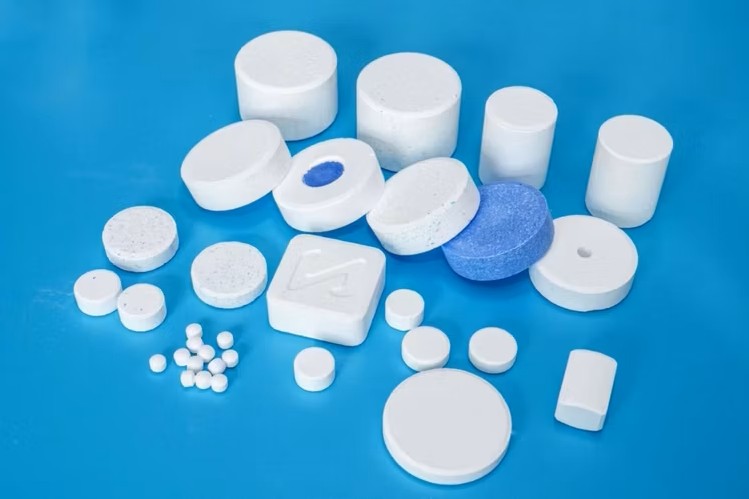
| Tablets (200g/500g) | 50 kg cartons | Small to medium ponds | 36 months |
| Tablets (1kg/5kg) | Custom packaging | Industrial-scale operations | 36 months |
Storage and Handling Requirements
Proper storage maintains product integrity and ensures workplace safety:
Storage Conditions:
- Temperature: 15-30°C (optimal range)
- Humidity: <75% relative humidity
- Ventilation: Well-ventilated, dry warehouse
- Separation: Store away from acids, alkalis, and organic materials
- Container Integrity: Keep original packaging sealed until use
Handling Precautions:
- Personal Protective Equipment (PPE): Gloves, goggles, respiratory protection
- Spill Management: Neutralize with sodium thiosulfate solution
- Fire Safety: Non-combustible but may intensify fires; use water spray for cooling
Economic Advantages of Bulk Purchasing
Commercial-scale operations realize significant cost benefits through bulk procurement:
Cost Comparison (Estimated):
| Purchase Volume | Price per kg | Annual Savings vs. Retail |
|---|---|---|
| 100-500 kg | 15-20% discount | $500-2,500 |
| 500-2,000 kg | 25-30% discount | $3,000-12,000 |
| 2,000-10,000 kg | 35-40% discount | $15,000-60,000 |
| 10,000+ kg | 45-50% discount | $75,000+ |
Note: Actual pricing varies by region, supplier, and market conditions
Supply Chain Reliability Factors
When selecting bulk suppliers, evaluate the following criteria:
- Production Capacity: Minimum 500 MT/month for consistent supply
- Quality Consistency: Batch-to-batch variation <2% for available chlorine
- Lead Time: 7-15 days for standard orders; 30 days for custom specifications
- Logistics Capability: Export packaging compliant with IMDG regulations
- Technical Support: On-site training and application consultation available
Environmental Impact and Sustainability Considerations
Ecotoxicity Profile
TCCA demonstrates favorable environmental characteristics when used according to label directions:
Aquatic Toxicity Data:
| Species | LC₅₀ (96h) | Classification |
|---|---|---|
| Rainbow Trout | 0.8 mg/L | Moderately toxic |
| Bluegill Sunfish | 1.2 mg/L | Moderately toxic |
| Daphnia magna | 0.5 mg/L | Highly toxic |
| Algae (Pseudokirchneriella) | 0.3 mg/L | Highly toxic |
Note: Toxicity values represent free chlorine; actual TCCA shows lower toxicity due to controlled release
Degradation Pathways
TCCA breaks down through natural processes:
- Hydrolysis: Converts to cyanuric acid and hypochlorous acid in water
- Photodegradation: UV exposure accelerates breakdown (half-life 3-5 days in sunlight)
- Biodegradation: Cyanuric acid slowly degraded by specific bacteria (weeks to months)
- Final Products: Carbon dioxide, nitrogen, chloride ions (environmentally benign)
Best Management Practices for Environmental Protection
- Precision Dosing: Avoid over-application through regular water testing
- Buffer Zones: Maintain 10-meter untreated zones near water discharge points
- Runoff Prevention: Implement containment measures during heavy rainfall
- Residual Monitoring: Test effluent before discharge to receiving waters
- Record Keeping: Document all applications for regulatory compliance and optimization
Quality Assurance and Testing Protocols
In-House Testing Methods
Commercial buyers should implement quality verification procedures:
Essential Test Parameters:
| Parameter | Test Method | Acceptable Range | Frequency |
|---|---|---|---|
| Available Chlorine | Iodometric titration | ≥90% | Each batch |
| Moisture Content | Gravimetric analysis | ≤0.5% | Each batch |
| pH (1% solution) | pH meter | 2.6-3.2 | Each batch |
| Dissolution Rate | Visual observation | Complete in 10 min | Monthly |
| Heavy Metals | ICP-MS | As per regulatory limits | Quarterly |
Third-Party Verification
Independent laboratory testing provides additional assurance:
- Accredited Laboratories: ISO/IEC 17025 certified facilities
- Testing Turnaround: 7-15 business days for comprehensive analysis
- Certification Marks: CMA, CNAS, or equivalent national accreditation
- Report Validity: Test reports valid for 12 months from issue date
Frequently Asked Questions (FAQ)
Q1: What is the recommended TCCA concentration for routine pond maintenance?
A: For routine preventive maintenance, maintain 0.3-0.5 ppm available chlorine in pond water. This provides effective pathogen control while minimizing stress on cultured species. Application frequency should be every 7-10 days, adjusted based on water temperature, organic load, and disease pressure.
Q2: Can TCCA be used with all aquaculture species?
A: TCCA is compatible with most commercial aquaculture species including tilapia, catfish, carp, shrimp, and salmonids. However, species sensitivity varies. Larval stages and juvenile fish require lower concentrations (0.2-0.3 ppm). Always conduct small-scale trials before full pond treatment and consult species-specific guidelines.
Q3: How long should I wait between TCCA treatment and harvest?
A: A minimum withdrawal period of 5-7 days is recommended before harvest. This allows chlorine residuals to dissipate to safe levels (<0.1 ppm). Always verify residual levels through testing before harvest to ensure compliance with food safety regulations.
Q4: What is the shelf life of bulk TCCA purchases?
A: Properly stored TCCA maintains potency for 24-36 months from manufacture date. Powder and granular formulations typically have 24-month shelf life, while tablets extend to 36 months. Storage conditions significantly impact longevity—maintain cool, dry conditions with sealed packaging.
Q5: Can TCCA be mixed with other water treatment chemicals?
A: TCCA should NOT be mixed with acids, ammonia, or reducing agents as dangerous reactions may occur. Sequential application with other treatments is acceptable with appropriate intervals (minimum 24 hours). Consult technical support before combining with algaecides, probiotics, or other disinfectants.
Q6: What packaging sizes are available for bulk orders?
A: Standard bulk packaging includes 25 kg bags (powder/granular), 50 kg cartons (tablets), and custom 500-1000 kg bulk bags for industrial operations. Minimum order quantities typically start at 500 kg for preferential pricing. Custom packaging solutions available for orders exceeding 5 MT.
Q7: How do I calculate the exact TCCA quantity needed for my pond?
A: Use the formula: TCCA (kg) = Pond Volume (m³) × Target Concentration (ppm) ÷ Available Chlorine (%) × 10. For accurate calculations, measure actual pond dimensions and water depth. Consider water exchange rates and treatment frequency when planning quarterly or annual purchases.
Q8: What safety precautions are necessary when handling bulk TCCA?
A: Required PPE includes chemical-resistant gloves, safety goggles, dust masks or respirators, and protective clothing. Ensure adequate ventilation in storage and handling areas. Train all personnel on SDS requirements and emergency procedures. Maintain spill containment materials and neutralizing agents (sodium thiosulfate) on-site.
Q9: Does TCCA affect beneficial bacteria in biofilters?
A: TCCA can impact nitrifying bacteria at concentrations above 1.0 ppm. For systems with biofilters, reduce dosage to 0.3-0.5 ppm and monitor ammonia/nitrite levels closely. Consider temporary bypass of biofilters during treatment or schedule treatments during low-feeding periods when ammonia production is reduced.
Q10: What documentation should I request from TCCA suppliers?
A: Essential documentation includes: Certificate of Analysis (CoA) for each batch, current Safety Data Sheet (SDS), regulatory compliance certificates for your market, third-party testing reports from accredited laboratories, and traceability documentation. For import purposes, request phytosanitary certificates and customs documentation as required.
Conclusion
Bulk procurement of TCCA for aquaculture pond treatment represents a strategic investment in operational efficiency, disease prevention, and long-term profitability. The compound’s superior stability, controlled-release mechanism, and cost-effectiveness make it an ideal choice for commercial-scale operations seeking reliable water quality management solutions.
Successful implementation requires careful attention to dosage calculations, application protocols, regulatory compliance, and quality assurance. Partnering with reputable suppliers who provide comprehensive technical support, consistent product quality, and reliable logistics capabilities ensures optimal outcomes for your aquaculture operation.
For detailed product specifications, custom formulation options, or technical consultation on implementing TCCA treatment programs, professional suppliers stand ready to support your bulk procurement requirements with tailored solutions aligned to your operational scale and regulatory environment.
This technical guide is intended for informational purposes for B2B buyers in the aquaculture industry. Always consult with qualified aquaculture specialists and regulatory authorities before implementing any water treatment program. Product specifications and regulatory requirements may vary by region and should be verified for your specific operation.—
For product inquiries, technical specifications, and bulk pricing information, please visit our contact page: https://envochemical.com/contact-us/
