
# Calcium Hypochlorite Bulk for Municipal Plants: Drinking Water Disinfection Expert Guide
Introduction
Municipal water treatment facilities worldwide face the critical challenge of delivering safe, potable water to millions of consumers daily. Among various disinfection technologies, calcium hypochlorite has emerged as a cornerstone solution for drinking water disinfection in municipal plants. This comprehensive technical guide examines the application of bulk calcium hypochlorite in municipal water treatment, providing essential information for procurement managers, engineering teams, and operational decision-makers seeking reliable, compliant, and cost-effective disinfection solutions.
Calcium hypochlorite (Ca(ClO)₂), commonly known as high-test hypochlorite (HTH), represents one of the most widely adopted chemical disinfectants in the water treatment industry. With its superior stability, high available chlorine content, and proven track record in municipal applications, this compound continues to be the preferred choice for water utilities across North America, Europe, Asia, and beyond.
Technical Specifications and Chemical Properties
Molecular Composition
Calcium hypochlorite is an inorganic compound with the following fundamental characteristics:
| Parameter | Specification |
|---|---|
| Chemical Formula | Ca(ClO)₂ |
| CAS Number | 7778-54-3 |
| Molecular Weight | 142.99 g/mol |
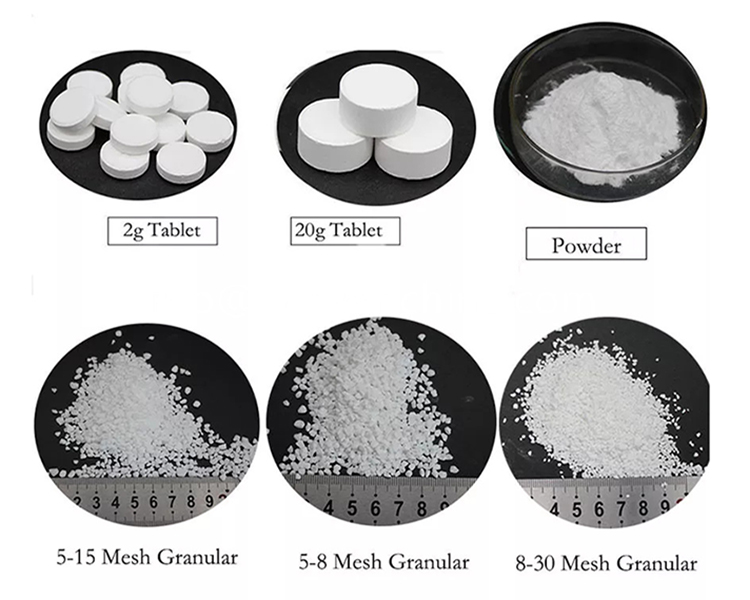
| Appearance | White to off-white granular or powdered solid |
| Odor | Strong chlorine-like odor |
| Solubility | Highly soluble in water (approximately 21g/100ml at 25°C) |
| pH of Solution | 10-12 (alkaline) |
| Density | 2.35 g/cm³ |
Available Chlorine Content
The effectiveness of calcium hypochlorite as a disinfectant is primarily determined by its available chlorine content. Commercial grades typically offer:
- Technical Grade: 65-70% available chlorine
- Premium Grade: 70-75% available chlorine
- Ultra-High Purity: Up to 78% available chlorine (specialized applications)
For municipal water treatment applications, the 65-70% available chlorine grade represents the industry standard, balancing cost-effectiveness with disinfection performance.
Stability Characteristics
Calcium hypochlorite demonstrates superior stability compared to alternative chlorine sources:
- Shelf Life: 12-24 months when stored properly in sealed containers
- Temperature Tolerance: Stable at ambient temperatures up to 40°C
- Moisture Sensitivity: Requires protection from humidity to prevent decomposition
- Decomposition Rate: Less than 2% available chlorine loss per year under optimal storage conditions
Disinfection Mechanism and Efficacy
Primary Disinfection Action
When calcium hypochlorite dissolves in water, it undergoes hydrolysis to produce hypochlorous acid (HOCl), the active disinfecting agent:
Ca(ClO)₂ + 2H₂O → Ca(OH)₂ + 2HOCl
The hypochlorous acid then dissociates based on water pH:
HOCl ⇌ H⁺ + OCl⁻
At typical drinking water pH levels (6.5-7.5), approximately 70-80% of the chlorine exists as HOCl, which is 80-100 times more effective as a disinfectant than the hypochlorite ion (OCl⁻).
Pathogen Inactivation Performance
Calcium hypochlorite demonstrates broad-spectrum antimicrobial activity against:
| Microorganism Type | CT Value (mg·min/L) at 10°C | Log Inactivation |
|---|---|---|
| Giardia cysts | 150-200 | 3-log |
| Cryptosporidium oocysts | 7,200-9,600 | 2-log |
| Viruses (Enteric) | 3-6 | 4-log |
| Bacteria (E. coli) | 0.4-1.0 | 4-log |
| Legionella pneumophila | 10-30 | 4-log |
CT values represent concentration × contact time required for specified inactivation levels
Residual Maintenance
One of the significant advantages of calcium hypochlorite in municipal distribution systems is its ability to maintain disinfectant residual throughout the distribution network:
- Initial Residual: 0.5-2.0 mg/L at treatment plant outlet
- Minimum Distribution Residual: 0.2 mg/L (per EPA requirements)
- Maximum Residual Limit: 4.0 mg/L (EPA Secondary Standard)
Dosage Guidelines for Municipal Applications
Standard Dosage Calculations
Proper dosing is critical for effective disinfection while minimizing disinfection byproduct (DBP) formation. The following guidelines apply to typical municipal water treatment scenarios:
Basic Dosage Formula:
Dosage (kg/day) = Flow Rate (MLD) × Required Chlorine Dose (mg/L) × 10 / Available Chlorine (%)
Typical Dosage Ranges
| Application Scenario | Dosage Range (mg/L) | Contact Time |
|---|---|---|
| Primary Disinfection | 1.0-3.0 | 30-60 minutes |
| Secondary Disinfection | 0.5-1.5 | 15-30 minutes |
| Distribution System Maintenance | 0.2-0.5 | Continuous |
| Emergency Shock Treatment | 5.0-10.0 | 2-4 hours |
| Pre-oxidation | 0.5-2.0 | 10-20 minutes |
Factors Affecting Dosage Requirements
Multiple variables influence optimal calcium hypochlorite dosage:
- Water Quality Parameters
- Turbidity levels
- Organic matter content (TOC/DOC)
- Ammonia nitrogen concentration
- pH and alkalinity
- Temperature
- Chlorine Demand
- Immediate demand (oxidation of reduced compounds)
- Combined chlorine formation (chloramines)
- DBP precursor concentration
- Regulatory Requirements
- Minimum residual at distribution extremities
- Maximum DBP limits (THMs, HAAs)
- Pathogen inactivation requirements (LT2ESWTR)
Industry Standards and Regulatory Compliance
International Standards
Calcium hypochlorite for municipal water treatment must comply with multiple international standards:
AWWA B300 (American Water Works Association)
- Specifies requirements for sodium hypochlorite and calcium hypochlorite
- Defines purity, packaging, and testing protocols
- Widely adopted across North American municipalities
NSF/ANSI 60 (National Sanitation Foundation)
- Drinking water treatment chemicals certification
- Ensures product safety for human consumption
- Mandatory for US municipal water treatment applications
ISO 9001 Quality Management
- Manufacturing process certification
- Consistent product quality assurance
- Traceability and documentation requirements
United States EPA Regulations
The Environmental Protection Agency establishes comprehensive regulations governing chlorine disinfection:
Stage 2 Disinfectants and Disinfection Byproducts Rule (DBPR)
- Total Trihalomethanes (TTHMs): Maximum Contaminant Level (MCL) = 80 μg/L
- Haloacetic Acids (HAA5): MCL = 60 μg/L
- Chlorite: MCL = 1.0 mg/L
Long Term 2 Enhanced Surface Water Treatment Rule (LT2ESWTR)
- Cryptosporidium treatment requirements
- Bin classification based on source water monitoring
- Additional log inactivation requirements for higher-risk systems
European Standards
EN 901:2013
- Chemicals used for treatment of water intended for human consumption
- Calcium hypochlorite specifications
- Purity requirements and analytical methods
EU Drinking Water Directive 2020/2184
- Updated parametric values for disinfection byproducts
- Risk-based approach to water safety
- Enhanced monitoring requirements
Chinese National Standards
GB/T 10666-2019
- Calcium hypochlorite (bleaching powder concentrate) specifications
- Implemented May 1, 2020
- Technical requirements for industrial and water treatment applications
GB 5749-2022
- Standards for drinking water quality
- Disinfectant residual requirements
- DBP limits and monitoring protocols
Safety Considerations and Handling Protocols
Occupational Safety
Calcium hypochlorite requires careful handling to ensure worker safety:
Personal Protective Equipment (PPE)
- Chemical-resistant gloves (nitrile or neoprene)
- Safety goggles or face shield
- Respiratory protection when handling powders
- Protective clothing to prevent skin contact
Exposure Limits
- OSHA Permissible Exposure Limit (PEL): 0.5 ppm (ceiling)
- ACGIH Threshold Limit Value (TLV): 0.5 ppm (ceiling)
- Immediately Dangerous to Life or Health (IDLH): 10 ppm
Storage Requirements
Proper storage is essential for maintaining product integrity and safety:
| Storage Parameter | Requirement |
|---|---|
| Temperature | Cool, dry area (15-25°C optimal) |
| Humidity | Below 60% relative humidity |
| Ventilation | Adequate air circulation required |
| Separation | Minimum 3 meters from organic materials |
| Container | Original sealed containers or approved bulk silos |
| Fire Rating | Non-combustible storage area |
Incompatibility Hazards
Calcium hypochlorite must never be mixed with:
- Acids (releases toxic chlorine gas)
- Ammonia or ammonium compounds (forms explosive nitrogen trichloride)
- Organic materials (fire and explosion hazard)
- Reducing agents (violent reactions possible)
- Metals and metal salts (catalyzes decomposition)
Emergency Response Procedures
Spill Management
- Evacuate area and ventilate
- Wear appropriate PPE
- Contain spill with inert absorbent material
- Collect and dispose according to local regulations
- Flush area with large quantities of water
Fire Response
- Use water spray or fog (large quantities)
- Do not use dry chemical or CO₂ extinguishers
- Evacuate surrounding area
- Prevent runoff from entering waterways
Comparison with Alternative Disinfectants
Calcium Hypochlorite vs. Sodium Hypochlorite
| Parameter | Calcium Hypochlorite | Sodium Hypochlorite |
|---|---|---|
| Available Chlorine | 65-70% | 10-15% |
| Shelf Life | 12-24 months | 3-6 months |
| Storage Volume | Compact (solid) | Large (liquid) |
| Transportation Cost | Lower (higher concentration) | Higher (water weight) |
| pH Impact | Increases pH significantly | Increases pH moderately |
| Handling | Dry material (dust hazard) | Liquid (splash hazard) |
| Cost per kg Cl₂ | Generally lower | Generally higher |
Calcium Hypochlorite vs. Chlorine Gas
| Parameter | Calcium Hypochlorite | Chlorine Gas |
|---|---|---|
| Safety Profile | Safer (no pressurized containers) | Higher risk (toxic gas) |
| Equipment Requirements | Simple feed systems | Complex gas handling systems |
| Regulatory Burden | Lower | Higher (RMP requirements) |
| Residual Formation | Similar | Similar |
| DBP Formation | Similar | Similar |
| Operator Training | Moderate | Extensive |
Calcium Hypochlorite vs. Chlorine Dioxide
| Parameter | Calcium Hypochlorite | Chlorine Dioxide |
|---|---|---|
| DBP Formation | THMs, HAAs | Chlorite, chlorate |
| Taste/Odor Impact | Chlorine taste | Less taste impact |
| Cost | Lower | Higher |
| On-site Generation | Not required | Required |
| Residual Stability | Good | Poor (no residual) |
| Viral Inactivation | Good | Excellent |
Bulk Procurement Considerations
Packaging Options
Municipal facilities can source calcium hypochlorite in various bulk configurations:
Super Sacks (FIBC)
- Capacity: 500-1,000 kg per bag
- Advantages: Cost-effective, easy handling with forklift
- Considerations: Requires covered storage, moisture protection
Drums
- Capacity: 45-50 kg per drum
- Advantages: Better moisture protection, stackable
- Considerations: Higher packaging cost per kg
Bulk Silos
- Capacity: 5-20 metric tons
- Advantages: Minimal handling, automated feed systems
- Considerations: Capital investment required, dedicated infrastructure
Quality Assurance Documentation
Reputable suppliers should provide:
- Certificate of Analysis (CoA) for each batch
- NSF/ANSI 60 certification documentation
- Safety Data Sheet (SDS) compliant with GHS
- Manufacturing date and expiration information
- Batch traceability records
Supply Chain Reliability
Critical factors for municipal procurement:
- Production Capacity: Supplier ability to meet peak demand
- Geographic Distribution: Multiple production facilities for supply continuity
- Inventory Levels: Adequate stock to handle emergency situations
- Transportation Network: Reliable delivery infrastructure
- Quality Consistency: Batch-to-batch specification compliance
Cost Analysis and Economic Considerations
Total Cost of Ownership
When evaluating calcium hypochlorite for municipal applications, consider:
Direct Costs
- Chemical purchase price ($/kg available chlorine)
- Transportation and delivery fees
- Storage infrastructure investment
- Feed equipment and maintenance
Indirect Costs
- Operator training and certification
- Safety equipment and monitoring
- Regulatory compliance documentation
- Waste disposal and environmental management
Cost Optimization Strategies
- Bulk Purchasing: Larger quantities typically offer better unit pricing
- Long-term Contracts: Price stability and supply assurance
- Inventory Management: Minimize degradation losses through proper rotation
- Dosage Optimization: Real-time monitoring to reduce chemical consumption
- Alternative Source Evaluation: Periodic competitive bidding
Environmental Impact and Sustainability
Disinfection Byproduct Management
While calcium hypochlorite is effective for pathogen inactivation, DBP formation requires careful management:
Precursor Control Strategies
- Enhanced coagulation for organic matter removal
- Optimized coagulation pH for DBP minimization
- Alternative disinfectant sequencing (chlorine dioxide, ozone, UV)
Monitoring Requirements
- Quarterly TTHM and HAA5 sampling (minimum)
- Distribution system representative sampling locations
- Seasonal variation assessment
Environmental Fate
Calcium hypochlorite decomposition products in water treatment:
- Calcium: Naturally occurring mineral, no environmental concern
- Chloride: Common ion, typically within natural background levels
- Chlorate: Potential byproduct, regulated in some jurisdictions
- Oxygen: Beneficial for water quality
Sustainable Sourcing
Consider suppliers with:
- ISO 14001 Environmental Management certification
- Energy-efficient manufacturing processes
- Responsible raw material sourcing
- Waste reduction and recycling programs
Implementation Best Practices
System Design Considerations
Feed System Configuration
- Dissolution tanks with adequate mixing
- Metering pumps with corrosion-resistant materials
- Backup systems for continuous operation
- Automated controls for dosage adjustment
Water Quality Monitoring
- Online chlorine residual analyzers
- pH monitoring and control
- Flow-proportional dosing systems
- SCADA integration for remote management
Operational Protocols
Daily Operations
- Verify chemical inventory levels
- Check feed equipment functionality
- Monitor chlorine residual at key points
- Document all operational parameters
Weekly Maintenance
- Inspect storage areas for moisture or contamination
- Calibrate monitoring equipment
- Review dosage trends and adjust as needed
- Verify safety equipment availability
Monthly Reviews
- Analyze DBP monitoring results
- Assess chemical consumption vs. budget
- Evaluate supplier performance
- Update emergency response procedures
Future Trends and Innovations
Advanced Monitoring Technologies
- Real-time DBP formation potential sensors
- AI-driven dosage optimization systems
- Remote monitoring and predictive maintenance
- Blockchain supply chain traceability
Alternative Disinfection Integration
- UV-chlorine hybrid systems
- Ozone pre-oxidation with chlorine residual
- Advanced oxidation processes (AOPs)
- Membrane filtration with chlorination
Regulatory Evolution
- Stricter DBP limits anticipated
- Enhanced pathogen monitoring requirements
- Climate change adaptation guidelines
- Cybersecurity requirements for water systems
Frequently Asked Questions (FAQ)
Q1: What is the typical shelf life of bulk calcium hypochlorite?
A: Properly stored calcium hypochlorite maintains its effectiveness for 12-24 months. Storage in cool, dry conditions below 25°C with relative humidity under 60% minimizes available chlorine degradation. Annual loss typically remains below 2% under optimal conditions.
Q2: How do I calculate the required dosage for my municipal plant?
A: Use the formula: Dosage (kg/day) = Flow Rate (MLD) × Required Chlorine Dose (mg/L) × 10 / Available Chlorine (%). Actual dosage should be determined through jar testing and adjusted based on chlorine demand, water quality parameters, and residual requirements at distribution system extremities.
Q3: Is calcium hypochlorite NSF certified for drinking water applications?
A: Yes, calcium hypochlorite products intended for municipal water treatment should carry NSF/ANSI 60 certification. This certification ensures the product meets safety requirements for chemicals used in drinking water treatment. Always verify certification documentation before procurement.
Q4: What are the main advantages of calcium hypochlorite over liquid bleach?
A: Key advantages include: higher available chlorine content (65-70% vs. 10-15%), extended shelf life (12-24 months vs. 3-6 months), reduced transportation costs (less water weight), and smaller storage footprint. These factors often result in lower total cost of ownership for municipal applications.
Q5: How do I manage disinfection byproduct formation?
A: DBP management requires a multi-barrier approach: optimize coagulation for organic matter removal, maintain appropriate chlorine dosage (avoid over-chlorination), consider alternative disinfectant sequencing, implement thorough distribution system monitoring, and adjust treatment based on seasonal water quality variations.
Q6: What safety training is required for operators handling calcium hypochlorite?
A: Operators should receive comprehensive training covering: chemical properties and hazards, proper PPE usage, safe handling and storage procedures, emergency response protocols, spill management, first aid measures, and regulatory compliance requirements. Annual refresher training is recommended.
Q7: Can calcium hypochlorite be used for emergency water disinfection?
A: Yes, calcium hypochlorite is suitable for emergency disinfection scenarios. For emergency situations, typical dosage ranges from 5-10 mg/L with extended contact time (2-4 hours). Always follow local health authority guidelines and verify residual levels before distribution.
Q8: What documentation should I request from suppliers?
A: Essential documentation includes: Certificate of Analysis (CoA) for each batch, NSF/ANSI 60 certification, current Safety Data Sheet (SDS), manufacturing and expiration dates, batch traceability records, and quality management system certifications (ISO 9001).
Q9: How does temperature affect calcium hypochlorite effectiveness?
A: Lower water temperatures reduce disinfection efficiency, requiring higher CT values for equivalent pathogen inactivation. At 5°C, CT values may need to be 2-3 times higher than at 20°C. Adjust dosage and/or contact time based on seasonal temperature variations.
Q10: What is the recommended residual chlorine level for distribution systems?
A: EPA recommends a minimum residual of 0.2 mg/L at all points in the distribution system. Typical target ranges are 0.5-1.0 mg/L at the treatment plant outlet, ensuring adequate residual reaches system extremities while staying below the 4.0 mg/L secondary standard.
For technical specifications, pricing information, or customized solutions for your municipal water treatment facility, our team of water disinfection experts is ready to assist with your procurement requirements.—
Contact our water treatment specialists for bulk calcium hypochlorite quotations and technical support: https://envochemical.com/contact-us/
