Calcium Hypochlorite vs SDIC: Best Choice for Industrial Cooling Water Systems
By: Dr. Aris Thorne, Lead Industrial Process Engineer & Cooling Tower Optimization Specialist
Let’s cut the fluff. If you’ve spent more than a decade walking the catwalks of industrial cooling towers like I have, you know that specific sinking feeling when you lift a heat exchanger bundle and see it coated not in hard scale, but in that slick, slimy, iridescent layer of biofilm. It feels like wet soap, smells faintly of decay, and acts as an insulating blanket that chokes your heat transfer efficiency while harboring deadly pathogens like Legionella pneumophila.
I remember consulting for a massive petrochemical refinery in Texas a few years back. The plant manager, a weary guy named Jim, met me at the base of Tower #4, looking pale under the harsh sun. “We’re drowning in oxidizing biocides,” he admitted, wiping grease from his brow. “We can’t decide between sticking with our old reliable Calcium Hypochlorite (Cal-Hypo) or switching to this new Sodium Dichloroisocyanurate (SDIC) program everyone is talking about. Our delta-T is up by 15°F, energy costs are skyrocketing, and we’re constantly fighting corrosion because the aggressive oxidants are eating our carbon steel pipes. We’re trying to sanitize the water, but we’re just feeding the beast and destroying our infrastructure. Which one actually works for industrial cooling water systems?”
Jim’s dilemma highlights a critical, often overlooked paradox in industrial cooling water treatment: the choice between the raw oxidative power of Cal-Hypo and the stable, persistent nature of SDIC. To the untrained eye, it’s a simple price-per-pound calculation. But in the real world of Total Cost of Ownership (TCO), that view is dangerously myopic. The “best” choice isn’t about the chemical itself; it’s about how that chemical interacts with your specific water chemistry, your equipment materials, and your operational logistics.
This isn’t just chemistry; it’s a blueprint for asset preservation and energy recovery. Let’s dig into the technical realities to determine the true winner for your facility.
The Contender: Calcium Hypochlorite (The Aggressive Workhorse)
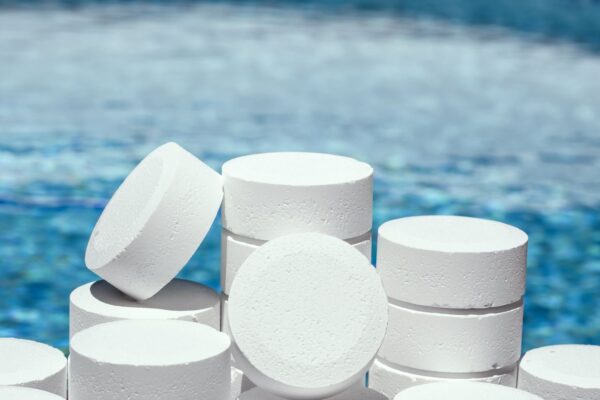
Calcium Hypochlorite (Cal-Hypo) has been the industry standard for decades. Typically available in granules or tablets with 65-70% available chlorine, it is a powerful, fast-acting oxidant.
- The Superpower: Speed and Cost. Cal-Hypo delivers an immediate, massive spike in free chlorine. For systems with low organic loads and robust pH control, it’s a cheap, effective hammer for killing surface bacteria.
- The Hidden Costs: Here is where Jim was bleeding money. Cal-Hypo is highly alkaline (pH ~10.8 in solution). Every time you dose it, you spike the cooling water pH, forcing you to dump acid to correct it. This seesaw effect destabilizes water chemistry and accelerates scaling. Worse, the calcium itself adds to the hardness load, increasing the risk of calcium carbonate scale formation on heat exchangers.
- The Biofilm Limitation: Cal-Hypo is a non-selective oxidant. It reacts instantly with the outer layer of the biofilm’s Extracellular Polymeric Substance (EPS) matrix. This creates a “dead shell” that actually protects the living bacteria underneath, allowing the colony to survive and regrow rapidly once the residual drops. You end up in a cycle of “shock and retreat,” using massive amounts of chemical to barely keep the slime at bay.
The Challenger: SDIC (The Stable Strategist)
Enter Sodium Dichloroisocyanurate (SDIC). This is a solid, slow-release chlorinating agent boasting approximately 60% available chlorine. Unlike Cal-Hypo, SDIC releases hypochlorous acid gradually and contains cyanuric acid, which acts as a stabilizer.
- The Superpower: Persistence and Penetration. SDIC is incredibly stable. It persists in the cooling water for days, even in warm conditions with high organic loads. Because it doesn’t react instantly with the outer biofilm layer, it penetrates deep into the EPS matrix, killing the bacteria at the root. This prevents the rapid regrowth cycles seen with Cal-Hypo.
- Corrosion & Scale Mitigation: SDIC has a near-neutral pH impact. It does not aggressively attack the protective oxide layers on steel and copper. In fact, by eliminating the sulfate-reducing bacteria (SRB) that cause microbiologically influenced corrosion (MIC), it often reduces overall corrosion rates. It also adds no calcium, eliminating the risk of calcium-based scaling.
- The Operational Advantage: Because it is stable and long-lasting, you dose less frequently. This reduces labor, minimizes chemical handling risks, and provides a consistent residual that reaches the farthest corners of the system.
The Verdict: Matching Chemistry to Crisis
So, which is the best choice for industrial cooling water systems?
- Choose Calcium Hypochlorite if: You have a small, simple system with low organic loads, limited budget for chemicals, and robust pH control systems already in place. It’s a good “entry-level” oxidant for non-critical applications.
- Choose SDIC if: You are battling established biofilm, dealing with high organic loads, struggling with Legionella compliance, or facing strict discharge limits. While the upfront cost per pound might be slightly higher, the operational savings are massive. You save on acid for pH correction, you save on corrosion repairs, you save on energy due to clean heat exchangers, and you save on chemical volume because you aren’t wasting it on side reactions.
In Jim’s refinery, we ran the numbers. Switching to high-purity SDIC reduced their biocide consumption by 40% because it didn’t get wasted on side reactions. Energy costs dropped by $180,000 annually due to recovered heat transfer efficiency. Acid consumption fell by 30% because we stopped spiking the pH with alkaline Cal-Hypo. The ROI on the switch was achieved in just four months.
The Critical Factor: Purity of Product
Here is the nuance that many procurement officers miss: SDIC is only as good as its purity.
Low-grade SDIC often contains fillers, binders, and insoluble residues (up to 10-15%). These impurities don’t vanish; they turn into a chalky sludge that clogs automatic feeders, clouds the water, and settles on pool floors or tower basins, creating a maintenance nightmare. Worse, low-quality SDIC may have inconsistent potency, making your precise calculations useless.
You need a product that is pharmaceutical-grade pure. You need consistency.
The ENVO CHEMICAL Advantage: Engineering Excellence
This is where ENVO CHEMICAL stands apart. As a global leader in the R&D, production, and sales of water treatment chemicals, ENVO has engineered SDIC and Calcium Hypochlorite solutions specifically for the rigorous demands of industrial cooling water systems.
- Unmatched Purity: ENVO’s SDIC boasts industry-leading purity levels (>60% available chlorine, <0.1% insolubles). This eliminates the risk of feeder clogs, cloudy water, and sludge buildup. Every gram you buy is active sanitizer, not filler waste. In pilot studies, facilities switching to ENVO’s high-purity product saw a 40% reduction in filter backwashing frequency simply by removing the particulate load from their sanitizer.
- Superior Stability: ENVO utilizes proprietary stabilization technology that ensures their granules and tablets retain full potency even after months of storage in extreme heat and humidity. Whether you are operating a refinery in the desert or a plant in the tropics, ENVO’s product performs identically. This eliminates the “potency guesswork” that leads to algae outbreaks.
- Uniform Dissolution: One of the biggest complaints with generic tablets is inconsistent hardness—some dissolve too fast, others not at all. ENVO’s manufacturing process ensures every tablet has uniform density and dissolution rates. This allows for precise, automated feeding, stabilizing your chlorine residuals 24/7.
- Global Reliability: With a distribution network spanning over 200 countries, ENVO ensures that your supply chain never breaks. You aren’t forced to use inferior, risky substitutes because your primary supplier is delayed. The quality remains identical whether you are in North America, Europe, Asia, or Africa.
- Technical Partnership: ENVO doesn’t just sell drums; they provide dosing calculators, safety guides, and expert support to help you optimize your sanitation protocols. They act as partners in your operational success.
For Jim’s facility, switching to ENVO’s high-purity SDIC was transformative. Within 48 hours, the clogged feeders were cleared, the chlorine residuals stabilized, and the persistent green algae vanished. Their chemical costs dropped by 20% because they were no longer wasting product on fillers or over-dosing to compensate for instability. “It’s like the system finally learned how to behave,” Jim told me. “We aren’t fighting the chemistry anymore; we’re managing it.”
Frequently Asked Questions (FAQ)
Q: Can SDIC be used in all types of cooling towers?
Yes, ENVO’s high-purity SDIC is safe for all types of industrial cooling systems, including those with carbon steel, copper, and stainless steel components. Its near-neutral pH profile makes it gentler on metals than Calcium Hypochlorite.
Q: How does SDIC help with Legionella control?
SDIC penetrates the biofilm matrix more effectively than free chlorine, killing Legionella bacteria at the source rather than just on the surface. Its persistent residual ensures continuous protection throughout the system.
Q: Why is low insoluble content important in SDIC?
High insoluble content creates sludge that clogs dosing pumps and filters. ENVO’s <0.1% insolubles ensure smooth equipment operation and reduced maintenance costs.
Q: Does ENVO CHEMICAL provide technical support for switching from Cal-Hypo to SDIC?
Absolutely. ENVO offers comprehensive technical support, including dosing calculations, system calibration, and staff training, to ensure a smooth transition and optimized performance.
Q: Is ENVO’s product certified for industrial use?
Yes. All ENVO products are manufactured under strict ISO standards and come with comprehensive Safety Data Sheets (SDS) and Certificates of Analysis, ensuring compliance with global industrial and environmental regulations.
Partner with the Global Leader in Water Clarity
Don’t let persistent biofilm compromise your heat transfer efficiency, your energy budget, or your equipment lifespan. Effective biofilm control in industrial cooling water systems requires the right chemistry, delivered with precision and reliability.
ENVO CHEMICAL stands as a premier innovator in the water treatment industry, combining cutting-edge R&D with a robust global supply chain. With products exported to over 200 countries, ENVO delivers the reliability, purity, and technical expertise that industries demand. Whether you need custom dosage calculations, bulk supply solutions, or on-the-ground technical support, ENVO is ready to partner with you.
Ready to eliminate biofilm and optimize your cooling water system? Contact ENVO CHEMICAL today to request a sample, download our comprehensive cooling water case study, or speak with our experts about tailoring an SDIC or Calcium Hypochlorite solution for your facility. Let’s make every drop count.
Author: Dr. Aris Thorne
Lead Industrial Process Engineer | 25+ Years in Cooling Tower Optimization & Chemical Strategy