
Can a NaDCC Surface Product Be Used for Fogging?
No—a NaDCC (sodium dichloroisocyanurate) product formulated specifically for surface disinfection should not be used for fogging without explicit confirmation from the manufacturer that it is suitable for that application. Surface products and fogging products differ in formulation, physical form, dissolution behavior, and safety profile when aerosolized. Applying a surface-use product in a fogger can produce inconsistent chlorine release, damage equipment, create respiratory hazards, and fail to meet disinfection objectives for air or space treatment.
Why Surface Formulation and Fogging Are Not Interchangeable
A NaDCC surface product is designed to dissolve in a measured volume of water and then be applied to hard surfaces by wiping, spraying, or mopping. Its formulation may include surfactants, thickeners, chelating agents, or fragrance components that help it cling to surfaces or improve cleaning performance. None of these additives are selected for behavior in an airborne mist.
Fogging, by contrast, requires a solution that atomizes cleanly, releases available chlorine at a controlled rate while suspended in fine droplets, and does not leave corrosive residue on fogging equipment, walls, or sensitive electronics. When a surface product enters a fogger:
- Surfactants and thickeners can clog fogger nozzles and produce uneven droplet size.
- Undissolved granules or tablet fragments can damage pump mechanisms.
- Additives not tested for inhalation safety may create respiratory irritants when aerosolized.
- The chlorine concentration in the resulting fog may be too high or too low to achieve the intended air-disinfection dose.
Even if the base chemistry—NaDCC—is the same, the product-level formulation determines whether fogging is safe and effective. The label or technical data sheet for the specific product must state fogging or space-disinfection use; absence of that statement means the product has not been validated for it.
What the Reader Should Check Before Considering Any NaDCC Fogging Application
Is the Product Labeled for Fogging or Space Disinfection?
This is the single most important check. Regulatory frameworks in most jurisdictions require that a disinfectant be used only according to its approved label. If the NaDCC product you hold is marketed as a surface cleaner, wipe, or spray for floors and counters, its registration does not cover aerosol application. Using it in a fogger would be an off-label use with no validated efficacy or safety data.
What Physical Form Is the Product?
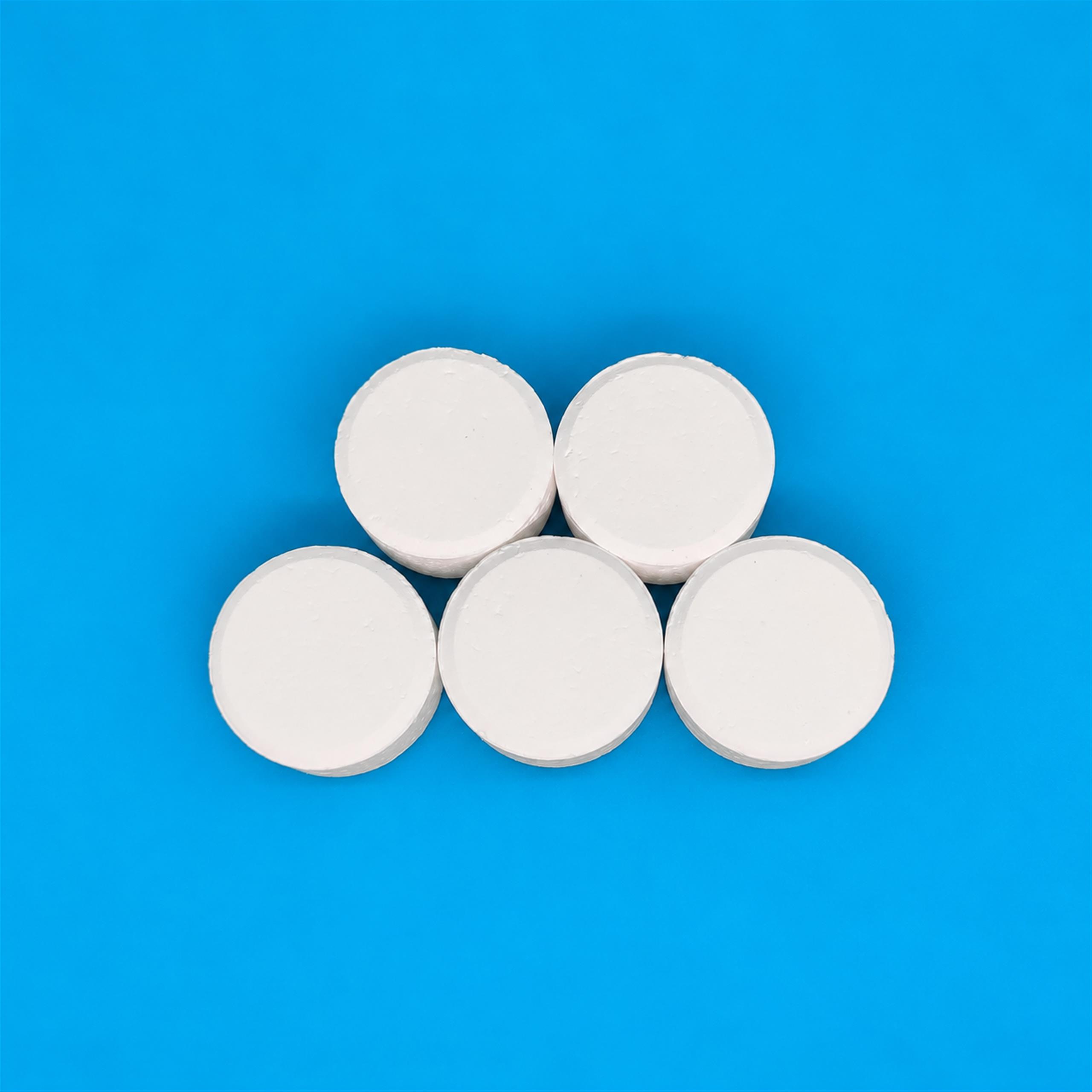
NaDCC surface products appear as tablets, granules, effervescent tablets, or pre-dissolved liquid concentrates. Fogging typically requires a fully dissolved, filter-cleared solution with no particulate matter. Tablet or granular surface products introduce the risk of incomplete dissolution, which leads to sediment in the fogger tank and inconsistent dosing. A pre-dissolved surface liquid may be closer to fogging-ready, but only if its full formulation—including any non-active ingredients—has been assessed for aerosol use.
What Concentration and Dose Does the Fogging Application Require?
Surface disinfection typically uses NaDCC solutions in the range of 1,000–5,000 ppm available chlorine, depending on the target organism and contact time on the surface. Fogging for air or space disinfection often targets much lower airborne concentrations, sometimes as low as 10–50 ppm depending on room volume, exposure time, and ventilation. Preparing a surface-product solution at surface-disinfection strength and fogging it can vastly exceed safe airborne chlorine levels. Always calculate the intended airborne concentration based on room volume and fogger output rate—never assume the surface-use dilution is appropriate.
Are Materials in the Room Compatible with Chlorine Aerosol?
Chlorine-based fog is corrosive to copper, brass, aluminum, stainless steel (certain grades), and many electronics. A surface product used on a kitchen counter may be safe for brief contact with stainless steel, but prolonged or repeated chlorine fogging in the same space accelerates corrosion. Verify material compatibility before fogging any enclosed area.
The Difference Between Raw NaDCC and a Formulated Surface Product
It helps to distinguish between anhydrous NaDCC or NaDCC dihydrate as a raw chemical and a finished surface-disinfection product. Raw NaDCC can, in principle, be dissolved to a specified concentration and tested for fogging suitability—but only by a qualified user who controls water quality, dissolution, filtration, and dosing, and who accepts full responsibility for safety and efficacy. A formulated surface product adds ingredients that change its behavior in solution. Those ingredients are chosen for surface performance, not for aerosol stability or inhalation safety. Therefore, even if raw NaDCC might be prepared for fogging under controlled conditions, a specific surface product containing that raw material is a different item with different constraints.
Safety Limitations That Apply to Any NaDCC Fogging Attempt
Regardless of which NaDCC product is under consideration, fogging with chlorine-releasing compounds carries inherent risks:
- Chlorine gas or hypochlorous acid mist can irritate eyes, skin, and the respiratory tract. Occupants must vacate the space during fogging and until the aerosol has settled and the area is ventilated.
- Never mix NaDCC solutions with acids, ammonia, or other chemicals. Toxic chlorine gas can form immediately.
- Fogger equipment must be constructed of chlorine-resistant materials (typically certain plastics and seals). Metal-bodied foggers may corrode rapidly.
- Personal protective equipment—including respiratory protection rated for chlorine—is required during preparation and operation.
These safety points are not optional add-ons; they are prerequisites for any fogging operation, and they apply even more strictly when the product in use has not been designed or tested for that purpose.
What to Do If You Need a NaDCC Fogging Solution
If your goal is to fog an enclosed space with a NaDCC-based disinfectant, the correct path is to obtain a product whose label explicitly authorizes fogging or space-disinfection use. That product will have been formulated to dissolve cleanly, to release chlorine at a rate appropriate for air treatment, and to have undergone safety assessment for aerosol exposure. Contact the supplier of your current surface product and ask whether they offer a fogging-grade NaDCC formulation derived from the same active ingredient. Do not attempt to adapt a surface product on your own.
If you are evaluating whether ENVO CHEMICAL has a NaDCC product suitable for fogging, reach out with your target space volume, required contact time, and any regulatory or industry standards the application must meet so the right product can be confirmed.
