
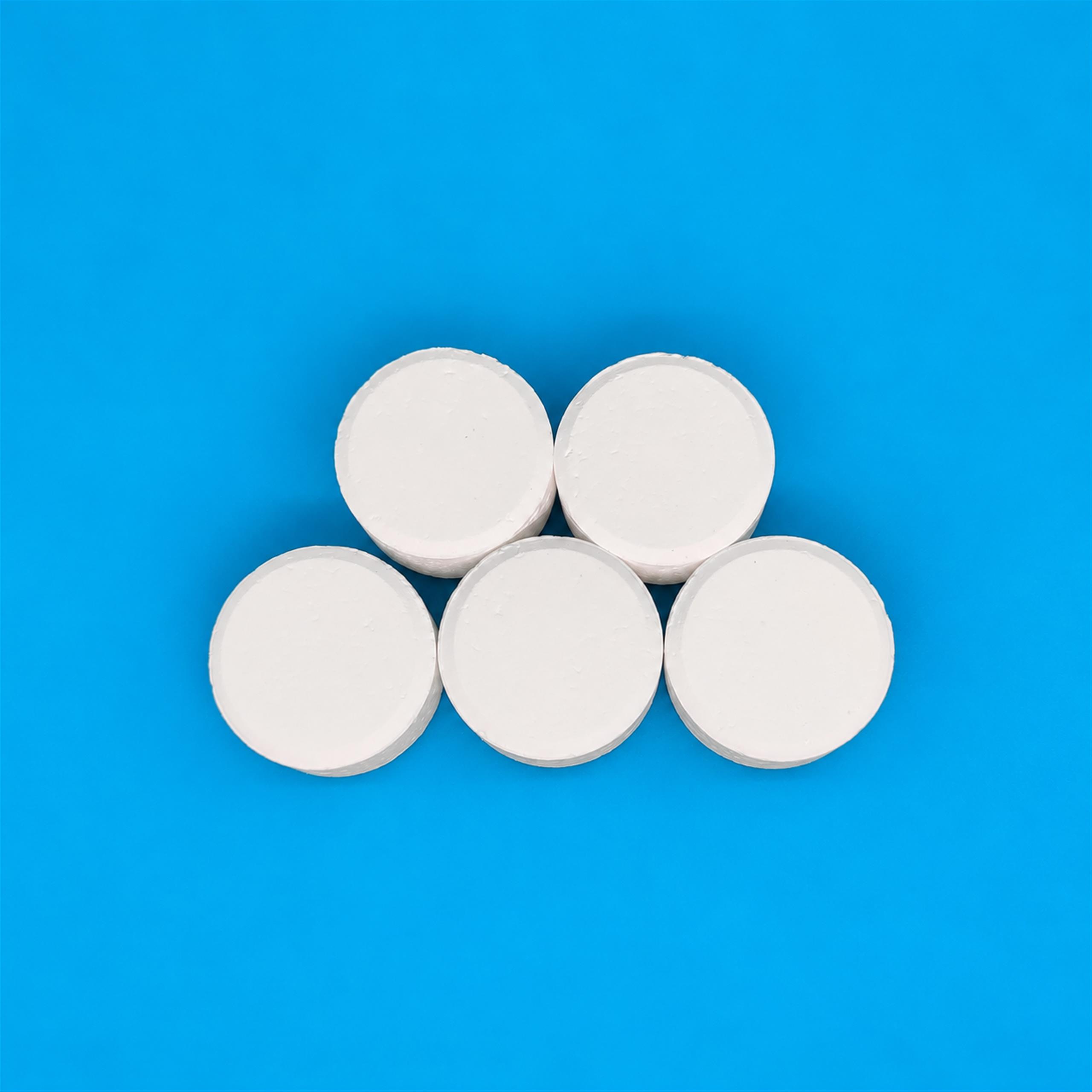
Direct Answer: Formulated NaDCC Surface Sanitizers Are Not Automatically Suitable for Process Water
A NaDCC (sodium dichloroisocyanurate) product labelled and sold as a surface sanitizer should not be assumed safe or effective for direct use in process water without a specific evaluation of formulation, regulatory status, dosing requirements, and water chemistry. The chemical basis—NaDCC releasing available chlorine—is the same, but a surface-sanitizer product is engineered for a different delivery method, contact scenario, and often a different regulatory pathway than bulk water treatment.
In short: the NaDCC active ingredient can be used in process water under the right conditions, but a finished surface-sanitizer formulation is not interchangeable with a product designed or approved for that purpose. Using it off-label introduces risks to product performance, process integrity, and regulatory compliance.
What Makes a Surface Sanitizer Different from a Process-Water Product
Formulation and Additives
Surface sanitizers based on NaDCC are typically formulated as ready-to-use solutions, wipes, or concentrated sprays. They often contain surfactants, buffers, fragrances, thickeners, or stabilisers that improve wetting, shelf stability, or user experience on hard surfaces. Those co-ingredients are chosen for surface compatibility—not for behaviour in a recirculating or single-pass water system.
When such a formulation enters process water, the additives may:
- Increase foam in recirculating systems
- Interfere with downstream filtration or membrane processes
- Leave residues that affect product quality or equipment
- Alter pH or chlorine demand in unpredictable ways
A product intended for process water treatment would either be raw NaDCC (anhydrous or dihydrate) or a formulation specifically tested and approved for that water matrix.
Intended Use and Regulatory Framework
Regulatory approval is use-specific. A surface disinfectant may carry registration under biocidal product legislation (such as the EU Biocidal Products Regulation or equivalent national frameworks) for “surface disinfection” only. That registration does not extend to treating water that contacts product, food, or pharmaceutical intermediates.
Process water applications—especially in food and beverage, pharmaceutical, or semiconductor manufacturing—often require that any chemical added to the water be listed on an approved substances register, hold a specific drinking-water or food-contact approval, or be validated under the facility’s own HACCP or GMP plan. A surface-sanitizer label will rarely meet those criteria.
Key Factors to Evaluate Before Using Any NaDCC Product in Process Water
Is the Product Registered or Approved for Water Treatment?
Check the product’s Safety Data Sheet (SDS) and regulatory label. If the approved uses list only “hard surface disinfection” and do not mention water treatment, the product is not authorised for that application in most jurisdictions. Using it in process water would be an off-label use and may void insurance, breach audits, or violate local law.
What Is the Water Quality and Chemistry?
Process water varies widely—from cooling tower make-up to rinse water in food plants. Factors that determine whether NaDCC can function effectively include:
- Organic load: High organic content consumes available chlorine rapidly, reducing the free chlorine residual needed for disinfection.
- pH: NaDCC is most effective at a slightly acidic to neutral pH. Alkaline process water shifts the equilibrium toward the less active hypochlorite form.
- Temperature: Higher temperatures accelerate chlorine dissipation.
- Hardness and metal ions: Calcium and magnesium can react with hypochlorous acid, forming scale or reducing efficacy.
A surface-sanitizer formulation does not account for these variables because it is designed to deliver a high local concentration for a short contact time on a solid surface—not a controlled, sustained residual in flowing water.
What Dose and Residual Are Required?
Surface sanitization typically targets a high concentration (often hundreds of ppm available chlorine) applied for a defined contact time on a non-porous surface. Process water disinfection usually aims for a much lower, maintained free-chlorine residual (often 0.5–5 ppm, depending on the standard and application) measured continuously or at frequent intervals.
Dosing a surface-sanitizer concentrate into a large water volume without proper calculation risks either under-dosing (ineffective) or massive over-dosing (corrosive, toxic off-gassing, regulatory breach). Accurate dosing requires knowing the available chlorine content of the specific product—usually expressed as a percentage by weight—and the volume and flow rate of the process water.
Are There Material Compatibility Concerns?
Chlorine at elevated concentrations can attack stainless steel, elastomers, and certain polymers. If the surface sanitizer is used undiluted or at higher-than-intended concentrations in process water, the risk of equipment damage increases. A water-treatment grade NaDCC product allows controlled, lower dosing that is less likely to exceed material tolerance limits.
When NaDCC Itself Can Be Appropriate for Process Water
The active ingredient—sodium dichloroisocyanurate—is widely used in water treatment because it is a stable, solid source of chlorine with high available-chlorine content (typically around 56–60% for anhydrous NaDCC, lower for the dihydrate). In its raw or appropriately formulated state, NaDCC can be suitable for:
- Cooling-water disinfection
- Wash-water sanitation in food-processing environments
- Emergency disinfection of non-potable process water supplies
In each case, the product used must be the correct grade, dosed accurately, monitored for residual, and approved for that specific water-contact use. This is fundamentally different from picking up a surface-sanitizer bottle and adding it to a process tank.
What You Should Do Instead
If your facility needs to disinfect process water with a NaDCC-based chemistry:
- Source a NaDCC product specifically formulated and labelled for water treatment, not surfaces.
- Verify regulatory approval for your jurisdiction and your specific process (food-contact, industrial, etc.).
- Conduct a water-quality assessment to determine the required dose and achievable free-chlorine residual.
- Install or confirm appropriate monitoring (free chlorine and, where needed, pH) to maintain control.
- Document everything as part of your facility’s chemical-management and quality-assurance system.
Attempting to repurpose a surface sanitizer skips most of these steps and creates compliance, safety, and performance gaps.
Get the Right Product for Your Process-Water Application
If you are evaluating whether a NaDCC-based chemistry can be used in your process water, the decisive factor is product grade and regulatory approval—not just the active ingredient name. Contact ENVO CHEMICAL with your water type, target residual, and regulatory requirements so we can confirm whether our NaDCC range includes a suitable option for your specific process-water use.
