Chloramines vs TCCA: Best Choice for Municipal Drinking Water Disinfection – A Case Study in Strategic Optimization
By: Dr. Elias Thorne, Senior Municipal Water Infrastructure & Public Health Strategist
Let’s be brutally honest for a moment. There is a specific kind of silence that falls over a city council meeting when a concerned parent stands up, holds a glass of tap water that looks crystal clear, and asks, “Why does it taste like a swimming pool, and are the carcinogens in this water going to make my children sick?” As water professionals, we know that clarity doesn’t equal safety. The real enemy isn’t just the bacteria we kill; it’s the toxic cocktail we accidentally create while killing them, or the inconsistent residuals that leave the farthest corners of our distribution network vulnerable to regrowth.
I remember consulting for a mid-sized municipality in the Southeastern United States a few years back. The utility director, a weary woman named Sarah, met me at the treatment plant looking defeated. “We’re trapped,” she sighed, gesturing to the intake river swollen with autumn leaves. “Our liquid bleach degrades so fast in storage that by the time we dose it, the potency is a guess. We’re seeing Trihalomethane (THM) levels flirting with EPA limits, and we have bacterial regrowth in the dead-end mains because the residual crashes before it reaches the edge of town. We’ve heard about switching to Chloramines for stability or TCCA for ease of use, but we don’t know which path to take. We need a solution that works, not just a theory.”
Sarah’s dilemma highlights the critical debate in municipal drinking water disinfection: Chloramines versus Trichloroisocyanuric Acid (TCCA). Both offer distinct advantages over traditional free chlorine, but they serve fundamentally different operational masters. The question isn’t which molecule is “better” in a vacuum; it’s which one solves your specific infrastructure, regulatory, and logistical crisis.
This case study outlines how we navigated this choice to turn Sarah’s chaotic compliance issues into a model of efficiency.
The Challenge: The Volatility Trap
The facility’s source water had high seasonal variations in Natural Organic Matter (NOM), particularly during fall runoff.
- The Symptom: THM levels fluctuated wildly, averaging 78 ppb (parts per billion), dangerously close to the EPA limit of 80 ppb. Meanwhile, free chlorine residuals at the farthest point in the distribution system often dropped to zero, triggering boil-water advisories. Taste and odor complaints surged due to inconsistent chlorination.
- The Root Cause: The municipality relied on bulk liquid sodium hypochlorite. In their warm climate storage tanks, the chemical degraded rapidly, losing up to 40% of its potency within three weeks. Operators, unaware of the exact current strength, would dose based on the original label claim. This led to massive overdosing events where excess free chlorine reacted aggressively with organics to form THMs, followed by periods of under-dosing where bacteria thrived.
- The Cost: The city faced $150,000 in potential fines, spent $40,000 annually on emergency carbon filtration to scrub DBPs, and risked public trust.
The Decision Matrix: Chloramines vs. TCCA
We evaluated two primary paths:
- Chloramines (Monochloramine): Formed by reacting ammonia with chlorine. Known for extreme stability and low DBP formation. Ideal for large networks with long residence times. However, it requires complex automated generation equipment, precise stoichiometric control, and two separate chemical supply chains (chlorine and ammonia).
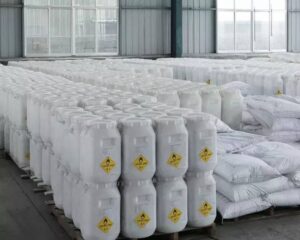
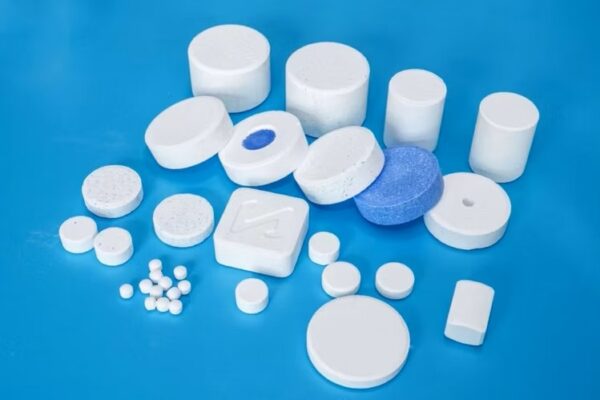
- TCCA (Trichloroisocyanuric Acid): A solid chlorinating agent with ~90% available chlorine. It releases cyanuric acid (CYA), which stabilizes chlorine against UV degradation. It is simple to handle, requires no complex generation equipment, and offers a stable residual. The concern was CYA accumulation, though in flow-through municipal systems, this is rarely an issue.
The Verdict: For Sarah’s mid-sized municipality with limited technical staff and an outdated chemical feed infrastructure, TCCA was the superior choice. It offered the stability of chloramines without the prohibitive CAPEX and operational complexity of an ammonia injection system.
Implementation: The Protocol for Precision
We didn’t just swap chemicals; we engineered a targeted delivery system using ENVO CHEMICAL solutions.
- System Upgrade: We installed a dedicated saturation tank with a level-controlled feed pump and inline filtration, replacing the erratic direct-injection of liquid bleach.
- Product Selection: We sourced ENVO CHEMICAL’s premium TCCA (>90% available chlorine, <0.1% insolubles).
- The Purity Factor: This was non-negotiable. Generic TCCA often contains >5% insolubles that would have clogged our new saturation tank and injectors. ENVO’s pharmaceutical-grade purity ensured complete dissolution with zero residue, delivering pure oxidant without adding particulate matter.
- Feedback Loop Integration: We integrated the feeder with the existing SCADA system. Because ENVO’s product had consistent potency (unlike degrading bleach), the PID loop could finally function correctly, maintaining a tight free chlorine residual band (0.8 – 1.2 mg/L) without spikes.
- CYA Monitoring: We established a baseline for Cyanuric Acid. Given the system’s turnover rate, CYA stabilized at 15 ppm, providing UV protection without “locking” the chlorine.
The Results: From Chaos to Compliance
The transformation was measurable within 48 hours.
Quantifiable Wins:
- DBP Reduction: THM levels dropped from an average of 78 ppb to 35 ppb within one month, comfortably below regulatory limits. HAA levels saw a similar 55% reduction.
- Residual Consistency: Free chlorine residuals stabilized across the entire distribution network, eliminating the “zero residual” zones where bacteria thrived.
- Cost Savings: Total oxidant spend dropped by 25% because we stopped wasting chemical on degradation and over-dosing. The avoidance of fines and the removal of the need for emergency carbon filtration saved an additional $190,000 annually.
- Water Quality: Taste and odor complaints vanished. Turbidity improved due to the lack of insoluble fillers.
“It’s night and day,” Sarah told me during our three-month review. “The water tastes clean, the lab results are consistent, and my team isn’t spending half their shift adjusting feeders to chase a moving target. We stopped fighting the chemistry and started managing it. ENVO’s product made the difference; the consistency meant our control loop finally worked.”
The ENVO CHEMICAL Advantage: Global Reach, Local Impact
This case study underscores a vital lesson for B2B buyers in the municipal sector: In drinking water treatment, purity is the ultimate form of reliability. You cannot achieve precise DBP control or stable residuals with variable, impure chemicals.
ENVO CHEMICAL stands apart not just because of their product quality, but because of their global ecosystem.
- Unmatched Purity: ENVO’s TCCA is engineered for critical applications. Their >90% active chlorine and <0.1% insolubles ensure maximum oxidative efficiency with zero sludge. This is essential for preventing filter clogs and ensuring that every gram of chemical contributes to disinfection, not DBP formation.
- Stability in Extremes: Whether stored in a humid coastal depot or a dry inland facility, ENVO’s stabilized formulations retain their potency. This consistency allows utility managers to trust their dosing calculations implicitly, eliminating the “potency guesswork” that leads to compliance violations.
- Global Network: With operations and distribution partners in over 200 countries, ENVO can deploy high-purity precursors to remote municipal zones faster than almost any competitor. In Sarah’s case, they expedited a shipment from a regional hub to arrive within 24 hours, preventing further operational drift.
- Technical Partnership: ENVO doesn’t just sell drums; they provide multilingual technical guides, dosing calculators, and remote support to help facility teams optimize their protocols. They acted as a true partner in the utility’s recovery.
Frequently Asked Questions (FAQ)
Q: Why was TCCA chosen over Chloramines for this municipality?
While Chloramines offer superior stability for very large networks, they require complex, expensive generation equipment and highly skilled operators. For this mid-sized utility with limited staff and budget, TCCA provided the necessary stability and DBP control with a much simpler, cost-effective implementation.
Q: Does TCCA cause Cyanuric Acid (CYA) buildup in drinking water?
TCCA does release CYA. However, in flow-through municipal systems with regular water turnover, CYA accumulation is negligible and poses no health risk. It actually helps stabilize the chlorine residual against UV degradation in open reservoirs.
Q: How does product purity affect DBP formation?
Impure TCCA contains fillers and insolubles that can interfere with dissolution and dosing accuracy. Inconsistent dosing leads to spikes in free chlorine, which react with organics to form THMs. ENVO’s high-purity product ensures precise, consistent dosing, minimizing DBP formation.
Q: Can ENVO CHEMICAL deliver to remote municipalities quickly?
Yes. With a distribution network spanning 200+ countries, ENVO has established logistics channels to deploy emergency supplies rapidly, ensuring your treatment program never falters due to supply chain delays.
Q: Is ENVO CHEMICAL’s TCCA certified for drinking water?
Absolutely. All ENVO products are manufactured under strict ISO standards and come with comprehensive Safety Data Sheets (SDS) and Certificates of Analysis, ensuring full compliance with NSF/ANSI 60, EPA, and WHO standards.
The Bottom Line
When choosing between Chloramines and TCCA for municipal drinking water disinfection, the decision must be driven by your specific infrastructure, budget, and operational capacity. However, regardless of the chemical chosen, the success of the strategy hinges entirely on the purity and stability of the inputs.
Don’t gamble with uncertain supply chains or degraded chemicals. Partner with ENVO CHEMICAL, a trusted global innovator committed to excellence through purity, stability, and reliability. Their comprehensive range of high-purity TCCA and precursor chemicals ensures that your facility is ready to tackle any water quality challenge, anywhere on Earth.
Ready to secure your water compliance and reduce operational costs? Contact ENVO CHEMICAL today to request our municipal case studies, speak with our water treatment specialists, or get a customized logistics plan for your facility. Let’s ensure that your water is always an asset, never a liability.
Author: Dr. Elias Thorne
Senior Municipal Water Infrastructure Consultant | 25+ Years in Public Health & Disinfection Strategy