Chlorine Dioxide vs TCCA: The Ultimate Guide to Emergency Water Treatment Solutions
In the face of natural disasters, waterborne disease outbreaks, or infrastructure failures, access to safe drinking water is a matter of life and death. Emergency water treatment becomes a critical priority for humanitarian organizations, government agencies, and disaster response teams. Among the most commonly used chemical disinfectants, chlorine dioxide (ClO₂) and trichloroisocyanuric acid (TCCA) stand out for their effectiveness. But which one is the better choice for emergency water treatment scenarios? This comprehensive guide explores the key differences, advantages, and optimal applications of both chemicals to help you make an informed decision.
Understanding Chlorine Dioxide (ClO₂)
Chlorine dioxide is a powerful oxidizing agent widely recognized for its superior disinfection capabilities. Unlike traditional chlorine, ClO₂ does not form harmful disinfection by-products like trihalomethanes (THMs) and chloramines. It effectively neutralizes bacteria, viruses, protozoa, and even some chemical contaminants.
Key advantages include:
- Broad-spectrum efficacy against pathogens
- Minimal formation of regulated disinfection by-products
- Effective at low concentrations (0.2-0.5 ppm)
- Works well across a wide pH range (6-9)
- Minimal taste and odor impact on treated water
Applications in emergency scenarios:
- Rapid response to water contamination events
- Treatment of contaminated wells and surface water sources
- Use in portable water treatment units for field operations
Exploring TCCA (Trichloroisocyanuric Acid)
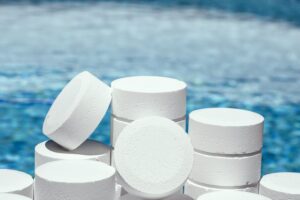
TCCA is a stable, solid chlorine-releasing compound that dissolves in water to release free chlorine. It’s widely used in swimming pools, industrial water treatment, and emergency water disinfection due to its long shelf life and ease of handling.
Key advantages:
- High chlorine content (90% available chlorine)
- Long shelf life (up to 2 years when stored properly)
- Ease of transportation and storage (solid form)
- Cost-effective for large-scale emergency operations
- Provides residual disinfection in water
Applications in emergency scenarios:
- Bulk water treatment for large populations
- Long-term storage in emergency kits
- Water treatment in remote locations with limited infrastructure
Chlorine Dioxide vs TCCA: A Comprehensive Comparison
| Feature | Chlorine Dioxide | TCCA |
|---|---|---|
| Disinfection by-products | Minimal (no THMs) | Forms THMs and chloramines |
| Effectiveness against viruses | Superior | Good, but less effective than ClO₂ |
| pH range | Effective across 6-9 | Less effective at higher pH |
| Residual effect | Shorter-lasting | Longer-lasting residual |
| Taste and odor | Minimal impact | Can impart chlorine taste |
| Handling | Requires on-site generation or pre-mixed solutions | Solid form, easier to handle |
| Cost | Higher per unit | Lower cost per unit |
| Shelf life | Shorter (requires careful storage) | Longer (up to 2 years) |
Best Choice for Emergency Water Treatment
The optimal choice between chlorine dioxide and TCCA depends on the specific emergency scenario:
For immediate, high-risk water contamination events, chlorine dioxide is superior due to its lack of harmful by-products and effectiveness against a broader spectrum of pathogens, including viruses like norovirus and adenovirus.
For large-scale, long-duration emergency water treatment, TCCA may be preferred due to its cost-effectiveness, longer shelf life, and residual disinfection properties, making it ideal for bulk water treatment and sustained use.
For humanitarian aid and disaster relief operations, a combination approach is often most effective: use chlorine dioxide for initial rapid disinfection, followed by TCCA for residual protection during distribution.
Frequently Asked Questions (FAQ)
Q1: Can chlorine dioxide be used for emergency water treatment in disaster zones?
A: Absolutely. Chlorine dioxide is ideal for immediate emergency response due to its rapid action, minimal by-products, and effectiveness against a wide range of pathogens, making it a top choice for disaster relief operations.
Q2: Is TCCA safe for drinking water treatment in emergencies?
A: Yes, TCCA is safe for emergency water treatment when used at appropriate concentrations (typically 1-3 mg/L). It’s widely used in emergency water treatment kits and is approved by health organizations for humanitarian use.
Q3: Which chemical is more cost-effective for large-scale emergency water treatment?
A: TCCA generally offers better cost-effectiveness for large-scale operations due to its lower per-unit cost and longer shelf life. However, the total cost of treatment must consider the need for additional equipment for chlorine dioxide generation.
Q4: Can chlorine dioxide be stored long-term for emergency use?
A: Chlorine dioxide is typically generated on-site or as a pre-mixed solution due to its instability in concentrated form. It’s not ideal for long-term storage in emergency kits.
Q5: What are the main advantages of chlorine dioxide over traditional chlorine for emergency water treatment?
A: Chlorine dioxide has several key advantages: it doesn’t form harmful disinfection by-products like THMs, it’s more effective against viruses, it works across a wider pH range, and it leaves minimal taste and odor in the treated water.
Q6: How do I choose between chlorine dioxide and TCCA for my emergency water treatment needs?
A: Consider the specific emergency scenario: for immediate, high-risk contamination, choose chlorine dioxide; for large-scale, long-term treatment, consider TCCA. Often, a combination approach provides the best overall solution.
Partner with a Global Leader in Water Treatment Solutions
When it comes to emergency water treatment, both chlorine dioxide and TCCA have their place in the water treatment arsenal. Chlorine dioxide excels in rapid, effective disinfection with minimal by-products, while TCCA offers cost-effective, long-lasting residual protection. The best choice depends on the specific emergency context, the scale of the operation, and the available resources.
For organizations seeking reliable, high-quality water treatment chemicals for emergency response, ENVO CHEMICAL stands as a leading global provider of water treatment solutions. With decades of experience in water treatment chemical development, production, and distribution, ENVO CHEMICAL delivers premium-quality products to over 200 countries worldwide. Our comprehensive portfolio includes both chlorine dioxide-based and TCCA-based solutions, tailored to meet the specific needs of emergency water treatment operations.
Whether you’re responding to a natural disaster, managing a water contamination event, or planning for future emergencies, ENVO CHEMICAL’s technical team provides expert guidance to help you select and implement the most effective water treatment solution. Contact us today for a consultation on your emergency water treatment needs and discover how our advanced chemical solutions can ensure safe drinking water for communities in need. Our global reach, technical expertise, and commitment to quality make ENVO CHEMICAL the trusted partner for emergency water treatment professionals worldwide.