Chlorine vs Calcium Hypochlorite: Best Choice for Industrial Cooling Water Systems
By: Dr. Michael Chen
As an industry veteran with over 25 years of experience in industrial water treatment, I’ve seen countless cooling systems struggle with biofouling, corrosion, and scaling issues. The choice between chlorine and calcium hypochlorite isn’t just a technical decision—it’s a critical operational call that impacts your bottom line, equipment lifespan, and regulatory compliance. After working with over 200 manufacturing facilities across North America and Asia, I’ve learned that the “best” disinfectant depends on your specific system parameters, budget constraints, and maintenance capabilities. Let me share my insights to help you make the right choice.
Understanding Industrial Cooling Water Systems
Industrial cooling systems are the unsung heroes of manufacturing plants, maintaining optimal temperatures for machinery and processes. However, untreated water in these systems becomes a breeding ground for microorganisms, leading to biofilm formation, heat transfer inefficiency, and potential system failures. The right disinfection strategy is crucial—not just for operational continuity but for safety and environmental compliance.
When selecting a disinfectant, many facilities default to chlorine due to its historical prevalence. But in today’s advanced water management landscape, calcium hypochlorite often provides superior value, especially for larger cooling systems. Let’s examine both options in detail.
Chlorine: The Traditional Workhorse
Elemental chlorine (Cl₂) has been the go-to disinfectant for decades. Its effectiveness is undeniable—when properly handled, it provides rapid microbial kill rates. However, in real-world industrial applications, chlorine presents several challenges:
- Handling hazards: Chlorine gas requires specialized storage and handling equipment, posing significant safety risks. A single leak can shut down an entire facility for days.
- pH sensitivity: Chlorine’s effectiveness plummets at higher pH levels common in cooling systems. You’ll need constant pH adjustment, adding to operational complexity.
- Corrosion concerns: Chlorine can accelerate corrosion in copper and carbon steel components, leading to premature equipment failure.
- Regulatory pressures: Increasingly stringent environmental regulations make chlorine handling and storage more cumbersome and costly.
I recall a chemical plant in Texas that experienced a $250,000 shutdown after a chlorine cylinder leak. The incident wasn’t just about equipment damage—it was about lost production, regulatory fines, and damaged reputation.
Calcium Hypochlorite: The Modern Solution
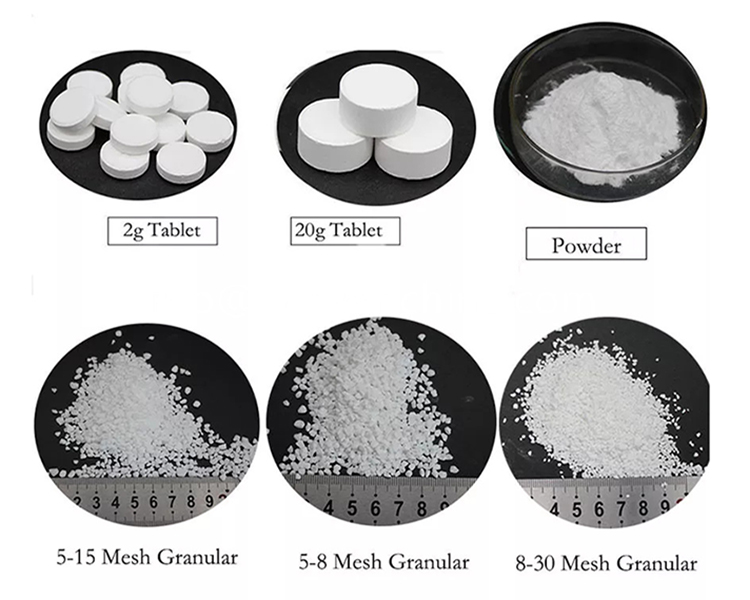
Calcium hypochlorite (Ca(OCl)₂), commonly known as “pool chlorine” but far more versatile in industrial applications, offers a compelling alternative. This solid form of chlorine has gained significant traction in industrial cooling water treatment for good reason:
- Ease of handling: Available as stable granules or tablets, it eliminates the need for high-pressure gas storage and complex delivery systems.
- Consistent effectiveness: Works effectively across a broader pH range (6.5-9.0), reducing the need for constant pH adjustment.
- Reduced corrosion: Calcium hypochlorite’s calcium content actually helps buffer against corrosion in certain system types.
- Cost efficiency: When factoring in handling equipment, safety measures, and regulatory compliance, calcium hypochlorite often proves more economical long-term.
A case study from a major automotive manufacturer in Germany demonstrated a 30% reduction in maintenance costs after switching from chlorine to calcium hypochlorite. Their cooling tower downtime decreased by 45%, and they achieved significant savings in chemical handling infrastructure.
Comparative Analysis: Key Decision Factors
When deciding between these two options, consider these critical factors:
| Factor | Chlorine | Calcium Hypochlorite |
|---|---|---|
| Handling Safety | High risk (gas) | Low risk (solid) |
| Storage Requirements | Specialized tanks, gas monitoring | Standard dry storage |
| pH Sensitivity | High (requires constant adjustment) | Moderate (works across wider range) |
| Initial Cost | Lower (per unit) | Slightly higher (per unit) |
| Total Cost of Ownership | Higher (due to safety systems) | Lower (simplified handling) |
| Environmental Compliance | More complex | Simpler |
The real question isn’t just “which is better,” but “which is better for your specific cooling system.” For smaller facilities with limited safety infrastructure, chlorine might still be viable. But for most industrial applications—especially those with cooling towers exceeding 500 tons—the advantages of calcium hypochlorite make it the superior choice.
Making the Right Choice for Your Operation
Don’t fall into the trap of choosing based solely on initial cost. Consider the total cost of ownership: safety equipment, training, regulatory compliance, and maintenance. I’ve seen too many facilities save $10,000 upfront only to spend $250,000 later on safety upgrades and downtime.
Your system’s specific conditions matter most. If your cooling water has high alkalinity, calcium hypochlorite’s buffering capacity provides a significant advantage. If your facility lacks gas handling expertise, the safety benefits of calcium hypochlorite are undeniable.
Frequently Asked Questions
Q: Is calcium hypochlorite as effective as chlorine for microbial control?
A: Absolutely. When dosed correctly, calcium hypochlorite provides comparable or superior microbial kill rates, especially in the pH ranges common in cooling systems.
Q: How does calcium hypochlorite affect scale formation?
A: The calcium in calcium hypochlorite can actually help control scale in certain systems, though it’s essential to monitor calcium levels to prevent scaling issues.
Q: Can I switch from chlorine to calcium hypochlorite without system modifications?
A: Typically, yes. Most facilities can transition with minimal adjustments to dosing equipment. Our technical team at ENVO CHEMICAL provides free system assessments to ensure seamless integration.
Q: What’s the typical dosage range for cooling water treatment?
A: Dosage depends on your specific water quality and system size, but for most industrial cooling systems, it ranges from 1-5 ppm. We always recommend a water analysis before finalizing your dosing strategy.
Take the Next Step for Your Cooling Water System
After decades of hands-on experience, I’ve seen how the right water treatment solution transforms operational efficiency. The choice between chlorine and calcium hypochlorite is more than a technical decision—it’s a strategic investment in your facility’s reliability and profitability.
ENVO CHEMICAL has been at the forefront of water treatment innovation since 1994, providing industrial cooling water solutions to over 200 countries worldwide. Our team of water chemistry experts can help you analyze your specific cooling system, recommend the optimal treatment approach, and provide a customized solution that maximizes your operational efficiency while minimizing costs.
Don’t let outdated water treatment practices hold back your facility’s performance. Contact ENVO CHEMICAL today for a free consultation and discover how our advanced water treatment chemicals can transform your cooling system’s efficiency.
Ready to optimize your cooling water system?
Get in touch with our water treatment specialists at info@envochemical.com . Visit our contact page at https://envochemical.com/contact-us/ to schedule your personalized assessment. We’ll provide insights into our products and work with you to develop the best solution for your operation—contact us today to start your journey toward more efficient, reliable cooling water management.