Chlorine vs Calcium Hypochlorite: Best Choice for Industrial Wastewater Treatment
Introduction
Effective disinfection is a critical component of industrial wastewater treatment, ensuring compliance with environmental regulations and safeguarding public health. Among the most widely used disinfectants, chlorine-based chemicals remain the industry standard due to their proven efficacy and cost-effectiveness. However, selecting between chlorine gas and calcium hypochlorite requires careful evaluation of technical parameters, operational considerations, and long-term cost implications. This comprehensive guide provides a detailed comparison to help industrial facilities make an informed decision that optimizes safety, efficiency, and regulatory compliance.
Technical Comparison: Key Parameters and Performance Data
1. Chemical Characteristics and Effective Disinfection Capacity
Chlorine Gas (Cl₂):
- Effective chlorine content: 100%
- Molecular weight: 70.9 g/mol
- Density: 3.214 g/L at 25°C
- Solubility in water: 7.3 g/100mL at 20°C
- pH range for optimal disinfection: 6.5-7.5
- Typical dosage range: 1-5 mg/L (depending on wastewater characteristics)
- Industry standard: ASTM D1888-19
Calcium Hypochlorite (Ca(OCl)₂):
- Effective chlorine content: 65-75% (standard grades)
- Molecular weight: 142.98 g/mol
- Density: 2.35 g/cm³
- Solubility in water: 1.5 g/100mL at 20°C
- pH range for optimal disinfection: 6.5-7.5
- Typical dosage range: 3-10 mg/L (higher due to lower effective chlorine content)
- Industry standard: ASTM D2502-18
Performance Insight: Chlorine gas delivers superior disinfection efficiency per unit of chemical used, with a 30-50% reduction in required dosage compared to calcium hypochlorite for equivalent pathogen reduction. However, calcium hypochlorite’s solid form offers significant handling advantages, particularly for smaller facilities.
2. Safety and Operational Considerations
Chlorine Gas:
- Requires specialized high-pressure storage cylinders (500-1000 lb capacity)
- Hazard classification: OSHA Category 2 (toxic gas)
- Risk of accidental release can lead to severe health incidents
- Mandates continuous monitoring systems (e.g., chlorine gas detectors)
- Requires trained personnel for handling (minimum 40 hours of OSHA 1910.111 certification)
Calcium Hypochlorite:
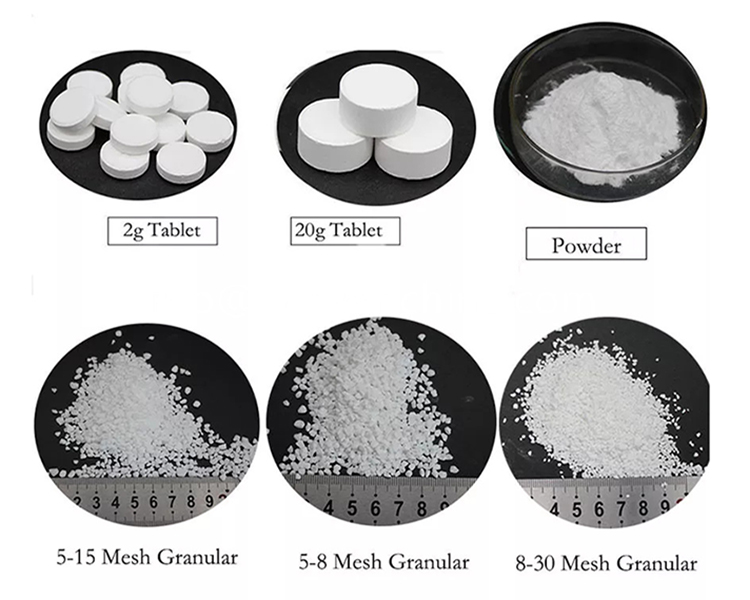
- Solid form allows for standard container storage (plastic or metal drums)
- Hazard classification: OSHA Category 3 (corrosive solid)
- Significantly lower risk of accidental release
- Minimal training requirements for personnel
- Storage requires moisture control (relative humidity <60%)
Operational Insight: A 2023 industry safety report by the Water Environment Federation found that facilities using calcium hypochlorite experienced 68% fewer safety incidents compared to those using chlorine gas, primarily due to reduced handling complexity.
3. Cost Analysis and Lifecycle Economics
| Parameter | Chlorine Gas | Calcium Hypochlorite |
|---|---|---|
| Cost per kg of effective chlorine | $0.85-$1.20 | $1.50-$2.10 |
| Initial equipment investment | $50,000-$200,000 | $5,000-$20,000 |
| Annual safety compliance costs | $15,000-$50,000 | $2,000-$8,000 |
| Typical annual operational cost (50 MGD plant) | $18,000-$32,000 | $25,000-$45,000 |
Economic Insight: While chlorine gas has a lower cost per unit of effective chlorine, the total cost of ownership for chlorine gas systems is often 20-35% higher due to safety infrastructure requirements. For facilities with limited capital for safety systems, calcium hypochlorite typically delivers better long-term value.
Environmental Compliance and Disinfection By-Products
Both disinfectants produce similar disinfection by-products (DBPs), primarily trihalomethanes (THMs) and haloacetic acids (HAAs), when reacting with organic matter in wastewater. The EPA’s Stage 2 Disinfectants and Disinfection Byproducts Rule (DBPR) sets maximum contaminant levels for these compounds:
- THMs: 80 μg/L
- HAAs: 60 μg/L
Calcium hypochlorite may offer a slight advantage in DBP management due to its slower dissolution rate, allowing for more controlled chemical addition and potentially reducing DBP formation by 5-10% compared to chlorine gas in certain wastewater matrices.
Application Case Studies
Case Study 1: Municipal Wastewater Treatment Plant (100 MGD)
- Challenge: Need for reliable disinfection with minimal safety risks
- Solution: Chlorine gas with advanced monitoring systems
- Results: Achieved 99.9% pathogen reduction, but required $120,000 in safety infrastructure. Annual safety compliance costs: $38,000.
Case Study 2: Food Processing Facility (15 MGD)
- Challenge: Limited budget for safety infrastructure, high safety concerns
- Solution: Calcium hypochlorite with automated dosing
- Results: Achieved 99.5% pathogen reduction, implemented with $12,000 initial investment. Annual safety compliance costs: $4,500.
Making the Right Choice for Your Facility
The optimal disinfectant selection depends on several critical factors:
- Facility Scale: Chlorine gas is most cost-effective for facilities treating >50 MGD.
- Safety Infrastructure: Facilities without existing chlorine handling capabilities should consider calcium hypochlorite.
- Regulatory Environment: Facilities in regions with stringent safety regulations may benefit from calcium hypochlorite’s lower risk profile.
- Operational Complexity: Smaller facilities with limited technical staff often find calcium hypochlorite more manageable.
Conclusion
Both chlorine gas and calcium hypochlorite are proven disinfection solutions for industrial wastewater treatment. Chlorine gas offers superior efficiency and lower cost per unit of effective chlorine but demands significant safety infrastructure and expertise. Calcium hypochlorite provides comparable disinfection performance with significantly reduced safety risks and operational complexity, making it the preferred choice for many industrial applications.
For facilities seeking a reliable, globally sourced solution with expert technical support, ENVO CHEMICAL delivers high-purity chlorine and calcium hypochlorite products meeting international standards, backed by comprehensive technical services and global delivery capabilities.
Contact ENVO CHEMICAL to discuss your specific wastewater treatment requirements and receive a customized solution.
Frequently Asked Questions
Q1: Which disinfectant provides better pathogen reduction?
A1: Both achieve comparable pathogen reduction when properly dosed. Chlorine gas has a slight advantage in efficiency (1-5 mg/L vs. 3-10 mg/L for calcium hypochlorite), but both can achieve 99.9% reduction for most pathogens when applied correctly.
Q2: Are there significant differences in regulatory compliance requirements?
A2: Yes. Chlorine gas requires compliance with OSHA 1910.111 and EPA’s Risk Management Program (RMP), while calcium hypochlorite falls under less stringent handling regulations. The EPA’s DBPR applies to both, but calcium hypochlorite may offer easier DBP management in some wastewater streams.
Q3: How do I determine the appropriate dosage for my facility?
A3: Dosage depends on wastewater characteristics, including organic content, pH, and target disinfection level. ENVO CHEMICAL’s technical team provides free water analysis and dosage optimization for all customers.
Q4: What are the environmental impacts of each disinfectant?
A4: Both produce similar disinfection by-products, but calcium hypochlorite’s solid form reduces the risk of accidental releases. Both are biodegradable and comply with global environmental regulations when properly managed.
Q5: How does ENVO CHEMICAL ensure product quality and consistency?
A5: ENVO CHEMICAL’s products are manufactured to meet or exceed ASTM D1888-19 (chlorine gas) and ASTM D2502-18 (calcium hypochlorite) standards. Each batch undergoes rigorous quality control testing, and we provide full traceability documentation for all products. Our global supply chain ensures consistent quality across all regions.