
Comprehensive Guide to Chlorine Dioxide Usage in Swimming Pool Disinfection
By: Dr. Elias Thorne, Senior Aquatic Chemist & Facility Operations Strategist
Let’s be brutally honest for a second. If you’ve ever walked onto the deck of a busy indoor aquatic center and been hit by that sharp, stinging aroma that makes your eyes water and your throat tighten, you know exactly what I’m talking about. Most people call it the “smell of clean.” They’re wrong. Dead wrong. That odor is actually chloramine—a toxic byproduct formed when traditional free chlorine reacts with swimmer waste like sweat, urine, and lotions. It’s not a sign of hygiene; it’s a sign of chemical failure. And for facility managers, it’s a nightmare scenario involving angry parents, respiratory complaints, and corroded steel beams.
I remember consulting for a large university natatorium in the Pacific Northwest a few years back. The athletic director, a weary woman named Sarah, met me poolside looking defeated. “We’re ventilating until the budget breaks,” she admitted, gesturing to the roaring HVAC systems. “We’ve shocked the pool three times this week with liquid bleach, but the ‘chlorine smell’ is worse than ever. Our lifeguards are calling in sick with asthma flare-ups, and the stainless steel railings are pitting. We’re trapped between killing bacteria and poisoning the air. Is there any way out?”
Sarah’s dilemma is the classic paradox of swimming pool disinfection. Traditional chlorine is a blunt instrument. It kills pathogens effectively, yes, but it reacts aggressively with organics to create the very irritants that drive users away. The solution? A strategic pivot to Chlorine Dioxide (ClO2). But here is the catch: ClO2 isn’t just a “drop-in” replacement. It requires a fundamental shift in how you think about oxidation, dosing, and safety.
This isn’t just chemistry; it’s a blueprint for operational excellence. Let’s dig into the mud and find out how to wield this powerful tool correctly.
Why Chlorine Dioxide? The Science of Selective Oxidation
First, let’s dispel a myth: Chlorine Dioxide is not just “another form of chlorine.”
Chemically, it behaves nothing like hypochlorite (bleach) or trichloroisocyanuric acid (TCCA).
- No Chloramines: This is the big sell. ClO2 does not react with ammonia or nitrogenous compounds to form chloramines. Instead, it oxidizes them into harmless nitrates. The result? Water that is truly odorless and non-irritating. In Sarah’s natatorium, switching to ClO2 eliminated the “pool smell” within 48 hours.
- Superior Pathogen Kill: ClO2 is roughly 2.6 times more potent than chlorine gas and up to 10 times more effective against resistant protozoa like Cryptosporidium and Giardia. It penetrates biofilm on pool walls and pipes far better than free chlorine, dismantling colonies from the inside out.
- pH Independence: Free chlorine loses efficacy as pH rises above 7.6. ClO2 remains highly effective across a wide pH range (6.0–9.0). This means less frantic adjusting of acid feeds and more stable water chemistry.
- No THMs/HAAs: Unlike free chlorine, ClO2 does not react with organic matter to form carcinogenic Trihalomethanes (THMs) or Haloacetic Acids (HAAs). For facilities facing strict environmental discharge limits, this is a lifesaver.
The Implementation Playbook: How to Use ClO2 Safely
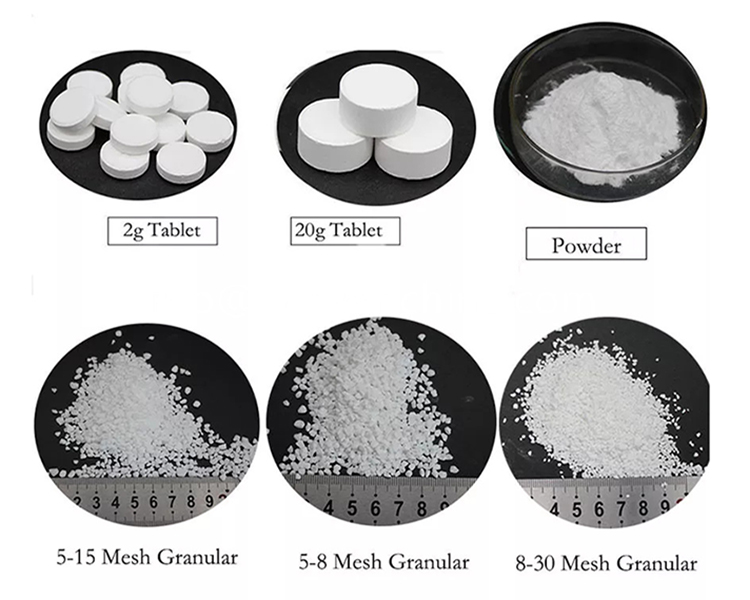
Here is where many operators stumble. You cannot simply dump ClO2 tablets into a skimmer. Chlorine Dioxide must be generated on-site. It is too unstable to store or transport in high concentrations.
Step 1: The Generation System
You need a dedicated feed system that mixes two precursors: typically Sodium Chlorite (NaClO2) and an activator (like hydrochloric acid or sodium hypochlorite).
- Precision Matters: The ratio must be exact. Too much acid creates dangerous chlorine gas; too little leaves unreacted chlorite. Automated proportioning pumps are non-negotiable for commercial pools.
Step 2: Dosing Strategy
Unlike the “shock and maintain” approach of traditional chlorine, ClO2 works best as a continuous, low-level residual.
- Target Residual: Aim for 0.2 – 0.4 mg/L of ClO2 in the pool water. This is sufficient to kill pathogens instantly without causing irritation.
- Primary vs. Secondary: In many jurisdictions, ClO2 is used as a primary oxidizer to destroy organics and control odor, while a tiny amount of free chlorine (0.5 mg/L) is maintained as a secondary residual to meet specific local codes. Check your local health regulations!
Step 3: Monitoring Byproducts
While ClO2 doesn’t make THMs, it does produce chlorite (ClO2-) and chlorate (ClO3-) ions as byproducts.
- The Limit: The EPA limit for chlorite in drinking water is 1.0 mg/L. In pools, regular blowdown (draining and refilling) keeps these levels well below concern. However, you must test for them weekly.
The Critical Factor: Purity of Precursors
Here is the nuance that separates success from disaster: Your ClO2 is only as good as your Sodium Chlorite.
Low-grade sodium chlorite often contains heavy metals, insoluble residues, or inconsistent concentrations.
- The Risk: Impurities can clog your delicate generation equipment, lead to inefficient conversion (wasting money), or introduce toxins into the water. If your precursor is only 90% pure, your dosing calculations are off, and you risk under-treating the water or creating excess byproducts.
- The Solution: You need pharmaceutical-grade purity. You need consistency.
The ENVO CHEMICAL Advantage: Engineering Safety and Clarity
This is where ENVO CHEMICAL stands apart. As a global leader in the R&D, production, and sales of water treatment chemicals, ENVO has mastered the formulation of high-purity precursors essential for safe, effective Chlorine Dioxide generation.
- Unmatched Purity: ENVO supplies ultra-high-purity Sodium Chlorite (>99%) and optimized activators. Their rigorous manufacturing process ensures no heavy metals, no insolubles, and consistent concentration. This guarantees >95% conversion efficiency in your generators, meaning every dollar spent becomes active disinfectant.
- Safety First: ENVO’s products are packaged and stabilized to minimize risks during storage and handling. Their technical data sheets provide precise instructions for safe mixing, reducing the margin for error in your facility.
- Global Reliability: With a distribution network spanning over 200 countries, ENVO ensures that whether you are running a resort in Dubai, a municipal pool in London, or a university natatorium in New York, your supply chain never breaks. You aren’t forced to use inferior, risky substitutes because your primary supplier is delayed.
- Technical Partnership: ENVO doesn’t just sell drums; they provide generator calibration support, dosing strategy consulting, and staff training. They help you navigate the complex transition from traditional chlorine to ClO2.
For Sarah’s university, switching to ENVO’s high-purity precursors was a game-changer. Within a month, asthma complaints dropped to zero. The corrosion on the railings stopped progressing. And surprisingly, their chemical costs decreased by 20% because they stopped wasting money on massive shock doses of bleach that weren’t working anyway. “It’s like we finally have clean water again,” Sarah told me. “Not just chemically treated water, but actually clean water.”
Frequently Asked Questions (FAQ)
Q: Is Chlorine Dioxide safe for swimmers?
Yes, absolutely. When used at recommended residuals (0.2–0.4 mg/L), ClO2 is non-irritating to eyes and skin. In fact, it is significantly safer than traditional chlorine because it does not form toxic chloramines or THMs.
Q: Can I use ClO2 tablets directly in my pool?
No. ClO2 gas is unstable and potentially explosive in high concentrations. It must be generated on-site using a proper feed system that mixes sodium chlorite and an activator immediately before injection. Never store or handle concentrated ClO2 gas.
Q: Will ClO2 affect my pool’s pH?
Minimal impact. Unlike liquid bleach (which raises pH) or trichlor (which lowers it), ClO2 generation can be balanced to be nearly pH-neutral. This leads to much more stable water chemistry and reduced acid demand.
Q: How do I monitor ClO2 levels?
You need a specific DPD test kit or a digital sensor calibrated for Chlorine Dioxide. Standard chlorine tests will not accurately measure ClO2 residuals. Regular testing for chlorite byproducts is also recommended.
Q: Is ENVO CHEMICAL’s Sodium Chlorite certified for pool use?
Yes. ENVO’s products meet strict international standards (NSF, EPA, EU) for use in recreational water applications. Their high purity ensures compliance with health and safety regulations globally.
The Bottom Line
Stop letting outdated disinfection methods compromise your air quality, your infrastructure, and your guests’ health. The shift to Chlorine Dioxide offers a clearer, safer, and more efficient path forward—but only if you start with the highest quality ingredients.
Don’t gamble with inferior precursors that jeopardize your operation. Partner with ENVO CHEMICAL, a trusted global innovator with decades of experience. Their commitment to purity, safety, and technical excellence ensures that your move to advanced disinfection delivers the sparkling, odor-free water your facility deserves.
Ready to eliminate chloramines and transform your pool environment? Contact ENVO CHEMICAL today to request a sample, speak with our aquatic specialists, or get a customized design for your ClO2 generation system. Let’s make every drop count.
Author: Dr. Elias Thorne
Senior Aquatic Chemist | 25+ Years in Commercial Pool Operations & Water Quality Strategy
