
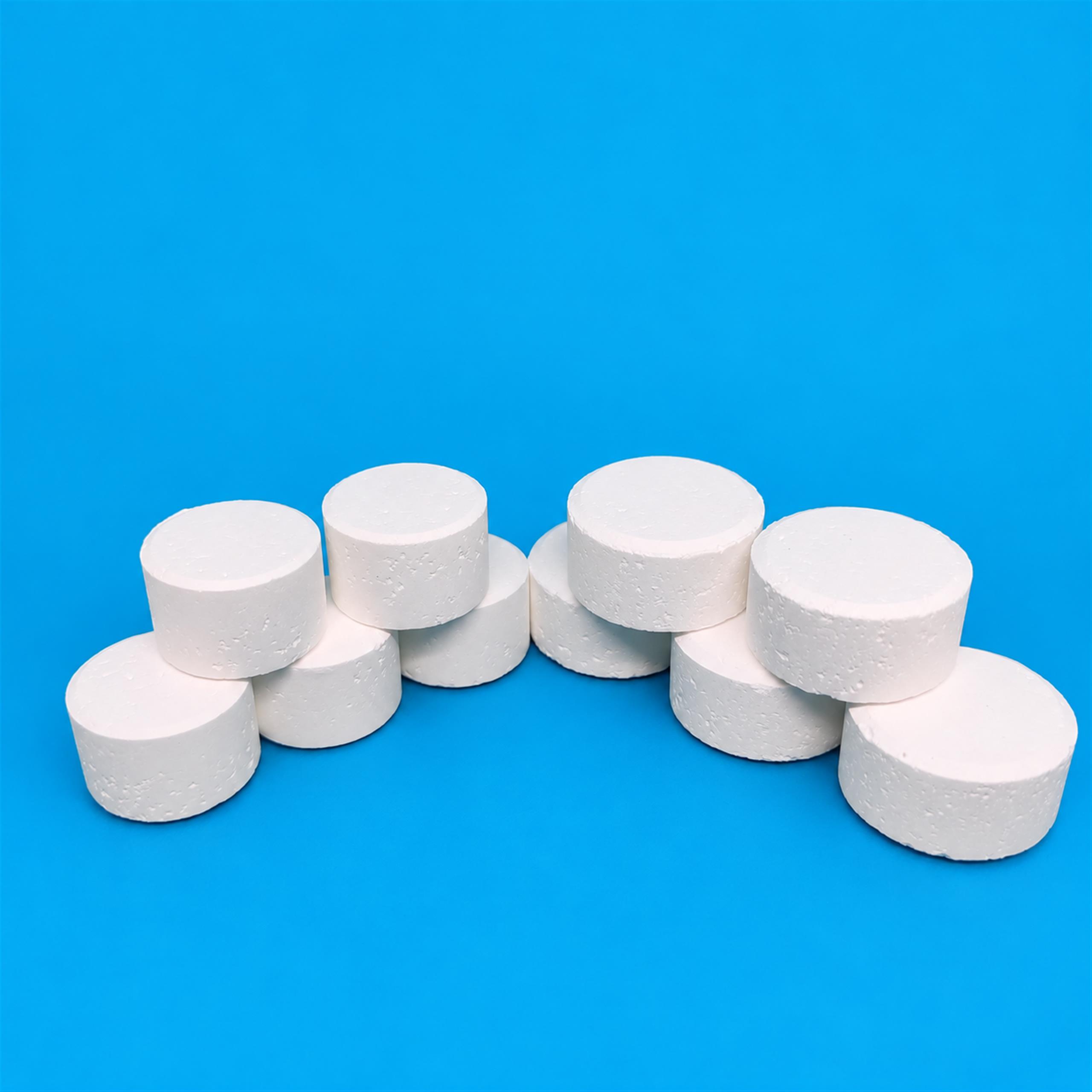
No — NaDCC Tablets Do Not Replace Safe Drinking Water Storage
Sodium dichloroisocyanurate (NaDCC) tablets disinfect water at the point of treatment, but they do not eliminate the need for safe drinking water storage. The two practices address different stages of the water-safety chain: NaDCC inactivates pathogens present when the tablet is added, while safe storage prevents recontamination after treatment. Using tablets without proper storage containers can leave treated water vulnerable to the same hazards it was meant to protect against.
This distinction matters because treating water once and then pouring it into an open or unclean vessel effectively undoes the disinfection step. Public-health guidance from organisations such as the World Health Organization consistently presents chemical disinfection and safe storage as complementary, not interchangeable, measures.
What NaDCC Tablets Actually Do
Disinfection, Not Preservation
NaDCC tablets release available chlorine when dissolved in water. The chlorine acts as an oxidising biocide that damages the cell walls and enzymes of bacteria, viruses, and many protozoa. When used at the correct dose and with adequate contact time, the treatment reduces microbial load to levels considered safe for drinking.
What the tablet does not do is create a lasting barrier. Once the initial chlorine demand of the water is satisfied and the dose decays — through reaction with organic matter, sunlight exposure, or simple volatilisation — the residual disinfectant concentration drops. At that point, the water has no active protection against new contamination.
Dose and Contact Time Determine Effectiveness
The performance of any NaDCC tablet depends on the applied dose relative to the water volume and quality, the required contact time (often 30 minutes or more for reliable disinfection), and the temperature and turbidity of the water. A tablet dropped into a large, turbid container without sufficient mixing or waiting time may leave pathogens alive. Users must follow verified dosing instructions for the specific tablet formulation they hold; generic advice cannot substitute for product-specific guidance.
Importantly, disinfection addresses only biological hazards. NaDCC does not remove chemical contaminants, heavy metals, or suspended solids. If the source water carries non-biological risks, tablet treatment alone is insufficient regardless of storage.
What Safe Drinking Water Storage Accomplishes
Preventing Recontamination
Safe storage means keeping treated water in a clean, covered container with a narrow opening, ideally one that allows dispensing without the user’s hands or a cup touching the water inside. The goal is physical: block insects, dust, animal waste, and human contact that introduce new pathogens after disinfection.
Studies in household water-treatment settings have shown that even when water is treated at point of use, diarrhoeal disease rates remain high if the water is stored unsafely. The storage vessel becomes the critical control point after treatment.
Maintaining Residual Protection
A well-designed storage container also helps maintain any remaining chlorine residual by shielding the water from sunlight, which accelerates chlorine decay. An opaque, tightly sealed container preserves disinfection benefits longer than an open bowl or transparent jug left in direct sun.
Why One Cannot Substitute for the Other
Different Failure Modes
If you rely on NaDCC tablets alone and store water in an open vessel, you risk recontamination within hours. If you rely on safe storage alone but never treat the source water, the container simply holds contaminated water in a cleaner environment — it does nothing to kill the pathogens already inside.
The table below summarises the distinct roles:
| Aspect | NaDCC Tablet Treatment | Safe Storage |
|---|---|---|
| Primary function | Inactivate pathogens in water | Prevent new pathogens from entering water |
| When it acts | At the moment of dosing and contact | Continuously, as long as container remains closed and clean |
| What it does not address | Post-treatment recontamination | Pathogens already present in untreated water |
| Failure if omitted | Water may contain live pathogens | Treated water may be recontaminated |
The Combined Approach Is the Standard
Public-health programmes that promote household water treatment and safe storage (HWTS) treat the two steps as a package. A typical recommendation is: treat the water with a verified disinfectant such as NaDCC at the correct dose, wait for the required contact time, then transfer the water into a narrow-mouthed, clean, covered container. Neither step is optional if the goal is safe drinking water at the point of consumption.
Practical Points to Check Before Deciding
- Dosing accuracy: Verify the tablet strength and the volume you intend to treat. Using too little chlorine may not achieve disinfection; using too much may leave an unpleasant taste and excess residue, though it does not replace storage.
- Water quality before treatment: Highly turbid or heavily contaminated source water may overwhelm a single tablet dose. Pre-filtration through cloth or a settled container can improve efficacy but does not replace the need for storage after treatment.
- Container hygiene: Even the best NaDCC treatment is wasted if the storage vessel has biofilm, cracks, or a wide opening that lets contaminants in. Clean the container regularly with soap and safe water, and let it dry before refilling.
- Shelf life and tablet integrity: NaDCC tablets degrade if exposed to moisture or heat. Damaged or discoloured tablets may not deliver the stated available chlorine. Check packaging and storage conditions of the tablets themselves.
- Regulatory suitability: Not all NaDCC formulations are approved for drinking-water use. Verify that the specific product you hold carries the relevant approval for potable water treatment in your jurisdiction. A “food-grade” or “pool-grade” label does not automatically confer drinking-water suitability.
Common Misunderstandings
“If the Tablet Kills Germs, I Do Not Need a Lid”
This is the most frequent error. The tablet kills germs that are present at dosing time. Any germs introduced after the chlorine residual has faded face no barrier. A lid is not redundant — it is the second line of defence.
“I Can Just Add Another Tablet Later”
Repeated dosing without safe storage is a reactive strategy that risks both under-dosing and over-chlorination. It also does not address the physical pathway of contamination. Proper storage reduces the need for re-treatment and keeps the water within a safe residual range.
Bottom Line
NaDCC tablets are an effective point-of-use disinfectant when used correctly, but they address only one link in the chain from source to glass. Safe drinking water storage addresses a different link — the post-treatment period when water is most vulnerable to recontamination. The two must be used together; neither replaces the other.
If you need clarification on the correct NaDCC dosing for your water volume or guidance on choosing storage containers compatible with chlorinated water, contact ENVO CHEMICAL with your specific application details so we can point you to the right information.
