
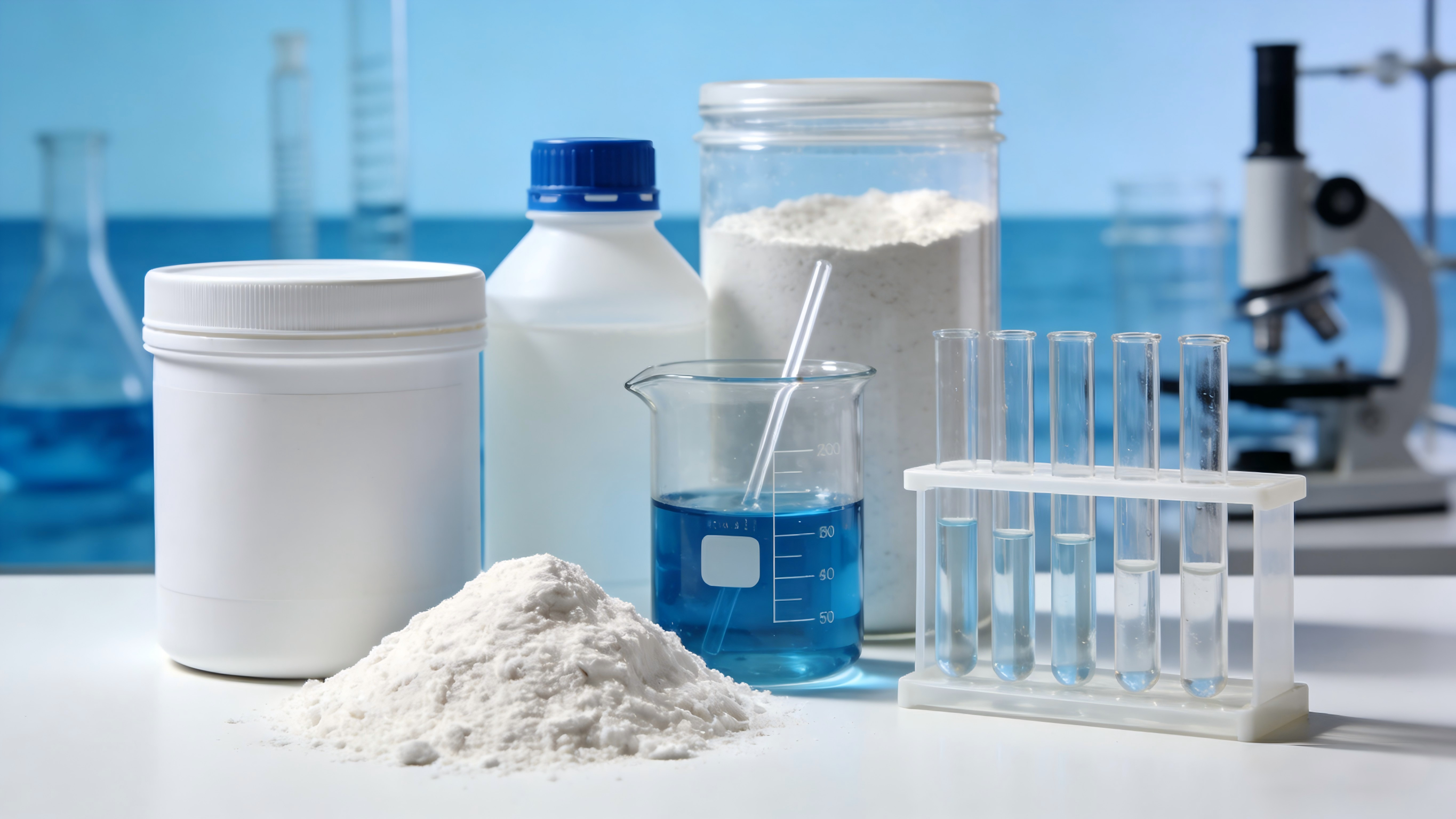
Here is a comprehensive guide to Sodium Dichloroisocyanurate (SDIC) in the bleaching industry, written from the perspective of a chemical industry expert.
🧪 The Ultimate Guide to SDIC in Bleaching: Efficiency, Mechanism & Applications
In the modern textile and pulp & paper industries, achieving a pristine, bright white finish is not just about aesthetics; it is a benchmark of quality. Among the myriad of bleaching agents available, Sodium Dichloroisocyanurate (SDIC) has emerged as a powerhouse ingredient. As a leading manufacturer of water treatment and industrial chemicals, we understand that selecting the right bleaching agent is critical for balancing cost, safety, and efficacy.
This guide will delve deep into how SDIC works as a bleaching agent, its advantages over traditional chlorine, and how to optimize its use in your industrial processes.
🧪 What is SDIC?
Sodium Dichloroisocyanurate (SDIC) is an organic chlorine compound renowned for its stability and high available chlorine content. It is a white crystalline powder or tablet that dissolves in water to release hypochlorous acid (HOCl), the active agent responsible for oxidation.
Unlike liquid chlorine bleach, SDIC is a solid, which makes it easier to transport, store, and dose accurately. It is often referred to as “solid chlorine” due to its potent oxidizing properties.
Chemical Insight: The molecular structure of SDIC allows it to act as a controlled-release reservoir for chlorine. This prevents the rapid degradation often seen in liquid sodium hypochlorite solutions.
⚗️ The Mechanism: How SDIC Bleaches
The bleaching action of SDIC is rooted in oxidation. When SDIC dissolves in water, it undergoes a hydrolysis reaction to form hypochlorous acid, the same active ingredient found in household bleach, but in a much more stable and concentrated form.
The Reaction: $$ \text{C}_3\text{Cl}_2\text{N}_3\text{O}_3\text{Na} + 2\text{H}_2\text{O} \rightarrow \text{C}_3\text{H}_2\text{N}_3\text{O}_3\text{Na} + 2\text{HOCl} $$
The Bleaching Process:
- Release of Hypochlorous Acid (HOCl): Upon dissolution, SDIC releases HOCl, a powerful oxidizing agent.
- Oxidation of Chromophores: The hypochlorous acid attacks the chromophores (color-bearing components) in organic stains, dyes, and natural fibers.
- Molecular Breakdown: The oxidizing agent breaks the chemical bonds within these chromophores, converting complex, colored organic molecules into smaller, colorless molecules (such as water and carbon dioxide).
- Removal: These broken-down particles are then easily washed away during the rinsing cycle.
📊 Why Choose SDIC Over Other Bleaching Agents?
When comparing industrial bleaching options, SDIC stands out for several specific reasons. Below is a comparison of SDIC against traditional Sodium Hypochlorite (Liquid Bleach) and Hydrogen Peroxide.
| Feature | 🧪 SDIC (Sodium Dichloroisocyanurate) | 🧴 Sodium Hypochlorite (Liquid) | 💧 Hydrogen Peroxide |
|---|---|---|---|
| Physical Form | Solid (Powder/Tablets) | Liquid | Liquid |
| Stability | High (Long shelf life, stable storage) | Low (Degrades rapidly, especially in heat/light) | Moderate |
| Active Chlorine | High (55-60%) | Low (10-15%) | N/A (Oxygen-based) |
| Transport Cost | Low (Concentrated, no water weight) | High (90% is water) | Moderate |
| pH Sensitivity | Effective over a wide pH range | Highly pH sensitive | Effective in Alkaline conditions |
Key Advantages of SDIC:
- High Efficiency: Due to its high available chlorine content, a small amount of SDIC goes a long way, reducing the volume of chemicals needed per batch.
- Safety: While still a strong oxidizer, SDIC is less corrosive to storage tanks and handling equipment compared to gaseous chlorine.
- Versatility: It is effective not only on cotton and linen but also in pulp bleaching and wastewater decolorization.
🏭 Industrial Applications of SDIC Bleaching
SDIC is not just for laundry; it is a workhorse in heavy industry.
1. Textile Processing In the textile industry, raw cotton contains natural waxes, pectins, and pigments. SDIC is used in the scouring and bleaching baths to remove these impurities.
- Process: It is typically added after the scouring stage.
- Benefit: It provides a uniform white base, which is essential for subsequent dyeing processes. Without proper bleaching, dyes can appear muddy or inconsistent.
2. Pulp and Paper Manufacturing For paper mills aiming for high-brightness paper, SDIC offers a cost-effective solution for delignification and brightening of mechanical pulps.
3. Wastewater Treatment While primarily used for disinfection, the bleaching (oxidizing) power of SDIC is utilized to remove color from effluents in dye houses and chemical plants, ensuring the discharged water meets environmental regulations.
⚠️ Safety and Handling Best Practices
While SDIC is a stable compound, it is a strong oxidizing agent. Proper handling is crucial to maintain workplace safety and chemical efficacy.
- Storage: Store in a cool, dry, and well-ventilated area. Keep away from direct sunlight and moisture. It must be stored separately from acids, ammonia, and flammable materials, as reactions with these can be violent.
- Personal Protection: Operators should wear chemical-resistant gloves, safety goggles, and protective clothing to avoid skin or eye contact.
- Compatibility: Avoid using SDIC in systems containing nickel, as it can cause pitting corrosion. Stainless steel (316L) or plastic-lined tanks are recommended for dissolution.
💡 Expert Tips for Optimization
To get the most out of your SDIC bleaching process, consider these technical tips:
- Temperature Control: While SDIC is stable in storage, the bleaching reaction rate increases with temperature. However, excessively high temperatures (> 60°C) can cause rapid chlorine gas release. Maintain the bath temperature between 20°C and 40°C for optimal safety and reaction speed.
- pH Balance: The efficiency of chlorine-based bleaching is pH-dependent. For SDIC, slightly acidic to neutral conditions (pH 5.5 – 7.0) maximize the concentration of hypochlorous acid (HOCl). In highly alkaline conditions, the reaction shifts towards hypochlorite ion (OCl-), which is a weaker oxidizer.
- Stabilizers: In some industrial formulations, cyanuric acid (a byproduct of SDIC hydrolysis) acts as a stabilizer, preventing the rapid breakdown of chlorine, making it ideal for outdoor or long-cycle applications.
🏁 Conclusion
Sodium Dichloroisocyanurate (SDIC) represents the perfect marriage of convenience and power in the world of industrial bleaching. Its solid form, high stability, and potent oxidizing capability make it a superior choice for manufacturers looking to streamline their supply chain while maintaining high-quality output.
By understanding the chemistry behind SDIC and adhering to best practices in handling and application, you can significantly improve the whiteness and quality of your products while managing costs effectively.
❓ Frequently Asked Questions (FAQ)
Q1: What is the main difference between SDIC and household bleach? Household bleach is typically Sodium Hypochlorite, a liquid solution containing only 5-15% available chlorine. SDIC is a solid powder or tablet containing 55-60% available chlorine. This makes SDIC much more concentrated, stable, and economical for industrial transport and storage.
Q2: Is SDIC safe for the environment? SDIC breaks down into cyanuric acid and salt in water. While it is an effective biocide, it degrades over time. However, like all chlorine-based products, it should be handled responsibly to prevent harm to aquatic life. It is always recommended to treat wastewater containing residual chlorine before discharge.
Q3: Can SDIC be used for food-grade bleaching? Yes, but it requires specific food-grade certification. The “Food & Beverage Industry” section on our website highlights our range of certified chemicals. If you are processing food-contact materials, ensure you source SDIC that meets FDA or equivalent food safety standards to avoid toxic residues.
Q4: How do I calculate the dosage of SDIC for my bleaching tank? Dosage depends on the organic load and the desired brightness. A general rule of thumb is to maintain a free available chlorine (FAC) concentration of 50-200 ppm in the bath. You can calculate this based on the tank volume and the 55-60% available chlorine content of the SDIC powder. For specific formulations, consulting a technical data sheet (TDS) is recommended.
Q5: Where can I source high-purity SDIC for industrial use? If you are looking for reliable industrial-grade SDIC or need technical advice on integrating it into your bleaching line, you can Contact Us for a consultation with our experts.
