
The short answer: no, and saying otherwise creates avoidable risk
Siliphos is not a chemical-free treatment. It is a slow-dissolving chemical material — most commonly a glassy polyphosphate, sometimes combined with silicate — that releases active substances into the water as it dissolves. Those substances do the work. If a customer asks whether Siliphos is “chemical-free,” the honest and commercially safer answer is: it is a passive, additive-free-in-appearance treatment that requires no pump, no salt and no electricity, but it is still a chemical treatment, and it must be described as one.
The confusion is understandable, and it is rarely the customer’s fault. It usually comes from marketing language they have read elsewhere. Your job is not to argue about the word “chemical.” It is to find out what the customer is actually worried about — health, taste, maintenance, regulations, or the wording on their own product label — and answer that concern precisely.
Why customers keep asking this question
Buyers who ask about “chemical-free” siliphos treatment are usually one of these:
- Filter and cartridge manufacturers who need accurate wording for packaging, datasheets and webshop listings.
- Water-treatment equipment suppliers and distributors whose end customers have asked them the same question.
- Plumbers and installers who want a simple explanation they can give at the kitchen table.
- Procurement and compliance staff checking whether a claim will survive scrutiny in their destination market.
They arrive with a mental list of things they dislike about conventional softening: bags of salt, brine discharge, electricity, regeneration cycles, and the feeling that they are “adding something” to their water. Siliphos appears to solve all of that, so it is easy to assume it must be chemical-free. It is not the same thing as being additive-free. A treatment can be salt-free, power-free and maintenance-light and still be a chemical treatment.
What Siliphos actually is
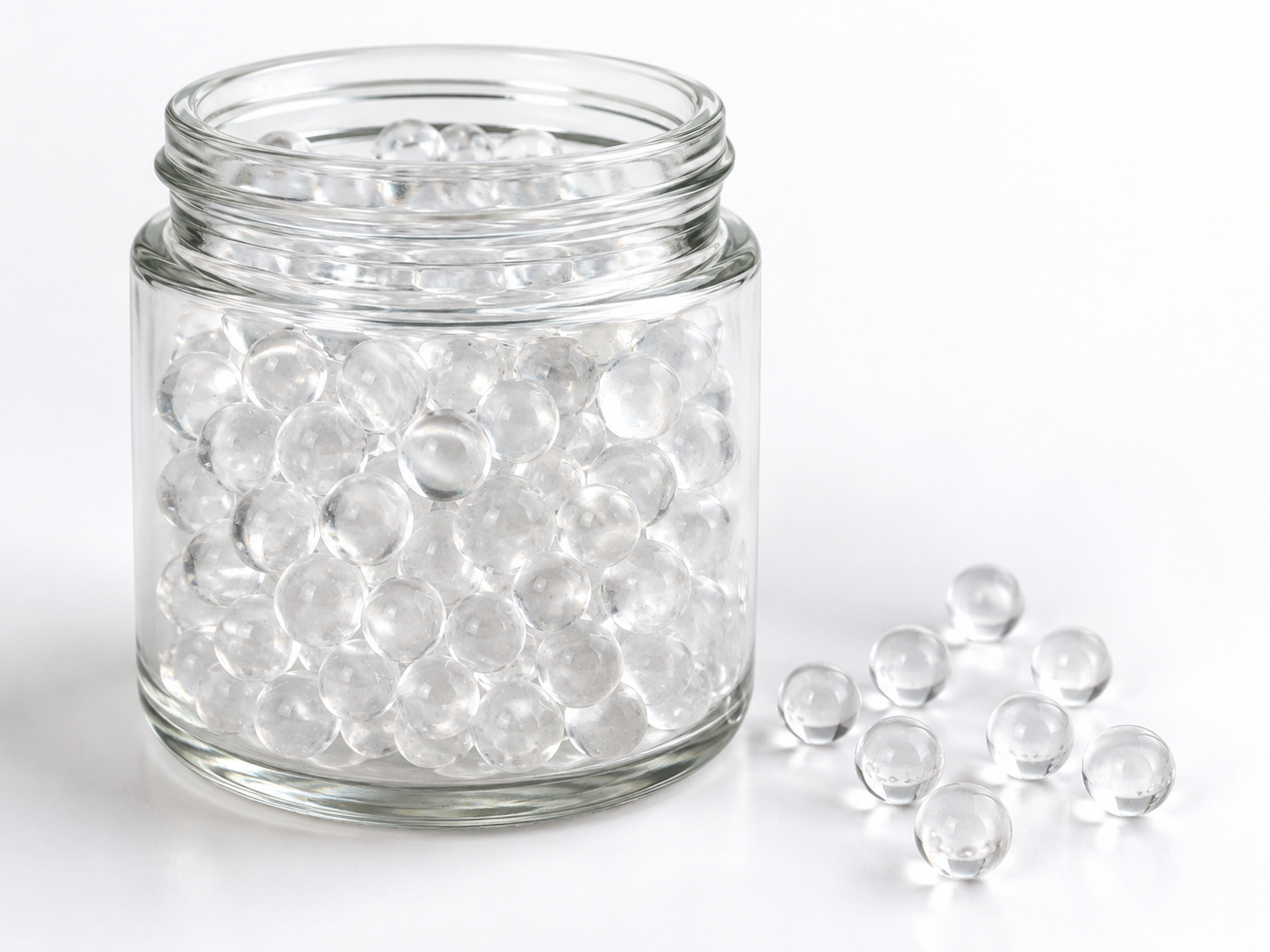
In the water trade, “Siliphos” is a brand name that has become a generic shorthand for slowly dissolving polyphosphate crystal used in point-of-entry and point-of-use scale-control devices. Products sold under that name are not guaranteed to be chemically identical. Some are polyphosphate glasses; some are polyphosphate–silicate blends; particle size, dissolution rate and solubility vary between suppliers. The exact composition, approvals and dissolution behaviour belong to the specific product, not to the name.
When the material dissolves, it releases polyphosphate into the water. At low concentrations, polyphosphates interfere with the crystallisation of calcium carbonate, so hardness minerals tend to stay suspended rather than deposit as hard scale on heat-transfer surfaces and pipe walls. This is a chemical mechanism, not a physical one. Nothing is filtered out, nothing is magnetised, and no hardness is removed.
What Siliphos does — and what it does not do
Most disputes between suppliers and customers come from mixing up six different functions that all sound similar to a non-specialist. Keep them separate.
| Function | What it means | Siliphos-type polyphosphate crystal |
|---|---|---|
| Scale inhibition | Preventing new hardness scale from forming and adhering | Main function, under suitable water conditions and correct dosing |
| Scale removal | Dissolving scale that has already formed | No — this is a different job done by acidic or specific descaling products |
| Water softening | Removing calcium and magnesium from the water | No — hardness remains in the water; a hardness test will still show hardness |
| Filtration | Physically removing particles, sediment or contaminants | No |
| Corrosion inhibition | Slowing metal loss in piping | Sometimes claimed, especially for silicate-containing formulations — verify per product |
| Disinfection | Inactivating bacteria, viruses or other microorganisms | No |
A customer who believes Siliphos softens water will eventually test the water, find the hardness unchanged, and conclude the product failed. A customer who understands it as a scale inhibitor gets the result they were promised. The distinction is worth more than any slogan.
How to answer the question in practice
-
Give the direct answer first. “Siliphos is a chemical treatment — it works by slowly releasing polyphosphate into the water. What it does not need is salt, electricity, regeneration or a dosing pump.” That single sentence removes the ambiguity without undermining the product’s real advantages.
-
Ask what is behind the question. Is the customer worried about drinking-water safety, about a claim on their packaging, about wastewater discharge rules, or about maintenance effort? The correct answer differs for each. A health concern needs documentation. A marketing concern needs defensible wording. A maintenance concern needs an explanation of passive dissolution.
-
Replace “chemical-free” with accurate benefits. The real selling points are no salt, no brine, no electricity, no regeneration, low maintenance and a small physical footprint. These are factual, verifiable and usually more persuasive than a vague purity claim.
-
State the technical limits openly. Effectiveness depends on water chemistry, temperature, flow, contact time and how much material is in the housing. Polyphosphates are also known to become less effective as water temperature rises, because they gradually convert to orthophosphate. Quote limits rather than hiding them; it prevents returns and complaints.
Wording that protects you
Many markets regulate health, composition and environmental claims on water-treatment products. Before any claim goes on a box, a datasheet or a website, check it against the rules of the destination market and against the actual test documentation for the exact product.
| Wording to avoid | Defensible alternative |
|---|---|
| “Chemical-free water treatment” | “Requires no salt, electricity or regeneration” |
| “Softens hard water” | “Inhibits the formation of new scale deposits; it does not reduce water hardness” |
| “Removes existing scale” | “Helps prevent new scale from forming on downstream surfaces” |
| “Makes water safe to drink” | “Drinking-water suitability depends on the exact product, the water source and local requirements — ask for the relevant documentation” |
| “Food grade, therefore drinking-water approved” | “Food-grade status and drinking-water approval are two different things” |
| “100% safe / no health effects” | “Use within the manufacturer’s stated conditions for the specific product” |
The food-grade point deserves special attention, because it causes the most damage when it is misstated. A material being described as food grade says something about its purity or handling category. It does not by itself establish that a device containing it is approved for drinking-water use in a given country. That depends on the exact formulation, the materials of construction, the dosage delivered, the application conditions, and the certification or registration required in the destination market. If you cannot show the specific document, do not make the claim.
What to confirm before you promise anything
- The exact composition and form of the material you are selling — polyphosphate only, or polyphosphate with silicate.
- Whether the supplier holds any certification relevant to your market and application, and for which specific product code.
- Any local restriction on phosphate in wastewater, since the treatment adds phosphate to the water it treats.
- The intended water temperature range, flow rate, contact time and housing volume.
- Whether the customer expects scale prevention, softening, corrosion control or filtration — and whether the product actually does that job.
Frequently asked questions
Is Siliphos salt-free?
Generally yes. Polyphosphate crystal treatments do not use sodium chloride and do not produce brine, because there is no ion-exchange resin to regenerate. Salt-free is accurate; chemical-free is not. Keep the two descriptions separate in your own materials.
Can I call it a physical treatment instead of a chemical one?
No. The device is passive, but the mechanism is chemical dissolution and chemical interference with crystal growth. Calling it physical invites a technical challenge you cannot win.
Does the treatment add anything to the water?
Yes. Polyphosphate enters the water as the crystal dissolves. Concentrations are low, but the addition is real, which is why discharge rules and drinking-water requirements are relevant questions in some markets.
Is food-grade Siliphos automatically suitable for drinking water?
No. Suitability must be verified for the exact product, the application conditions in which it will be installed, and the regulations of the destination market. Ask your supplier for the specific documentation rather than relying on the food-grade description.
Does it work in hot water systems?
Effectiveness generally changes with temperature, and performance should be confirmed against the supplier’s stated conditions for the specific product. Do not assume performance data from a cold-water application will apply to a hot-water or boiler system.
When you need product-specific answers
Once you have explained the chemistry honestly, the next step is usually a technical match between a specific crystal grade and a specific application. ENVO CHEMICAL can discuss that level of detail with buyers who need it.
To get a useful reply, include: the application (drinking-water device, appliance protection, industrial line, cartridge assembly), your source-water conditions including hardness and temperature, the equipment type and housing volume, any flow rate or contact-time limits, the specification or particle size you are looking for, your required quantity, and your destination market so that documentation requirements can be checked. With those details, the conversation moves straight to whether a given material fits — rather than back to the question of whether it is chemical-free.
