
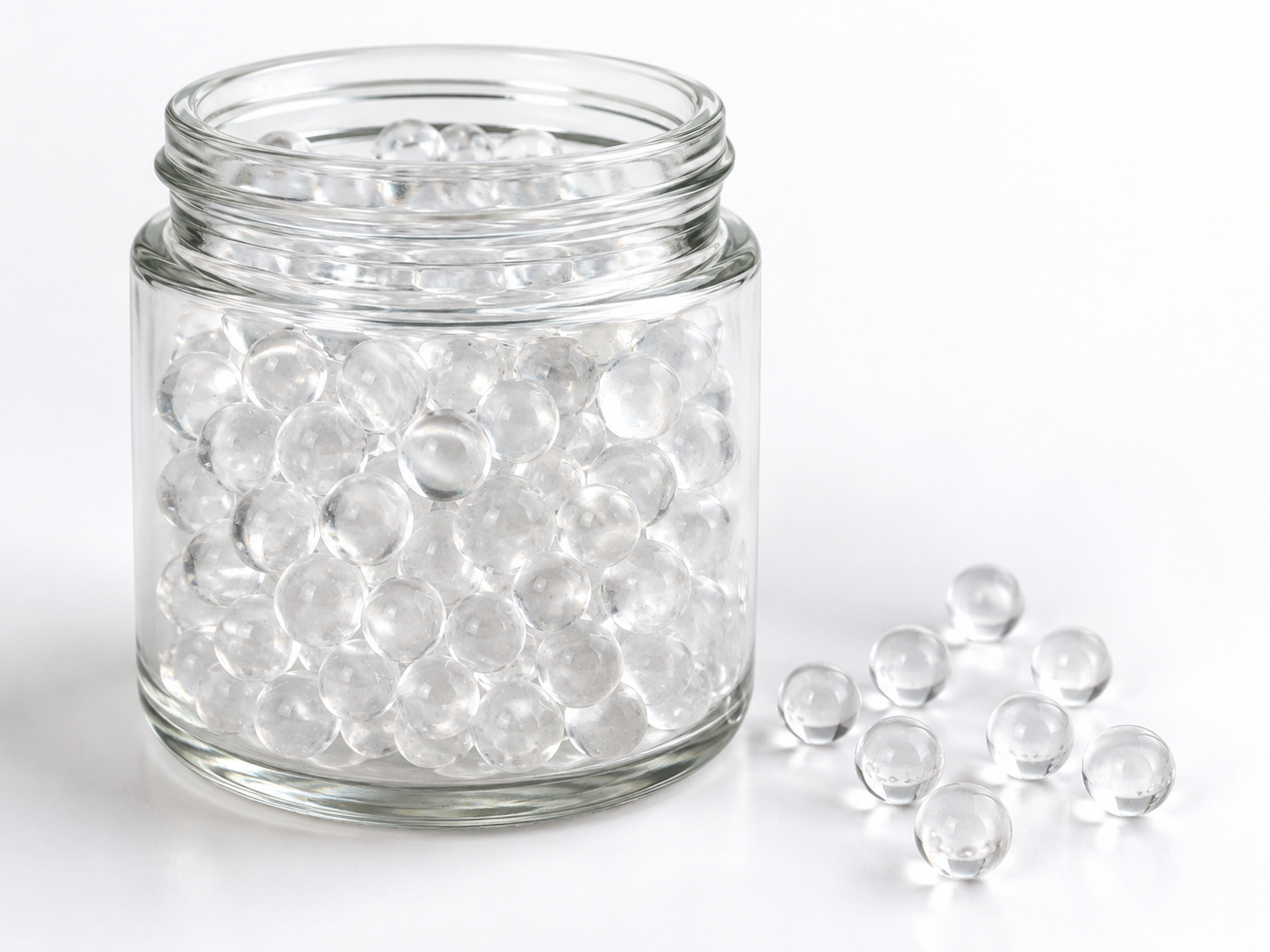
Conflicting advice about polyphosphate filters is rarely a sign that one side is lying. It usually means the two sides are answering different questions. One writer may be describing scale prevention in a hot-water appliance; another may be describing a cartridge that also traps sediment; a third may be repeating a claim about “softening” that actually belongs to ion-exchange technology. Before you decide who is right, separate every claim into four layers: what the material is, what function it performs, under which water conditions, and who verified it. Most contradictions collapse once those layers are pulled apart.
This is a practical guide for the readers who run into this problem most often: filter and water-treatment equipment manufacturers, importers and distributors evaluating a supplier, and contractors or maintenance engineers who have to specify something that works. It focuses on how to evaluate conflicting online advice about polyphosphate media — including products sold under brand-style names such as Siliphos crystal — rather than on repeating one more set of marketing claims.
Why online advice about polyphosphate filters conflicts so often
Five recurring causes explain most of the disagreement you will find in forums, supplier blogs, and product listings.
- Different products share the same name. “Siliphos,” “polyphosphate crystal,” “phosphate media,” and “anti-scale media” are used loosely. Some products are slow-dissolving phosphate-based crystals; others are blends, coated granules, or cartridge-based systems with a phosphate component. Two sources can describe genuinely different materials while using identical wording.
- Different jobs are described with the same verb. “Softening,” “scale control,” and “descaling” are routinely used as if they were interchangeable. They are not, and the confusion produces contradictory conclusions.
- Different water conditions. Hardness, pH, temperature, flow rate, and the amount of media in contact with the water all change what a phosphate material can realistically do. Advice written for one set of conditions fails in another.
- Different regulatory markets. Phosphate-based treatment of potable water is regulated or restricted in some countries and accepted in others. A statement that is accurate in one market can be misleading or non-compliant in another.
- Commercial incentives. A distributor that only sells ion-exchange softeners and one that only sells phosphate cartridges have little reason to describe the other category fairly.
Separate the function before you compare the opinions
The single most useful step is to identify which technical function each claim actually describes. The table below maps the terms you will meet online to what they really mean — and to the check that resolves the argument.
| Claim you read | What it actually means | What to verify |
|---|---|---|
| “Softens water” | True softening means removing calcium and magnesium ions, normally by ion exchange. Phosphate-based media do not remove hardness in that sense; total hardness stays in the water. | Ask for a hardness test before and after. If hardness is unchanged, the product is not a softener regardless of the label. |
| “Prevents scale” | Scale inhibition: reducing the formation or deposition of mineral scale on surfaces, typically through threshold effects at low phosphate concentrations. | Which surface, which temperature, which water chemistry, and how the result was measured. |
| “Removes existing scale” | Scale removal means dissolving or detaching deposits that already exist. Inhibition and removal are different actions. | Whether the claim describes prevention or cleaning. Most phosphate media are positioned for prevention, not deposit removal. |
| “Filters water” | Filtration is mechanical or adsorptive removal of suspended particles. A phosphate cartridge housing may also contain a sediment element, but that is a separate component. | Which part of the assembly does the filtering — the crystal bed or the surrounding cartridge. |
| “Protects pipes from corrosion” | Phosphate-based corrosion control works through thin-film formation on metal surfaces and is a recognized approach in some distribution systems. | Which metal, which water chemistry, and whether the specific product is intended and documented for that use. |
| “Purifies” or “disinfects” | Disinfection is inactivation of microorganisms. Phosphate media are not disinfectants. | Nothing — treat this claim as a category error and read the rest of that source with caution. |
Five questions that resolve most disagreements
1. What exactly is the material?
Ask for the product identity in writing: chemical description, physical form (crystal, granule, blend, cartridge), and the intended function as stated by the producer. In the water-treatment trade, “Siliphos” functions as a brand-style name that has been applied to a range of slow-dissolving phosphate-based crystal media. Because the name is used loosely, two suppliers can both say “Siliphos” while offering products that differ in form, dissolution behaviour, and intended application. Treat the name as a starting point, not a specification.
2. What problem is being solved?
Write down the objective in one sentence: prevent scale on a heat exchanger, reduce red-water complaints, protect a boiler feed line, stop white deposits on a fixture, or something else. Many online arguments disappear when one participant is optimizing for appearance and the other for equipment protection.
3. What are the source-water conditions?
Hardness, alkalinity, pH, temperature, iron and manganese content, chlorine residual, and flow rate all influence performance. Advice that omits these inputs cannot be evaluated. If a source recommends a specific figure without stating the conditions it assumes, that figure is not transferable to your site.
4. How is the media contacted with the water?
Bed volume, contact time, flow rate per unit of media, and cartridge orientation matter as much as the material itself. A recommendation that works in a low-flow point-of-use unit may be irrelevant for a continuous high-flow industrial line, even if the media are identical.
5. What is the evidence?
Rank the available evidence in this order: third-party test reports tied to a named product and stated conditions; the producer’s own technical datasheet; documented field experience from a comparable installation; a supplier’s general blog statement; an anonymous forum post. Most conflicting advice resolves at step four.
A reading checklist for supplier pages and forum threads
- Identify whether the source is selling ion exchange, phosphate media, filtration, or a combined system.
- Highlight every performance claim and mark it as prevention, removal, filtration, corrosion control, or disinfection.
- Note whether source-water conditions are stated. If not, downgrade the claim.
- Check whether “softening” is being used correctly or as shorthand for scale reduction.
- Look for the words “may,” “can help,” and “typically.” These signal the limits of the claim.
- Check whether any regulatory approval is named, and for which market and application. A food-grade description is not the same as verified suitability for drinking water in your destination market.
- Write down what remains unresolved, then request that specific information from the supplier in writing.
Red flags worth acting on
- Guaranteed service life stated without reference to water conditions, flow, or media volume.
- Claims that one cartridge both softens, filters, disinfects, and protects every metal.
- Performance numbers with no test method, no product identity, and no conditions.
- Specifications copied from another manufacturer’s datasheet without adaptation.
- Drinking-water suitability implied from a food-grade label alone.
- Pressure to decide before technical questions are answered.
What to do when the advice still conflicts
Sometimes both sources are technically correct for their own conditions, and the remaining question is simply whether your application matches either one. At that point, stop collecting opinions and design a small verification step:
- Define the measurable outcome — for example, deposit formation on a monitored surface, hardness at the outlet, or turbidity.
- Record baseline conditions before installing anything.
- Test at the real operating flow and temperature, not at a convenience flow rate.
- Compare against the same measurement over the same period without the media.
- Ask the supplier to state, in writing, what result their product is expected to produce under those conditions, and what would indicate it is not working.
This approach also gives you something more valuable than agreement online: site-specific evidence you can reuse when the cartridge is replaced or the specification is reviewed.
Frequently asked questions
Is Siliphos the same as any polyphosphate media?
No. It is a brand-style name that has been applied to slow-dissolving phosphate-based crystal media, and different suppliers may use it for products that are not identical. Confirm the specific product identity and datasheet rather than relying on the name.
Does a polyphosphate filter soften water?
Not in the technical sense. Softening removes calcium and magnesium by ion exchange. Phosphate-based media are generally used to inhibit scale deposition and, in some applications, to assist corrosion control. If a supplier claims softening, ask for before-and-after hardness data.
Can the same media be used for drinking water?
Only if the exact product is documented as suitable for that application, at the intended dosage and contact conditions, in your destination market. Phosphate treatment of potable water is regulated differently across countries, and a food-grade description alone does not establish drinking-water compliance.
How long does the media last?
Service life depends on dissolution behaviour, water chemistry, temperature, flow, and bed volume. A universal figure is not meaningful. Ask the supplier what service estimate applies to your documented conditions, and how that estimate was derived.
Which claim should I trust?
Trust the claim that names a product, states the conditions, describes the mechanism accurately, and can be traced to a test report or the producer’s technical documentation. Everything else is a hypothesis about your system, not a fact about it.
When you are ready to compare materials
If you are evaluating crystal phosphate media for a specific project and want the discussion to move past conflicting online summaries, share the application, source-water analysis, equipment type and flow arrangement, the technical objective (scale inhibition, corrosion control, or another defined outcome), the required specification, quantity, and destination market. ENVO CHEMICAL can then respond to those defined requirements rather than to a generic description, and you will have a documented basis for comparing the offer against the alternatives you have already read about.
