
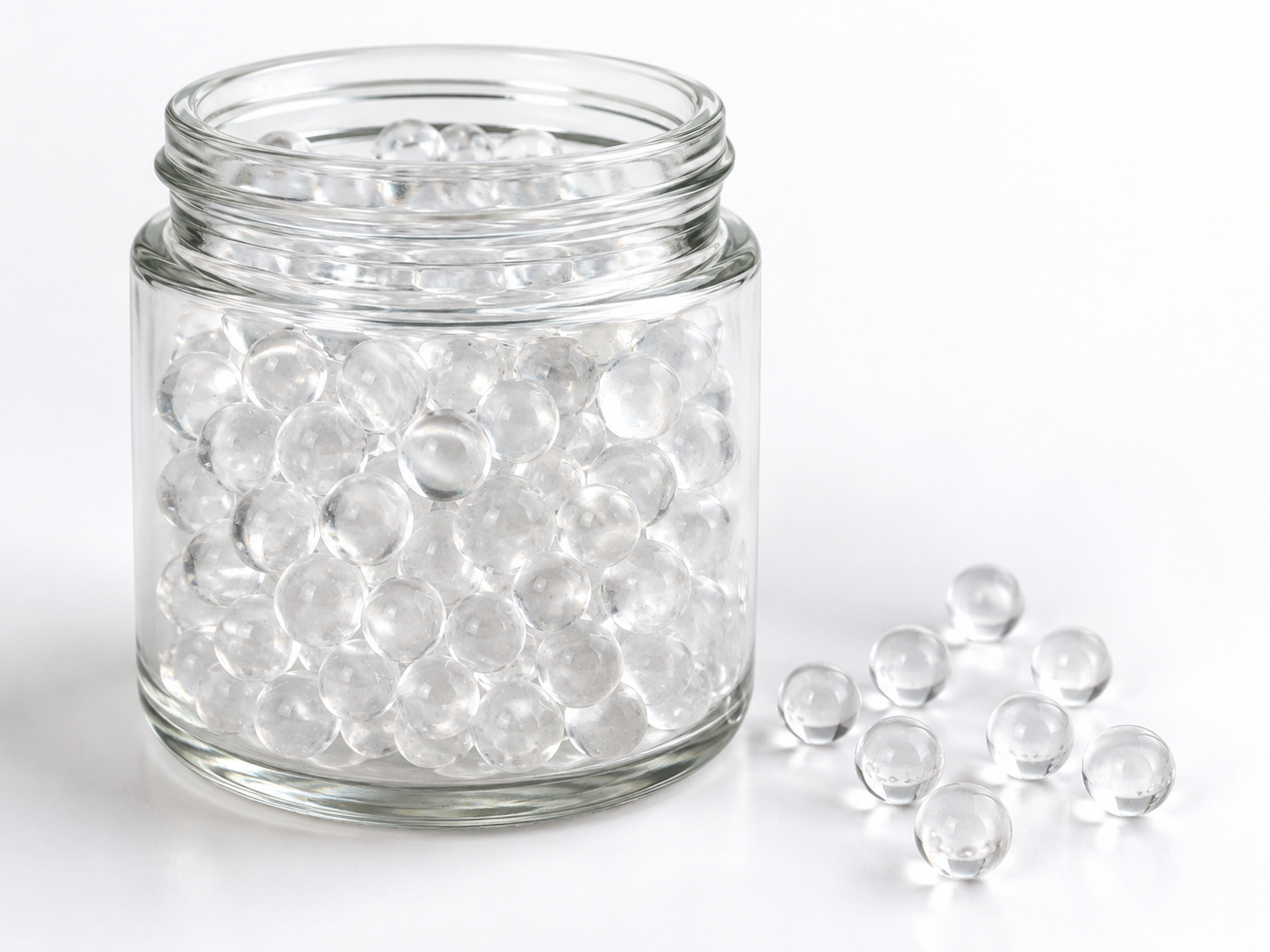
A wholesale polyphosphate starter assortment is easiest to build when you segment customers by how they actually use the material, not by chemical name. In practice that means four groups: point-of-entry and cartridge installers who need refill-grade crystalline media, equipment manufacturers and water-treatment contractors who buy bulk, chemical blenders who need powder or granular grades, and resellers who need pre-packed units with retail-ready labeling. Each group buys a different form, package size, and documentation set, so one SKU almost never covers everyone. The steps below show how to choose the first few SKUs, what to verify before listing them, and where a starter range usually goes wrong.
Why “polyphosphate” alone is not a buying category
Polyphosphate describes a family of materials, not a single product. Under that umbrella you will find controlled-solubility phosphate glasses (the siliphos-type crystal sold for pipe scale and corrosion control), granular and powdered polyphosphates used in blended formulations, and slow-dissolving briquettes or cartridges for specific housings. They differ in dissolution behavior, particle form, and the applications they are designed for.
Two clarifications matter before you build any assortment:
- Siliphos is a trade name that is often used generically. Not every “siliphos crystal” or “phosphate crystal” on the market is the same glass composition, size fraction, or dissolution rate. Treat the name as a description of a category and confirm the actual material with the supplier.
- Polyphosphates are not softeners. They work by threshold inhibition and sequestration, which slows scale formation and helps keep hardness minerals dispersed. They do not remove calcium and magnesium from water the way ion exchange does. Similarly, they are not filters and not disinfectants. If a customer asks for “soft water,” clarify whether they mean no scale in pipes and heaters, or genuinely reduced hardness.
Getting this distinction right at the catalog stage prevents a large share of returns and technical complaints later.
A customer-type map for the first assortment
The table below links the most common wholesale customer types to the form they typically ask for. It is a starting framework; the exact specification still has to be confirmed product by product.
| Customer type | What they usually ask for | What you must confirm before listing |
|---|---|---|
| Plumbing and point-of-entry installers | Crystalline media for refillable housings and cartridges | Particle size range, compatibility with the housing, expected refill interval under local water conditions |
| Water-treatment equipment OEMs | Consistent bulk media for cartridges they assemble | Batch-to-batch consistency, particle size distribution, packaging that protects the media in storage |
| Contractors and facility service providers | Bulk media for cooling, heating, and process water lines | Whether the intended chemistry is suitable for that system, and whether potable-water approval is required |
| Chemical blenders and formulators | Powder or granular polyphosphate for blending | Solubility profile, moisture sensitivity, compatibility with other blend components |
| Distributors and online resellers | Pre-packed retail or trade units | Label content, pack sizes that match market expectations, documentation the buyer can pass on |
Installers and cartridge refillers
This group buys on repeat and cares about fit and predictability. They want a media that behaves the same way in the same housing every time, because their reputation depends on the customer not calling back in three months. For them, the useful starter SKUs are usually one or two particle size ranges of controlled-solubility crystal, packed in quantities that match how often they refill housings.
Equipment manufacturers
OEMs are the most specification-driven buyers in the group. They will ask for a particle size distribution, a moisture specification, and a packaging format that fits their filling line. They also ask harder questions about consistency between batches. If you cannot supply a stable specification document, this segment will not convert, no matter how attractive the unit price looks.
Blenders and formulators
Powder and granular grades serve a different function from crystalline media. Blenders are not filling a cartridge; they are building a formulation, so they care about solubility, dust, and how the polyphosphate interacts with the other components in the blend. Stocking a crystalline media and assuming it will also serve blenders is a common and expensive mistake.
Resellers
Resellers need the material already converted into a sellable unit. That means a defined pack size, a label that states what the product is and what it is not, and enough technical background for their support staff to answer basic questions. A bulk bag behind the counter does not help them.
How many SKUs should a starter assortment contain?
Most wholesalers are better served by a narrow, well-documented range than by a broad one they cannot explain. A practical first line-up usually covers:
- One core controlled-solubility crystalline media in the particle size range your local installers already use.
- One alternative size fraction, so you can serve housings that need a different flow characteristic.
- One powder or granular grade for blenders, if that customer type exists in your market.
- One trade or retail pack format for resellers and small contractors.
- A documentation pack covering composition, intended use, storage, and handling for each SKU.
Resist the temptation to add a fifth or sixth variant before the first four have real demand behind them. Polyphosphate media has a finite storage life in the sense that packaging integrity and moisture exposure matter over time; a wide range that sits in the warehouse is working capital that is not earning anything.
Verify these points before the assortment goes live
Potable water suitability is not the same as food grade
This is the single most important compliance point. A material described as food grade has met a purity standard — it does not automatically follow that the specific product is approved for treating drinking water in your destination market. Potable-water use normally depends on a recognized approval or registration for that exact product and application. Before listing any polyphosphate as drinking-water suitable, confirm the approval that applies to the product you are actually selling and the market where it will be used. If that confirmation is not available, describe the product only for the applications you can support.
Dosing cannot be inherited from another product
Dosage depends on water chemistry, flow rate, contact time, temperature, and the dissolution behavior of the specific material. Do not publish recommended dose rates copied from a different manufacturer or a different product. If a customer needs a dosing recommendation, the honest answer is that it must be established for their water and equipment.
Compatibility with the housing
Crystalline media is designed to dissolve gradually. That means the housing, flow path, and refill practice all affect performance. Ask suppliers what housing types and flow conditions the material was developed around, and pass that information to installers rather than letting them guess.
Packaging, labeling, and storage
Polyphosphate materials are hygroscopic to varying degrees. Packaging that keeps moisture out during shipping and storage protects both the product and your customer relationship. For wholesale, the practical questions are:
- Does the pack format match how the customer dispenses the material — scoop, pour, or direct fill?
- Is the label clear about what the product does and does not do?
- Is there a handling and storage instruction on the pack, not just in a document nobody reads?
- Can the packaging survive the freight profile of your market without splitting or absorbing moisture?
Common mistakes when building the range
- Stocking by chemical name instead of application. A buyer searching for “polyphosphate” may need three different things.
- Treating all crystal as interchangeable. Particle size and dissolution behavior vary between sources.
- Publishing dose rates. Inherited numbers create complaints and, in some applications, real problems.
- Assuming food grade equals potable-water approved. It does not.
- Skipping documentation. OEMs and larger contractors will ask for it during qualification, and a missing datasheet stalls the order.
Frequently asked questions
Is siliphos crystal the same as polyphosphate media?
Not necessarily. “Siliphos” is often used as a generic term for controlled-solubility phosphate glass used in water lines, while “polyphosphate media” can describe several forms with different dissolution and handling characteristics. Always compare the actual specification, not the label.
Can polyphosphates replace a water softener?
No. They inhibit scale formation and help keep minerals dispersed, but they do not remove hardness from water. If a customer needs hardness reduction, that is a different treatment step.
How long does the media last in a housing?
That depends on the material, the water chemistry, the flow rate, and the housing design. There is no universal service life. It should be established for the specific installation rather than quoted from a general figure.
What should a wholesale buyer ask a supplier first?
Ask for the material specification, the intended applications, the storage and handling requirements, and the approvals that apply to the product in your market. Those four items determine whether the SKU is viable for your customer base.
Building the assortment with a supplier
The final step is matching your customer map to what a supplier can actually provide consistently. A supplier who can explain the difference between their crystalline media and their powder grades, and who will state clearly what approvals exist for each product, is more useful to a wholesaler than one who quotes a single price for “polyphosphate.”
If you are planning a starter range and want to check forms, particle size options, and documentation availability, contact ENVO CHEMICAL with the details that affect the selection: your customer types, the applications you intend to serve, the pack formats you need, whether potable-water use is involved, your expected quantity, and your destination market. That information is enough to confirm what fits and what needs to be verified first.
