
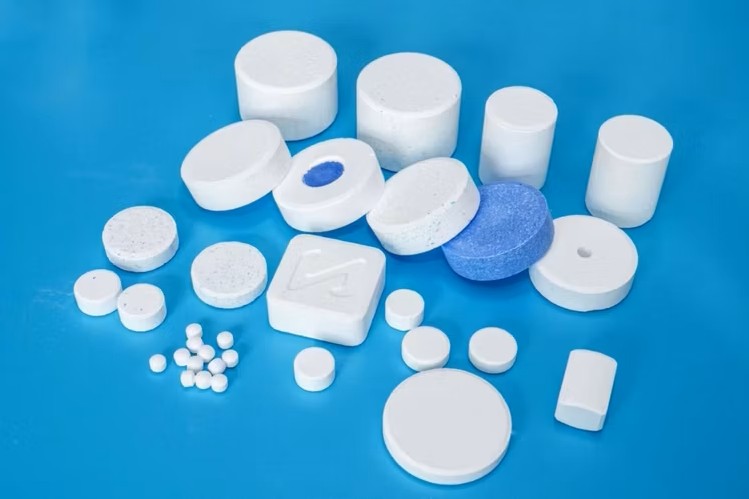
Import TCCA for Fountain Companies: Supplies Easy Prevention
Introduction
In the evolving landscape of decorative water features and commercial fountain installations, maintaining optimal water quality stands as a critical operational priority. Fountain companies across North America, Europe, and Asia face increasing regulatory pressure and consumer expectations regarding water safety, aesthetic clarity, and microbial control. Trichloroisocyanuric Acid (TCCA), chemically designated as C₃Cl₃N₃O₃ with CAS Number 87-90-1, has emerged as the premier disinfection solution for fountain water treatment systems.
This comprehensive technical guide examines why importing premium-grade TCCA represents a strategic advantage for fountain maintenance companies, facility managers, and water feature contractors. We delve into critical performance specifications, compliance frameworks, and operational protocols that distinguish professional-grade TCCA from conventional chlorine alternatives.
Understanding TCCA: Chemical Properties and Mechanism of Action
Molecular Structure and Stability
Trichloroisocyanuric Acid belongs to the chloroisocyanurate family of organic chlorine compounds. Its triazine ring structure provides exceptional stability compared to inorganic chlorine sources such as sodium hypochlorite or calcium hypochlorite. The molecular weight of 232.44 g/mol contributes to its controlled dissolution characteristics in aqueous environments.
Key Chemical Specifications:
| Parameter | Specification |
|---|---|
| Chemical Formula | C₃Cl₃N₃O₃ |
| CAS Number | 87-90-1 |
| Molecular Weight | 232.44 g/mol |
| Available Chlorine Content | ≥90% (industrial grade) |
| Moisture Content | ≤0.5% |
| pH (1% Solution) | 2.6-3.2 |
| Melting Point | 247-251°C |
| Density | 2.191 g/cm³ |
| Solubility (25°C Water) | 1.2g/100g |
| Solubility (30°C Acetone) | 36g/100g |
Controlled Chlorine Release Mechanism
TCCA operates through a hydrolysis reaction that gradually releases hypochlorous acid (HOCl) into the water column. This slow-release mechanism provides several operational advantages for fountain applications:
- Extended Disinfection Duration: Maintains residual chlorine levels for 5-7 days under normal operating conditions
- Reduced Chemical Dosing Frequency: Minimizes maintenance visits and operational interruptions
- Stable pH Buffering: Cyanuric acid byproduct acts as a stabilizer, reducing chlorine degradation from UV exposure
- Lower Corrosion Risk: Compared to liquid chlorine, TCCA demonstrates minimal corrosive impact on stainless steel components
Industry Standards and Regulatory Compliance Framework
International Certification Requirements
Fountain companies importing TCCA must ensure products meet recognized international standards for water treatment chemicals. The following certifications represent minimum compliance thresholds for commercial deployment:
NSF/ANSI/CAN 60 Certification
- Required for all drinking water treatment chemicals in North American markets
- Validates that TCCA does not introduce harmful contaminants at specified dosage levels
- Testing protocol includes extraction analysis for heavy metals, organic compounds, and residual impurities
HG/T 3779-2005 (Chinese Industry Standard)
- Specifies technical requirements for trichloroisocyanuric acid products
- Defines grading criteria for available chlorine content, moisture, and particle size distribution
- Widely referenced by international procurement specifications
ASTM D1253-14(2021)e1
- Standard test method for residual chlorine measurement in water
- Essential for verifying disinfection efficacy in fountain systems
- Provides methodology for ongoing water quality monitoring programs
European Biocidal Products Regulation (BPR) EU 528/2012
- Governs authorization of disinfectant products within EU member states
- Requires product notification and active substance approval
- Impacts import documentation and labeling requirements
Water Quality Parameters for Fountain Applications
Maintaining compliant water quality in decorative fountains requires adherence to established parameters. The following table outlines recommended operational ranges:
| Parameter | Recommended Range | Testing Frequency |
|---|---|---|
| Free Chlorine Residual | 0.5-1.0 mg/L | Daily |
| Total Chlorine Residual | 1.0-2.0 mg/L | Daily |
| pH Level | 7.2-7.8 | Daily |
| Cyanuric Acid Stabilizer | 30-50 mg/L | Weekly |
| Total Dissolved Solids | ≤1500 mg/L | Monthly |
| Turbidity | ≤5 NTU | Daily |
Performance Data and Comparative Analysis
Disinfection Efficacy Studies
Independent laboratory testing demonstrates TCCA’s superior performance against common waterborne pathogens found in fountain systems:
Microbial Reduction Efficiency (Contact Time: 30 minutes at 1.0 mg/L residual chlorine):
- Escherichia coli: >99.99% reduction (4-log)
- Pseudomonas aeruginosa: >99.9% reduction (3-log)
- Legionella pneumophila: >99.99% reduction (4-log)
- Staphylococcus aureus: >99.99% reduction (4-log)
- Adenovirus: >99% reduction (2-log)
- Giardia cysts: >90% reduction (1-log)
Long-Term Stability Assessment
Accelerated aging studies conducted at 40°C and 75% relative humidity reveal TCCA’s exceptional shelf stability:
| Storage Duration | Available Chlorine Retention |
|---|---|
| 6 months | ≥98% |
| 12 months | ≥95% |
| 24 months | ≥90% |
| 36 months | ≥85% |
This stability profile significantly reduces inventory loss and ensures consistent product performance throughout the supply chain.
Corrosion Compatibility Testing
Fountain systems incorporate diverse materials including stainless steel, brass, copper, and various polymers. TCCA’s corrosion characteristics have been extensively evaluated:
Corrosion Rate Comparison (mm/year at 25°C, 2 mg/L chlorine residual):
| Material | TCCA | Sodium Hypochlorite | Calcium Hypochlorite |
|---|---|---|---|
| Stainless Steel 304 | 0.002 | 0.008 | 0.006 |
| Stainless Steel 316 | 0.001 | 0.005 | 0.004 |
| Brass | 0.015 | 0.025 | 0.022 |
| Copper | 0.018 | 0.032 | 0.028 |
| PVC | No effect | No effect | No effect |
| EPDM Rubber | No effect | Minor degradation | Minor degradation |
Data indicates TCCA presents substantially lower corrosion risk compared to alternative chlorine sources, particularly for critical stainless steel components common in modern fountain installations.
Operational Implementation Guidelines
Dosage Calculation Methodology
Proper TCCA dosing requires consideration of fountain volume, water turnover rate, ambient temperature, and bather load (for interactive fountains). The following formula provides baseline dosage estimation:
Daily Dosage (grams) = Fountain Volume (m³) × Target Chlorine Increase (mg/L) × 1.1
The 1.1 factor accounts for TCCA’s 90% available chlorine content and typical system losses.
Practical Dosing Scenarios:
| Fountain Type | Volume Range | Initial Shock Dose | Maintenance Dose |
|---|---|---|---|
| Decorative Plaza Fountain | 10-50 m³ | 200-500g | 50-100g/day |
| Interactive Splash Pad | 5-20 m³ | 100-300g | 30-60g/day |
| Indoor Atrium Feature | 2-10 m³ | 50-150g | 15-30g/day |
| Large Commercial Complex | 100-500 m³ | 2-5 kg | 500-1000g/day |
Application Procedures
Step 1: Pre-Treatment Assessment
- Measure existing chlorine residual and pH
- Verify filtration system operational status
- Document water temperature and TDS levels
Step 2: Product Preparation
- Dissolve TCCA tablets or granules in dedicated chemical feeder
- Never mix with other chemicals, particularly ammonia-containing compounds
- Use appropriate PPE including gloves and eye protection
Step 3: System Integration
- Introduce solution through circulation system return lines
- Avoid direct application to fountain surfaces or decorative elements
- Allow minimum 4-hour circulation before public access
Step 4: Post-Treatment Verification
- Confirm free chlorine residual within target range (0.5-1.0 mg/L)
- Adjust pH if necessary using approved alkalinity increasers
- Record all parameters in maintenance log
Safety and Handling Protocols
TCCA classification under GHS (Globally Harmonized System) requires specific handling precautions:
Hazard Classification:
- Oxidizing Solid, Category 2 (H272)
- Acute Toxicity (Oral), Category 4 (H302)
- Skin Corrosion/Irritation, Category 2 (H315)
- Serious Eye Damage, Category 1 (H318)
- Hazardous to Aquatic Environment, Category 1 (H400)
Storage Requirements:
- Temperature: 15-25°C optimal range
- Humidity: <75% relative humidity
- Segregation: Separate from organic materials, reducing agents, and ammonia compounds
- Ventilation: Adequate airflow to prevent chlorine gas accumulation
- Container Integrity: Original sealed packaging until point of use
Economic Analysis and ROI Considerations
Cost Comparison Framework
When evaluating TCCA against alternative disinfection methods, fountain companies should consider total cost of ownership rather than unit price alone:
| Cost Factor | TCCA | Liquid Chlorine | UV Systems | Ozone Systems |
|---|---|---|---|---|
| Chemical Cost (annual) | $2,500-5,000 | $3,000-6,000 | N/A | N/A |
| Equipment Investment | $500-1,500 | $500-1,500 | $15,000-30,000 | $25,000-50,000 |
| Maintenance Labor | 2 hrs/week | 3 hrs/week | 1 hr/week | 2 hrs/week |
| Energy Consumption | Minimal | Minimal | Moderate | High |
| Expected Lifespan | N/A (consumable) | N/A (consumable) | 5-7 years | 7-10 years |
| 5-Year Total Cost | $15,000-30,000 | $20,000-40,000 | $40,000-70,000 | $60,000-100,000 |
Note: Costs based on 100 m³ fountain system with 8-hour daily operation
Return on Investment Metrics
Fountain companies transitioning to premium TCCA typically realize ROI within 6-12 months through:
- Reduced Maintenance Frequency: Extended chlorine residual decreases service visits by 30-40%
- Lower Water Consumption: Improved water stability reduces drain-and-refill cycles
- Extended Equipment Life: Reduced corrosion prolongs pump and fixture longevity
- Compliance Risk Mitigation: Consistent disinfection reduces regulatory violation potential
- Customer Satisfaction: Clear, odor-free water enhances user experience and contract retention
Supply Chain and Import Considerations
Quality Verification Protocols
Importing TCCA requires rigorous supplier qualification and product verification:
Documentation Requirements:
- Certificate of Analysis (CoA) for each production batch
- Safety Data Sheet (SDS) compliant with GHS standards
- NSF/ANSI/CAN 60 certification documentation (for North American markets)
- REACH compliance declaration (for European markets)
- ISO 9001:2015 quality management certification from manufacturer
Testing Verification:
- Independent laboratory analysis for available chlorine content
- Heavy metal screening (lead, cadmium, mercury, arsenic)
- Particle size distribution analysis for dissolution rate consistency
- Moisture content verification to ensure stability during transit
Logistics and Storage Optimization
TCCA’s classification as an oxidizing solid (UN 2468, Class 5.1) imposes specific transportation requirements:
- Packaging: Double-layer polyethylene bags within fiber drums or woven bags
- Maximum Net Weight: 25-50 kg per container for manual handling safety
- Shipping Documentation: Dangerous Goods Declaration required for international freight
- Temperature Control: Avoid prolonged exposure above 35°C during transit
- Customs Classification: HS Code 2933.69 for trichloroisocyanuric acid
Environmental Impact and Sustainability
Aquatic Toxicity Profile
TCCA’s environmental impact has been extensively studied under OECD testing guidelines:
| Test Organism | LC50/EC50 (96 hours) | Classification |
|---|---|---|
| Daphnia magna | 0.45 mg/L | Highly toxic |
| Pimephales promelas | 0.68 mg/L | Highly toxic |
| Selenastrum capricornutum | 0.32 mg/L | Highly toxic |
Mitigation Strategies:
- Implement dechlorination protocols before fountain water discharge
- Utilize sodium thiosulfate for emergency neutralization
- Design closed-loop systems to minimize water exchange
- Monitor effluent chlorine levels to meet local discharge limits (typically <0.5 mg/L)
Cyanuric Acid Accumulation Management
Extended TCCA use results in cyanuric acid buildup, which can reduce disinfection efficiency at elevated concentrations:
Management Protocol:
- Monitor cyanuric acid levels monthly
- Maintain concentration below 100 mg/L for optimal performance
- Partial water replacement (25-30%) when levels exceed 80 mg/L
- Consider alternative chlorine sources during off-season maintenance periods
Frequently Asked Questions (FAQ)
Q1: What is the recommended chlorine residual level for decorative fountains?
A: For non-interactive decorative fountains, maintain free chlorine residual between 0.3-0.5 mg/L. Interactive fountains with public contact require 0.5-1.0 mg/L to meet health department requirements. Always verify local regulations as requirements vary by jurisdiction.
Q2: How often should TCCA be added to fountain systems?
A: Maintenance dosing frequency depends on fountain volume, water temperature, and bather load. Typical intervals range from daily to every 3 days for continuous operation systems. Automated chemical feeders can maintain consistent residual levels with minimal manual intervention.
Q3: Can TCCA be used with saltwater fountain systems?
A: TCCA is compatible with saltwater systems, though chlorine demand may increase due to bromide ion presence. Adjust dosage by 15-20% above standard calculations and monitor total dissolved solids regularly to prevent excessive accumulation.
Q4: What is the shelf life of imported TCCA products?
A: Properly stored TCCA maintains ≥90% available chlorine content for 24-36 months. Store in cool, dry conditions below 25°C with relative humidity under 75%. Avoid direct sunlight and ensure packaging remains sealed until use.
Q5: How does TCCA compare to bromine for fountain disinfection?
A: TCCA offers cost advantages (approximately 40-60% lower per treatment) and wider availability. Bromine performs better at elevated pH levels and produces fewer chloramine odors. Selection depends on specific water chemistry, budget constraints, and local regulatory preferences.
Q6: What safety precautions are required when handling TCCA?
A: Always wear chemical-resistant gloves, safety goggles, and protective clothing. Work in well-ventilated areas. Never mix with ammonia, acids, or organic materials. Have emergency eyewash stations accessible. Store away from combustible materials and reducing agents.
Q7: Is NSF certification mandatory for fountain TCCA applications?
A: NSF/ANSI/CAN 60 certification is required when fountain water may contact drinking water systems or when local regulations mandate certified treatment chemicals. Decorative fountains without public contact may have reduced requirements, but certification demonstrates quality commitment to clients.
Q8: How do I calculate the correct TCCA dosage for my fountain system?
A: Use the formula: Daily Dosage (grams) = Volume (m³) × Target Chlorine Increase (mg/L) × 1.1. For example, a 50 m³ fountain requiring 0.5 mg/L chlorine increase needs approximately 27.5 grams daily. Adjust based on actual residual testing results.
Q9: What should I do if chlorine levels become too high?
A: Immediately cease TCCA dosing and increase water circulation. For rapid reduction, partially drain and refill the fountain (25-50% water replacement). Sodium thiosulfate can neutralize excess chlorine in emergency situations. Do not allow public access until levels return to safe ranges.
Q10: Can TCCA cause staining on fountain surfaces?
A: TCCA itself does not cause staining. However, elevated iron or manganese in source water can oxidize and deposit on surfaces when chlorine is present. Pre-treat source water with sequestering agents if metal concentrations exceed 0.3 mg/L for iron or 0.05 mg/L for manganese.
Conclusion
Importing premium-grade TCCA represents a strategic investment for fountain companies committed to operational excellence, regulatory compliance, and customer satisfaction. The combination of superior disinfection efficacy, extended residual stability, minimal corrosion impact, and favorable economics positions TCCA as the optimal choice for commercial water feature maintenance.
By partnering with qualified suppliers who provide comprehensive documentation, consistent quality, and technical support, fountain companies can streamline operations while delivering exceptional water quality outcomes. The technical specifications, performance data, and implementation guidelines presented in this article serve as a foundation for informed procurement decisions and optimized system performance.
For detailed product specifications, certification documentation, and customized quotation based on your fountain system requirements, professional consultation is recommended to ensure optimal product selection and deployment strategy.
