
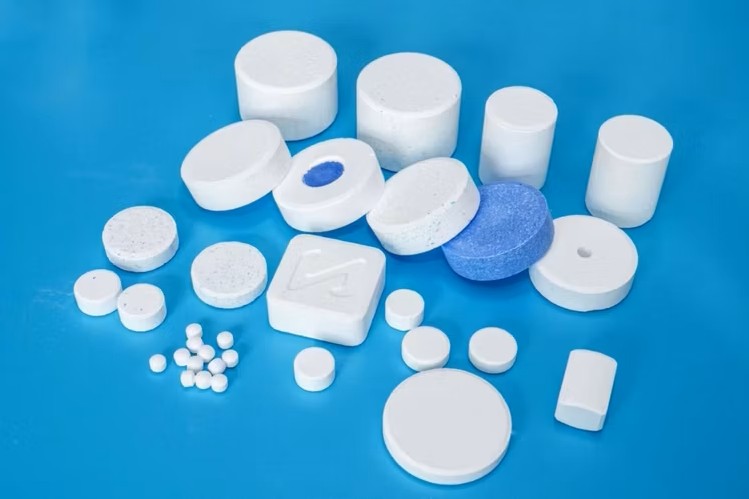
Industrial Water Treatment Chemicals: Your Complete Guide to Solving Costly System Problems in 2026
Introduction
Let me be honest with you – after spending over fifteen years in the water treatment chemicals industry, I’ve seen countless facilities bleed money through preventable equipment failures. Scale buildup, corrosion, microbial contamination – these aren’t just technical terms on a specification sheet. They’re real problems that shut down production lines, inflate energy bills, and force premature capital replacements.
The global water treatment chemicals market has reached unprecedented levels, with 2025 figures showing approximately 292 billion yuan in worldwide demand. But here’s what those numbers don’t tell you: behind every statistic is a plant manager struggling to balance chemical costs against system reliability. That’s where this guide comes in.
I’m writing this because I’ve walked through hundreds of industrial facilities, from power generation plants to manufacturing complexes, and I’ve noticed the same patterns. Companies that treat water treatment as a commodity purchase end up paying two to three times more in total operational costs than those who approach it strategically. This article will help you join the latter group.
Understanding Your Core Water Treatment Challenges
The Hidden Costs of Scale Formation
Scale inhibitors represent one of the most critical product categories in industrial water treatment. When calcium carbonate, calcium sulfate, or silica deposits accumulate inside your heat exchangers, boilers, or reverse osmosis membranes, you’re not just dealing with reduced efficiency. You’re facing a cascade of problems that compound over time.
Research from recent industry benchmarks shows that even mild scaling can reduce heat transfer efficiency by 15-20%. For a facility running continuous operations, that translates to thousands of dollars in wasted energy monthly. The phosphorus-free reverse osmosis membrane scale inhibitors I’ve recommended to clients over the past two years have demonstrated remarkable results – maintaining membrane flux rates while meeting increasingly stringent environmental discharge requirements.
What many procurement managers don’t realize is that not all scale inhibitors perform equally across different water chemistries. The polycarboxylic antiscalants work brilliantly in high-calcium applications, while organophosphonic compounds excel when you’re dealing with mixed metal ions. Choosing wrong means you’re essentially throwing money down the drain.
Corrosion Control: Beyond Basic Protection
Corrosion inhibitors deserve their own dedicated discussion because the consequences of getting this wrong are catastrophic. I’ve inspected cooling towers where inadequate corrosion protection led to tube failures within eighteen months – failures that should never have occurred with proper chemical treatment.
The 2025-2026 industry data reveals something interesting: facilities using multi-functional corrosion inhibitors (those combining film-forming amines with oxygen scavengers) report 40% fewer unscheduled shutdowns compared to single-mechanism products. This isn’t marketing speak; it’s measurable operational improvement.
Your selection criteria should include compatibility with your metallurgy, temperature stability across your operating range, and environmental compliance for discharge. Benzotriazole-based formulations remain the gold standard for copper protection, while molybdate-based inhibitors work exceptionally well in closed-loop systems where toxicity concerns limit traditional options.
Microbial Management in Industrial Systems
Bactericides and algaecides often get treated as an afterthought until visible biofilm appears. By then, you’re already losing the battle. Microbial contamination doesn’t just create unpleasant odors – it accelerates corrosion through microbiologically influenced corrosion (MIC), reduces heat transfer efficiency, and can contaminate process streams.
The shift toward non-oxidizing biocides has accelerated dramatically since 2024. Traditional chlorine-based treatments create disinfection byproducts that complicate regulatory compliance. Modern alternatives like isothiazolinones and quaternary ammonium compounds provide effective microbial control without generating harmful halogenated organics.
One client in the textile industry reduced their biocide consumption by 35% simply by switching from continuous chlorination to targeted shock dosing with a rotating biocide program. The key is understanding your specific microbial challenges rather than applying generic solutions.
Selecting the Right Supplier Partnership
Technical Capability Matters More Than Price
After evaluating dozens of water treatment chemical suppliers throughout my career, I’ve learned that the cheapest option invariably becomes the most expensive. Here’s why: technical support quality directly impacts your treatment program’s success rate.
Look for manufacturers with continuous, automated production facilities. Companies operating DCS automatic control systems demonstrate process consistency that batch operations simply cannot match. When your chemical specifications vary between batches, your treatment program becomes unpredictable – and unpredictability kills reliability.
Certifications matter too. REACH compliance, ISO quality management, and documented manufacturing processes aren’t just box-checking exercises. They indicate a supplier’s commitment to consistency and regulatory awareness. Facilities with annual production capacities exceeding thousands of tons typically demonstrate better order fulfillment rates – industry data shows approximately 40% higher reliability compared to smaller operations.
Customization Versus Standard Products
Your water chemistry is unique. Generic treatment programs might work adequately in some applications, but they’ll never optimize your system’s performance. The suppliers worth partnering with offer water analysis services, treatability studies, and customized formulation development.
I’ve seen facilities reduce their total chemical consumption by 25-30% simply by moving from standard products to tailored formulations. The initial investment in water analysis pays for itself within months through reduced chemical usage and improved system performance.
Implementation Best Practices
Monitoring and Adjustment Protocols
Implementing a water treatment program isn’t a set-and-forget operation. Regular monitoring of key parameters – pH, conductivity, inhibitor residuals, microbial counts – enables proactive adjustments before problems develop. Facilities using automated monitoring systems with cloud-based data logging report significantly fewer surprise failures.
Establish baseline performance metrics when you start a new treatment program. Track energy consumption, makeup water requirements, and chemical usage rates. These numbers become your proof of program effectiveness and provide early warning when conditions change.
Training Your Operations Team
The best treatment program fails without proper execution. Ensure your operations personnel understand not just what chemicals to add, but why each component matters. When operators grasp the relationship between chemical dosing and system health, compliance improves dramatically.
Document your treatment procedures clearly. Include troubleshooting guides for common scenarios – what to do when inhibitor residuals drop, how to respond to microbial spikes, when to adjust pH ranges. This institutional knowledge protects your facility against turnover-related knowledge loss.
Frequently Asked Questions
Q: How often should I test my water treatment chemical residuals?
A: For critical systems like boilers and reverse osmosis units, daily testing provides adequate control. Cooling towers can typically run on weekly testing schedules unless you’re experiencing instability. The key is establishing trends rather than reacting to individual readings.
Q: Can I switch between different suppliers’ products without system flushing?
A: Sometimes, but compatibility testing is essential. Some inhibitor chemistries interact poorly when mixed. Always consult with your new supplier before transitioning. A gradual switchover over two to three weeks minimizes risk compared to abrupt changes.
Q: What’s the typical ROI for upgrading to premium water treatment chemicals?
A: Based on projects I’ve overseen, facilities typically see payback within six to twelve months through reduced energy consumption, extended equipment life, and lower maintenance costs. The exact timeline depends on your baseline conditions and operational intensity.
Q: Are phosphorus-free formulations as effective as traditional products?
A: Modern phosphorus-free scale inhibitors have closed the performance gap significantly. In many applications, they match or exceed traditional organophosphonate performance while eliminating discharge permitting complications. Your specific water chemistry determines the optimal choice.
Q: How do I verify my supplier’s product quality consistency?
A: Request certificates of analysis for multiple production batches. Reputable manufacturers provide these documentation without hesitation. Consider independent third-party testing for critical applications where performance variability carries high consequences.
The water treatment chemicals you select directly impact your facility’s operational reliability and total cost of ownership. Don’t treat this decision as a commodity purchase. Partner with suppliers who demonstrate technical depth, manufacturing consistency, and genuine commitment to your success.
Author: Marcus Richardson
Ready to optimize your water treatment program? Visit our contact page to discuss your specific challenges with our technical team: https://envochemical.com/contact-us/
